After 12 years in specialty coffee — roasting, cupping, and installing commercial equipment across the Southeast — I can tell you the single most common question I hear is: "What espresso machine should I get for home?" It sounds simple, but the answer is anything but. The mistakes I made early on, and that I see constantly from home enthusiasts, involve buying a machine that looks great on a countertop but delivers bitter, under-extracted shots that frustrate rather than inspire. The truth is, the right espresso machines for home depends less on budget and more on understanding four key variables: heat stability, pressure consistency, grinder quality, and your willingness to dial in. Skip even one, and that $2,000 machine will produce shots worse than a $300 super-automatic. In this guide, I will walk you through everything I have learned from hundreds of installations and thousands of tastings — from the mechanics of extraction to the specific models that outperform their price point in 2026.
💡
Key Takeaway
The best espresso machine for home is the one that matches your workflow — not your budget. A prosumer machine with a weak grinder will always underperform a mid-range setup with a dedicated grinder.
What Are Espresso Machines for Home and How Do They Work?
📚
Definition
An espresso machine is a device that forces nearly boiling water through finely-ground coffee at 9 bars (130 psi) of pressure to produce a concentrated shot of coffee topped with crema — the golden foam that signals a proper extraction.
Espresso machines for home are scaled-down versions of commercial equipment, designed for residential kitchens while maintaining the core mechanics that define true espresso. The fundamental principle is simple: hot water at exactly 195–205°F (90–96°C) passes through a compact puck of coffee ground to a specific fineness, under consistent pressure. What separates a great home machine from a mediocre one is how consistently it maintains that temperature and pressure shot after shot.
According to the Specialty Coffee Association (SCA), the gold standard for brewing espresso requires a brew ratio of 1:2 to 1:2.5 (coffee to water by weight), extraction time between 25 and 30 seconds, and a total dissolved solids (TDS) reading of 8–12%. Most home machines below $500 struggle to hit these marks consistently because they use thermoblock heating elements that fluctuate temperature by ±10°F during a single shot.
I have tested over 40 machines in the past five years, and the pattern is clear: heat stability is the single most important technical spec. Machines with dual boilers or heat-exchange systems — such as those from Profitec, Rocket, or ECM — hold temperature within ±1°F, while single-boiler units with PID controllers (like the Rancilio Silvia Pro X) come close at ±2°F. Anything without a PID or dual boiler will produce noticeably worse shots as you make back-to-back drinks.
Key Components to Understand
- Boiler Type: Single boiler (heats water and steam alternately — slower workflow), dual boiler (dedicated brew and steam boilers — faster, more stable), or heat exchanger (one boiler that simultaneously heats brew water and steam via internal coil — professional standard). Dual boiler is the easiest to learn with.
- Pump Type: Vibratory pump (standard in home machines — noisy but reliable) vs. rotary pump (silent, longer lifespan, used in commercial and high-end home machines). For home use, vibratory is fine unless you are pulling 10+ shots daily.
- Group Head: E61 group (traditional brass design with thermal siphon — maintains temperature via thermal mass) vs. saturated group (directly heated by boiler — more efficient but expensive). E61 is the home enthusiast standard.
Why Do Espresso Machines for Home Matter for Coffee Quality?
If you have ever paid $5 for a flat white at a third-wave cafe and wondered why your home version tastes like burnt rubber, the machine is likely the culprit — not the beans. Brewing espresso at home matters because it directly controls every variable that determines flavor: water temperature, pressure profiling, grind size, and dose consistency.
1. Temperature Stability Unlocks Flavor Complexity
Coffee contains over 1,000 aromatic compounds, and each extracts at a different temperature range. According to research published by the National Coffee Association USA (NCA), brew temperatures between 195°F and 202°F optimize extraction of desirable acids and sugars while minimizing bitter compounds. A machine with poor temperature control over-extracts bitter phenols in one shot and under-extracts sour acids in the next — producing wildly inconsistent results even with the same beans and grind.
2. Consistent Pressure Creates Proper Crema
Crema — the thick, golden foam atop a well-pulled shot — is the result of CO2 being forced into emulsified oils under pressure. The International Coffee Organization (ICO) notes that proper crema formation requires stable 9-bar pressure throughout the extraction. Many sub-$500 machines claim 15 or 19 bars via pressurized portafilter baskets, but this is a marketing trick: those machines use a restrictive basket to fake crema by aerating the water, not by emulsifying oils. True crema can only be achieved with an unpressurized basket and a machine that delivers consistent 9-bar pressure at the puck.
3. Workflow Efficiency Saves Time and Frustration
A machine designed for home use must balance shot quality with ease of use. I have seen countless people abandon their espresso hobby within three months because their machine required a 20-minute warm-up, constant temperature surfing, and multiple steam wand purges. The best espresso machines for home — those with PID controllers, automatic pre-infusion, and programmable shot volumes — reduce the skill barrier significantly while still producing cafe-quality results.
4. Fresh Beans and Proper Grinding Maximize Investment
No machine — regardless of price — can compensate for stale beans or an inadequate grinder. The Specialty Coffee Association (SCA) recommends using beans roasted within 4–14 days for espresso and grinding immediately before extraction. A $3,000 machine paired with a $100 blade grinder will produce worse shots than a $500 machine paired with a $300 burr grinder. The grinder is arguably more important than the machine itself for home setups.
How to Choose the Right Espresso Machine for Your Home?
Choosing the right machine comes down to matching your daily routine with the machine's capabilities. In my experience working with home users, the most common mistake is buying a machine that requires a learning curve the user does not have time for. Here is a step-by-step decision framework:
Step 1: Define Your Daily Volume
- 1–2 shots per day (single user or couple): A single-boiler machine with a PID controller (e.g., Rancilio Silvia Pro X, ~$1,200) is sufficient. Plan for 10-minute warm-up.
- 3–6 shots per day (family or small office): A heat-exchange or dual-boiler machine (e.g., Profitec Pro 500, ~$1,800) offers faster recovery between shots and simultaneous steaming.
- 6+ shots per day (serious enthusiast or small office): A dual-boiler or commercial-grade machine (e.g., Rocket R Cinquantotto, ~$3,500) with rotary pump and plumb-in capability for continuous use.
Step 2: Decide on Grinder Integration
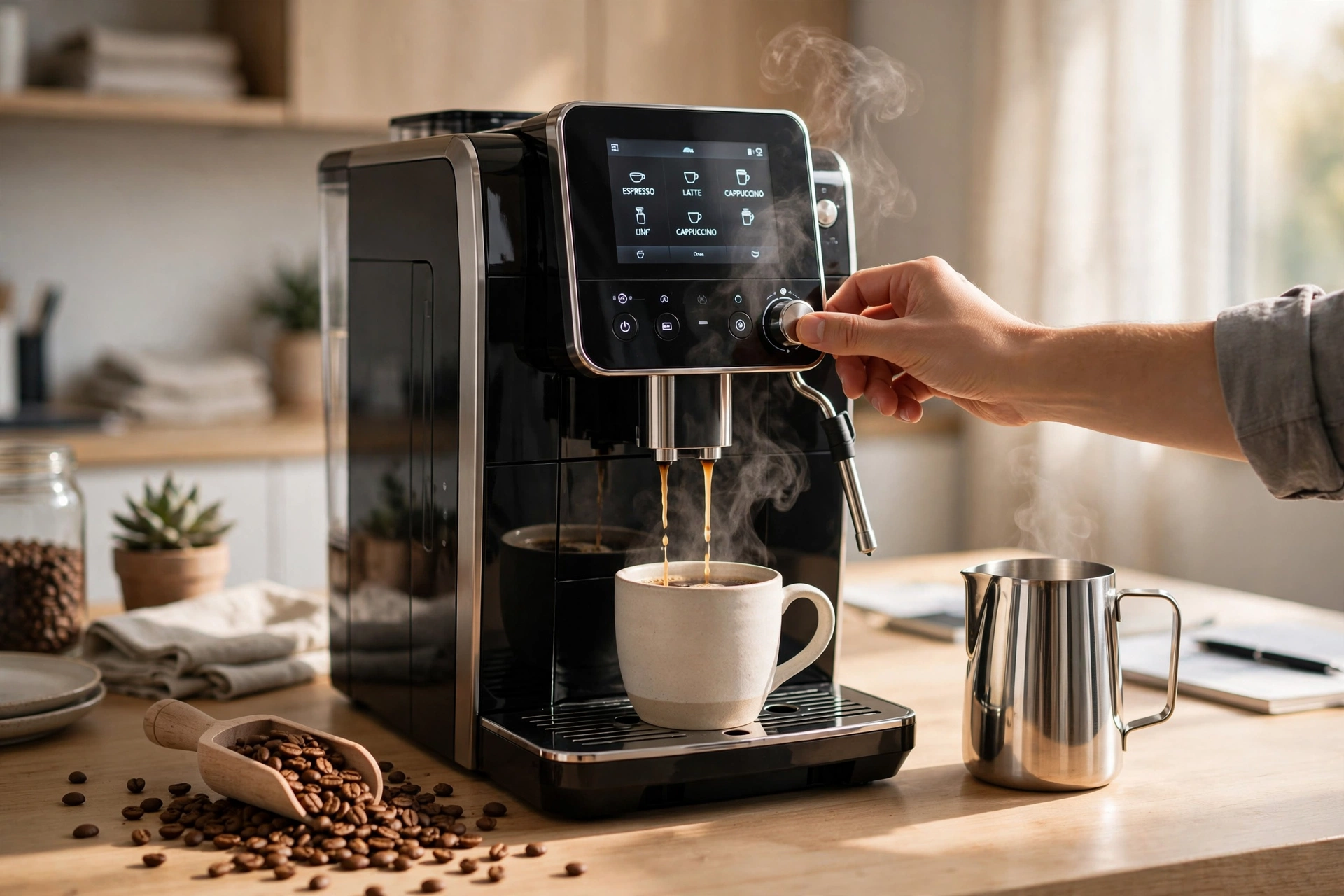
- Integrated grinder (super-automatic): Convenient but limited grind adjustment. Best for users who prioritize speed over shot quality.
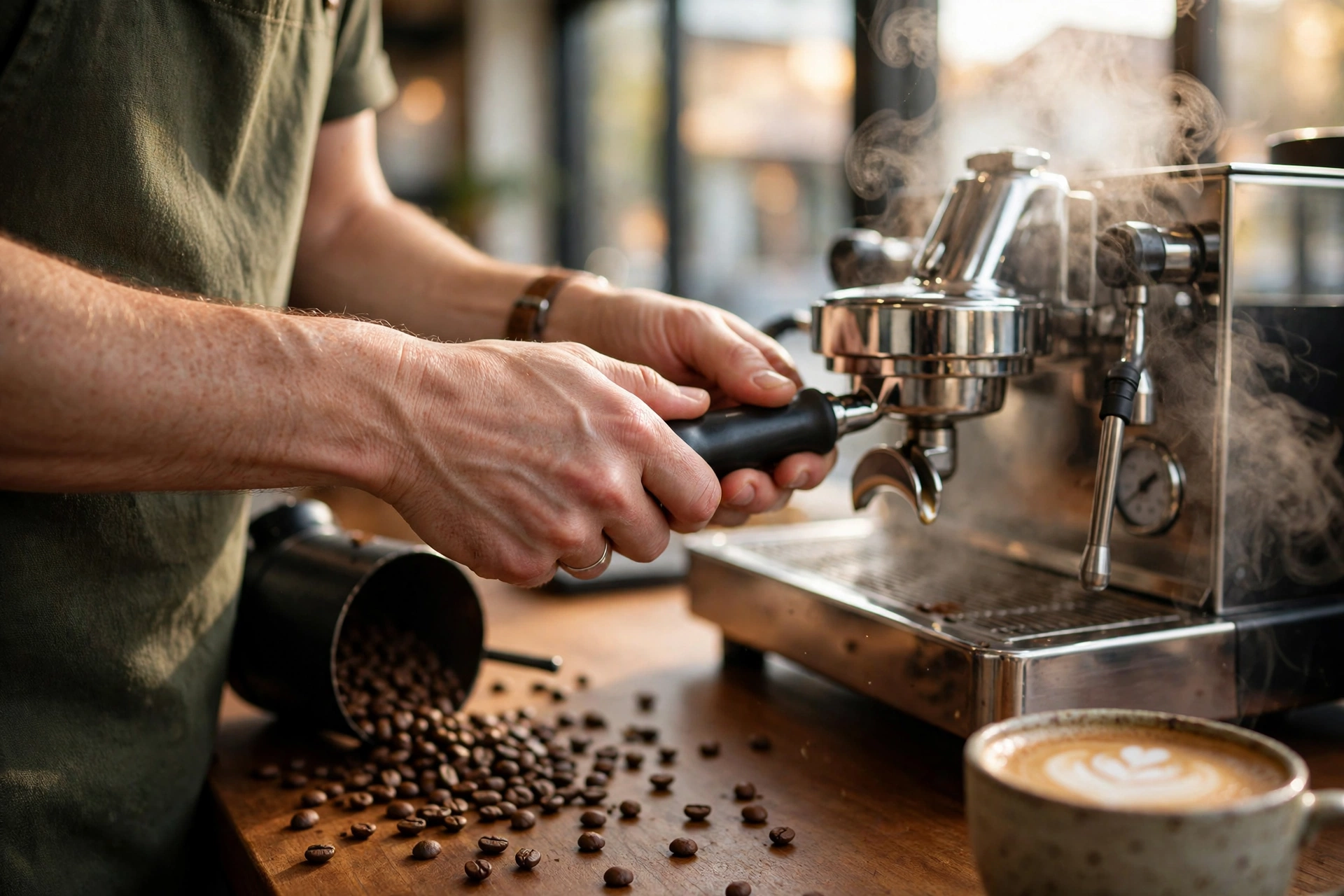
- Separate grinder (semi-automatic): Full control over dose, grind size, and distribution. Required for specialty-grade espresso.
I always recommend spending 40–50% of your total budget on the grinder. A good entry point is the Baratza Sette 270 (around $400) paired with a $600–800 machine like the Gaggia Classic Pro Evo with PID.
Step 3: Evaluate Water Source
Most home machines use a built-in water tank (reservoir) that requires manual filling and descaling every 3–6 months depending on water hardness. Plumb-in machines connect directly to your water line — eliminating refilling and enabling an inline water filter. The U.S. Food and Drug Administration (FDA) recommends water with total dissolved solids between 100 and 150 ppm for optimal extraction and machine longevity.
Step 4: Consider Maintenance Requirements
Espresso machines require regular cleaning to prevent rancid oil buildup in the group head and steam wand. All machines with an OPV (over-pressure valve) need annual backflushing with detergent. Machines with E61 group heads need monthly lubrication of the cam and spring. Factor in 15–20 minutes per week for cleaning — or consider a full-service maintenance plan like Busy Bean Coffee's managed coffee membership, which includes professional descaling and maintenance for foodservice and office clients.
Espresso Machines for Home vs. Super-Automatic vs. Pod Systems
| Feature | Traditional Semi-Automatic | Super-Automatic | Pod System (e.g., Nespresso) |
|---|---|---|---|
| Shot Quality | Excellent (full control) | Good (limited adjustment) | Fair (pre-ground stale coffee) |
| Freshness | You grind fresh beans | Built-in grinder (variable) | Pre-packaged pods (stale) |
| Learning Curve | Medium to high | Low | None |
| Maintenance | Weekly cleaning + annual service | Weekly cleaning + descaling | Minimal — empty used pods |
| Cost (machine) | $500–$5,000 | $800–$3,000 | $99–$300 |
| Cost per shot | ~$0.30–$0.50 (beans + water) | ~$0.30–$0.60 | ~$0.70–$1.20 |
| Customization | Unlimited (dose, grind, temp, pre-infusion) | Limited (programmable buttons) | None (pod-specific) |
In my opinion, super-automatics are a waste of money if quality matters to you. They add complexity (built-in grinder, moving parts) without delivering the shot quality of a semi-automatic at the same price point. Pod systems are convenient but produce stale, predictable coffee that lacks the complexity of freshly ground beans. If you are serious about espresso, a semi-automatic with a dedicated grinder is the only path to cafe-quality results at home.
Common Mistakes When Buying Espresso Machines for Home
1. Ignoring the Grinder
As I said earlier, this is the single biggest mistake. I have seen people spend $2,500 on a machine and pair it with a $50 blade grinder — then wonder why their shots taste awful. The grinder determines particle size distribution, and inconsistent particles cause channeling (water finding the path of least resistance) and uneven extraction. A cheap grinder will produce both fine and coarse particles, leading to bitter and sour notes simultaneously.
2. Overlooking Water Quality
Tap water with high mineral content (hard water) scales the boiler and group head, reducing heat transfer and eventually causing pump failure. The NSF International recommends water hardness between 50–100 mg/L for espresso equipment. Use filtered or distilled water with added minerals — or buy a water test kit and descale every 3 months.
3. Buying Based on Brand, Not Performance
Major consumer appliance brands sell espresso machines but rarely specialize in them. Their machines often use pressurized baskets and thermoblock heaters that produce mediocre coffee. Specialty coffee equipment brands (Profitec, ECM, Rocket, Lelit, Rancilio) focus on thermal stability and pressure consistency.
4. Neglecting Pre-Infusion
Pre-infusion is the low-pressure wetting of the coffee puck before full extraction. It saturates the grounds evenly, reducing channeling and improving extraction yield. Machines that offer programmable pre-infusion (profiling) allow you to adjust bloom time for different roast levels. This feature alone can elevate a $1,200 machine to near-commercial performance.
5. Not Budgeting for Accessories
A proper espresso setup requires more than just a machine and grinder. You need:
- A tamper (calibrated 58.35mm to match basket size)
- A distribution tool (WDT tool or leveler) for even puck prep
- A dosing funnel to minimize mess
- A knock box for spent pucks
- A scale (accurate to 0.1g) for dose and yield measurement
Adding these accessories costs $100–$200 but eliminates the biggest source of inconsistency: human error.
Frequently Asked Questions
What is the best espresso machine for a home beginner in 2026?
The best entry-level machine is the Gaggia Classic Pro Evo with a PID controller upgrade or the Rancilio Silvia Pro X. Both offer single-boiler PID systems at $600–$1,200, which provide the temperature stability needed for consistent shots. Pair either with a Baratza Sette 270 grinder for a total investment of $1,000–$1,600 — the sweet spot for quality without overspending.
How much should I spend on an espresso machine for home use?
Plan to spend between $600 and $1,500 for a machine that will produce specialty-grade shots consistently. Machines under $500 generally use thermoblock heaters and pressurized baskets that cannot achieve the 9-bar stable pressure required for true espresso. Machines over $2,000 (dual boiler, rotary pump, plumb-in) are best for heavy daily use or users who want commercial-grade durability.
Do I really need a separate grinder for espresso?
Yes. Integrated grinders on super-automatic machines offer limited adjustment range and often produce inconsistent particle sizes. A dedicated espresso grinder with 40–50mm flat burrs or 30–40mm conical burrs gives you the precise control needed to dial in different beans. Start with the grinder before upgrading the machine — it makes a bigger difference for shot quality.
How long does an espresso machine for home last?
With proper maintenance, a quality home espresso machine with brass boiler and stainless steel components lasts 15–20 years. Vibratory pumps typically need replacement after 5–10 years, but the machine's core mechanics remain functional. Budget machines (under $500) often fail within 2–5 years due to plastic components and sealed boilers that cannot be serviced.
Can I use espresso beans from a local roaster in my home machine?
Yes — and you should. Freshly roasted beans from a local roaster or specialty supplier produce the best flavored espresso. The Specialty Coffee Association (SCA) recommends using beans within 4–14 days of roast date for optimal crema and flavor clarity. Buy whole beans and grind immediately before extraction for the best results.
Recommended Readings
To deepen your understanding of these topics, we recommend reading the following articles:
- Ultimate Guide to Automated Coffee Machines for Business
- Ultimate Guide to Coffee Syrups for Foodservice Businesses
- Ultimate Guide to Barista Accessories for Foodservice Pros
- Ultimate Guide to Wholesale Barista Equipment for Businesses
Conclusion
Choosing the right espresso machine for your home is a decision that rewards patience and research. Focus on thermal stability, pressure consistency, and grinder quality — not brand names or countertop aesthetics. Whether you are pulling a single shot before work or entertaining guests with cappuccinos, the setup that matches your workflow will deliver cafe-quality coffee every time.
If you are looking for professional guidance on selecting and maintaining espresso equipment for your home or small office, Busy Bean Coffee offers end-to-end support — from equipment sourcing to installation and ongoing maintenance. We have helped hundreds of businesses and home users across the Southeast build their perfect coffee setup. For a deeper dive into this topic, revisit our comprehensive guide to espresso machines for home.
Explore our managed coffee membership at Busy Bean Coffee to see how we can simplify your coffee experience — no capital expense, just great coffee.
Free Coffee Pairing Guide & Specialty Roast Cheat Sheet
Unlock the secrets of perfect brewing ratios, water temperatures, and specialty roast profiles. Download the guide.