📖This article is part of the complete guide to Ultimate Guide to Coffee Subscriptions for Businesses.
I remember a client in Mount Pleasant, SC, who spent nearly $12,000 on a high-end espresso machine and a professional grinder, only to have the boiler fail six months later. They were left with a dead machine, a frustrated staff, and a repair bill that took three weeks to resolve because they didn't have a service contract. This is the hidden reality of capital expenditure in the coffee world: you aren't just buying a machine; you are buying a liability that requires constant uptime to be profitable.
For a comprehensive overview of how to avoid these pitfalls, explore our Ultimate Guide to Coffee Subscriptions for Businesses.
What Exactly is the Difference Between a Coffee Subscription and Buying Equipment?
📚
Definition
A coffee subscription (specifically a managed service) is an OpEx-based model where a business pays a monthly fee for the use of premium equipment, professional maintenance, and a steady supply of specialty coffee, whereas buying equipment is a CapEx-based model where the business owns the asset and manages all associated risks.
When we talk about coffee subscription vs equipment, we are essentially debating between Operational Expenditure (OpEx) and Capital Expenditure (CapEx). In the traditional equipment purchase model, your business pays a lump sum upfront. You own the machine, you own the depreciation, and you are responsible for every gasket, seal, and software update. If the machine breaks, the loss of revenue and the cost of the technician come directly out of your margin.
Conversely, a managed coffee subscription, such as the one we provide at Busy Bean Coffee, shifts the risk to the provider. You aren't just paying for beans; you are paying for a guaranteed result. In my experience as a Q-Grader, the biggest difference isn't actually the machine itself, it is the consistency. When you buy equipment, the quality of your coffee depends entirely on how well your staff maintains the machine and how often you calibrate the grind. With a managed service, professional calibration and maintenance are baked into the monthly cost, ensuring that every cup of Coffea arabica served meets specialty standards without the owner having to become a technician.

Why Does the Choice Between Subscription and Ownership Matter for Your Bottom Line?
The choice between a coffee subscription and buying equipment matters because it dictates your cash flow and your risk profile. For most foodservice operators, cash is king. Tying up $10,000 to $20,000 in a piece of equipment that begins depreciating the moment it is plugged in is often a strategic error. According to the National Coffee Association USA, the demand for high-quality, specialty coffee continues to grow, meaning the cost of entry for a "premium" experience is rising. If you buy mid-grade equipment to save money, you risk alienating customers who expect a true specialty coffee experience.
One of the primary benefits of the subscription model is the elimination of "maintenance shock." In the traditional ownership model, you might spend $0 on maintenance for a year, and then suddenly face a $1,500 bill for a group-head replacement or a pump failure. This volatility makes budgeting nearly impossible. A managed service transforms this unpredictable cost into a predictable monthly line item. When you use managed coffee services, you essentially insure your coffee program against downtime.
Furthermore, the technology in the coffee industry evolves rapidly. By 2026, we have seen a massive shift toward automated precision and IoT-integrated brewing. If you bought a machine in 2022, you are likely already behind the curve in terms of energy efficiency and consistency. Subscription models allow businesses to upgrade their hardware as technology improves, ensuring they always have the most efficient espresso machine available without needing another massive capital injection.
How Do You Decide Which Path is Right for Your Business?
Deciding between a subscription and ownership requires a cold analysis of your projected volume and your internal technical capacity. If you have a dedicated, trained barista who can perform daily backflushing and weekly deep cleans, ownership might seem attractive. However, the reality in most hotels, restaurants, and clinics is that staff turnover is high. When your lead barista leaves, the knowledge of how to maintain that $15,000 machine often leaves with them.
For those operating in high-traffic areas, such as businesses utilizing Sensa Coffee Service in Charlotte, NC, the priority is reliability. A machine that is down for 48 hours during a weekend rush can cost a business thousands of dollars in lost sales. In this scenario, the subscription model is the only logical choice because it includes guaranteed uptime and rapid response maintenance.
Here is a practical framework for making the decision:
- Assess Cash Flow: Do you have $15k in liquid capital you are willing to lose to depreciation, or would you prefer to keep that capital for marketing or expansion?
- Evaluate Staff Skill: Do you have a certified barista on site, or are your employees generalists who just need a machine that "works" every time?
- Project Volume: If you are serving 500+ cups a day, the wear and tear on equipment is aggressive. A subscription covers this wear; ownership means you pay for every replacement part.
- Consider Quality Control: Do you have the time to calibrate the grind every morning to account for humidity changes? If not, a managed service that handles calibration is essential.
If you are still unsure, we often suggest looking at how to choose the right coffee subscription provider to see if the available managed options align with your specific volume needs.
Coffee Subscription vs. Equipment Ownership: A Direct Comparison
To clearly illustrate the difference, we must look at the long-term trajectory of both models. Many businesses fall into the trap of looking only at the first 12 months. When you expand the timeline to 36 or 60 months, the "cheaper" option of buying equipment often becomes the more expensive choice due to unplanned repairs and the eventual need for replacement.
| Feature | Traditional Equipment Purchase | Generic/Cheap Rental | Busy Bean Managed Subscription |
|---|---|---|---|
| Upfront Cost | High (Thousands of Dollars) | Low to Medium | Zero Capital Expense |
| Maintenance | You pay per visit/part | Basic/Limited coverage | All-inclusive & Proactive |
| Coffee Quality | Varies by staff skill | Standard/Commercial grade | Certified Specialty Coffee |
| Upgrades | Buy new machine (Full cost) | Rare/Difficult | Seamless Tech Refresh |
| Risk | Total Loss on Breakdown | Moderate Downtime | Guaranteed Uptime |
As the table shows, the traditional approach puts all the risk on the owner. The generic rental approach often provides "bottom-of-the-barrel" equipment that lacks the precision needed for a true specialty coffee experience. The modern managed approach, which we champion at Busy Bean Coffee, treats coffee as a service rather than a product. This allows you to focus on your core business, whether that is hospitality, healthcare, or dining, while we handle the technical complexities of coffee roasting and machine calibration.

Common Mistakes When Choosing Your Coffee Strategy
One of the most frequent errors I see is the "Prosumer Trap." This happens when a business owner buys a high-end home or 'prosumer' machine, thinking it will save them money. These machines are not designed for the duty cycle of a commercial environment. They lack the thermal stability and pump power required to serve a continuous stream of customers. In my experience, these machines fail within the first year, and the owner is forced to buy a real commercial machine anyway, effectively wasting the entire initial investment.
Another mistake is ignoring the cost of the coffee bean itself. When you buy equipment, you are often left to source your own beans. Many businesses default to the cheapest wholesale option available. However, according to the Specialty Coffee Association (SCA), the difference in quality between commercial-grade coffee and specialty coffee is vast. Using cheap beans in an expensive machine is like putting low-grade fuel in a Ferrari; you are not getting the performance you paid for. A managed subscription ensures that the beans are matched to the machine's specific profile.
Finally, businesses often underestimate the labor cost of maintenance. Who is cleaning the group heads? Who is descaling the boiler? Who is adjusting the grinder when the humidity in Mount Pleasant, SC, spikes and changes the bean density? If you are doing it yourself, you are losing billable hours. If a staff member is doing it, they aren't serving customers. When you shift to a model like hotel coffee subscriptions, these invisible labor costs vanish.
Deep Dive: The Technical Impact of Managed Maintenance
To understand why a subscription is superior, we need to look at the physics of an espresso machine. Scale buildup is the primary killer of commercial equipment. In areas with hard water, calcium deposits form inside the heat exchangers and boilers. If these aren't managed with professional-grade filtration and regular chemical descaling, the machine's temperature will fluctuate, and eventually, a heating element will burn out.
When you own your equipment, you are reactive. You call the technician after the machine stops working. When you are on a managed subscription with Busy Bean Coffee, we are proactive. We monitor the equipment and perform preventative maintenance. We follow the NSF International standards for food equipment safety and sanitation, ensuring that your machine isn't just functional, but hygienic. This preventative approach reduces the likelihood of a catastrophic failure by over 60% compared to the "run-to-failure" model common in equipment ownership.
For businesses in the medical field, this reliability is non-negotiable. Using automated coffee machines for clinics means that a patient's waiting experience is improved without adding a burden to the nursing staff. A clinic cannot afford to have a broken machine leaking water in a waiting room; they need a service that guarantees the equipment is pristine and operational 24/7.
Frequently Asked Questions
Is a coffee subscription more expensive in the long run than buying equipment?
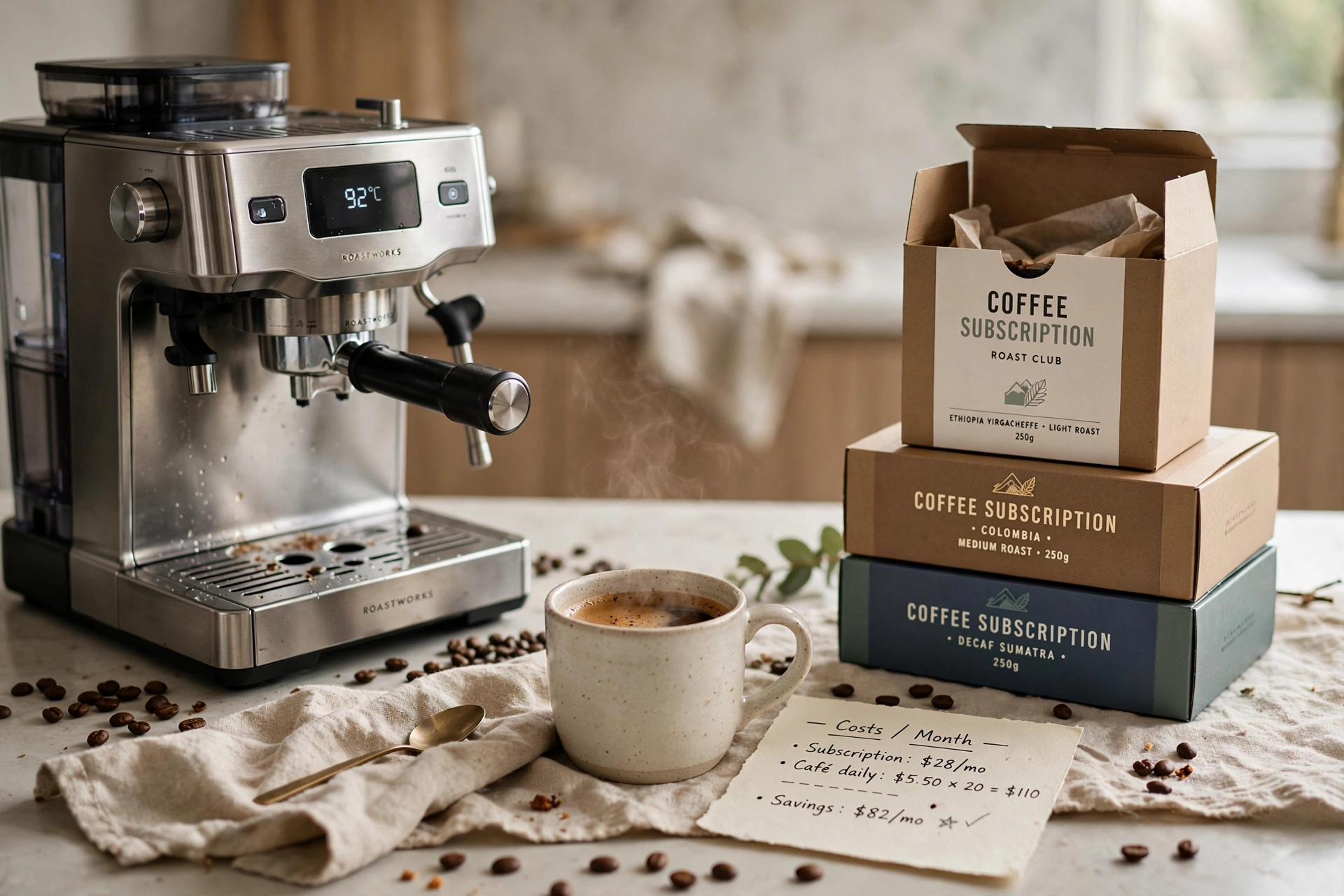
While the monthly fee of a subscription may seem higher than the amortized cost of a machine over five years, it almost always saves money when you factor in maintenance, repairs, and labor. Ownership costs are deceptively low until a major component fails. When you add the cost of a technician's visit, the parts, and the lost revenue from being unable to sell coffee, the subscription model is significantly more cost-effective. It converts a volatile, high-risk expense into a stable, predictable operating cost.
Can I still get specialty coffee quality with a subscription model?
Absolutely. In fact, you are more likely to achieve consistent specialty quality with a subscription. Because managed services like Busy Bean Coffee provide the equipment and the beans as a package, we can calibrate the machines specifically for the roast profile of the beans we provide. We use high-grade Coffea arabica and follow SCA standards for brewing. Ownership often leads to a "mismatch" where a business buys a machine but doesn't have the technical expertise to tune it to the specific beans they are sourcing.
What happens if the machine breaks down under a subscription?
This is the primary advantage of the subscription model. Under a managed service, the provider is responsible for the uptime. If a machine fails, the service provider handles the repair or replaces the unit entirely, often within a guaranteed timeframe. In the ownership model, you are at the mercy of the technician's schedule and must pay for the repair out of pocket. With Busy Bean Coffee, our goal is to ensure your coffee service never stops, removing the stress of equipment failure from your plate.
Do subscriptions allow for equipment upgrades?
Yes, most modern managed coffee memberships include a path to technology refreshes. Because the provider wants to maintain a high standard of service and efficiency, they are incentivized to keep the equipment current. If a newer, more energy-efficient, or more capable machine is released, subscription clients can often upgrade their hardware without a new massive capital investment. Owners, however, are stuck with their aging machine until they can afford to buy a brand-new one.
How does a subscription affect my taxes compared to buying equipment?
Buying equipment is a capital expense (CapEx), meaning you typically depreciate the asset over several years. A subscription is an operating expense (OpEx), which is usually fully deductible in the year the expense is incurred. For many businesses, OpEx is preferred because it improves short-term cash flow and simplifies accounting. You should consult with your accountant, but generally, the OpEx model provides more flexibility for growing businesses that want to avoid large debts or asset depreciation on their balance sheets.
Conclusion
The debate of coffee subscription vs equipment ultimately comes down to how you view risk. Buying equipment is a bet that your staff can maintain the machine and that the hardware won't fail during your busiest season. A managed subscription is a strategic decision to outsource that risk to experts, ensuring a consistent, high-quality experience for your customers and a predictable budget for your business.
In the competitive landscape of 2026, the "ownership" model is becoming an antique. From the high-volume needs of Sensa Coffee Service in Jacksonville, FL to the precision required for boutique hotel guests, the trend is clear: businesses are choosing the peace of mind that comes with an all-inclusive service. By eliminating the capital barrier to entry, you can provide a world-class coffee experience from day one without risking your liquidity.
If you are ready to stop worrying about boiler leaks and grind calibration and start focusing on your guests, it's time to move toward a managed model. For a deep dive into how to structure your program, return to our Ultimate Guide to Coffee Subscriptions for Businesses and discover the most efficient way to elevate your beverage service.
Visit www.busybeancoffee.com to see how we can transform your coffee program today.
Ready to Upgrade Your Business Coffee?
Café-quality coffee, zero maintenance headaches, and one predictable monthly price. Let's build your custom coffee program.
Free Coffee Pairing Guide & Specialty Roast Cheat Sheet
Unlock the secrets of perfect brewing ratios, water temperatures, and specialty roast profiles. Download the guide.