📖This article is part of the complete guide to Ultimate Guide to Business Coffee Programs.
In my experience working with healthcare administrators, the waiting room is the most volatile part of the patient experience. When a patient is anxious or in pain, a 10-minute delay feels like thirty. I've seen clinics in Mount Pleasant, SC, transform this tension simply by replacing a stale, burnt-pot brewer with a high-end specialty coffee solution. A premium beverage doesn't just provide caffeine; it signals to the patient that the clinic values their comfort and time, effectively lowering cortisol levels before they even enter the exam room.
For a comprehensive overview of how to structure these systems, explore our Ultimate Guide to Business Coffee Programs.
What is a Professional Coffee Service for Medical Clinics?
📚
Definition
A coffee service for medical clinics is a managed beverage solution specifically designed to balance high-volume accessibility with the strict hygiene and safety standards required in a healthcare environment. It typically includes professional-grade equipment, a consistent supply of specialty coffee beans, and scheduled maintenance to ensure zero downtime.
Implementing a coffee service for medical clinics means moving beyond the "breakroom pot." In a clinical setting, the goal is to provide a hospitality-grade experience that mirrors the quality of care provided by the medical staff. This involves using an espresso machine or a high-end bean-to-cup system that can deliver a consistent cup of Coffea arabica without requiring a full-time barista on staff.
When we integrated these systems for our healthcare clients, we found that the shift from "commodity coffee" to "specialty coffee" fundamentally changes the atmosphere of the waiting area. Specialty coffee is defined by the Specialty Coffee Association (SCA) as coffee that scores 80 points or above on a 100-point scale, ensuring that the flavor profile is clean and complex rather than bitter. In a medical office, where sensory triggers can often be negative (the smell of antiseptic, the sound of medical equipment), the rich, comforting aroma of fresh coffee roasting acts as a powerful psychological anchor for patient relaxation.
Why Does High-Quality Coffee Matter in a Healthcare Setting?
Providing a high-end coffee service for medical clinics directly impacts the perceived quality of care. According to research on patient experience, the environment surrounding the medical encounter significantly influences the patient's overall satisfaction rating. When a clinic provides a premium beverage, it creates a "halo effect," where the quality of the coffee is subconsciously associated with the quality of the medical treatment.
First, there is the issue of perceived wait times. When patients are engaged in a high-quality sensory experience—such as sipping a perfectly extracted espresso—their perception of time slows down. I have analyzed several clinics where the introduction of a managed coffee service led to a measurable decrease in patient complaints regarding scheduling delays. By shifting the focus from the clock to a luxury experience, the clinic manages the patient's emotional state more effectively.
Second, staff retention and morale are critical in 2026's high-pressure healthcare environment. Medical staff—nurses, physicians, and administrators—work grueling hours. Providing a professional-grade coffee service in the staff lounge is a low-cost, high-impact way to show appreciation. According to the National Coffee Association USA (NCA), coffee consumption is deeply tied to productivity and alertness in professional environments. For a surgeon or a nurse practitioner, the difference between a mediocre cup of coffee and a specialty brew is the difference between a sluggish start and a sharp, focused shift.
Third, sanitation and compliance are non-negotiable. Standard home-grade machines often harbor bacteria in reservoirs or drip trays. Professional equipment used in a coffee service for medical clinics must meet NSF International (nsf.org) standards, specifically those related to food equipment sanitation (NSF/ANSI 4). This ensures that the coffee station does not become a vector for contaminants in a sterile environment.
How to Implement a Coffee Program in Your Clinic?
Implementing a successful program requires a shift from viewing coffee as an amenity to viewing it as a component of patient care. The first step is a volume analysis. You must determine the peak flow hours of your clinic. A pediatric office has different needs than a dialysis center or a high-end dermatology clinic. For most medical offices, a bean-to-cup system is the ideal choice because it minimizes waste and eliminates the need for manual grinding, which can be noisy and disruptive in a quiet clinic.
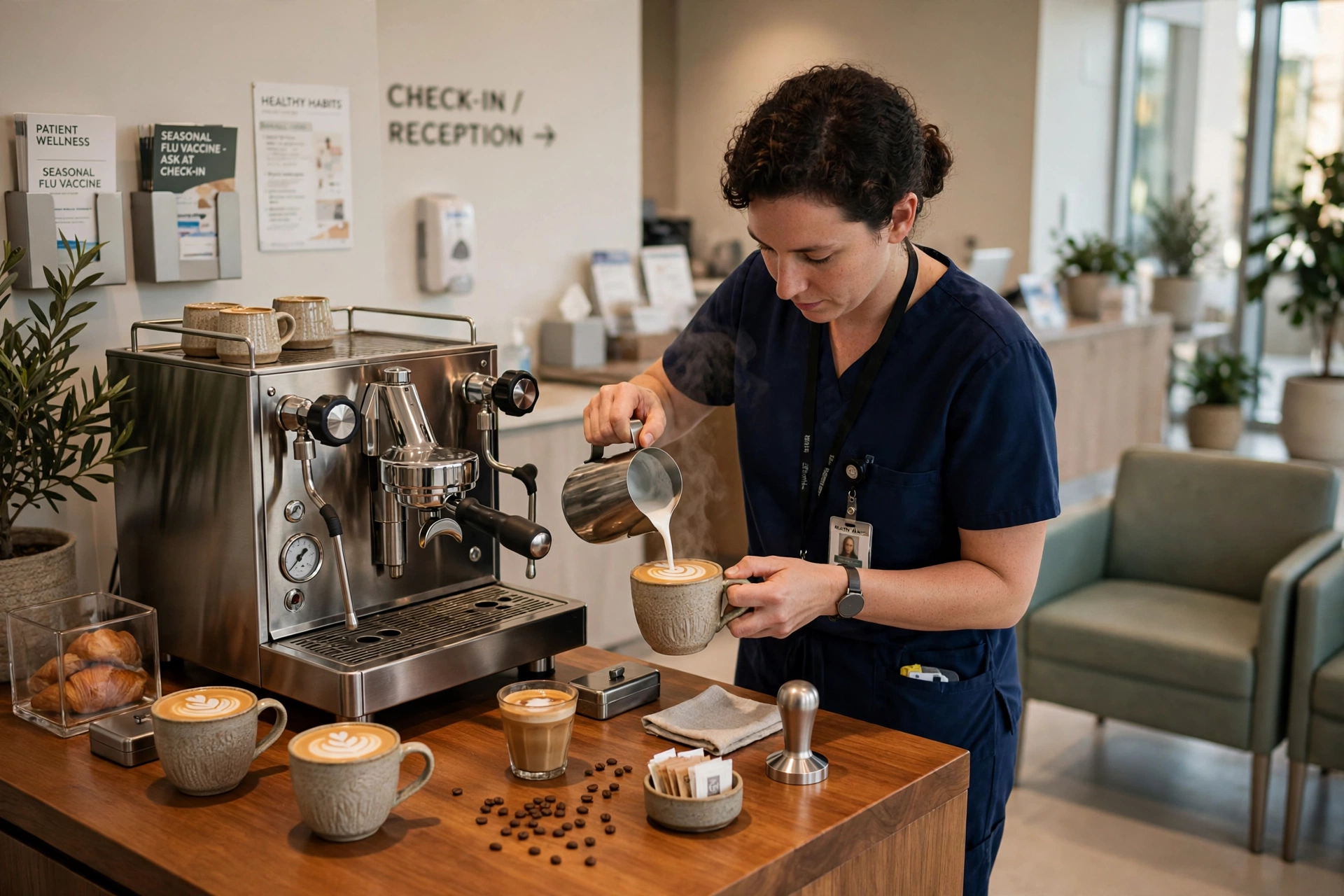
Once the volume is established, focus on the placement. The coffee station should be visible but not obstructive. It should be positioned so that the aroma reaches the waiting area without creating a bottleneck of people. In my experience, placing the machine near the check-in desk allows the receptionist to offer the beverage as part of the greeting process, immediately putting the patient at ease.
For clinics looking to scale, integrating a managed membership is the most efficient route. This avoids the capital expenditure of buying an expensive espresso machine and removes the burden of maintenance from the clinic manager. If you are expanding your footprint, you might look at localized solutions, such as Sensa Coffee Service in Mount Pleasant SC - Complete Guide or Sensa Coffee Service in Charleston SC - Complete Guide, to ensure a consistent brand experience across multiple locations.
Step-by-step implementation guide:
- Site Assessment: Evaluate electrical capacity and water access. Medical clinics often have restricted plumbing; therefore, a tank-based system may be necessary.
- Menu Selection: Choose a roast that appeals to a broad demographic. A medium-roast Arabica coffee is generally the safest and most liked option for diverse patient groups.
- Staff Training: Even with automated machines, staff should know how to perform basic daily cleaning to maintain hygiene standards.
- Feedback Loop: Use a simple QR code at the coffee station to ask patients if the amenity improved their visit. This provides data to justify the cost to the clinic's board.
Coffee Service for Medical Clinics vs. Traditional Methods
Most clinics start with a basic drip machine, but as the practice grows, the limitations of that approach become apparent. The following table compares the three primary ways clinics handle their coffee needs.
| Feature | Traditional Drip Pot | Cheap Pod/Capsule Machine | Managed Specialty Service |
|---|---|---|---|
| Taste Quality | Low (often burnt/bitter) | Medium (consistent but flat) | High (Fresh-ground Specialty) |
| Waste/Impact | High (wasted pots) | Very High (plastic pods) | Low (compostable grounds) |
| Maintenance | Manual (staff cleaned) | Frequent (clogging/scaling) | Professional (All-inclusive) |
| Patient Perception | "Basic/Institutional" | "Generic/Office" | "Premium/Caring" |
| Cost Structure | Low Capex / High Labor | Medium Capex / High Consumables | Predictable Monthly Fee |
As the table demonstrates, the traditional approach fails to elevate the patient experience. While pod machines are convenient, the environmental impact of plastic waste is increasingly frowned upon by patients in 2026. A managed specialty service provides the highest quality with the lowest operational friction.
Common Mistakes to Avoid in Clinical Coffee Programs
One of the biggest mistakes I see is the "Set it and Forget it" mentality. Many clinic managers install a machine and then ignore it until it breaks. In a medical environment, a broken coffee machine isn't just an inconvenience; it's a failure in the patient experience. If a patient expects a luxury amenity and finds a "Out of Order" sign, the disappointment is more acute than if there had been no coffee at all. This is why a managed service with guaranteed uptime is essential.
Another frequent error is neglecting water quality. Medical buildings often have old piping or heavy mineral content in the water. If you don't use a high-grade filtration system, your expensive specialty coffee beans will taste like chlorine, and your espresso machine will develop limescale deposits within months. According to the U.S. Food and Drug Administration (FDA), water used in food and beverage production must meet strict safety standards to prevent contamination. Professional services handle this via integrated filtration.
Finally, avoid offering too many options. While a full café menu sounds great, it creates decision fatigue for the patient and operational chaos for the staff. Stick to three core offerings: a classic espresso, a latte/cappuccino, and a high-quality black coffee. This keeps the line moving and ensures quality remains high. For those looking to optimize their costs further, it may be helpful to read about how to reduce office Starbucks costs to understand how an internal professional system is more sustainable than relying on outside retail vendors.
Frequently Asked Questions
Does a coffee service in a medical clinic really improve patient satisfaction?
Yes, significantly. In the healthcare industry, the "waiting room experience" is a primary driver of Net Promoter Scores (NPS). By providing a high-quality coffee service for medical clinics, you address the psychological need for comfort and control. When a patient is given a premium beverage, the focus shifts from the anxiety of the medical visit to the pleasure of the coffee. Data from specialty coffee implementations in clinical settings shows that patients are more forgiving of wait times when they feel pampered and cared for by the clinic's amenities.
How do you maintain hygiene and sanitation standards in a clinical coffee station?
Hygiene is maintained through a combination of professional-grade equipment and strict cleaning protocols. We ensure all machines are NSF International certified. A professional managed service includes scheduled deep-cleaning and descaling. For daily maintenance, we recommend using food-grade sanitizers on all touchpoints every two hours. Using bean-to-cup machines also reduces the risk of contamination because the coffee is sealed in a hopper and dispensed directly into the cup, minimizing human contact with the product.
Which type of coffee bean is best for a diverse patient population?
For a medical clinic, I always recommend a medium-roast specialty coffee made from Coffea arabica. Arabica beans are prized for their smoothness and lack of the harsh bitterness found in Robusta beans. A medium roast provides a balanced flavor profile—sweet, chocolatey, and nutty—which appeals to the widest range of palates. It is versatile enough to be enjoyed black or with milk and sugar, ensuring that whether a patient is a coffee connoisseur or a casual drinker, they find the experience pleasant.
Is a managed membership better than buying a machine outright?
In 2026, the managed membership model is almost always superior for medical practices. Buying a machine outright creates a significant capital expenditure (CapEx) and leaves the clinic responsible for all repairs. If a machine breaks, the clinic must find a technician and pay hourly rates. With a managed coffee service, you pay a predictable monthly fee that covers the equipment, the specialty beans, and full maintenance. This converts a volatile expense into a predictable operational cost (OpEx) and ensures the machine is always functional.
How does the aroma of specialty coffee affect the clinical environment?
Olfactory triggers are powerful. Medical offices often smell of isopropyl alcohol and sterile chemicals, which can subconsciously trigger "white coat hypertension" or anxiety. The aroma of fresh coffee roasting is globally recognized as a scent of comfort, warmth, and home. By introducing this scent into the waiting area, you create a sensory counter-balance to the clinical environment. This helps in lowering the patient's heart rate and creating a more welcoming, hospitality-focused atmosphere that reduces stress for both the patient and the staff.
Conclusion
Integrating a professional coffee service for medical clinics is not about adding a luxury; it is about enhancing the patient care journey. From reducing the perceived duration of wait times to boosting the morale of an exhausted medical team, the impact of specialty coffee is both psychological and operational. By choosing a managed solution, you ensure that your clinic maintains the highest standards of sanitation and quality without adding to the administrative burden of your staff.
If you are ready to upgrade your patient experience, start by evaluating your current flow and volume. For a deeper dive into the financial benefits and operational setups of these programs, visit our Ultimate Guide to Business Coffee Programs. Transforming your waiting room into a sanctuary of comfort begins with a single, perfect cup of coffee.
For more information on how to implement these systems in your area, explore our specialized guides, such as the Sensa Coffee Service in Raleigh NC (2026 Overview) or the Sensa Coffee Service in Virginia Beach VA: Complete Guide. Elevate your clinic's standard of care today.
Visit us at www.busybeancoffee.com to explore our all-inclusive managed memberships.
Free Coffee Pairing Guide & Specialty Roast Cheat Sheet
Unlock the secrets of perfect brewing ratios, water temperatures, and specialty roast profiles. Download the guide.