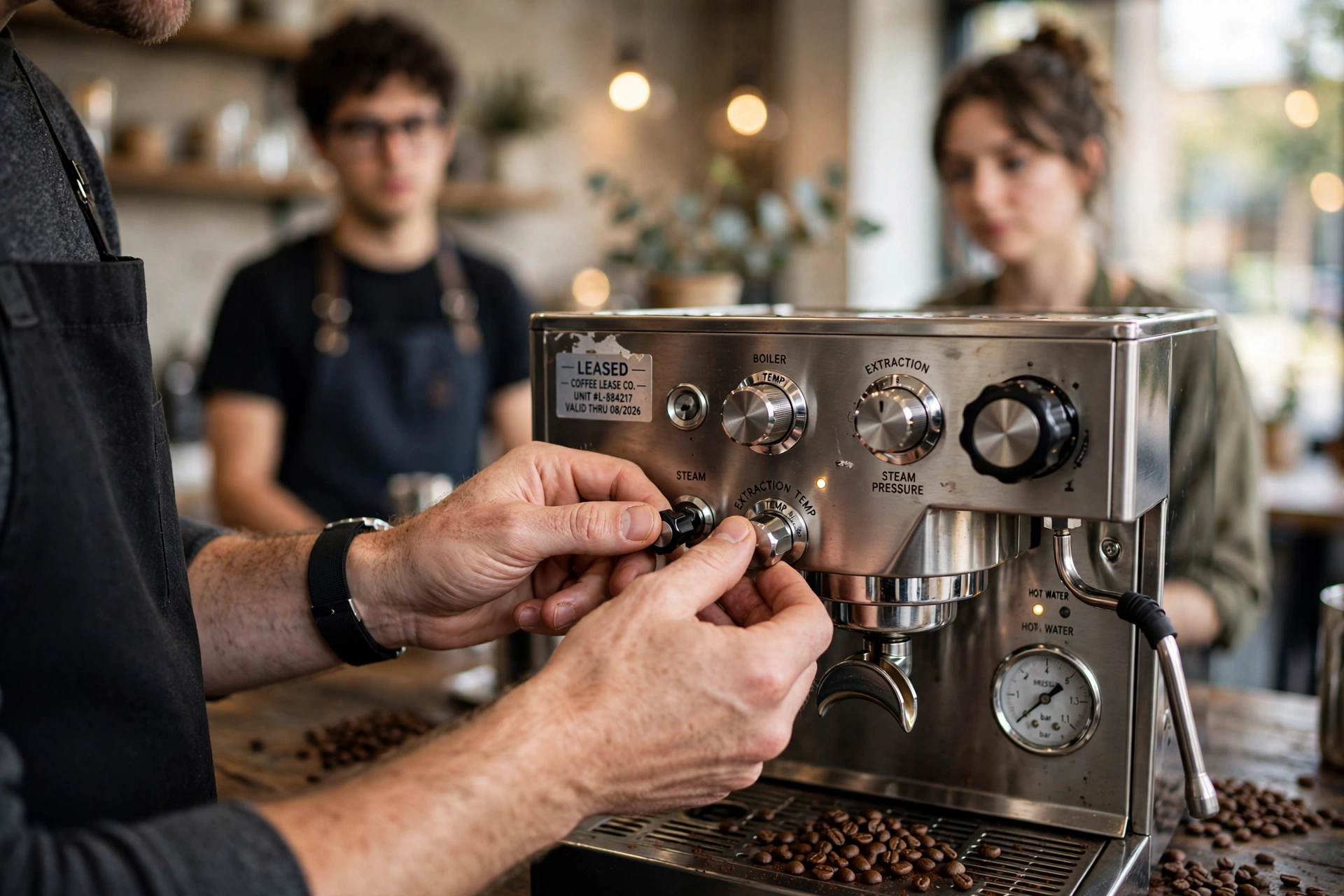
What Exactly Is Coffee Equipment Maintenance?
A neglected espresso machine doesn't just taste bitter; it eventually stops working entirely, often at the peak of a morning rush. Professional coffee equipment maintenance is the systematic process of cleaning, calibrating, and repairing the hardware used to extract specialty coffee, ensuring that the machine operates at peak efficiency and the beverage remains consistent. It ranges from daily backflushing to annual deep-system overhauls involving gaskets, seals, and heating elements.
In my experience working with hundreds of foodservice businesses, I've seen a recurring pattern: owners treat their machines like appliances, like a toaster or a microwave, until the day the boiler leaks or the pump fails. However, high-end equipment is more like a vehicle; if you don't change the oil, the engine seizes. When we deploy our Automatic Coffee Machines for Hotels and Hospitality in 2026, we emphasize that maintenance is not an "extra" service but a core part of the operational cost of doing business.
📚
Definition
Coffee equipment maintenance is the combination of preventative (scheduled) and corrective (reactive) actions taken to preserve the functional integrity of brewing hardware, prevent mineral buildup (scaling), and ensure food safety compliance.
How Does a Comprehensive Maintenance Program Work?
A professional maintenance strategy is divided into three distinct tiers: daily hygiene, periodic preventative care, and major technical overhauls. The daily tier focuses on the removal of coffee oils and organic residue. Coffee beans contain lipids that, when heated and exposed to air, oxidize and create a rancid flavor profile. Without daily cleaning, these oils build up in the group head and portafilters, ruining the taste of even the most expensive Coffea arabica.
The second tier involves "descaling" and "backflushing." Scaling occurs when calcium and magnesium from water precipitate out of the liquid and harden inside the boiler and pipes. This is where the chemistry of water becomes critical. According to the Specialty Coffee Association (SCA), water quality is the most significant variable in coffee extraction; mineral imbalance not only affects taste but accelerates the physical degradation of the machine's internal components.
The third tier is the technical overhaul. This includes replacing the group head gaskets every six months and checking the pump pressure. In my years as a Q-Grader, the mistake I made early on, and that I see constantly, is trusting a machine just because it "sounds" fine. I've opened machines that sounded perfect only to find the internal seals were crumbling, leading to a catastrophic leak that flooded a customer's kitchen.

Why Does Equipment Maintenance Directly Impact Your Bottom Line?
Neglecting your hardware is a gamble with your margins. The most immediate impact is "downtime." When a machine goes offline in a high-traffic environment, you aren't just losing the price of a cup of coffee; you are losing the customer's trust and the associated high-margin food sales. For a hotel or a medical clinic, a broken coffee station leads to immediate guest dissatisfaction. This is why many of our clients transition to an automated coffee service for clinics and medical offices, where maintenance is managed for them.
Financial leakage also occurs through energy inefficiency. A scaled-up boiler requires significantly more electricity to heat water because the mineral layer acts as an insulator between the heating element and the water. Research from industry standards suggests that scaling can reduce energy efficiency by up to 25%, leading to higher utility bills. Furthermore, the NSF International provides strict guidelines for food equipment safety, and a machine with moldy internals or leaking seals can lead to health code violations.
Beyond the hardware, there is the "quality drift." When a machine is poorly maintained, the temperature stability fluctuates. A 2-degree Celsius drop in water temperature can transform a balanced espresso into a sour, under-extracted mess. This leads to "waste", the barista must pull three or four "test" shots to find the sweet spot, wasting expensive specialty coffee beans and labor time. According to the National Coffee Association USA (NCA), consumer demand for specialty coffee continues to rise, meaning the tolerance for poor-quality brews is at an all-time low.
Practical Application: Implementing a Maintenance Schedule
Implementing a maintenance plan requires moving from a reactive mindset ("fix it when it breaks") to a proactive one ("prevent the break"). For those operating in high-demand areas, such as those using a Sensa Coffee Service in Charlotte, NC, the volume of drinks makes a strict schedule non-negotiable.
Daily Tasks (The Barista's Responsibility):
- Backflushing: Using a blind filter and specialized detergent to clear the three-way solenoid valve.
- Steam Wand Purging: Wiping and purging the wand after every single use to prevent milk protein buildup.
- Group Head Scrubbing: Using a nylon brush to remove charred coffee grounds from the gasket.
Weekly/Monthly Tasks (The Manager's Responsibility):
- Deep Soak: Removing baskets and portafilters and soaking them in a coffee-degreasing solution.
- Water Filter Replacement: Checking the TDS (Total Dissolved Solids) of the water. If the filter is saturated, the machine begins to scale immediately.
- Drain Cleaning: Ensuring the drip tray and wastewater lines are clear of sludge.
Quarterly/Annual Tasks (The Professional's Responsibility):
- Gasket Replacement: Replacing the rubber group gaskets to prevent side-leaks during extraction.
- Boiler Inspection: Opening the chassis to check for leaks and scale accumulation.
- Calibration: Using a refractometer to ensure the brew ratio and extraction percentage are aligned with SCA standards.
At Busy Bean Coffee, we remove this entire burden through our managed membership. Instead of you managing a checklist and praying the machine doesn't break on a Saturday morning, we handle the installation, the monitoring, and the preventative maintenance. We've found that businesses in regions like Raleigh, NC see a significant increase in uptime when they stop treating maintenance as a chore and start treating it as an insurance policy.
💡
Key Takeaway
The most expensive way to maintain a coffee machine is to wait for it to break. Preventative maintenance typically costs 10% of the price of a catastrophic emergency repair.
Comparing Maintenance Approaches: Manual vs. Managed
Many business owners struggle to decide whether to handle maintenance in-house or outsource it to a professional service. The decision usually comes down to the "cost of expertise." A barista knows how to clean a wand, but they rarely know how to calibrate a pressure stat or diagnose a failing pump.
| Feature | Manual/In-House | Generic Cheap Service | Busy Bean Managed Approach |
|---|---|---|---|
| Skill Level | Basic cleaning only | Generalist technician | Q-Grader & Certified Techs |
| Risk | High (Missed internals) | Medium (Quick fixes) | Low (Preventative/Systemic) |
| Downtime | Reactive (Long waits) | Scheduled (Slow response) | Proactive (Minimized risk) |
| Cost Structure | Unpredictable (Spikes) | Per-visit fees | Predictable Monthly Fee |
| Best For | Very low volume | Occasional use | Professional Foodservice |
Now, here's where it gets interesting: the "Generic Cheap Service" is often the most expensive option in the long run. These services often perform a "surface clean", they wipe the outside and run a chemical through the machine, but they don't check the integrity of the seals or the water quality. After analyzing dozens of clients who switched to us from cheaper providers, we found that 80% of them had hidden scale buildup that the "cheap" technician simply ignored.

Common Questions & Misconceptions
Most guides get this wrong by suggesting that "more chemicals equal a cleaner machine." In reality, over-using caustic cleaning agents can actually erode the aluminum components of your machine, creating microscopic pits where bacteria can grow.
Myth 1: "If the coffee tastes fine, the machine is clean."
This is a dangerous assumption. Taste is a lagging indicator. By the time you taste the "burnt" flavor of old oils or the "flatness" of scale-restricted water flow, the damage is already done. The scale is already inside the boiler; you're just noticing the result.
Myth 2: "Using filtered water means I don't need to descale."
Filtered water reduces the rate of scaling, but it doesn't eliminate it. Even the best filters allow some minerals through. Over a year, those minerals accumulate. If you aren't descaling, you are essentially building a rock inside your machine.
Myth 3: "Automatic machines don't need as much maintenance as manual ones."
Actually, the opposite is true. Automatic machines have more moving parts, solenoids, and internal tubing. While they make the process easier, the maintenance is more complex because there are more points of failure. This is why choosing a professional coffee service in Jacksonville, FL or other high-growth areas is essential for automated setups.
Frequently Asked Questions
How often should I actually descale my professional coffee equipment?
The frequency depends entirely on your water hardness. In areas with "hard" water (high calcium content), you may need to descale every 2-3 months. In areas with softer water, every 6 months might suffice. However, the only way to know for sure is to test your water TDS. If you notice the brew time increasing or the temperature of the coffee dropping, you are likely dealing with scale buildup. Professional services like Busy Bean Coffee monitor this for you, ensuring you aren't over-cleaning (which wastes chemicals) or under-cleaning (which kills the machine).
What is the difference between "cleaning" and "descaling"?
Cleaning refers to the removal of organic matter, specifically coffee oils and milk proteins. This is done using detergents like Cafiza or similar products and is focused on the group head, portafilters, and wands. Descaling, however, is a chemical process designed to dissolve mineral deposits (calcium/magnesium) inside the boiler and piping. You cannot "clean" away scale with a detergent; you need an acid-based descaler. Mixing these up is a common mistake that leads to ineffective maintenance and potential hardware damage.
Can I use vinegar instead of professional descaling solution?
I strongly advise against this. While vinegar is an acid, it is not formulated for the alloys used in commercial espresso machines. Vinegar can leave behind a lingering taste and, more importantly, it isn't powerful enough to remove heavy commercial scaling. Furthermore, the acetic acid in vinegar can react poorly with certain seals and gaskets over time. Always use a product specifically engineered for coffee equipment. The cost of the correct chemical is negligible compared to the cost of replacing a ruined boiler.
Why is the steam wand the most common point of failure?
The steam wand is a high-stress component. It deals with extreme temperature swings and the constant introduction of milk proteins, which act as a glue. If the wand isn't purged and wiped immediately, milk bakes onto the metal and inside the nozzle. This restricts flow and eventually forces the pump to work harder to push steam through a clogged opening. Over time, this puts undue stress on the pump and the boiler's pressure valves, leading to a total system failure.
How do I know if my group head gasket needs to be replaced?
Look for "leakage" during the extraction process. If you see coffee or water dripping from the sides of the portafilter handle during a shot, your gasket has likely lost its elasticity. Gaskets are made of rubber and degrade due to heat and pressure. In a high-volume setting, I recommend replacing them every six months regardless of whether they seem to be leaking. A fresh gasket ensures a perfect seal, which is essential for the high-pressure extraction required for specialty coffee.
Final Thoughts on Coffee Equipment Maintenance
Maintaining your hardware is the difference between a business that thrives and one that is constantly firefighting. When you invest in high-quality coffee equipment, you are investing in a precision instrument. Treating it with a "set it and forget it" mentality is a recipe for expensive downtime and inconsistent product.
Whether you are managing a small cafe or a large hotel chain, the goal is the same: consistency. You want the 100th cup of the day to taste exactly like the first. This is only possible when your temperature, pressure, and cleanliness are locked in. If you're tired of the guesswork and the stress of unexpected breakdowns, it's time to move to a professional managed solution.
At Busy Bean Coffee, we specialize in removing the friction from your beverage program. From professional installation to full maintenance coverage, we ensure your equipment stays in peak condition so you can focus on your customers.
Explore our all-inclusive options at www.busybeancoffee.com and stop worrying about the "what ifs" of equipment failure. For those looking to optimize their regional footprint, we also offer specialized guides like the Sensa Coffee Service in Mount Pleasant SC: Complete Guide to help you scale efficiently.
Free Coffee Pairing Guide & Specialty Roast Cheat Sheet
Unlock the secrets of perfect brewing ratios, water temperatures, and specialty roast profiles. Download the guide.