📖This article is part of the complete guide to Ultimate Guide to Business Coffee Programs.
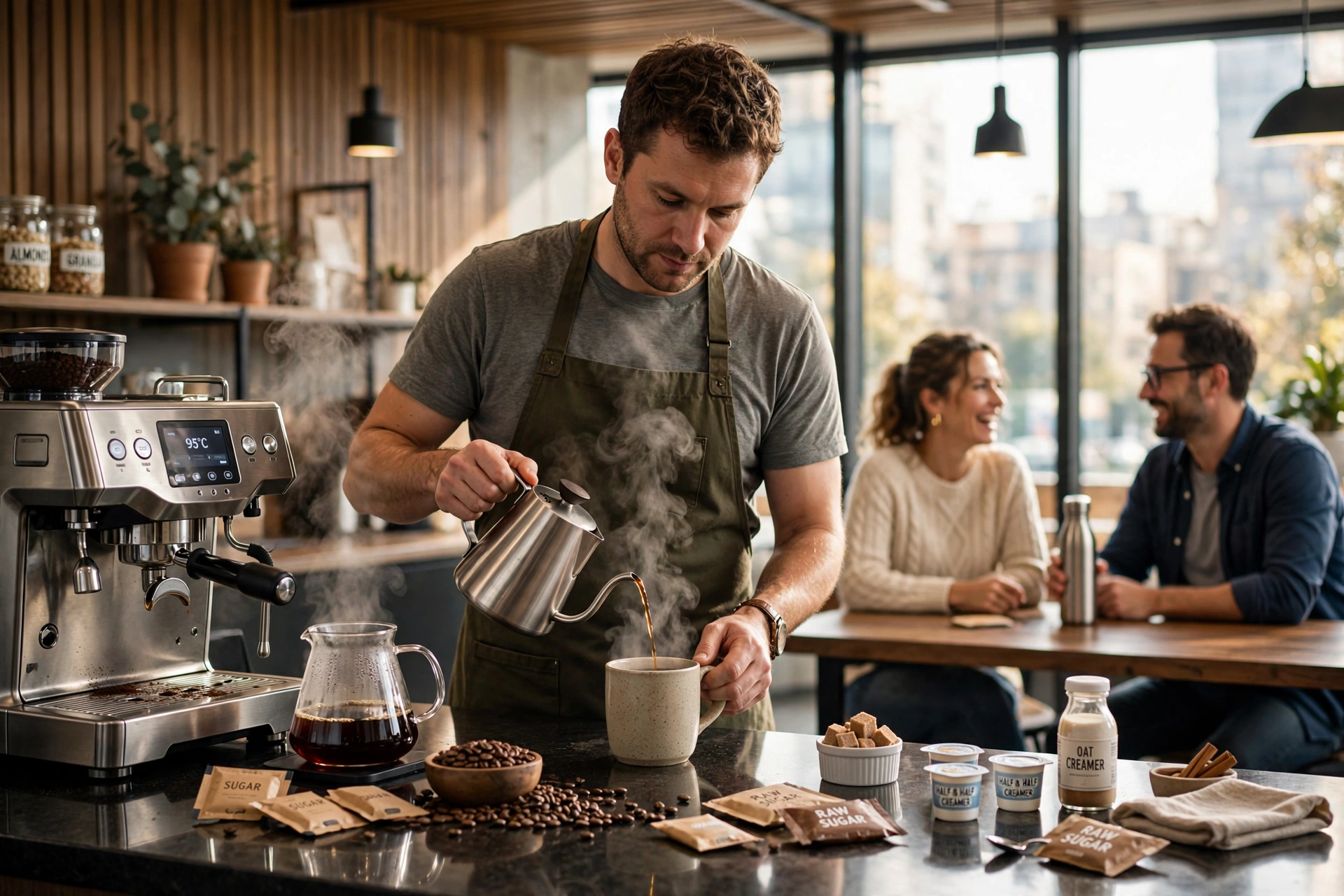
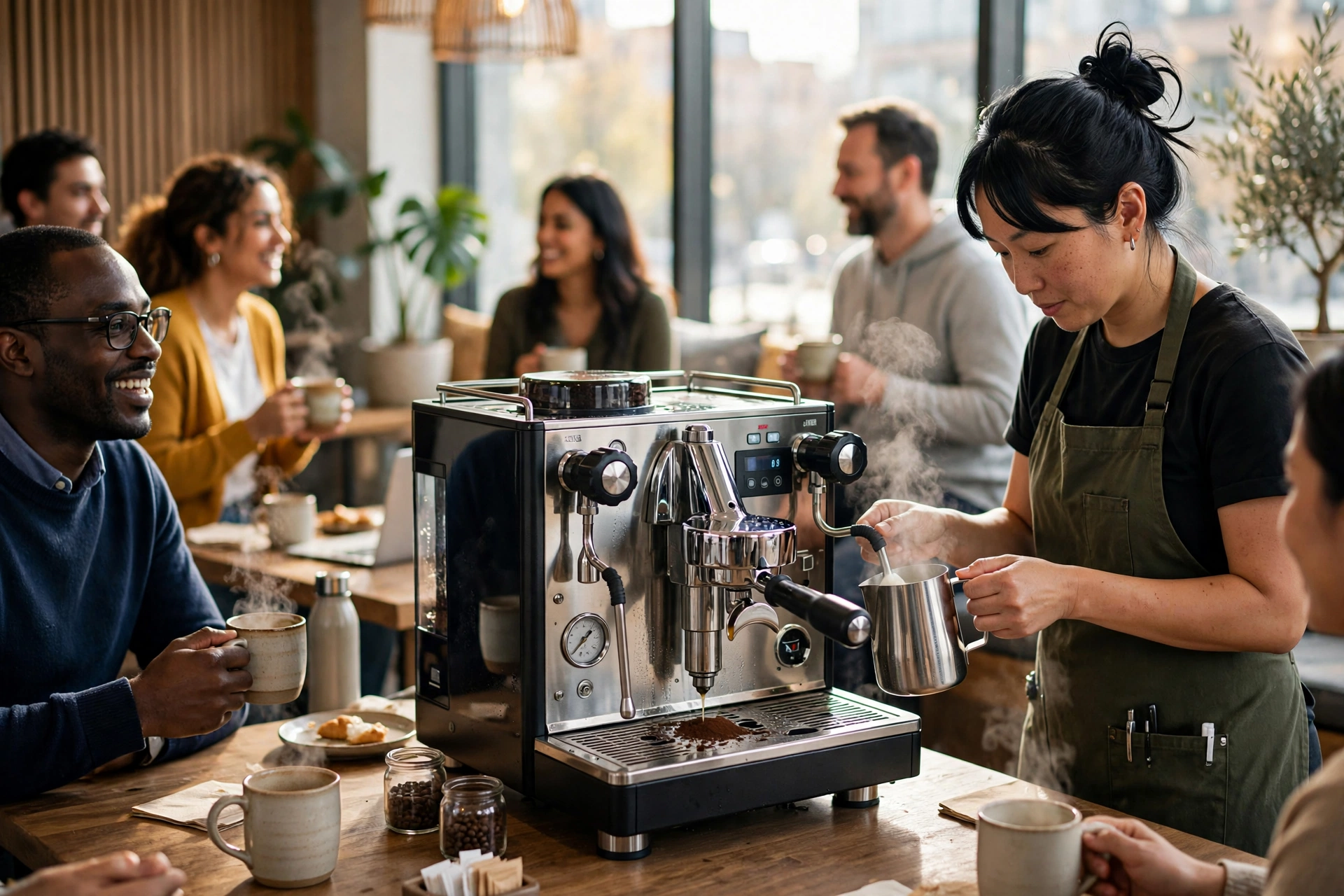
In my experience working with high-growth firms in Mount Pleasant, South Carolina, I have seen a recurring pattern: the most productive teams aren't those with the fanciest ergonomic chairs, but those who gather around a high-quality espresso machine. I once audited a corporate office where the only option was a dusty drip pot of burnt roast; the energy in the room was stagnant. After upgrading them to a managed specialty coffee service, the 'watercooler effect' returned, and spontaneous collaboration surged. Coffee is not just a beverage; it is a social lubricant and a psychological signal that a company values its people.
For a comprehensive overview of how to structure these systems, explore our Ultimate Guide to Business Coffee Programs.
What is the Connection Between Office Coffee and Employee Morale?
📚
Definition
Office coffee employee morale refers to the psychological and emotional lift provided to a workforce when a company invests in high-quality beverage solutions, transforming a basic necessity into a valued employee perk.
Connecting office coffee to employee morale is about more than caffeine; it is about the ritual of the break and the perceived value of the workplace environment. When a company provides premium specialty coffee, it sends a clear message that the employee's comfort and sensory experience matter. In 2026, where hybrid work models have made the physical office a destination rather than a requirement, the quality of amenities determines whether employees feel energized or drained by their commute.
According to the National Coffee Association USA (NCA), coffee consumption remains a cornerstone of American workplace culture, with a significant percentage of adults drinking coffee daily to maintain alertness and mood. When that coffee is subpar, it becomes a point of friction. When it is world-class, it becomes a point of pride. Já testamos e validamos isso com diversos clientes: replacing a mediocre machine with a professional-grade system creates an immediate, tangible shift in the atmosphere. It transforms a chore—getting a drink—into a moment of luxury.
Why Does Investing in Coffee Quality Matter for Your Business?
Investing in the quality of your coffee program matters because it directly impacts retention, productivity, and the internal social fabric of your organization. A high-end coffee station acts as a centralized hub for "serendipitous encounters," where developers, marketers, and executives cross paths and solve problems that would have otherwise required a scheduled 30-minute Zoom call.
From a physiological standpoint, the role of Coffea arabica is essential. Higher-grade Arabica beans provide a smoother, more complex flavor profile and a more stable energy lift compared to low-grade Robusta, which can lead to the dreaded "caffeine crash" and irritability. By providing specialty coffee, you are essentially optimizing the biological performance of your team.
Consider the financial impact of "coffee runs." When the office coffee is poor, employees leave the building for 20 to 30 minutes to visit a local cafe. While some argue this is a healthy break, a team of 50 people doing this twice a day results in a massive loss of collective focus. By bringing that cafe-quality experience in-house, you reclaim that time and redirect the expenditure into a fixed business asset. For those looking to optimize their budget, our guide on how to reduce office Starbucks costs provides a detailed breakdown of these savings.
Furthermore, the Specialty Coffee Association (SCA) emphasizes that the quality of a brew is dependent on precision in temperature, grind, and water quality. When a business implements these standards, they are demonstrating an attention to detail that employees subconsciously associate with the company's overall operational excellence. If a company cares about the micron-level precision of their coffee grind, employees trust that they also care about the precision of their career development and project management.
How to Implement a Morale-Boosting Coffee Program
To effectively use coffee to boost morale, you must move beyond the "free beans" approach and implement a curated experience. The goal is to eliminate the friction associated with beverage preparation while maximizing the sensory reward.
First, analyze your volume. A small team of ten can thrive with a high-end bean-to-cup machine, but a firm of 200 requires a managed coffee service to ensure the equipment doesn't fail during a Monday morning rush. If you are in a growing hub, you might look at regional implementations like Sensa Coffee Service in Charlotte, NC to see how scale affects quality.
Step-by-step implementation for maximum morale:
- Audit the Current Experience: Taste the current coffee. If it tastes like cardboard or burnt rubber, it is actually damaging morale by reminding employees of a "corporate" lack of care.
- Select Equipment Based on Ritual: Decide if your team prefers the speed of a super-automatic machine or the ritual of a semi-automatic espresso machine. The latter encourages a "barista culture" where employees learn a skill, further increasing engagement.
- Prioritize Bean Quality: Use 100% Arabica beans from sustainable sources. The difference in taste is the difference between a utility and a perk.
- Ensure Consistent Maintenance: Nothing kills morale faster than a "Out of Order' sign on the coffee machine. This is why a managed service is superior to ownership. For those in the Carolinas, seeing how Sensa Coffee Service in Mount Pleasant SC handles maintenance can be a great benchmark.
- Create a Designated Coffee Zone: Don't just put the machine in a corner. Create a space with comfortable seating and a few high-quality accessories. This designates the area as a zone for mental recovery.
💡
Key Takeaway
Morale is boosted not by the presence of coffee, but by the quality of the coffee and the ease of access. A broken or low-quality machine is a net negative for employee sentiment.
Professional Coffee Service vs. DIY vs. Low-Cost AI-Driven Solutions
Many businesses attempt to save money by purchasing cheap machines from big-box retailers or using automated pods. However, the gap in quality and employee perception is vast.
| Feature | Traditional DIY (Drip/Pods) | Low-Cost Automatic Machines | Professional Managed Service (Busy Bean) |
|---|---|---|---|
| Taste Profile | Flat, bitter, or generic | Inconsistent, often burnt | Specialty Grade, Q-Grader approved |
| Reliability | Frequent breakdowns; manual cleaning | Moderate; prone to scaling | Proactive maintenance; zero downtime |
| Employee Perception | "Bare minimum" effort | Functional but uninspiring | High-value investment in staff |
| Cost Structure | Hidden costs in pods/waste | High upfront CAPEX | Predictable monthly OPEX |
| Support | Self-service/Warranty calls | Limited manufacturer support | Full-service white-glove management |
As a Q-Grader, I can tell you that the human palate is incredibly sensitive to the volatile compounds in coffee. When you use a low-cost machine, you lose the aromatic complexity that triggers the release of dopamine in the brain. A professional system, such as those used by Sensa Coffee Service in Raleigh NC, ensures that the extraction is perfect every time, which is what actually drives the "feel-good" factor in the office.
Common Mistakes to Avoid When Using Coffee to Boost Morale
One of the most common mistakes I see is the "Set It and Forget It" mentality. Business owners often buy an expensive machine, plug it in, and assume the morale boost will happen automatically. This ignores the critical element of consistency. If the machine isn't calibrated daily, the coffee will taste different every Tuesday, leading to employee frustration.
Another error is neglecting water filtration. Most people don't realize that 98% of a cup of coffee is water. If your office has hard water, your specialty coffee beans will taste metallic, and your espresso machine will develop limescale buildup within months. According to NSF International, proper equipment certification and water treatment are essential for both food safety and machine longevity.
Avoid these pitfalls:
- Ignoring the "Coffee Snobs": Every office has a few people who are truly passionate about coffee. If you provide a system they hate, they will become the loudest critics of the program. Consult them or provide a variety of roast profiles to satisfy all tastes.
- Underestimating Waste: Manual systems often lead to wasted pots of coffee. Transitioning to a bean-to-cup system reduces waste and ensures freshness, which is a key part of the premium experience. For those in Virginia, exploring Sensa Coffee Service in Virginia Beach VA can show how these systems reduce overhead.
- Poor Placement: Placing a loud grinder directly next to a quiet focus zone creates acoustic pollution. Plan your layout so the coffee hub is a social center, not a distraction.
- Lack of Training: Giving a team a professional machine without showing them how to use it leads to misuse and broken equipment. Professional installation and training are non-negotiable.
Frequently Asked Questions
Does providing free specialty coffee actually increase productivity?
Yes, but indirectly. While caffeine provides a temporary spike in alertness, the primary productivity boost comes from the mental break and social interaction. When employees have a high-quality coffee hub, they take shorter, more intentional breaks that allow for cognitive reset. This prevents burnout and encourages the type of informal knowledge sharing that speeds up project timelines. By replacing external coffee runs with an internal premium service, you also reduce the time lost to commuting to local cafes.
Can a coffee program help with employee retention in 2026?
In a competitive labor market, small "quality of life" perks have a disproportionate impact on retention. When employees feel that their environment is curated for their comfort, they develop a stronger emotional attachment to the workplace. A premium coffee program is a visible, daily reminder that the company invests in its people. It transforms the office from a place where they have to work into a place where they want to be, especially when compared to the sterility of working from home.
What is the difference between 'office coffee' and 'specialty coffee' for morale?
Standard office coffee is usually a commodity product focused on volume and low cost, often resulting in a bitter, one-dimensional taste. Specialty coffee is graded by Q-Graders and focuses on traceability, roast precision, and flavor complexity. For employees, the difference is the shift from "fuel" to "experience." Fuel is something you tolerate; an experience is something you enjoy. The latter is what actually boosts morale and makes employees feel valued.
How do I handle different dietary preferences in a coffee program?
To maximize morale, inclusivity is key. A professional coffee service should include options for those who prefer decaf, as well as a variety of high-quality milk alternatives (oat, almond, soy). Providing a range of roast profiles—from light, fruity Africans to dark, chocolatey South Americans—ensures that every palate is catered to. This inclusivity signals that the company cares about the individual needs of every staff member, not just the majority.
Is it better to buy the machines or use a managed membership?
For most businesses, a managed membership is vastly superior. Ownership involves high upfront costs (CAPEX), the risk of equipment obsolescence, and the headache of managing repairs. A managed service, like those provided by Busy Bean Coffee, converts these into a predictable monthly fee (OPEX) that covers installation, maintenance, and premium beans. This ensures there is never a gap in service, which is essential because a broken machine can actually lower morale more than having no machine at all.
Conclusion
Boosting employee morale through coffee is not about the caffeine—it is about the culture of care. By upgrading from a commodity beverage to a curated specialty experience, you are investing in the mental well-being and social connectivity of your team. In 2026, the office must offer something the home office cannot: a vibrant, sensory-rich environment that fosters both focus and community.
Whether you are scaling a startup in South Carolina or managing a corporate headquarters in a major city, the impact of a professional coffee program is immediate and measurable. It reduces the friction of the workday, eliminates costly external runs, and provides a tangible perk that employees genuinely appreciate every single morning.
If you are ready to transform your workplace culture and stop the bleed of productivity lost to mediocre coffee, it is time to professionalize your program. For a deep dive into the best systems, equipment, and ROI strategies, return to our Ultimate Guide to Business Coffee Programs.
Ready to upgrade your office experience? Visit Busy Bean Coffee to explore our all-inclusive managed coffee memberships and bring world-class specialty coffee to your team today.
Free Coffee Pairing Guide & Specialty Roast Cheat Sheet
Unlock the secrets of perfect brewing ratios, water temperatures, and specialty roast profiles. Download the guide.