📖This article is part of the complete guide to Ultimate Guide to Automatic Coffee Machines for Business.
I once walked into a high-end boutique hotel that had invested $15,000 in a top-tier espresso machine, only to find it sitting unused in the corner of the lobby. Why? Because the interface was so complex that neither the staff nor the guests knew how to operate it without a manual. This is the most common failure in the coffee industry: prioritizing technical specs over the actual human workflow of the business. When you are deciding how to choose an automatic coffee machine, you aren't just buying hardware; you are designing a customer experience.
For a comprehensive overview of the technology and options available, explore our Ultimate Guide to Automatic Coffee Machines for Business.
What Exactly Is an Automatic Coffee Machine?
📚
Definition
An automatic coffee machine, specifically in a commercial context, is a device that automates the grinding, dosing, tamping, and extraction process, often including automated milk frothing, to produce a consistent beverage with a single touch.
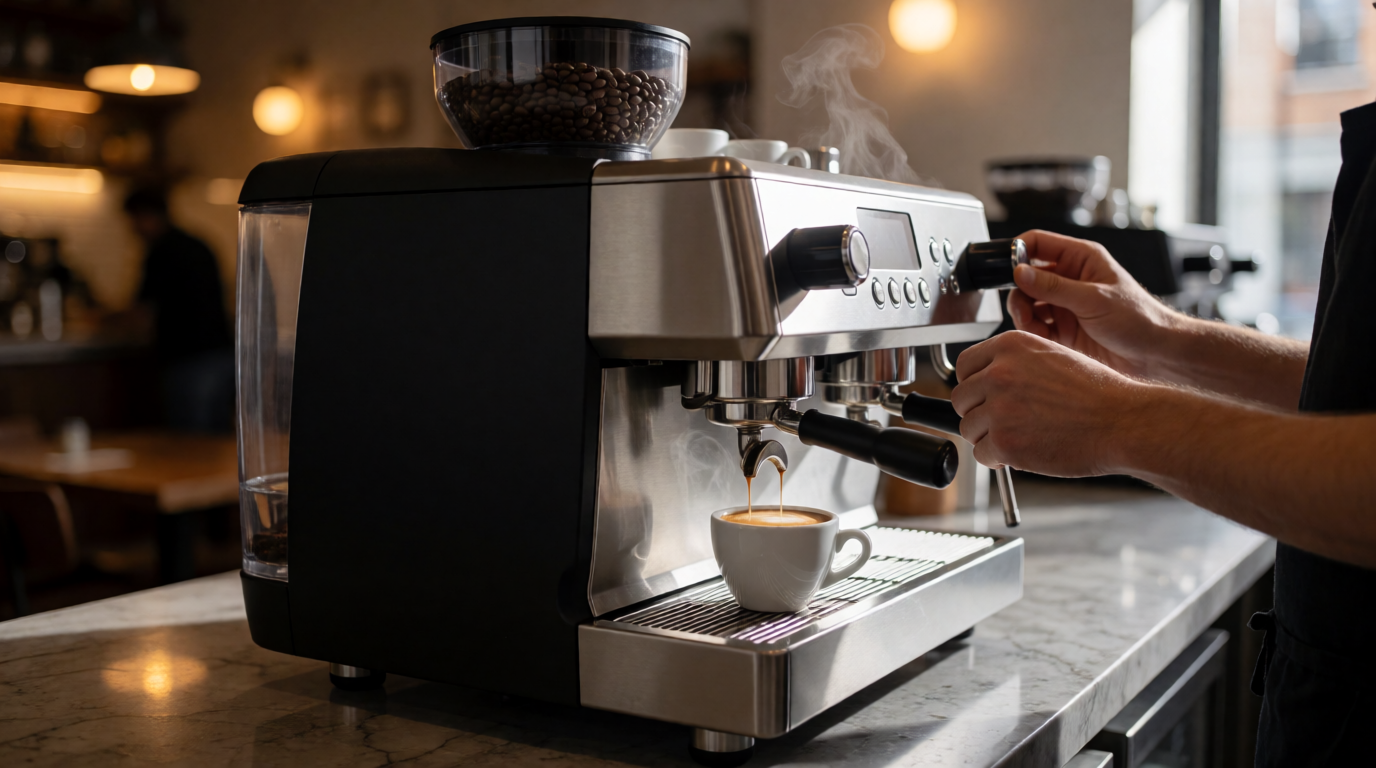
When we talk about how to choose an automatic coffee machine, we are usually referring to "bean-to-cup" systems. These machines integrate the entire chain of production. Unlike semi-automatic machines that require a trained barista to manually tamp the coffee and steam the milk, an automatic system handles the variables internally. This ensures that a latte served at 7:00 AM tastes exactly like the one served at 2:00 PM, regardless of who pressed the button.
In my experience working with hundreds of foodservice operators, the biggest misconception is that "automatic" means "lower quality." In 2026, the engineering behind these machines has evolved. Modern sensors can now adjust grind size in real-time to account for humidity and temperature, mimicking the adjustments a professional barista would make. This is where the concept of Specialty Coffee enters the conversation. By utilizing high-grade Coffea arabica and precision brewing temperatures, these machines can now produce drinks that rival manual extractions.

Why Choosing the Right Machine Matters for Your Bottom Line
Choosing the wrong machine isn't just a nuisance; it is a direct hit to your operational efficiency and profit margins. The primary reason this choice matters is the balance between throughput and quality. If you choose a machine with a low-capacity water tank or a slow heating element for a high-traffic environment, you create a bottleneck that frustrates customers and loses sales.
According to the National Coffee Association USA (NCA), coffee consumption patterns have shifted toward specialized espresso-based drinks, meaning the demand for versatility (lattes, cappuccinos, Americanos) is higher than ever. If your machine cannot handle diverse milk textures or different bean profiles, you are leaving money on the table. Furthermore, labor costs are at an all-time high. By implementing a system that requires zero specialized training, you eliminate the need for a dedicated barista for every shift, shifting that labor cost toward guest services or kitchen productivity.
Beyond labor, there is the issue of sanitation and compliance. In the United States, the FDA maintains strict guidelines on food and beverage safety. An automatic machine with a poorly designed milk system can become a breeding ground for bacteria if it isn't easy to clean. This is why we emphasize NSF certification. The NSF International standards ensure that the equipment is built with non-porous materials and has accessible components for deep cleaning, reducing the risk of health code violations.
How to Choose the Right Automatic Coffee Machine: A Step-by-Step Framework
When you are analyzing how to choose an automatic coffee machine, you should follow a quantitative approach rather than an emotional one. Don't buy a machine because it looks sleek; buy it because it fits your data.
1. Calculate Your Peak Hourly Volume
Start by determining your "peak hour." How many cups of coffee are served between 8:00 AM and 9:00 AM? If you are serving 50+ drinks an hour, you need a machine with dual boilers and high-capacity bean hoppers. If you only serve 10 drinks, a compact model is sufficient. Over-speccing leads to wasted energy; under-speccing leads to lost revenue. For those in high-pressure environments, looking into Best Automatic Coffee Machines for Restaurants can provide a blueprint for high-volume scaling.
2. Evaluate Your Bean Strategy
Are you using a generic roast or a specialty coffee blend? The quality of the coffee bean is 50% of the equation; the machine is the other 50%. If you are committed to a high-end coffee roasting profile, you need a machine with adjustable dosing and temperature controls. A cheap machine will "burn" an expensive light roast by using temperatures that are too high, neutralizing the investment you made in premium beans.
3. Assess Milk and Beverage Variety
Do your customers want just black coffee, or are they asking for oat-milk lattes and macchiatos? If you need variety, you must choose a machine with an integrated milk system. However, consider if you want a "fresh-tank" system (where the milk is kept in a refrigerated container) or a "steam-wand" system (where a human froths the milk). The former is faster and more consistent; the latter allows for more artistic control, such as creating latte art. For more on the tools needed for the latter, check our guide on Where to Buy Latte Art Tools for Foodservice Pros.
4. Analyze Maintenance and Downtime Costs
This is where most business owners fail. They look at the purchase price but ignore the Total Cost of Ownership (TCO). A machine that requires a technician to fly in from another state for a simple sensor replacement is a liability. Look for machines with modular components and clear cleaning cycles. At Busy Bean Coffee, we've seen that a predictable monthly fee for managed services is always more sustainable than a one-time purchase followed by unpredictable repair bills. If you are operating in a specific region, like our clients using Automated Coffee Service in Fort Worth TX, local support becomes the most important feature of the machine.

Comparison: Approach to Coffee Equipment Acquisition
| Feature | Traditional Manual Purchase | Cheap "Prosumer" AI Machines | Managed Professional Approach |
|---|---|---|---|
| Initial Cost | High Capital Outlay | Low to Medium | Predictable Monthly Fee |
| Consistency | Variable (Barista Dependent) | Moderate (Often inconsistent) | High (Standardized output) |
| Maintenance | Your Responsibility | Limited Warranty/Self-fix | All-Inclusive Managed Care |
| Quality | High (if expert) | Medium (Risk of burnt beans) | High (Specialty grade) |
| Training | Intensive / Expensive | Minimal | Zero to Low |
Common Mistakes When Choosing an Automatic Machine
In my years of deploying systems for hotels and offices, I have noticed a recurring set of errors. Avoiding these will save you thousands of dollars in the long run.
**Mistake 1: Ignoring the Water Quality.**n
Many owners buy a $10,000 machine and plug it into a standard water line without a filtration system. Scale buildup from hard water is the number one killer of automatic machines. If you don't have a dedicated reverse osmosis or high-grade carbon filtration system, your machine's lifespan will be cut in half. This is a non-negotiable technical requirement.
Mistake 2: Underestimating the "Cleaning Friction."
Some machines look great but require a 40-minute cleaning process every night. If your staff finds the process tedious, they will skip it. When cleaning is skipped, the milk lines clog, the coffee tastes bitter, and the machine eventually breaks. Choose a machine with an automated cleaning cycle that requires minimal manual intervention. This is especially important for Automatic Coffee Machines for Hotels and Hospitality where staffing is often lean.
Mistake 3: Buying for Today, Not Tomorrow.
I often see businesses buy a machine that perfectly fits their current 20-person staff, only to outgrow it six months later when they expand. Always buy for 20% more capacity than you currently need. It is far cheaper to have a slightly under-utilized machine than to replace an undersized one during a growth spurt. If you are managing a growing team, consider the Top Office Automatic Coffee Machines to Boost Morale.
Mistake 4: Overlooking the Noise Level.
This is a subtle but critical point. A loud, grinding machine in a quiet boutique hotel lobby or a professional office environment can be disruptive. If the machine is located near a seating area, check the decibel levels of the grinder. High-end models often feature sound-dampening enclosures that preserve the atmosphere of the space.
Mistake 5: Forgetting the User Experience (UX).
If the button to "Start" is hidden behind a complex menu, your customers will stop using the machine. The interface should be intuitive. A guest should be able to walk up, select their drink, and have it in their hand within 45 seconds. If it takes longer, the "automation" is failing its primary purpose: speed.
Frequently Asked Questions
How often should an automatic coffee machine be deep-cleaned?
Most commercial automatic machines require a daily automated cleaning cycle and a more intensive deep-clean weekly. The daily cycle typically involves flushing the milk lines and the brew group to remove residual oils and proteins. The weekly clean involves removing the brew unit (if applicable) and cleaning it with a brush and specialized detergent. Neglecting this leads to a buildup of rancid oils, which destroys the flavor profile of the coffee bean and can eventually lead to mechanical failure of the pump. Using an all-inclusive service ensures these schedules are managed without stressing your staff.
Can these machines handle alternative milk like oat or almond milk?
Yes, but it depends on the frothing technology. High-end automatic machines use steam-injection systems that can handle the different proteins in plant-based milks. However, the viscosity of oat milk is different from dairy, so some machines allow you to select a "Plant-Based" setting that adjusts the temperature and aeration. If you are using a fresh-tank system, be aware that plant-based milks tend to separate faster than dairy, meaning the tank must be agitated or replaced more frequently to maintain a consistent foam quality.
What is the difference between a super-automatic and a bean-to-cup machine?
In the industry, these terms are often used interchangeably, but there is a subtle difference. A "bean-to-cup" machine describes any system that goes from whole bean to finished cup. A "super-automatic" specifically refers to a machine where every single step—grinding, tamping, and frothing—is done by the machine without any human interaction. Some bean-to-cup machines are only semi-automatic (e.g., you still have to froth the milk manually). When you are figuring out how to choose an automatic coffee machine, always clarify if the milk system is fully automated or manually operated.
How does the machine ensure the coffee doesn't taste burnt?
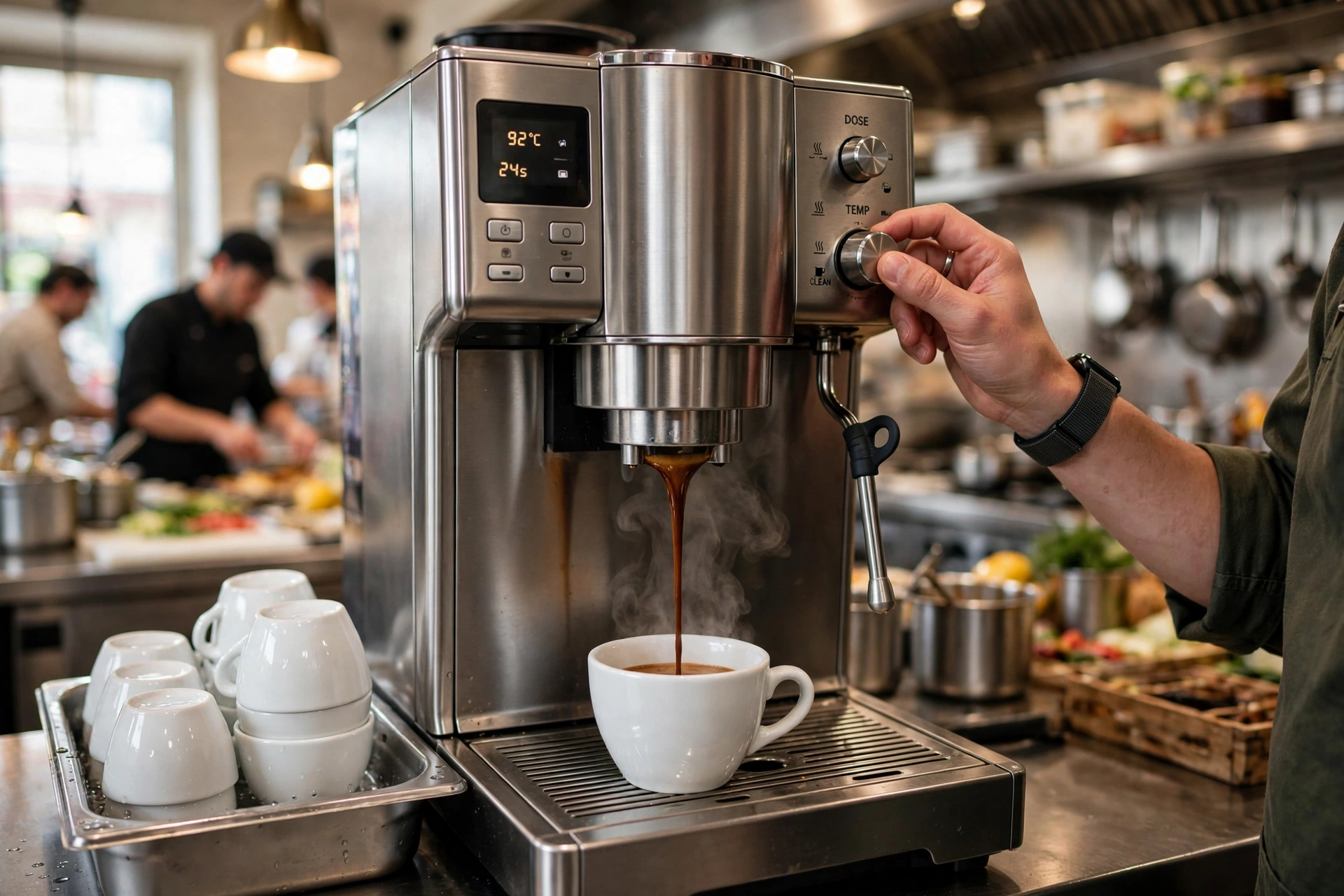
Professional machines use PID (Proportional-Integral-Derivative) controllers to maintain the water temperature within a fraction of a degree. If the water is too hot, it scorches the coffee oils, leading to a bitter, burnt taste. By precisely controlling the temperature and the pressure (typically 9 bars for a true espresso), the machine extracts the sweetness and acidity of the Arabica coffee without over-extracting. This precision is what separates a professional commercial unit from a cheap home-office machine.
Is a monthly membership better than buying the machine outright?
For most foodservice businesses, a managed membership is financially superior. Buying a machine outright involves a massive initial capital expenditure and leaves you responsible for all repairs. A managed service, like the one provided by Busy Bean Coffee, converts that capital expense into a predictable operating expense. You get the equipment, professional installation, and ongoing maintenance for a flat fee. This removes the risk of a "down-time disaster" where a broken machine costs you thousands in lost revenue while you wait for a replacement part.
Conclusion
Knowing how to choose an automatic coffee machine comes down to one thing: aligning the machine's capabilities with your business's operational reality. Whether you are running a high-volume restaurant or a boutique hotel, the goal is to maximize quality while minimizing friction. By focusing on peak volume, water filtration, and the total cost of ownership, you can turn your coffee station from a cost center into a profit engine.
If you find the process of selecting and maintaining equipment overwhelming, remember that you don't have to do it alone. At Busy Bean Coffee, we specialize in taking the guesswork out of the equation by providing all-inclusive managed coffee solutions that scale with your business. From the first bean to the last cup, we ensure your beverage service is seamless and professional.
To dive deeper into the technical specifications and the different tiers of equipment, return to our Ultimate Guide to Automatic Coffee Machines for Business and start planning your upgrade today.
For a personalized consultation on the best fit for your space, visit us at www.busybeancoffee.com.
Free Coffee Pairing Guide & Specialty Roast Cheat Sheet
Unlock the secrets of perfect brewing ratios, water temperatures, and specialty roast profiles. Download the guide.