📖This article is part of the complete guide to Ultimate Guide to Coffee Shop Equipment and Outfitting.
In my experience working with high-volume cafes, the biggest mistake owners make is assuming that an espresso machine is the only tool needed to drive revenue. While espresso is the anchor, the rise of slow coffee and precision brewing has shifted consumer expectations. A customer in 2026 doesn't just want 'coffee'; they want a curated experience where the terroir of the Coffea arabica bean is highlighted through a specific brewing method. If your menu lacks a dedicated specialty brewing section, you are leaving a significant portion of your potential ticket average on the table.
For a comprehensive overview of how these tools fit into your broader setup, explore our Ultimate Guide to Coffee Shop Equipment and Outfitting.
What are Specialty Coffee Brewers?
📚
Definition
Specialty coffee brewers are precision instruments—ranging from manual pour-overs and siphons to high-end automated batch brewers—designed to extract specific flavor profiles from high-grade coffee beans by controlling variables like water temperature, flow rate, and filtration.
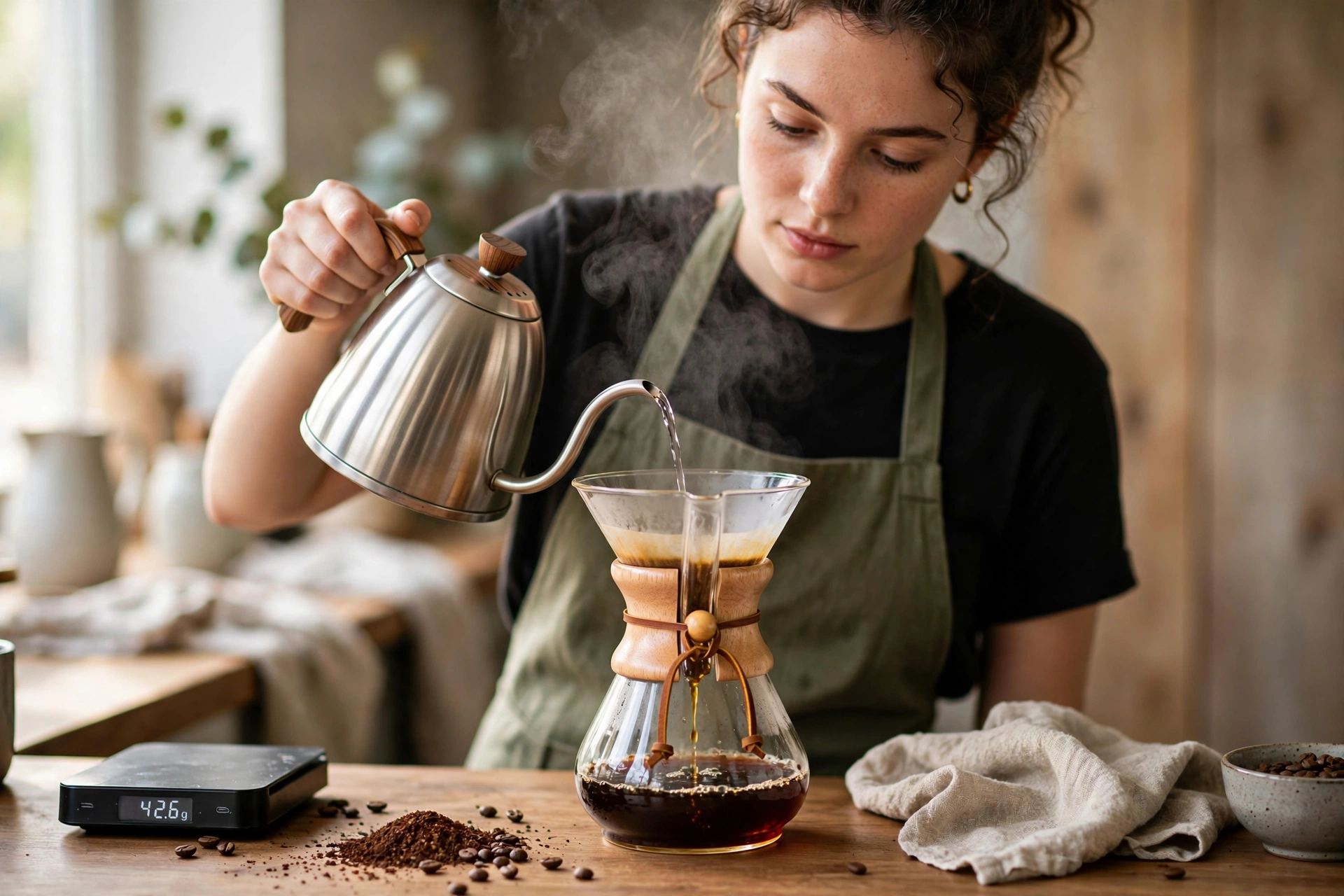
Specialty coffee brewers differ from standard commercial machines because they prioritize the chemistry of extraction over mere speed. In a traditional setting, coffee is often over-extracted or burnt, masking the intrinsic notes of the bean. Specialty brewers, however, allow the barista to manipulate the brew ratio and turbulence to highlight acidity, sweetness, and body. For instance, using a V60 or a Chemex allows for a cleaner cup with less sediment, whereas a French Press emphasizes a heavy body and intense oils.
When we implement these systems at Busy Bean Coffee, we focus on the synergy between the brewer and the bean. A light-roasted Ethiopian Yirgacheffe requires a different approach than a dark-roasted Sumatran. By using specialized tools, a business can offer 'single-origin' flights, which have become a staple in the 2026 specialty market. This level of precision is what separates a generic coffee shop from a destination cafe. Integrating these tools requires a deep understanding of the Top Coffee Grinders for Commercial Use, as the grind size must be perfectly calibrated to the specific brewer being used to avoid under-extraction or bitterness.
Why Do Specialty Coffee Brewers Matter for Your Business?
Precision brewing matters because it allows you to command a premium price point. In the current market, a standard drip coffee might sell for $3, but a meticulously prepared pour-over using specialty coffee brewers can easily fetch $7 to $12. This price delta is justified by the labor, the quality of the beans, and the transparency of the brewing process, which serves as a form of 'culinary theater' for the customer.
According to the Specialty Coffee Association (SCA), adhering to strict brewing standards—such as the golden ratio of coffee to water—directly correlates with consistent sensory quality. Consistency is the bedrock of customer retention. If a customer enjoys a bright, floral Geisha coffee on Monday, they expect that exact profile on Friday. Without precision brewers, this consistency is nearly impossible to maintain across different staff members.
Furthermore, the National Coffee Association USA (NCA) has noted that consumer interest in 'craft' experiences continues to grow, with a significant shift toward transparency in sourcing and preparation. By showcasing your brewing process, you communicate expertise. This expertise builds trust, making customers more likely to buy your retail beans for home use. This creates a dual revenue stream: high-margin prepared drinks and high-volume retail bags.
Integrating these brewers also allows for better inventory management. Instead of roasting massive batches of one blend, you can rotate small lots of specialty coffee, keeping your offering fresh and exciting. To maintain this flow, you must ensure your Best Commercial Coffee Machines for Coffee Shops are complementing, not competing with, your manual brew bar. The goal is to provide a spectrum of options: the speed of espresso for the morning rush and the luxury of a slow brew for the afternoon crowd.
How to Implement Specialty Brewing in a Commercial Setting
Implementing a specialty brew program requires a transition from a 'volume-first' mindset to a 'quality-first' workflow. The first step is establishing a dedicated 'slow bar' area. This is a physical space where the barista can interact with the customer, explaining the origin of the coffee bean and the reason for the chosen brewing method. This interaction is where the value is added; the customer isn't just paying for caffeine, but for an education.
Step-by-step implementation should follow this trajectory:
- Variable Control Setup: Install a temperature-controlled kettle (such as a gooseneck) and a digital scale accurate to 0.1 grams. You cannot execute specialty brewing without measuring every gram of coffee and every milliliter of water.
- Filter Selection: Choose the right paper or metal filters. For example, the thick filters used in a Chemex remove more oils, creating a tea-like clarity, whereas a Kalita Wave provides a more balanced extraction.
- Grind Calibration: Use one of the Top Coffee Grinders for Commercial Use to set a specific recipe. For pour-overs, a medium-coarse setting is generally required. If the brew takes too long (stalling), the grind is too fine; if it rushes through, it is too coarse.
- Water Chemistry: Ensure your water is filtered to remove impurities that can flatten the flavor of specialty coffee. Water should have a specific mineral content to act as a solvent for the coffee solids. This is why we always recommend checking your How to Choose Commercial Espresso Machines guidelines for water filtration, as the same logic applies to brewers.
- Staff Training: Train baristas in the 'bloom' phase—pouring a small amount of water over the grounds to release carbon dioxide. Without a proper bloom, the gas prevents water from penetrating the coffee, leading to uneven extraction.
In my experience, the most successful shops start with two methods: a V60 for clarity and a French Press for body. Once the staff is comfortable, they can introduce more complex methods like the AeroPress or Hario Siphon. This phased rollout prevents the team from feeling overwhelmed and ensures that the quality of the output remains high. Remember that the efficiency of your workflow is impacted by your auxiliary tools; for instance, having Essential Milk Frothers for Coffee Shops nearby allows you to offer specialty lattes alongside your black coffee brews without disrupting the flow.
Choosing the Right Brewer: Traditional vs. AI-Driven vs. Modern Professional
When selecting equipment, you will encounter three primary philosophies. The traditional approach relies on the barista's intuition, which is beautiful but inconsistent. The cheap AI/automated approach often relies on pre-programmed timers that don't account for bean age or humidity. The modern professional approach, which we champion at Busy Bean Coffee, combines precision technology with human expertise.
| Feature | Traditional Manual | Generic Automated | Modern Professional |
|---|---|---|---|
| Consistency | Variable (Human Error) | Fixed (No Adjustment) | High (Calibrated Tech) |
| Flavor Profile | High Potential | Flat / Generic | Precision Targeted |
| Labor Cost | High (Slow Process) | Low (Push Button) | Balanced (Expert Led) |
| Customer Experience | High Engagement | Low Engagement | Educational Experience |
| Waste Level | Moderate | High (Batch Waste) | Low (Brew-to-Order) |
As shown above, the modern professional approach is the only one that scales effectively in a high-end environment. A generic machine might brew coffee in 60 seconds, but it cannot adjust for the degassing of a bean roasted three days ago. A professional setup allows the barista to adjust the temperature by a single degree to unlock a hidden note of stone fruit or chocolate in the cup. This is where the true ROI of specialty coffee brewers is realized.
Common Mistakes to Avoid with Specialty Brewers
One of the most frequent errors I see in new cafes is the 'equipment hoard.' Owners buy every brewer available—Chemex, V60, AeroPress, Clever Dripper—without training their staff on the nuance of each. This results in a cluttered counter and a confused customer. It is far better to master one method and execute it perfectly than to offer five methods poorly. If your staff cannot explain why they are using a specific brewer, the customer will perceive it as a gimmick rather than a quality choice.
Another critical mistake is ignoring the 'Total Dissolved Solids' (TDS) of the brew. Professional shops use a refractometer to measure the concentration of coffee solids. If your coffee tastes sour, you have under-extracted; if it tastes hollow or bitter, you have over-extracted. Relying solely on taste is a start, but using data to calibrate your brewers is how you ensure that a customer in Sensa Coffee Service in Charlotte, NC gets the same experience as a customer in Sensa Coffee Service in Raleigh NC (2026 Overview).
Lastly, neglect of sanitation is a silent killer of flavor. Coffee oils oxidize and turn rancid quickly. If a V60 or a French Press is not cleaned thoroughly between brews, the residue from the previous batch will contaminate the new one. According to NSF International, food-contact surfaces must meet strict sanitation standards to prevent microbial growth and flavor contamination. Using NSF-certified equipment ensures that your specialty brew program is not only delicious but safe.
Frequently Asked Questions
Which specialty coffee brewer is best for beginners in a commercial setting?
The V60 is generally the best starting point for commercial environments. Its conical shape and large opening allow for a high degree of control over the flow rate, and it produces a clean, bright cup that highlights the acidity of specialty beans. Because it is relatively affordable and widely recognized, it allows a business to enter the 'slow coffee' market without a massive initial investment. However, it requires a skilled barista to avoid 'channeling,' where water finds a path of least resistance through the coffee, leading to an uneven extraction.
How do I price a pour-over compared to a standard drip coffee?
Pricing should be based on the 'experience value' and the cost of the specialty coffee bean. While a standard drip uses a house blend, a pour-over typically uses a single-origin specialty coffee, which costs more per pound. You should factor in the 3-5 minutes of dedicated labor from your barista. In 2026, a common pricing strategy is to charge 2x to 3x the price of a standard drip. This reflects the artisanal nature of the preparation and the superior quality of the Coffea arabica variety used. This premium positioning reinforces the brand's status as a specialty destination.
Can I use a batch brewer for specialty coffee?
Yes, but only if it is a precision batch brewer. Standard commercial drip machines often overheat the water or fail to saturate the grounds evenly. A precision batch brewer allows you to control the temperature and the spray pattern of the water. This allows you to serve high-quality specialty coffee to a large crowd without the 4-minute wait of a manual pour-over. Many shops use a hybrid model: precision batch brewing for the morning rush and manual specialty brewers for the mid-day and afternoon periods to maximize efficiency and revenue.
How often should I change my coffee brew recipes?
Recipes should be adjusted every time you bring in a new lot of beans. Coffee is an agricultural product; a bean from the same farm in Ethiopia may taste different from one harvest to the next due to rainfall and soil conditions. I recommend a 'calibration session' every time a new bag is opened. This involves testing different grind sizes and temperatures to find the 'sweet spot' where the bean's unique characteristics shine. Documenting these recipes in a digital log allows all baristas on the team to maintain the same standard of quality.
Does the type of water affect the taste of specialty coffee?
Water is the most overlooked ingredient in the brewing process. Since coffee is roughly 98-99% water, the mineral content (specifically magnesium and calcium) determines how effectively the flavor compounds are extracted from the coffee bean. Water that is too soft will result in a flat, under-extracted taste, while water that is too hard (high mineral content) can lead to a harsh, metallic flavor. Using a high-quality filtration system tailored for coffee extraction is essential to ensure that the nuances of the specialty roast are not muted by poor water quality.
Conclusion
Integrating high-quality specialty coffee brewers into your business is not just about adding a new product to the menu; it is about elevating your brand's authority in the coffee industry. By moving beyond the basic espresso-only model and embracing the art and science of precision brewing, you create a destination for true coffee enthusiasts. This shift increases your profit margins, improves customer engagement, and allows you to showcase the finest attributes of the beans you source.
Whether you are starting a small boutique cafe or upgrading an existing foodservice operation, the key is to balance technology with human skill. From selecting the right filters to mastering the bloom and the pour, every detail contributes to the final sensory experience of the customer. If you are still planning your layout or deciding which equipment will best serve your goals, we highly recommend revisiting our Ultimate Guide to Coffee Shop Equipment and Outfitting for a complete strategic overview.
At Busy Bean Coffee, we specialize in providing the equipment and the expertise needed to turn a simple coffee break into a premium experience. Our all-inclusive managed solutions ensure that your equipment is always calibrated and your staff is supported, so you can focus on growing your business. Visit us at www.busybeancoffee.com to learn how we can transform your coffee service into a profit center.
Free Coffee Pairing Guide & Specialty Roast Cheat Sheet
Unlock the secrets of perfect brewing ratios, water temperatures, and specialty roast profiles. Download the guide.