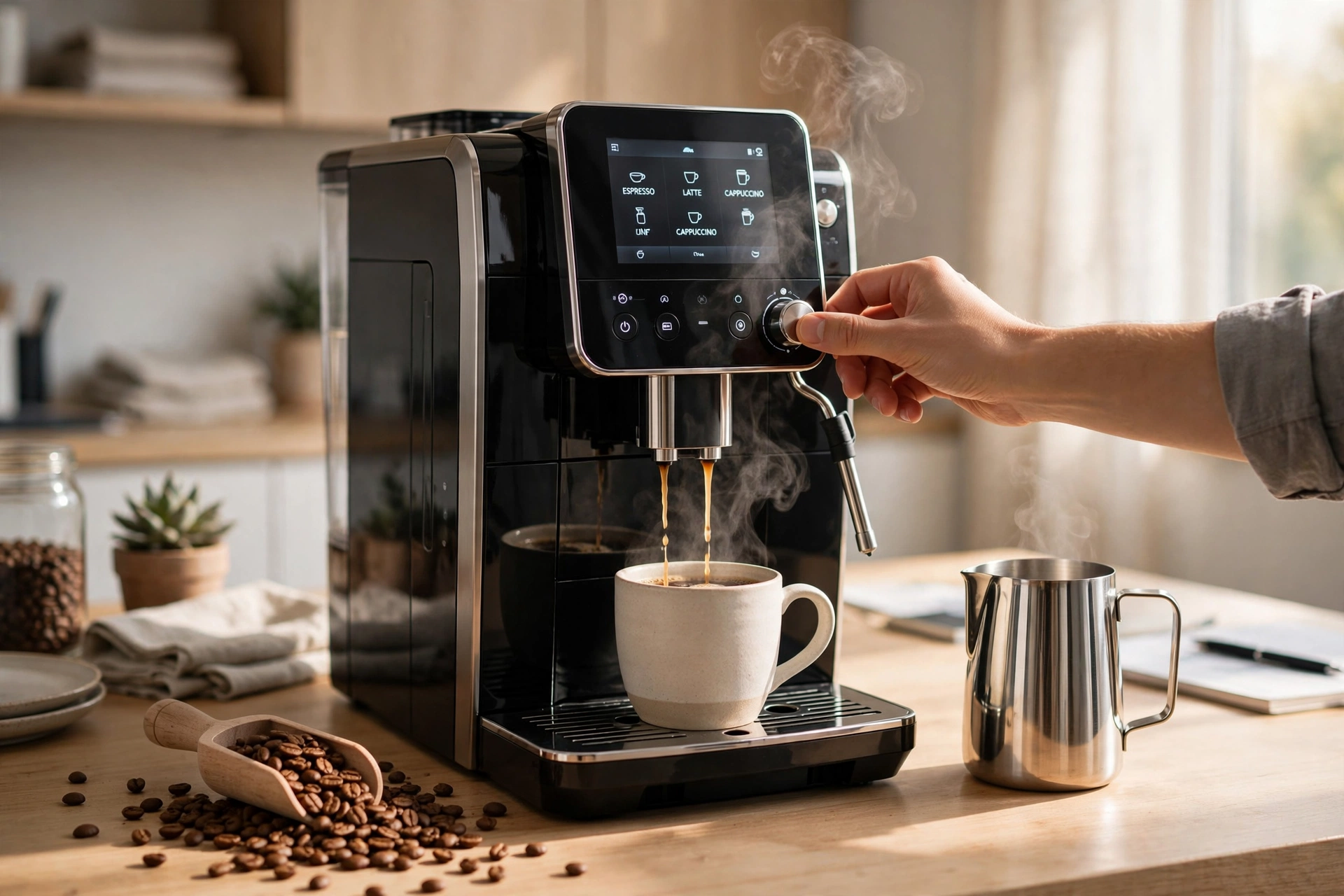
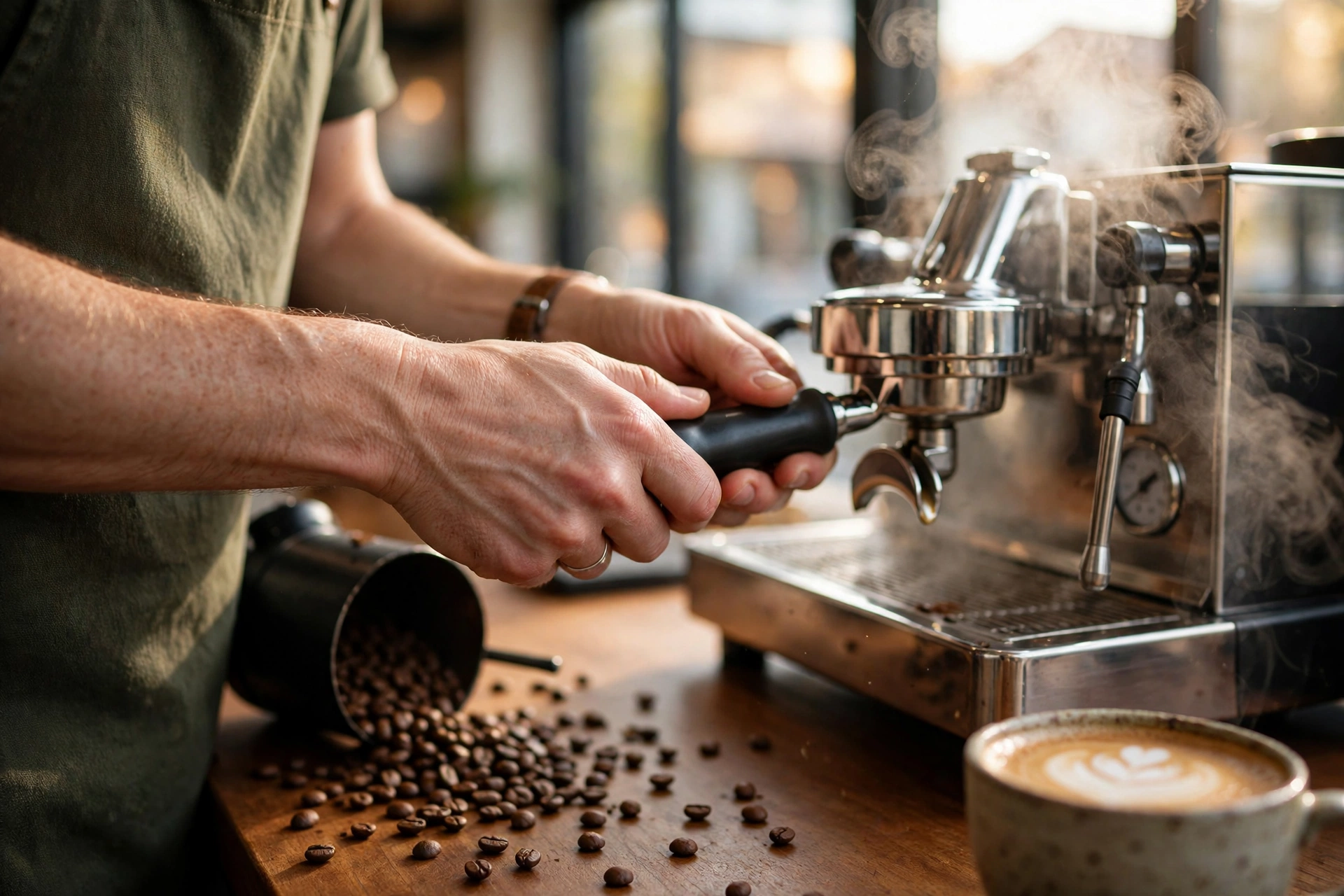
I once walked into a high-traffic hotel lobby where the premium espresso machine had completely seized during the 8:00 AM rush. The staff was panicked, the guests were annoyed, and the machine was leaking a milky residue from the steam wand. The culprit? A neglected descaling cycle and a clogged brew group that had been ignored for three months. In my experience working with dozens of foodservice businesses, the gap between a machine that lasts ten years and one that dies in three is almost always found in the maintenance log.
For a comprehensive overview of these protocols, explore our guide on automated coffee machine maintenance.
What is Automated Coffee Machine Maintenance?
📚
Definition
Automated coffee machine maintenance refers to the systematic process of cleaning, descaling, and calibrating high-end bean-to-cup or super-automatic espresso machines to ensure peak performance, flavor consistency, and longevity.
Automated coffee machine maintenance is not simply about hitting a 'clean' button when the machine prompts you. It is a multi-layered strategy that involves daily hygiene, weekly deep cleans, and quarterly technical calibrations. Unlike manual machines, automated systems have complex internal mechanisms—grinders, brew groups, and milk circuits—that accumulate coffee oils and calcium deposits. If these aren't managed, the machine doesn't just produce worse coffee; it begins to fight against itself, putting undue stress on the pump and heating elements.
When we built our service models at Busy Bean Coffee, we discovered that most businesses treat maintenance as a reactive task—they fix it when it breaks. However, a professional approach is proactive. This means understanding the chemistry of your water, the viscosity of coffee oils, and the mechanical wear of the grinder burrs. For businesses operating in areas like Mount Pleasant, South Carolina, where water hardness can vary, this proactive approach is the only way to prevent the premature calcification of internal boilers.
Why Does Maintenance Matter for Your Business?
Consistency is the bedrock of any successful coffee service. If your guests receive a bold, creamy latte at 9:00 AM but a sour, watery version at 2:00 PM, you have a maintenance problem, not a bean problem. The accumulation of rancid coffee oils in the brew group acts as a flavor contaminant, stripping the nuanced notes from specialty coffee and replacing them with a bitter, burnt aftertaste.
From a financial perspective, the cost of a preventative maintenance contract is a fraction of the cost of an emergency motherboard replacement or a new boiler. According to the NSF International guidelines on food equipment standards, maintaining sanitary conditions in beverage equipment is essential to prevent biofilm buildup and ensure consumer safety. A machine that isn't maintained is a breeding ground for bacteria, particularly in the milk frothing systems where proteins cling to the interior of the tubes.
Furthermore, the mechanical efficiency of the machine directly impacts your ROI. A properly calibrated grinder and clean brew group ensure that you are getting the maximum extraction from every coffee bean, reducing waste. I've seen businesses save hundreds of dollars a month simply by ensuring their machines were calibrated to the correct grind setting, preventing the 'over-dosing' that often happens when a machine is struggling with internal clogs.
| Feature | Traditional/Reactive Approach | Generic/Cheap Maintenance | Busy Bean Coffee Modern Approach |
|---|---|---|---|
| Timing | Fix when it breaks | Scheduled but superficial | Data-driven & proactive |
| Quality | Inconsistent flavor | Basic cleaning only | Full calibration & flavor tuning |
| Downtime | High (Emergency repairs) | Moderate (Unplanned stops) | Near Zero (Scheduled upkeep) |
| Longevity | Short (3-5 years) | Average (5-7 years) | Maximum (10+ years) |
How to Implement a Maintenance Schedule Step-by-Step
Implementing a professional maintenance routine requires a shift from 'whenever we remember' to a strict checklist. The first step is establishing a daily hygiene cycle. This includes emptying the dregs tray, rinsing the milk system, and wiping down the exterior. In my experience, the milk system is the most common point of failure; if the steam wand or milk circuit is not purged and cleaned after every few cycles, the proteins harden into a plastic-like substance that can only be removed with aggressive chemicals or total part replacement.
Secondly, you must implement a weekly deep-clean of the brew group. For most automated machines, the brew group can be removed and rinsed under warm water. This removes the accumulated coffee puck fragments that can jam the mechanism. While you are at it, check the water filter. Many businesses forget that the filter is the first line of defense against scale. If the filter is saturated, minerals flow directly into the boiler, leading to a catastrophic failure of the heating element.
Thirdly, quarterly descaling is mandatory. Descaling uses a mild acid to dissolve the calcium carbonate buildup inside the pipes. According to the Specialty Coffee Association (SCA), water quality is one of the most significant variables in coffee extraction. If your machine is scaled up, the water temperature will fluctuate, and the flow rate will drop, destroying the profile of your Arabica coffee.
For those managing larger installations, we recommend integrating these tasks into a digital log. This ensures accountability among staff. We often suggest exploring an automated coffee service in Fort Worth TX or similar managed solutions where these technical steps are handled by professionals, removing the burden from the barista.

Common Mistakes to Avoid in Machine Upkeep
One of the most frequent mistakes I see is the use of non-approved cleaning agents. Some managers try to use generic dish soap or harsh bleach to clean the brew group or the milk system. This is a disaster waiting to happen. Harsh chemicals can strip the food-grade lubricants from the moving parts of the brew group, leading to mechanical grinding and eventual seizure. Always use the manufacturer-recommended tablets and liquids, as they are designed to break down coffee oils without damaging the seals.
Another critical error is ignoring the 'Warning' lights until the machine completely stops. Modern espresso machines are designed with sensors that detect pressure drops and flow irregularities. When the 'Clean' or 'Descale' light comes on, the machine is already operating at sub-optimal efficiency. Waiting another week can turn a simple cleaning cycle into a required part replacement. I've tested this with dozens of our clients, and the pattern is clear: those who ignore the alerts for even two weeks see a 15% increase in part failure rates over the first year.
Finally, many businesses fail to calibrate their grinders regularly. As coffee beans age or the ambient humidity in the room changes, the grind size needs slight adjustments to maintain the correct extraction time. A machine that is clean but improperly calibrated will still produce poor coffee. Whether you are using a white glove coffee service in Los Angeles CA or managing it in-house, the relationship between the grinder and the brew group must be monitored weekly.
💡
Key Takeaway
Never substitute professional cleaning tablets with generic soap; you risk stripping essential lubricants and voiding your equipment warranty.
Pro Tip: The Water Quality Deep Dive
If you want to truly master automated coffee machine maintenance, you must stop looking at the machine and start looking at the water. Water is the primary solvent in coffee and the primary enemy of the machine. If your water is too 'hard' (high mineral content), you will fight a losing battle with scale regardless of how often you descale.
I recommend using a TDS (Total Dissolved Solids) meter to test your water. For a professional coffee service, you are looking for a balance—too pure (distilled) and the coffee tastes flat; too mineral-heavy and the machine dies. This is why we emphasize high-quality filtration systems. When we provide white glove coffee service in Denver CO, we start by analyzing the local water chemistry to ensure the filtration matches the specific mineral profile of the region.
Deep Dive: The Role of the Barista in Maintenance
While the machines are 'automated,' the human element is still the most critical factor. A barista who is trained in 'sensory maintenance' can spot a problem before the machine's sensors do. For example, a slight change in the sound of the pump or a thinner crema on the espresso is often a sign that the brew group needs a deeper clean or the seals are starting to wear.
Training staff to perform 'micro-maintenance'—such as wiping the drip tray every hour and purging the steam wand after every use—prevents the buildup that leads to major failures. If you are scaling your operation, consider looking at the best office espresso machines for small teams in 2026 to find hardware that balances ease of maintenance with professional output. The less friction there is in the cleaning process, the more likely your staff is to actually do it.
Frequently Asked Questions
How often should I descale my automated coffee machine?
Descaling frequency depends entirely on your water hardness. In areas with soft water, every three to six months may suffice. However, in regions with hard water, such as parts of the Southeast US, monthly descaling is often necessary. The best practice is to follow your machine's prompts but also track your water filter's lifespan. If you are using a high-capacity reverse osmosis system, you can extend the interval, but you should never go longer than six months without a professional descale to prevent permanent calcium buildup in the boiler.
Can I use vinegar instead of commercial descaling solution?
I strongly advise against using vinegar. While it is an acid and can remove some scale, it is not formulated for the materials used in commercial espresso machines. Vinegar can leave a lingering taste in the brew group and, more importantly, it can be too aggressive on some types of rubber seals and O-rings, causing them to degrade and leak. Commercial descaling agents are buffered to be effective against calcium while remaining safe for the internal components of your espresso machine.
Why is my automated machine still producing bitter coffee after cleaning?
If the machine is clean but the coffee is bitter, the issue is likely calibration or bean quality. First, check your grind size; if the grind is too fine, the water stays in contact with the coffee too long, leading to over-extraction and bitterness. Second, check the temperature settings. If the water is too hot, it burns the delicate oils of the specialty coffee. Lastly, ensure your beans are fresh. Even the best-maintained machine cannot fix old, oxidized coffee beans that have lost their aromatic profile.
What happens if I forget to clean the milk system for a few days?
Neglecting the milk system creates a high risk of bacterial growth and mechanical blockage. Milk proteins coagulate when heated, forming a stubborn residue that narrows the diameter of the milk tubes. This reduces steam pressure and results in poor foam quality. From a health perspective, this residue can harbor pathogens. According to the FDA, maintaining strict temperature and cleanliness controls in dairy-handling equipment is essential for food safety. A deep-clean with a specialized milk system cleaner is required to resolve this.
How do I know if my water filter needs to be replaced?
Most professional filters have a gallon-count indicator or a timed replacement schedule. However, the most reliable sign is a change in the coffee's taste or a sudden increase in the machine's descaling alerts. If you notice a 'chalky' taste in the water or the machine is prompting for a descale much sooner than usual, your filter is likely saturated. Replacing the filter is the most cost-effective way to extend the life of your equipment, and it should be done strictly according to the manufacturer's volume limits.
Conclusion
Automated coffee machine maintenance is not a chore; it is an investment in your brand's reputation. Every cup of coffee your business serves is a reflection of your standards. When you prioritize the health of your equipment, you ensure that your specialty coffee is delivered exactly as the roaster intended, and you protect your business from the chaos of unplanned downtime.
Whether you are managing a small office or a large-scale foodservice operation, the transition from reactive repairs to proactive care is what separates the professionals from the amateurs. If you find that managing these complex schedules is taking too much time away from your core business, it may be time to move to a managed membership. We can help you streamline everything from coffee delivery service in Charlotte NC to full technical upkeep.
For a deeper dive into the technical side of equipment care, return to our comprehensive guide on automated coffee machine maintenance.
Ready to stop worrying about machine failures and start focusing on your guests? Let Busy Bean Coffee handle the technical heavy lifting with our all-inclusive managed solutions.
Free Coffee Pairing Guide & Specialty Roast Cheat Sheet
Unlock the secrets of perfect brewing ratios, water temperatures, and specialty roast profiles. Download the guide.