Why High-Performance Gear Matters: The True Benefits of Specialty Coffee Equipment
Investing in a high-end beverage program often feels like a gamble until you realize that coffee quality is not a result of the bean alone, but of the precision of the extraction. In my experience working with hospitality groups and corporate offices, the difference between a "good" cup and a "world-class" cup usually comes down to the stability of the thermal block and the consistency of the grind. When a business chooses to invest in professional specialty coffee equipment, they aren't just buying a machine; they are securing a repeatable, high-margin revenue stream and ensuring that the nuances of a premium roast are actually delivered to the customer.
The "why" behind this investment is simple: precision equals profitability. Inconsistent equipment leads to wasted beans, frustrated baristas, and a customer base that doesn't return because the coffee tasted different on Tuesday than it did on Monday. By eliminating these variables, businesses can scale their quality without increasing their labor stress. For those managing smaller environments, choosing the Best Office Espresso Machines for Small Teams in 2026 is often the first step in transitioning from a basic amenity to a high-value culture builder.
What Exactly Constitutes Specialty Coffee Equipment?
When we talk about professional gear, we aren't referring to the consumer-grade pods or the basic drip machines found in home kitchens. We are talking about tools engineered for thermal stability, pressure precision, and volumetric accuracy. To understand the benefit, we first have to define what the equipment actually does.
📚
Definition
Specialty coffee equipment refers to commercial-grade hardware—such as PID-controlled espresso machines, burr grinders with micron-level adjustment, and precision brewing systems—designed to maximize the flavor potential of high-scoring specialty coffees.
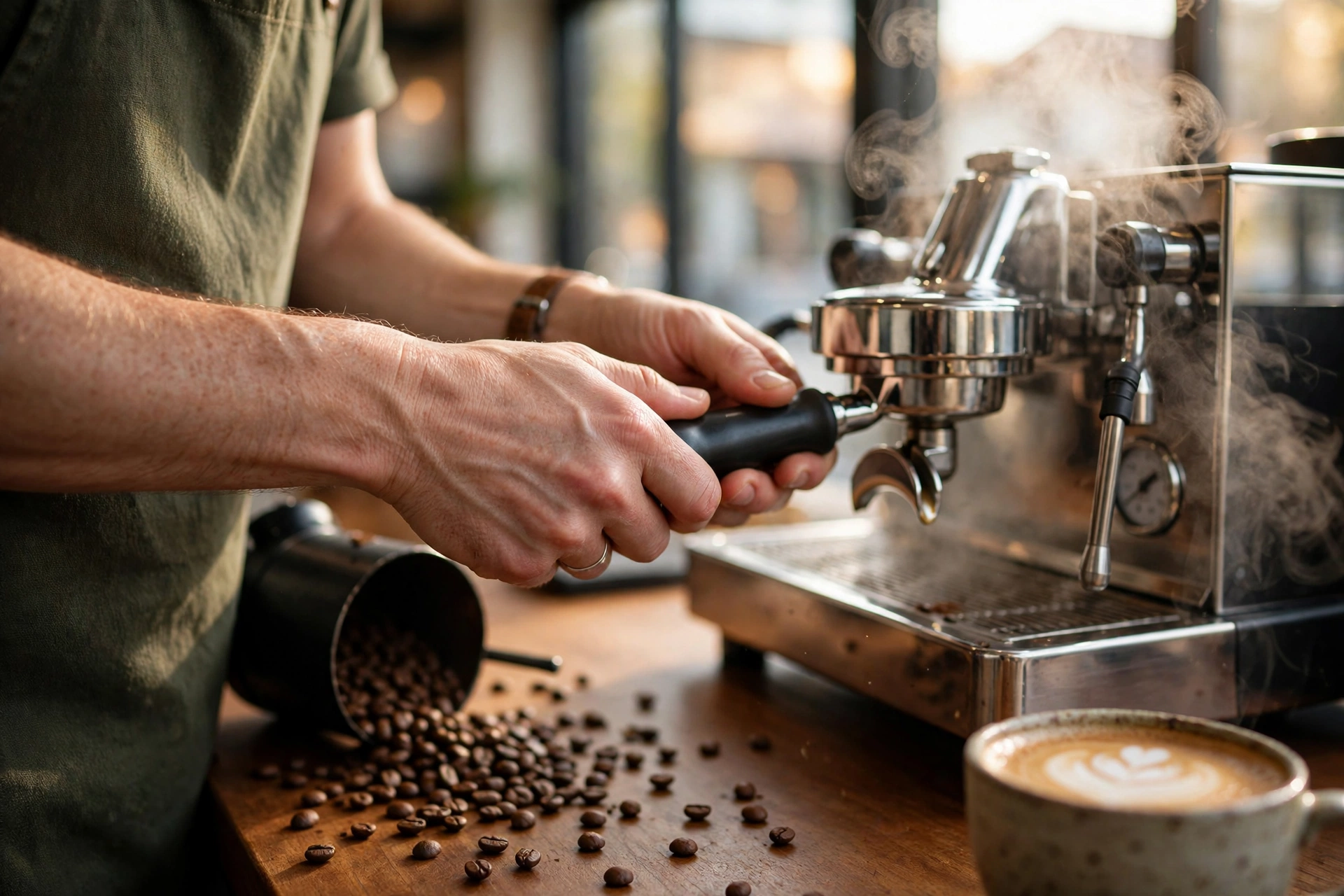
The core objective of this gear is to control the variables of extraction: water temperature, pressure, and particle size. For example, if your water temperature fluctuates by even two degrees Celsius during a shot, you risk under-extracting the oils, leading to a sour, thin beverage. Commercial equipment solves this through heat-exchange systems or dual boilers.
According to the Specialty Coffee Association (SCA), the standards for professional brewing require a strict adherence to water temperature and brew ratios to ensure the chemical compounds of the coffee bean are extracted balancedly. Without this precision, you are essentially wasting the premium you paid for your Arabica beans.

In the trenches, I've seen businesses spend thousands on the most expensive beans from Ethiopia or Colombia, only to run them through a machine that cannot hold a steady 200°F. It is a common tragedy in the industry. The equipment is the bridge between the raw potential of the coffee bean and the actual sensory experience of the drinker. If the bridge is broken, the quality of the bean is irrelevant.
Why Does This Investment Actually Matter for Your Bottom Line?
The decision to upgrade equipment is rarely about "better taste" in a vacuum; it is about the financial implications of consistency and efficiency. When you operate a foodservice business, every second of "down time" or every wasted portafilter is a direct hit to your EBITDA.
High-end specialty coffee equipment reduces waste through precision. Low-end machines often "channel," where water finds a path of least resistance through the coffee puck, leaving much of the coffee dry and the resulting drink tasting hollow. This leads to "dialing in" errors where baristas dump pounds of coffee into the trash trying to fix a problem that is actually caused by the machine's unstable pressure.
Moreover, the impact on customer lifetime value (LTV) is measurable. According to data from the National Coffee Association USA (NCA), consumers are increasingly migrating toward "premiumization," meaning they are willing to pay a higher price point for a beverage that is demonstrably superior in quality and presentation. If your equipment allows for a consistent, creamy micro-foam and a balanced espresso shot, you can justify a premium price point that a basic machine simply cannot support.
The consequences of not acting are often invisible until they manifest as a decline in sales. When a customer perceives a drop in quality, they don't tell you; they just stop coming. This "silent churn" is the primary risk of sticking with outdated or consumer-grade gear in a professional environment. Whether you are looking for an automated coffee service in Fort Worth TX or a boutique setup, the goal is the same: remove the risk of human error through mechanical excellence.
Practical Application: How to Implement a High-Performance Coffee Program
Moving from a basic setup to a specialty program requires a strategic approach. You cannot simply plug in a new machine and expect a miracle; you need a workflow that supports the hardware.
First, focus on the "Golden Triangle": Water Quality, Grind Consistency, and Thermal Stability. Many businesses overlook the water. If you have hard water and don't have a professional filtration system, your expensive equipment will be ruined by limescale within months. This is where the NSF International standards for food equipment become vital, ensuring that your machinery meets sanitary and safety regulations while protecting the internal components from mineral buildup.
Second, invest in the grinder before the machine. A common mistake I see—and one I made early in my career—is spending 90% of the budget on a flashy espresso machine and 10% on a cheap grinder. In reality, the grinder is the most important piece of the puzzle. Without a uniform particle size, no amount of temperature control can save your shot.
At Busy Bean Coffee, we simplify this by offering all-inclusive managed solutions. Instead of forcing a business to navigate the complexity of installation, maintenance, and calibration, we provide the hardware and the expertise in one package. This removes the capital expenditure barrier and ensures that the equipment is always performing at its peak.
💡
Key Takeaway
The most successful coffee programs prioritize the "grind-to-cup" workflow over individual gadgetry, ensuring that water filtration and grinder precision are addressed before the espresso machine is even turned on.
For those who want the highest level of precision without the overhead of a full-time staff, exploring white glove coffee service in Los Angeles CA allows for a professional-grade experience where the maintenance and calibration are handled by experts, leaving the business owner to focus on growth.
Comparing Your Equipment Options: Which Path is Right?
Not every business needs a three-group manual espresso machine. The "best" equipment depends on your volume, your staff's skill level, and your target customer. Here is how the different approaches stack up in a real-world business environment.
| Approach | Pros | Cons | Best For |
|---|---|---|---|
| Traditional Manual | Maximum flavor control, "craft" appeal | High training required, slow output | Boutique Cafes, High-End Restaurants |
| Generic/Cheap AI | Low initial cost, fast setup | Inconsistent taste, high failure rate | Low-traffic breakrooms, temporary pop-ups |
| Managed Professional | Predictable cost, guaranteed uptime, expert calibration | Monthly subscription fee | Hotels, Corporate Offices, Scaled Foodservice |
Now here's where it gets interesting: the "Generic" approach often costs more in the long run. When a cheap machine breaks during a morning rush, the loss in revenue isn't just the price of the coffee—it is the loss of customer trust.
If you are operating in a high-traffic area, you might consider the efficiency of an automated coffee service in Wilmington NC, which provides the precision of specialty equipment with the speed of automation, ensuring that every guest gets a consistent drink regardless of who is behind the counter.

Common Questions & Misconceptions About Specialty Gear
There is a lot of noise in the coffee industry, and most guides get the priorities wrong. They focus on the "brand name" of the machine rather than the "specifications" of the output.
Myth 1: "A more expensive machine automatically makes better coffee."
This is fundamentally false. A $20,000 machine will produce terrible coffee if the beans are stale or the grind is incorrect. The equipment doesn't "make" the coffee; it allows the coffee to express its natural flavor. The real value is in the repeatability. The benefit of specialty gear is that once you find the perfect recipe, the machine will hit that exact mark 500 times a day without drifting.
Myth 2: "Automatic machines can't produce 'specialty' quality."
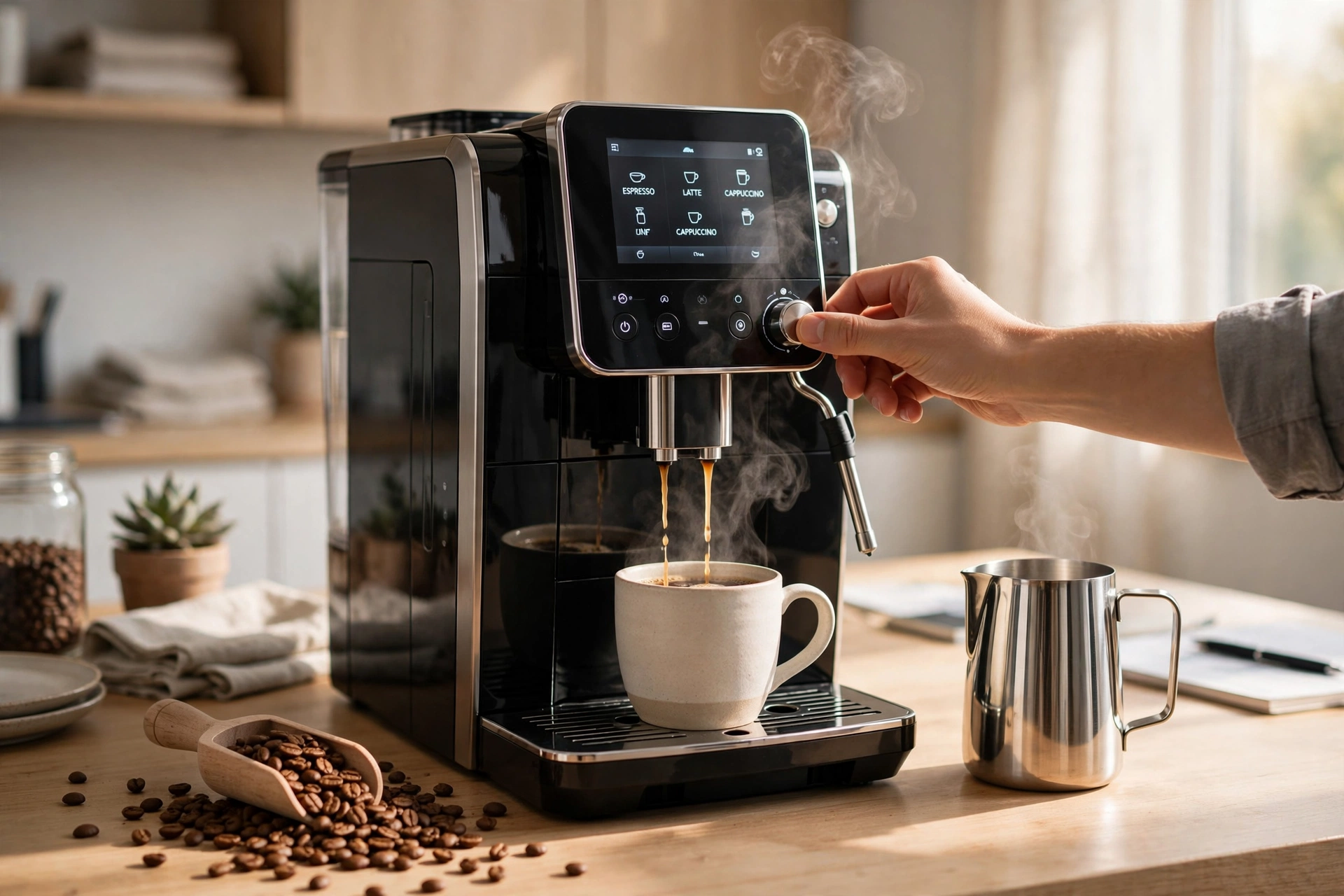
This used to be true ten years ago. However, modern super-automatic machines use precision grinders and volumetric dosing that can mimic a human barista's precision. While a master barista is still the gold standard, the gap has closed significantly. This is why we emphasize the quality of the internal components, not just the manual or automatic nature of the interface.
Myth 3: "Maintenance is just about cleaning the drip tray."
The mistake I see constantly is the "set it and forget it" mentality. Specialty equipment is a precision instrument. It requires back-flushing, group head cleaning, and regular filter changes. If you don't have a maintenance plan—which is why a managed service is so valuable—your "specialty" coffee will start tasting like burnt rubber within three months due to oil buildup.
Frequently Asked Questions
Why is the grinder considered more important than the espresso machine?
The grinder determines the surface area of the coffee exposed to water. If the grind is inconsistent (producing both huge chunks and tiny powders), the water will extract different flavors from different particles simultaneously. This results in a cup that is both sour and bitter at the same time, a flaw that no espresso machine, regardless of price, can correct. A professional burr grinder ensures every single particle is the same size, allowing for a uniform extraction that unlocks the complex notes of specialty coffee.
How does temperature stability impact the taste of the coffee?
Coffee is chemically sensitive. If the water is too hot (above 205°F), it scorches the compounds, resulting in a bitter, ashy taste. If it is too cold (below 195°F), it fails to extract the sugars and oils, leaving the coffee tasting salty or sour. Specialty equipment uses PID controllers and stable boilers to keep the temperature within a tight window of 1-2 degrees, ensuring that the nuanced flavors of the bean are preserved.
What is the difference between a "commercial" and a "prosumer" machine?
While prosumer machines look like commercial gear, they lack the "duty cycle" required for business. A prosumer machine might be able to make five great lattes in a row, but by the sixth, the boiler cannot keep up, and the temperature drops. Commercial equipment is engineered for continuous operation, with larger boilers and more robust pumps that can handle hundreds of drinks a day without a dip in quality or pressure.
Is it worth investing in a "white glove" managed service instead of buying equipment?
For most businesses, the answer is yes because of the "Hidden Cost of Ownership." When you buy a machine, you are responsible for the installation, the technician calls when it breaks, and the constant calibration as humidity changes the way coffee grinds. A managed service, such as those provided by Busy Bean Coffee, turns a variable risk into a fixed monthly cost, ensuring your equipment is always optimized without needing a dedicated technician on staff.
How do I know if my current equipment is underperforming?
The easiest sign is "drift." If your coffee tastes great at 8:00 AM but tastes different by 11:00 AM, your equipment is likely struggling with thermal stability or pressure consistency. Other signs include frequent "channeling" (where the espresso spurts unevenly) or a lack of thick, elastic crema on top of the shot. If you are seeing these patterns, it's time to evaluate your gear.
Final Thoughts on Specialty Coffee Equipment
The transition to professional-grade specialty coffee equipment is not about luxury; it is about operational excellence. By controlling the variables of temperature, pressure, and grind, you stop guessing and start delivering. Whether you are scaling a cafe or upgrading a corporate environment, the shift from "basic" to "specialty" directly impacts your customer's perception of your brand and your bottom line.
If you're tired of inconsistent quality and the stress of equipment failure, it's time to move toward a managed solution. At Busy Bean Coffee, we handle the complexities of the hardware so you can focus on the hospitality. From premium SENSA equipment to full maintenance coverage, we ensure your coffee is the highlight of your guest's experience, not a liability.
For those looking to elevate their regional presence, consider our coffee delivery service in Charlotte NC or explore our options for white glove coffee service in Denver CO to see how professional management transforms the daily brew.
Visit www.busybeancoffee.com today to build a beverage program that actually works for your business.
Free Coffee Pairing Guide & Specialty Roast Cheat Sheet
Unlock the secrets of perfect brewing ratios, water temperatures, and specialty roast profiles. Download the guide.