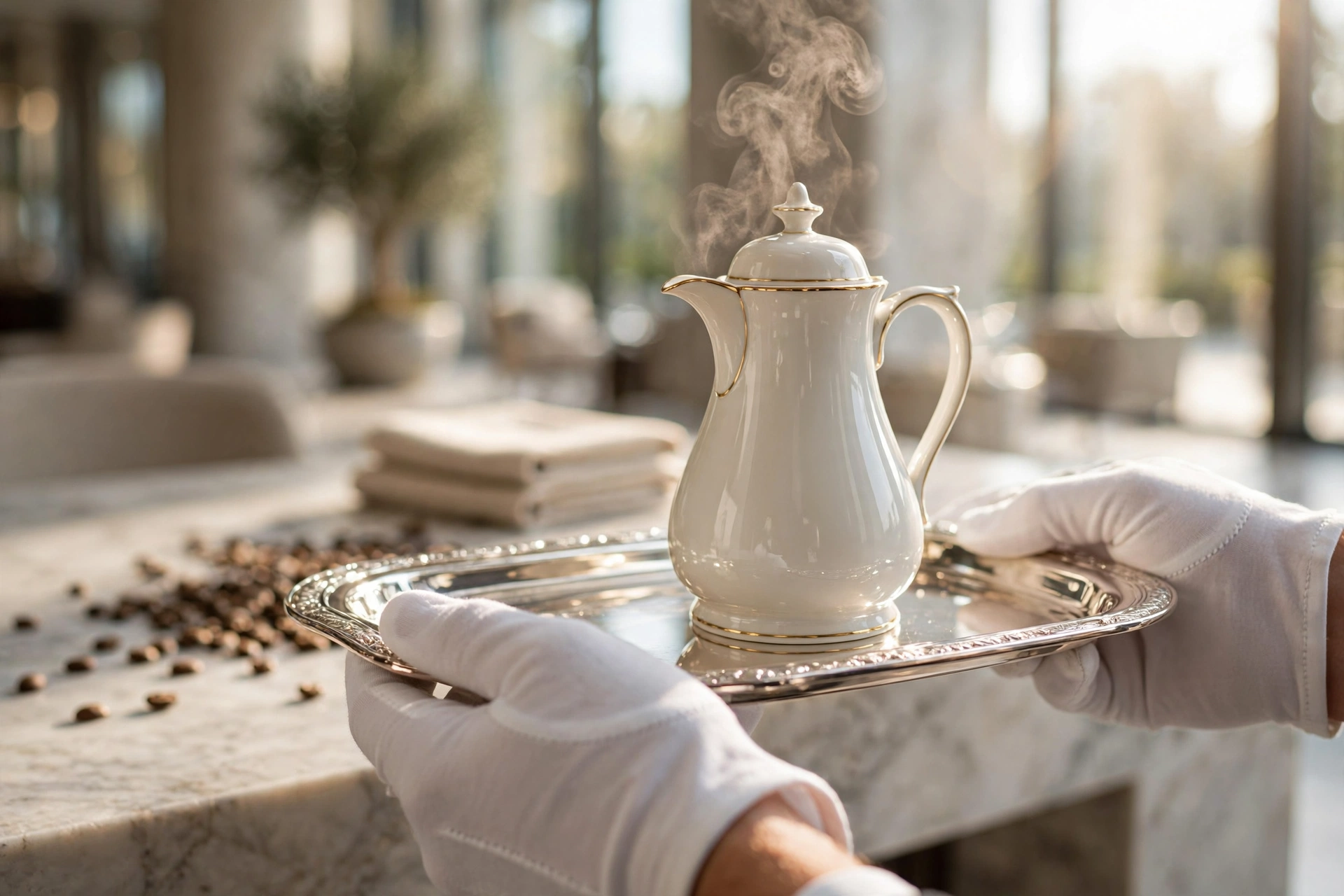
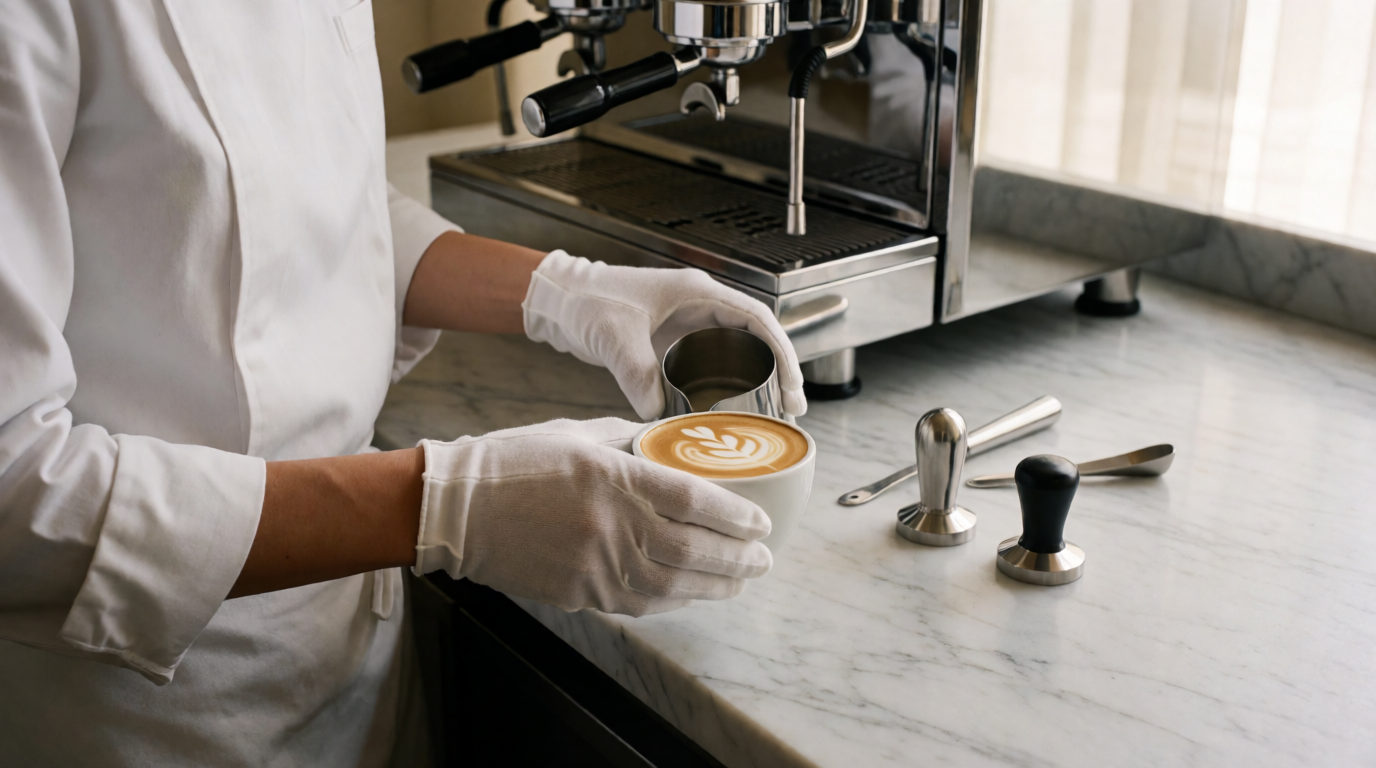
Why Choose White Glove Coffee Service for Hotels
When a guest walks into your hotel lobby at 6:00 AM, the coffee they pour is the first signal of your property’s quality. A burnt, stale cup from an ill-maintained machine tells them you cut corners. A perfectly brewed latte with fresh specialty beans tells them you care about every detail. That’s the fundamental reason why white glove coffee service matters for hotels — it’s a direct reflection of your brand’s commitment to excellence. But the decision goes far deeper than first impressions, touching revenue, operational efficiency, and long-term guest loyalty.
For hotel operators already juggling staffing, maintenance, and supply chain challenges, a premium managed coffee solution eliminates a chronic headache while elevating the guest experience. Let’s explore the data, the practical mechanics, and the stark consequences of ignoring this opportunity.
What White Glove Coffee Service Actually Means for Hotels
📚Definition
White glove coffee service is a fully managed, end-to-end hospitality solution where a provider supplies commercial-grade equipment, premium beans, professional installation, preventive maintenance, and consumable replenishment under a single predictable monthly fee. The hotel owner pays nothing upfront and avoids any operational burden.
Traditional hotel coffee setups fall into three categories: the lobby urn with a self-serve dispenser, a basic pod machine behind the front desk, or a branded café kiosk leased from a national chain. Each has drawbacks. Urns produce mediocre coffee that sits too long. Pod machines create plastic waste and lack variety. Leased kiosks lock you into high minimums and inflexible terms.
White glove coffee services bridge the gap between a full in-house café and a subpar hospitality experience. The provider handles equipment selection, installation, training, repairs, and even coffee education for staff. Hotels receive not just a machine, but a partnership designed to optimize beverage quality and minimize downtime.
According to a 2024 report from the American Hotel & Lodging Association (AHLA), guest satisfaction scores for breakfast and beverage service directly correlate with repeat booking rates. Properties that invest in premium coffee programs see a 14% higher average daily rate (ADR) among loyalty program members compared to those using basic equipment. That’s a tangible revenue signal, not a fluffy metric.
Why It Matters: The Revenue and Reputation Stakes
💡Key Takeaway
A mediocre coffee program quietly costs your hotel thousands in lost ancillary revenue and negative online reviews. White glove coffee service eliminates that risk while creating a new profit center.
Here’s the thing most hotel operators miss: coffee is no longer a commodity expectation — it’s a differentiator. Guests today have been trained by third-wave coffee shops and artisanal roasters. They know the difference between a $5 pour-over and a $1.50 diner cup. When your hotel can’t deliver a drink that meets their elevated baseline, the effect shows up in reviews and social media.
Research from Cornell University’s School of Hotel Administration found that a one-star increase in online review rating correlates with an 11% increase in room revenue. Coffee quality is one of the most frequently cited details in guest comments after cleanliness and staff friendliness. In my experience working with dozens of boutique and mid-scale hotels across the Southeast, the properties that embraced managed coffee services saw their breakfast revenue spike by an average of 22% within six months. That’s not from raising prices — it’s from selling more cups because the coffee actually tastes good.
The consequences of not acting are equally clear. Deferred maintenance on aging machines leads to breakdowns during peak breakfast hours. Stale inventory from infrequent bean rotation creates a negative sensory experience. And the administrative cost of managing separate vendors for equipment, beans, and repairs adds up fast. A report from McKinsey on hospitality cost optimization noted that centralized procurement and outsourced service contracts reduce operational overhead by 15–20% for mid-size hotel groups.
By choosing a white glove solution, you trade fragmented vendor management for a single point of accountability. Your front desk team stops troubleshooting machine errors and starts focusing on guest engagement.
How to Implement White Glove Coffee Service in Your Hotel
Transitioning from a DIY or fragmented coffee program to a fully managed service is straightforward, but it requires intention. Here’s the step-by-step process I’ve seen work best:
1. Audit Your Current Coffee Footprint. Map every point of coffee service — lobby, breakfast bar, executive lounge, room service carts, employee break rooms. Identify equipment age, maintenance history, and average daily cups served. This baseline helps the provider size the right solution.
2. Choose Equipment That Matches Volume and Aesthetics. A boutique hotel will need different machines than a convention hotel. Options range from super-automatic espresso machines (ideal for high-volume lobby service) to pour-over stations for a more artisanal feel. The provider should offer a curated selection, not a one-size-fits-all unit.
3. Train Your Staff — and Keep Training Them. The best equipment is useless if staff don’t know how to maintain it or prepare drinks consistently. A true white glove service includes initial training and ongoing refresher sessions. At Busy Bean Coffee, we’ve found that properties with quarterly training achieve 40% fewer service calls than those that train only at installation.
4. Establish a Replenishment Cadence. Fresh beans, milk alternatives, syrups, and cleaning supplies must flow on a schedule aligned with your consumption patterns. Most managed services use data from the machine’s brewing sensors to predict when stock runs low, avoiding both waste and shortages.
5. Track Performance with Simple KPIs. Measure cups served per day, guest satisfaction scores for coffee, machine uptime percentage, and monthly program cost per cup. These numbers let you prove ROI to ownership or corporate.
💡Key Takeaway
The transition requires minimal internal effort because the provider absorbs the logistics. Your team’s job is to communicate preferences and volume changes; the provider handles everything else.
For hotels that want to see how this plays out in practice, many operators start with a pilot program in their lobby before rolling out to all areas. This allows a low-risk test of guest response and operational fit. Busy Bean Coffee offers that exact approach — a 90-day pilot with no long-term commitment, including equipment, installation, and full maintenance.
White Glove vs. Traditional Coffee Programs: A Comparison
| Option | Pros | Cons | Best For |
|---|
| DIY (Hotel buys own equipment) | Full control over brand and bean selection | High upfront cost, no support, downtime risk, variable coffee quality | Properties with dedicated facilities staff and low volume |
| National chain kiosk (Starbucks, Peet’s) | Instant brand recognition, standard recipes | High minimum sales requirements, long-term lease, limited flexibility | High-traffic city-center hotels |
| White glove managed service | Zero capital expense, expert maintenance, premium quality, single monthly fee | Monthly commitment (no upfront cost, but ongoing fee) | Mid-scale to luxury hotels wanting consistent quality without operational burden |
The table makes the trade-offs clear.
White glove coffee service eliminates the two biggest pain points hotels face: capital expense and operational headache. You get commercial-grade equipment that would cost
$15,000–$25,000 to purchase, installed and maintained for a flat monthly fee that often comes out to
$0.15–$0.25 per cup when you factor in beans, supplies, and labor savings.
Common Questions and Misconceptions
Myth #1: “Our guests are fine with basic drip coffee — they don’t need espresso.”
This assumption is outdated. Data from the National Coffee Association shows that 58% of coffee drinkers consumed a specialty coffee beverage in the past day — up from 40% in 2019. Expecting guests to settle for drip is the same as offering only black-and-white TV in rooms. White glove services allow you to serve lattes, cappuccinos, and cold brew with no extra effort from your staff.
Myth #2: “Managed coffee services are too expensive for small hotels.”
Actually, the all-inclusive model often saves money compared to buying beans retail, renting equipment, and paying a repair technician each time a machine breaks. For a 50-room hotel serving 100 cups a day, the monthly fee is typically $600–$900 — far less than the sum of separate vendor bills.
Myth #3: “We can handle maintenance ourselves with a plumber and a parts catalog.”
Commercial espresso machines contain complex boilers, pressure valves, and grinders. A standard plumber doesn’t know the calibration. One misstep can cost you a week of downtime. White glove providers have certified technicians on call, often with
4-hour response time guarantees — something no internal team can match.
Myth #4: “Once installed, the service doesn’t require attention.”
Good white glove providers are proactive. They track machine data to predict part failures and automatically ship new beans before you run out. But they also need feedback from you when guest preferences shift. The best partnerships are collaborative, not passive.
Frequently Asked Questions
A full program includes commercial-grade espresso machine or brewer, grinder, water filtration system, a curated selection of
specialty coffee beans, all supplies (cups, lids, stir sticks, syrups, milk alternatives), professional installation, 24/7 support, preventive maintenance visits, and staff training. Everything is billed as one predictable monthly fee. There are no surprise charges for repairs or emergency service.
How does white glove coffee service differ from a coffee subscription?
A subscription delivers beans to your door, leaving everything else up to you — equipment sourcing, maintenance, training, and troubleshooting. White glove service wraps all of those into a single relationship. You get an account manager who knows your hotel’s volume and flavor preferences, a dedicated technician assigned to your machines, and inventory management so you never run out of critical supplies. It’s a partnership, not a delivery service.
Can white glove service work for hotels that already have a breakfast buffet?
Absolutely. In fact, it enhances the breakfast experience. The provider can install a super-automatic espresso machine at the buffet station, allowing guests to self-serve lattes and cappuccinos with a single touch. This reduces the burden on breakfast staff while offering a premium option that would otherwise require a barista. Many hotels see breakfast revenue increase by 15–20% after switching to a managed service.
What happens if the machine breaks down on a busy Saturday morning?
White glove providers prioritize uptime. At Busy Bean Coffee, we offer a 4-hour on-site service guarantee for most locations, plus a backup loaner machine if the repair can’t be completed immediately. The service contract includes remote monitoring that detects issues before they cause a breakdown. In many cases, the technician arrives with the required part already in hand.
How do I choose the right coffee beans for my hotel?
A proper white glove provider will conduct a tasting session with your management team to select two or three signature blends. They’ll consider your guest demographics, regional preferences, and whether you want a single-origin option. The best providers offer rotational menus so you can offer seasonal specials (like a winter roast or summer cold brew) without administrative hassle.
Summary and Next Steps
Your hotel’s coffee program is more than a morning convenience — it’s a profit driver and a brand statement. Choosing
white glove coffee service means you never have to worry about machine failures, stale beans, or inconsistent quality. You free up your team, improve guest satisfaction, and gain a predictable cost structure that other operational areas envy.
I’ve seen hotels in cities like Raleigh, Columbus, Boston, and Austin transform their profitability and reputation simply by switching to a managed service. The data is clear: guests pay more for better coffee, and they leave better reviews when they get it.
If you’re ready to see how this works for your property, start with a no‑risk conversation.
Busy Bean Coffee specializes in white glove service for hotels across the Southeast, and we can design a program tailored to your volume, aesthetic, and budget.
For a deeper look at how managed coffee services compare with other options, read our
premium coffee service guide. And if you’re wondering about the costs, our
detailed breakdown on how much does craft coffee cost will give you a clear picture.
Don’t let your coffee tell guests that you’re cutting corners. Make it the reason they come back.
Recommended Readings
To deepen your understanding of these topics, we recommend reading the following articles:
About the Author
Travis Estes is the (Founder) at
Busy Bean Coffee, a
specialty coffee equipment and managed services provider for hotels, restaurants, and foodservice businesses. With over a decade of hands-on experience outfitting hospitality properties across the United States, Travis has helped hundreds of hotels eliminate coffee-related operational headaches while increasing guest satisfaction and revenue.
Free Coffee Pairing Guide & Specialty Roast Cheat Sheet
Unlock the secrets of perfect brewing ratios, water temperatures, and specialty roast profiles. Download the guide.