Why Managed Coffee Services are the Secret to Scaling Foodservice Profitability
I once watched a hotel manager spend four hours of his Monday morning arguing with a technician about a leaking espresso machine while his lobby guests waited in a line that stretched out the door. That is the exact moment when a business realizes that owning equipment isn't the same as having a coffee program. For most high-volume businesses, the shift toward managed coffee services is driven by the need to eliminate "operational friction"—the hidden costs of maintenance, inconsistent bean quality, and the catastrophic downtime of a broken machine during a morning rush.
The core reason to adopt a managed model is simple: it transforms a volatile capital expense and a labor-intensive chore into a predictable, outsourced utility. By shifting the burden of equipment upkeep and supply chain logistics to a specialist, you ensure that every cup of specialty coffee meets a gold standard without requiring your staff to be certified technicians.

What Exactly Are Managed Coffee Services and How Do They Work?
To understand the value, we first have to define the mechanism. Most businesses treat coffee as a grocery item—they buy a machine, buy beans, and hope for the best. A managed service flips this logic on its head.
📚
Definition
Managed coffee services are all-inclusive beverage partnerships where a provider supplies the equipment, the premium coffee beans, installation, and ongoing preventative maintenance for a fixed monthly fee or a volume-based contract.
In my experience working with dozens of hospitality groups, the biggest misconception is that this is just a "rental agreement." It is not. A rental is about the hardware; a managed service is about the outcome. When you engage in a managed model, you aren't just paying for a machine; you are paying for the guarantee that your beverage program will never be the reason a customer leaves a negative review. This includes the sourcing of Coffea arabica beans that are roasted to precise specifications and the calibration of the espresso machine to ensure consistency across different shifts.
According to the Specialty Coffee Association (SCA), technical precision in extraction and temperature stability is what separates a commercial brew from a specialty experience. In a managed environment, these variables are handled by experts, not by a tired employee who happened to be on the clock at 6:00 AM. This level of oversight is why many firms are now opting for an automated coffee service in Fort Worth TX to remove human error from the equation entirely.
Why Does This Model Matter for Your Bottom Line?
The financial implication of a poorly managed coffee station is often invisible until you audit the waste. I've seen businesses lose thousands of dollars annually simply through "dial-in waste"—the coffee ground and tossed while a staff member tries to figure out why the espresso is tasting sour or flowing too fast.
The Cost of Downtime
When a machine goes down in a high-traffic environment, you don't just lose the sale of a latte. You lose the "attachment sale." A customer who cannot get their coffee often skips the pastry or the breakfast sandwich. For a mid-sized hotel or cafe, a 48-hour outage during a peak weekend can result in a revenue dip that exceeds the entire annual cost of a managed service contract.
Labor Optimization
Staff training is a revolving door in foodservice. Training a new barista takes time and money. When you utilize managed services, the equipment is often designed for intuitive use, and the maintenance is outsourced. This allows your team to focus on hospitality rather than troubleshooting boiler pressure. This is especially critical for those seeking a white glove coffee service in Los Angeles CA, where the expectation for luxury and seamlessness is absolute.
Supply Chain Stability
The global coffee market is volatile. The International Coffee Organization (ICO) frequently reports on the price fluctuations of Arabica coffee due to climate shifts and geopolitical tensions. A managed service provider absorbs much of this volatility, providing you with a predictable cost per cup. This makes your P&L statement significantly easier to manage because your coffee spend becomes a flat, predictable line item rather than a fluctuating variable.
How to Transition to a Managed Coffee Program
Moving from a traditional "buy-and-maintain" model to a managed one requires a shift in how you view your assets. You are moving from an ownership mindset to a performance mindset.
Step 1: Audit Your Current Consumption
Before signing a contract, track your daily volume. Are you serving 50 cups or 500? This determines whether you need a super-automatic machine or a manual setup with a dedicated technician. If you are a smaller team, you might look into the best office espresso machines for small teams in 2026 to find a baseline for your needs.
Step 2: Define Your Quality Threshold
Do you want a "convenience" coffee or a "destination" coffee? If you are positioning yourself as a luxury brand, you need a partner who understands coffee roasting profiles and can provide a consistent, high-scoring bean. Busy Bean Coffee specializes in this transition, ensuring that the equipment matches the ambition of the brand.
Step 3: Establish Service Level Agreements (SLAs)
The "managed" part of the service is only as good as the response time. A professional contract should specify exactly how quickly a technician will arrive if a machine fails. If the provider takes three days to respond, you aren't in a managed service; you're in a slow-motion crisis.
Step 4: Integration and Training
Once the hardware is installed, the human element comes in. Even with automated systems, your staff needs to know how to perform basic daily cleaning to maintain the NSF International sanitary standards.
💡
Key Takeaway
The goal of a managed service is to decouple your revenue from your equipment's reliability. You should be able to scale your volume without worrying if the boiler can handle the stress.

Comparing Coffee Service Models
Many business owners struggle to decide between the "DIY" approach, the "Cheap Lease," and a truly "Managed Service." Here is how they stack up when you look at the long-term data.
| Feature | Traditional DIY (Ownership) | Generic Lease/Cheap AI | Managed Coffee Services |
|---|---|---|---|
| Upfront Cost | Extremely High (CAPEX) | Moderate | Low to Zero |
| Maintenance | Reactive (Fix when broken) | Basic/Limited | Preventative (Proactive) |
| Bean Quality | Inconsistent (Retail) | Generic/Commercial | Specialty Grade |
| Risk | High (Total loss on failure) | Moderate (Slow repair) | Low (Guaranteed uptime) |
| Best For | Hobbyists/Very Low Volume | Low-budget offices | Growth-oriented businesses |
As the table suggests, the traditional approach creates a massive spike in initial spending and a constant risk of unplanned expenses. The generic lease is a middle ground that often fails when a complex part breaks. A professional managed service, like those offered by Busy Bean Coffee, treats the coffee program as a strategic asset. For those in North Carolina, utilizing a coffee delivery service in Charlotte NC can further streamline the logistics of this model.
Common Misconceptions About Managed Services
There is a persistent myth in the industry that managed services are "more expensive" than buying your own equipment. Most guides get this wrong because they only look at the monthly invoice and ignore the Total Cost of Ownership (TCO).
Myth 1: "I save money by owning the machine."
Ownership looks cheaper on day one, but the "hidden" costs are staggering. You have to pay for water filtration replacements, group head gaskets, scale removal chemicals, and the labor of the person doing the cleaning. When you add the cost of professional repair visits, the "savings" vanish. In my experience, the TCO of an owned machine is often 20% to 30% higher over five years than a managed service.
Myth 2: "I lose control over the quality of the coffee."
Actually, the opposite is true. When you buy beans in bulk from a wholesaler, you are at the mercy of whatever roast date they send you. A managed service provides a curated supply chain. Because the provider's reputation is tied to the final cup, they have a vested interest in ensuring the coffee bean quality remains peak.
Myth 3: "Managed services are only for huge corporations."
I see this mistake constantly. Small boutiques and mid-sized offices often think they are "too small" for a managed plan. However, a small business is actually more vulnerable to a machine breakdown because they don't have backup equipment. For a small team in North Carolina, an automated coffee service in Wilmington NC provides a level of professionalism that allows them to compete with the giants.
Frequently Asked Questions
How do managed coffee services actually reduce my monthly overhead?
Managed services convert unpredictable capital expenditures (CAPEX) into predictable operating expenses (OPEX). Instead of shelling out $10,000 for a high-end machine and then paying $800 for an emergency repair in month six, you pay a consistent monthly fee. This allows for precise budgeting and frees up cash flow for other areas of your business, such as marketing or staffing. Furthermore, you eliminate the waste associated with improper calibration and bean spoilage, as the provider ensures you have exactly what you need.
What happens if the equipment breaks down under a managed contract?
This is the primary benefit of the model. Under a professional agreement, the provider is responsible for the uptime of the equipment. This typically includes a guaranteed response time and, in many cases, a loaner machine to ensure your business continues to generate revenue. Because the provider performs preventative maintenance—cleaning and tuning the machine before it breaks—the frequency of failures is significantly lower than in a DIY ownership model.
Do I have to use the provider's coffee beans, or can I source my own?
While most managed services include a premium bean subscription to ensure the machine is calibrated correctly, some offer flexibility. However, I always recommend using the provider's beans. Why? Because the espresso machine is tuned to the specific roast profile, oil content, and grind size of those specific beans. If you switch to a different roast, you may experience clogging or poor extraction, which could lead to "user error" disputes during a maintenance call.
Is a managed service better than a standard lease?
Yes, because a lease is typically just a financing vehicle for hardware. If a leased machine breaks, you are still responsible for finding a technician and paying for the repair. A managed service is a comprehensive "beverage solution." It includes the hardware, the software (if automated), the consumables, and the technical labor. It is the difference between renting a car and having a private chauffeur who also handles the oil changes and insurance.
How does the quality of "managed" coffee compare to a traditional cafe?
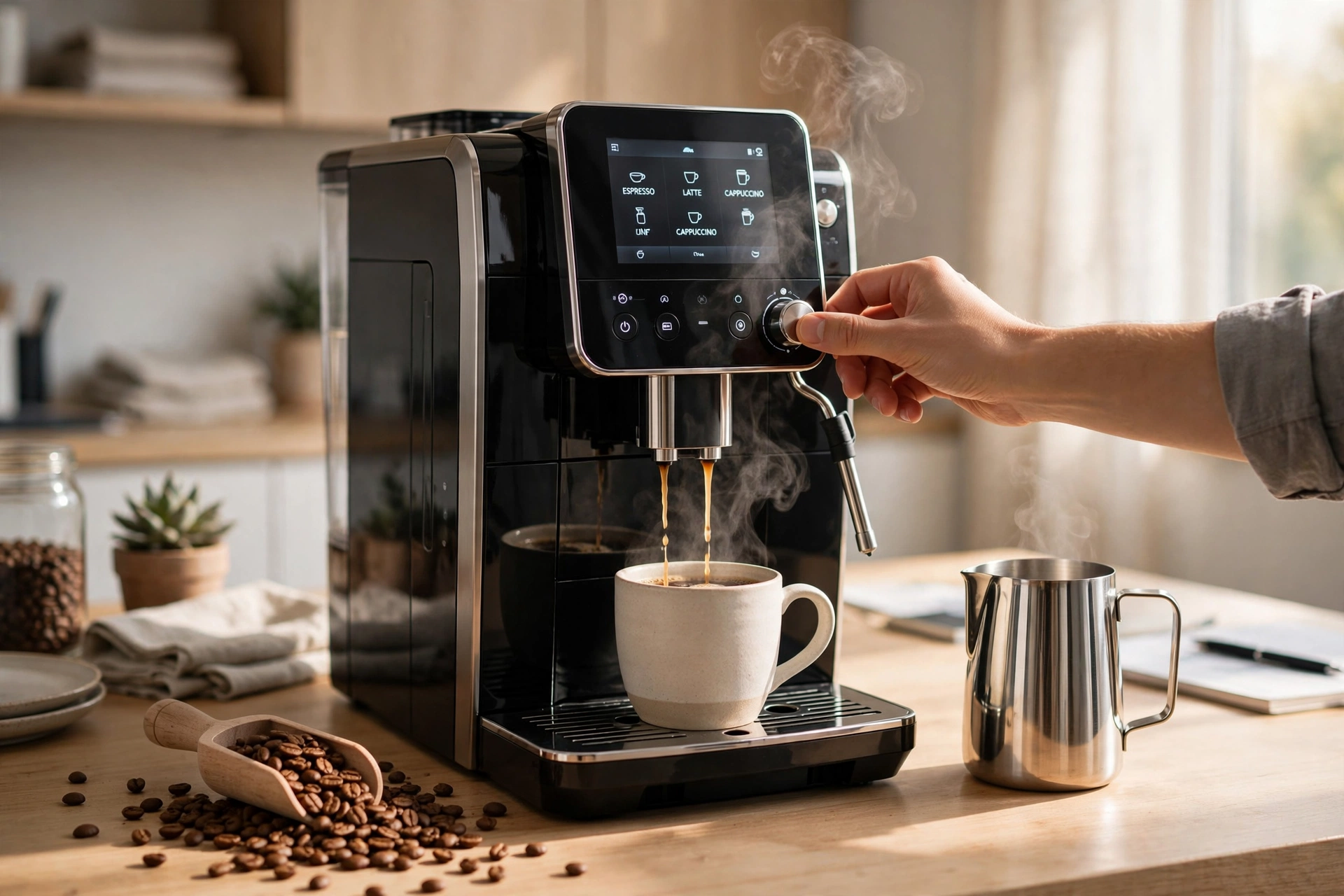
When executed correctly, there is no difference. By using specialty coffee and high-end equipment like the SENSA line, managed services can produce a cup that rivals any boutique cafe. The key is the consistency. In a traditional cafe, quality fluctuates based on the barista's mood or skill. In a managed, automated system, the parameters for temperature and pressure are locked in, ensuring the 100th cup of the day is identical to the first.
Final Thoughts on Managed Coffee Services
Choosing to implement managed coffee services is a decision to stop treating your beverage program as a chore and start treating it as a revenue driver. The consequences of sticking with a fragmented, DIY approach are clear: inconsistent quality, unpredictable costs, and the constant anxiety of a mechanical failure during your busiest hour.
By partnering with a specialist like Busy Bean Coffee, you remove the operational friction from your business. You gain the ability to serve a world-class cup of coffee without needing to become an expert in boiler pressure or bean origin. It is the most efficient way to scale your hospitality offering while protecting your margins.
If you are ready to stop managing machines and start managing your growth, visit www.busybeancoffee.com to explore our managed membership options. For those looking to refine their presentation, we also provide a comprehensive guide on where to buy latte art tools to ensure your drinks look as good as they taste.
Free Coffee Pairing Guide & Specialty Roast Cheat Sheet
Unlock the secrets of perfect brewing ratios, water temperatures, and specialty roast profiles. Download the guide.