Where Should You Look for Managed Coffee Services?
Many business owners make the mistake of searching for "coffee vending machines" when what they actually need is a partner to handle the entire ecosystem. Finding reliable managed coffee services isn't about browsing a generic marketplace; it is about identifying providers who integrate high-end hardware, consistent supply chains, and proactive maintenance into a single membership. Whether you are operating a luxury hotel, a high-traffic corporate office, or a boutique cafe, the best solutions are found through specialized managed service providers (MSPs) rather than retail equipment stores.
In my experience working with dozens of hospitality groups, the biggest point of failure is usually the "gap" between the equipment seller and the coffee roaster. When the machine breaks, the seller blames the beans; when the coffee tastes sour, the roaster blames the machine. A true managed service eliminates this friction by owning the entire stack. For those seeking high-touch support, we often recommend exploring a White Glove Coffee Service in Los Angeles CA or similar premium models that prioritize uptime over one-time sales.

What Exactly Are Managed Coffee Services and Where Do They Fit In?
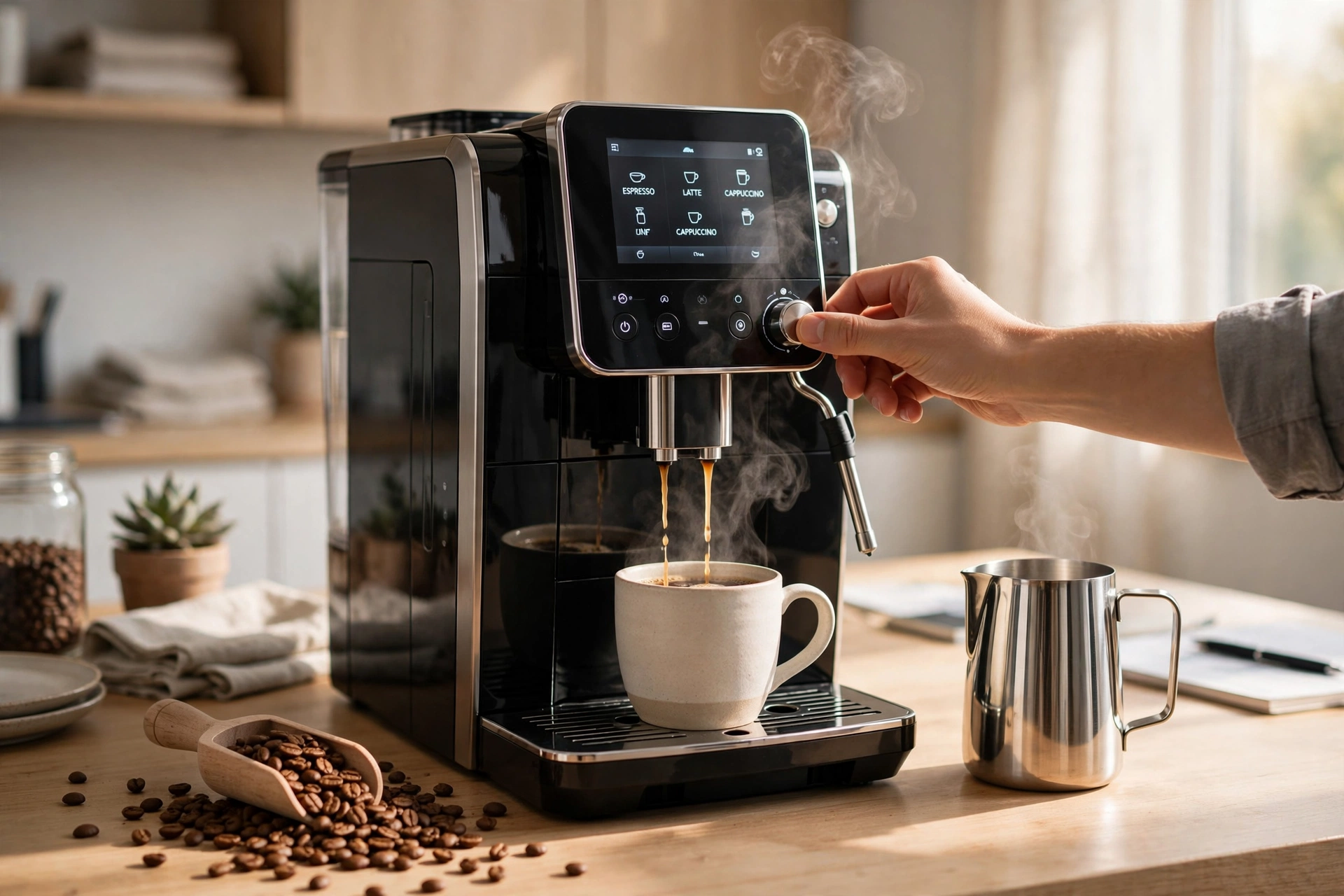
Managed coffee services are comprehensive, subscription-based beverage programs where a provider manages everything from the installation of professional-grade espresso machines to the recurring delivery of specialty coffee and technical upkeep. Unlike a traditional purchase model, where you buy a machine and hope it lasts, a managed service shifts the risk of equipment failure from the business owner to the provider.
📚
Definition
Managed Coffee Services are an all-inclusive operational model for beverage programs, encompassing equipment leasing (OpEx), professional installation, preventative maintenance, and a curated supply of coffee beans for a predictable monthly fee.
When determining where these services fit into your business, you have to look at your labor costs. If your staff is spending two hours a day cleaning machines or troubleshooting "Error 404" codes on a digital display, you aren't just losing coffee; you are losing productive payroll hours. This is why the shift toward managed models is accelerating. According to the National Coffee Association USA (NCA), the demand for specialty coffee in professional environments has surged as businesses use high-quality beverage programs as a tool for employee retention and guest satisfaction.
Now, here is where it gets interesting: the "where" isn't just about a geographic location, but about the service tier. You can find basic "bean-to-cup" rentals through office supply giants, but those are often glorified vending machines. For businesses that actually care about the profile of their Coffea arabica and the precision of their extraction, you need a specialty provider. For example, if you are in the Carolinas, looking into a coffee delivery service in Charlotte NC can bridge the gap between local roasting quality and professional equipment management.
Why Does the Source of Your Coffee Service Directly Impact Your Bottom Line?
The financial implication of where you source your coffee service comes down to the difference between CapEx (Capital Expenditure) and OpEx (Operating Expenditure). When you buy an espresso machine outright, you take a massive hit to your cash flow and inherit the depreciation of the asset. When you utilize managed coffee services, you move that cost to a monthly operating expense, which is often more tax-efficient and keeps your capital liquid for other growth initiatives.
Beyond the accounting, there is the "Hidden Downtime Cost." In a hotel lobby or a busy cafe, an espresso machine that is down for 48 hours doesn't just mean missed sales; it means a degraded brand experience. Research from the Specialty Coffee Association (SCA) emphasizes that consistency in brew temperature and pressure is the primary driver of quality in specialty coffee. If your equipment isn't calibrated weekly, your guests are drinking suboptimal coffee, which directly affects your reviews and repeat business.
I've seen this play out repeatedly. A client once tried to save money by buying a mid-range machine and hiring a local handyman for "maintenance." Within six months, the boiler scaled up, the pump failed, and they spent more on emergency repairs than they would have spent on a three-year managed contract. The mistake I made early on—and that I see constantly—is underestimating the technical complexity of a commercial espresso machine. These are not kitchen appliances; they are high-pressure industrial tools that require specialized knowledge to maintain.
For those in fast-growing hubs, integrating an automated coffee service in Fort Worth TX allows a business to scale its beverage output without adding more headcount to the payroll. By automating the consistency of the pour, you eliminate the "human error" variable that often leads to wasted beans and inconsistent taste.
How to Implement a Managed Coffee Program Step-by-Step
Transitioning to a managed model requires a strategic approach to ensure the service fits your actual volume and quality needs. You cannot simply pick the cheapest plan; you must align the equipment with the expected "cups per day" to avoid burning out the hardware.
- Audit Your Peak Volume: Track your busiest hour of the day. A machine that handles 10 cups an hour will fail if your morning rush demands 60.
- Define Your Quality Tier: Decide if you need "fuel" (fast, consistent, automated) or "experience" (manual espresso, latte art, barista-led). If the latter, you'll need to source specific latte art tools for foodservice pros to ensure the presentation matches the taste.
- Evaluate the Service Level Agreement (SLA): This is the most important part of the contract. Does the provider guarantee a 4-hour response time? Do they provide a loaner machine if yours needs to go to the shop?
- Test the Bean Profile: Ensure the provider offers high-grade Arabica coffee that suits your demographic.
- Plan the Infrastructure: Check your water filtration. According to NSF International, poor water quality is the leading cause of equipment failure in commercial food service. A managed provider should handle the filtration installation as part of the setup.
💡
Key Takeaway
The value of a managed service isn't the coffee itself, but the guarantee of uptime and the removal of technical liability from your plate.
At Busy Bean Coffee, we've streamlined this by offering an all-inclusive membership. We provide the SENSA equipment, the installation, and the maintenance, so the business owner only has to worry about the guest. For those needing a high-efficiency setup in coastal regions, an automated coffee service in Wilmington NC can provide the perfect balance of speed and specialty quality.

Comparing Your Coffee Service Options
When looking for where to host your beverage program, you generally face three paths. Most businesses start with the "Traditional" route, but as they scale, the inefficiencies become glaring.
| Feature | Traditional Purchase | Low-Cost Rental | Managed Coffee Service |
|---|---|---|---|
| Upfront Cost | Very High (CapEx) | Low to Medium | Zero to Minimal (OpEx) |
| Maintenance | Your Responsibility | Reactive (Break-Fix) | Proactive (Preventative) |
| Bean Quality | Variable/Sourced Alone | Generic/Low-Grade | Specialty/Curated |
| Risk Profile | High (Asset Depreciation) | Medium (Downtime) | Low (Provider Liability) |
| Best For | Owner-Operators/Purists | Low-Volume Offices | Hotels, Cafes, High-End Corp |
The "Low-Cost Rental" is often a trap. These providers usually give you an older machine and charge you a premium for the coffee beans to recoup their costs. You end up paying more for lower-quality coffee over the long run. A professional managed service, like those found in a White Glove Coffee Service in Denver CO, focuses on the lifetime value of the partnership, providing cutting-edge gear because it reduces their own maintenance costs.
Common Misconceptions About Managed Services
There is a persistent myth that managed services are "too expensive" for small businesses. Most guides get this wrong by only looking at the monthly fee and ignoring the cost of labor and repair. When you factor in the cost of a technician's visit (which can range from $150 to $300 per call) and the lost revenue during downtime, the managed model is almost always cheaper.
Another common misconception is that you lose control over your coffee quality. Some owners fear they will be forced to use a "house blend" that tastes like burnt rubber. In reality, top-tier managed services provide a curated selection of specialty coffee and allow you to adjust the roast profile to match your brand.
Finally, many believe that "automated" means "bad coffee." This is a dated perspective. Modern espresso machines use precision PID controllers to maintain temperature within a fraction of a degree, often producing a more consistent shot than a human barista who is tired at 7:00 AM. For teams with limited space, looking into the best office espresso machines for small teams in 2026 reveals that automation now supports specialty-grade extraction.
Frequently Asked Questions
Where is the best place to find a managed coffee provider for a luxury hotel?
For luxury environments, you should avoid general office supply companies and instead look for "White Glove" specialty providers. These are companies that specialize in the intersection of hospitality and coffee science. Look for providers who offer end-to-end management, meaning they handle the interior design of the coffee station, the plumbing, the machine calibration, and the staff training. A luxury guest expects a specific sensory experience, and only a provider who understands the nuance of specialty coffee and high-end equipment can deliver that consistently across a large property.
Can I use managed coffee services if I already own my equipment?
Some providers offer "maintenance-only" contracts, but the true power of a managed service is the synergy between the machine and the bean. In my experience, trying to fit a managed bean service onto an old, unmaintained machine leads to poor results. Most professional providers prefer to bring in their own certified equipment (like SENSA) because it allows them to guarantee the quality of the output. If you own your gear, it is often more cost-effective to trade it in for a managed membership to eliminate the risk of sudden, expensive failures.
How does a managed service handle water filtration and plumbing?
Water is the most overlooked component of any coffee program. Since coffee is 98% water, the mineral content determines both the taste and the lifespan of the machine. A professional managed service will perform a water analysis of your site and install a customized filtration system. This is essential because, as noted by NSF International, calcium buildup (scaling) is the primary cause of boiler failure. By managing the filtration, the provider protects their equipment and ensures that your coffee tastes the same every single day, regardless of local water fluctuations.
Is a managed coffee service better than hiring a full-time barista?
It depends on your business goals. If the coffee is the primary product (a dedicated cafe), a skilled barista is indispensable. However, for hotels, offices, or restaurants where coffee is a supporting amenity, a managed service is far superior. It provides "barista-level" quality through automation and professional calibration without the overhead of a full-time salary, benefits, and the risk of turnover. You get the consistency of a professional program without the management headache of staffing a specialized role.
What happens if the machine breaks during a holiday weekend?
This is where the "where" of your provider matters most. A local, managed provider will have a dedicated service team in your region. Your contract (the SLA) should explicitly state the response time for emergency repairs. Top-tier managed services often have a "swap-out" policy where they deliver a loaner machine immediately if the primary unit cannot be fixed on-site. This ensures that your business never stops serving coffee, which is a critical requirement for any high-traffic foodservice operation.
Final Thoughts on Managed Coffee Services
Finding the right partner for managed coffee services is not about searching for a vendor; it is about finding an operational partner. The shift from owning a machine to subscribing to a service is a strategic move that protects your cash flow, guarantees your quality, and frees your staff to focus on the guest rather than the equipment.
Whether you are looking for a White Glove Coffee Service in Los Angeles CA or a streamlined automated solution in the Carolinas, the goal remains the same: eliminate the friction between the bean and the cup. When the equipment is managed and the coffee is specialty-grade, your beverage program becomes a profit center rather than a maintenance headache.
If you are ready to stop worrying about boiler scales and broken pumps and start serving world-class coffee, we invite you to explore the all-inclusive solutions at Busy Bean Coffee.
Free Coffee Pairing Guide & Specialty Roast Cheat Sheet
Unlock the secrets of perfect brewing ratios, water temperatures, and specialty roast profiles. Download the guide.