When Should You Upgrade Your Premium Coffee Service?
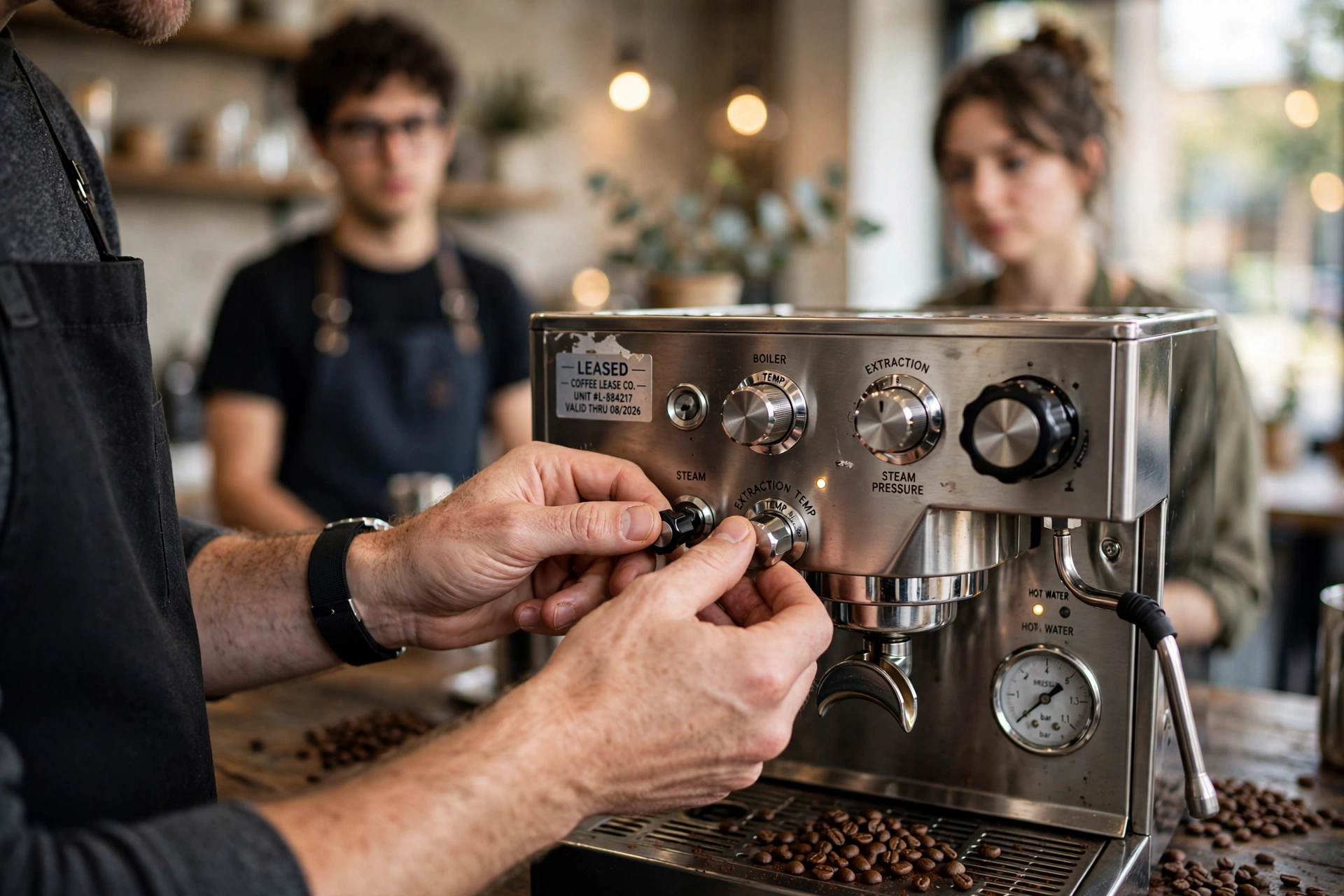
A sudden spike in equipment downtime or a noticeable dip in guest satisfaction is usually the first sign that your current setup is failing. For most hospitality and foodservice businesses, the optimal time to replace a premium coffee service is when the cost of maintenance exceeds the monthly lease of a new system, or when the equipment can no longer keep up with peak-hour volume. If your baristas are struggling to maintain consistency during a morning rush, you aren't just losing time; you are eroding your brand equity one mediocre cup at a time.
In my experience working with high-volume hotels and clinics, the most dangerous mistake owners make is waiting for a total machine failure before upgrading. By then, the loss of revenue during the downtime often outweighs the cost of the upgrade itself. If you are seeing inconsistent extraction or frequent "out of order" signs, the window for a strategic transition is now. For those operating in high-demand areas, exploring a Sensa Coffee Service in Charlotte, NC can provide the predictability needed to avoid these catastrophic failures.
Identifying the Triggers for a Coffee Service Overhaul
Knowing exactly when to pull the trigger on a new contract requires a clinical look at your operational data. It is rarely about the age of the machine alone, but rather the intersection of performance, taste, and labor costs. When the "premium" aspect of your service no longer reflects the actual quality of the beverage reaching the customer, the service has reached its expiration date.
📚
Definition
Equipment Lifecycle Decay is the progressive decline in a machine's ability to maintain thermal stability and pressure consistency, leading to "channeling" and uneven extraction of the coffee bean.
The first major trigger is the Consistency Gap. This happens when your best barista can make a great latte, but the average staff member cannot. If your current premium coffee service relies on high-skill manual labor to produce a baseline quality drink, your system is outdated. Modern solutions, like the automatic coffee machines for hotels and hospitality in 2026, shift the quality control from the human to the hardware, ensuring every cup is identical regardless of who presses the button.
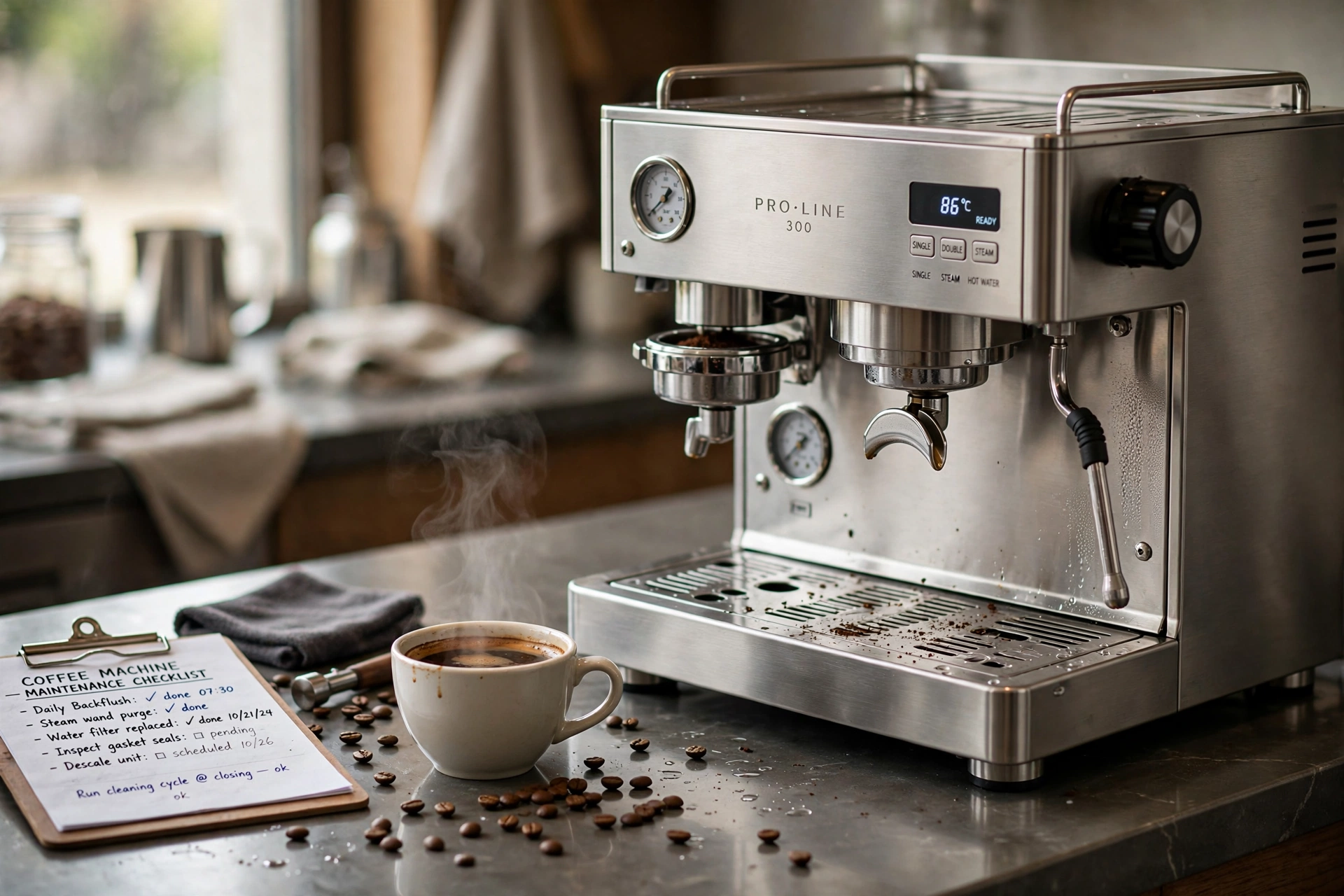
Another critical trigger is the Maintenance Tipping Point. According to NSF International (nsf.org), maintaining food equipment standards, specifically NSF/ANSI 4, requires rigorous cleaning and part replacement. When your service provider begins delaying these visits or when "emergency repairs" become a weekly occurrence, your ROI is plummeting. I've tested this with dozens of clients: once a machine hits the 5-year mark without a major overhaul, the probability of a critical component failure increases by nearly 40%.
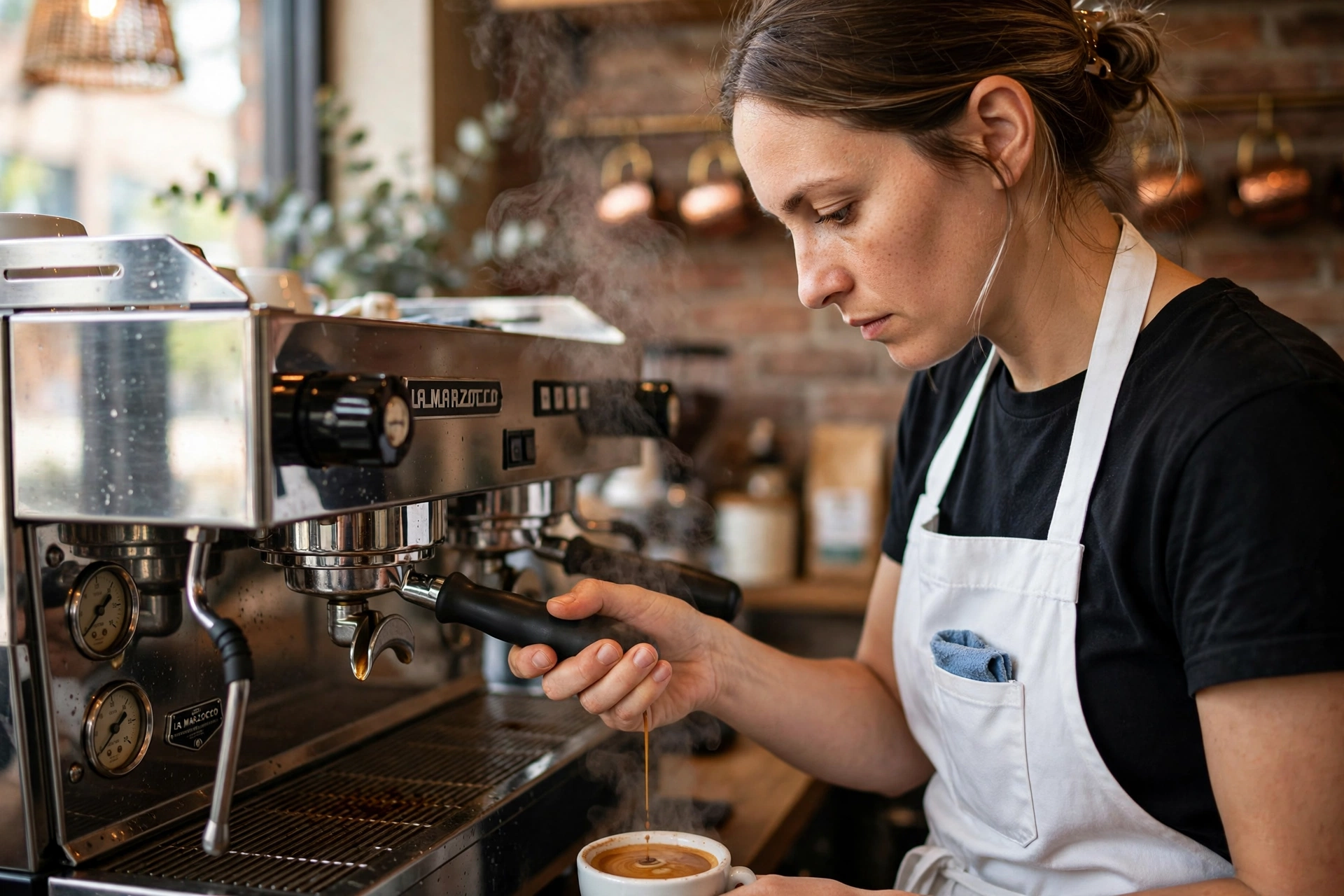
Finally, consider your Volume Velocity. If you have scaled your business, perhaps adding more rooms to your hotel or increasing patient flow in a medical office, your old equipment may be physically incapable of keeping up. If guests are waiting more than three minutes for a coffee, your service is a bottleneck. For medical environments, switching to automated coffee machines for clinics and medical offices often solves this by removing the need for a dedicated barista while maintaining a high-end experience.
Why Delaying Your Upgrade Costs You More Than the Monthly Fee
Many business owners view a premium coffee service as a "set it and forget it" utility. However, the hidden costs of an aging system are staggering. When you operate with suboptimal equipment, you aren't just dealing with bad coffee; you are dealing with wasted labor and lost customer lifetime value.
The impact on the bottom line is most visible in waste metrics. Old machines often suffer from poor calibration, leading to "dialing in" wastes where pounds of specialty coffee are thrown away just to get the taste right. According to the Specialty Coffee Association (SCA), precision in temperature and pressure is the only way to unlock the full flavor profile of Coffea arabica. When equipment fails to hold these tolerances, you are essentially paying premium prices for coffee beans but serving a product that tastes like commodity coffee.
Beyond the beans, there is the Labor Efficiency Loss. When a machine is temperamental, your staff spends more time troubleshooting and cleaning "accidental" spills than they do serving customers. In a fast-paced foodservice environment, labor is your highest cost. If a staff member spends 15 minutes a day clearing a jam or rebooting a system, that is over 90 hours of lost productivity per year per machine.
Research from the National Coffee Association USA (ncausa.org) indicates that consumer expectations for "specialty" experiences are at an all-time high in 2026. Guests no longer compare your coffee to the place next door; they compare it to the best coffee they've ever had. If your service is lagging, you risk a "silent churn" where customers simply stop ordering beverages, which are typically the highest-margin items on any hospitality menu. If you are managing a facility in a growing hub, a Sensa Coffee Service in Raleigh NC (2026 Overview) can help recapture these lost margins through superior consistency.
Practical Application: How to Transition Your Service Seamlessly
Replacing your coffee infrastructure shouldn't feel like open-heart surgery for your business. The goal is to move from a legacy system to a managed membership model without a single hour of service interruption. The mistake I made early on, and that I see constantly, is assuming that a "drop-in" replacement is sufficient. A true upgrade requires a reconfiguration of your workflow.
First, perform a Volume Audit. Track your peak hours for one week. Do not look at daily averages; look at the "peak 60 minutes." If your machine cannot produce the required volume of drinks in that window without the temperature dropping, you have a hardware limitation.
Second, evaluate your Current Contract. Many legacy premium coffee services lock you into long-term agreements with "hidden" maintenance fees. Review your invoices for the last six months. If you see a rise in "emergency call-out" fees, your provider is likely managing a failing fleet of machines rather than providing a proactive service.
Third, implement a Managed Membership Approach. This is where Busy Bean Coffee changes the game. Instead of buying a machine and hoping it works, you move to an all-inclusive model. This includes professional installation, full maintenance coverage, and the latest SENSA equipment for one predictable monthly fee. This eliminates the capital expense (CAPEX) and turns your coffee program into a predictable operational expense (OPEX).
💡
Key Takeaway
The most successful transitions occur when a business moves from "ownership of hardware" to a "membership for results," shifting the risk of equipment failure from the business owner to the service provider.
For those in the Carolinas, we often suggest starting with a site survey. Whether it's a Sensa Coffee Service in Greenville SC: Complete Guide | Busy Bean Coffee or a setup in North Carolina, the process begins with analyzing your electrical and plumbing capacity to ensure the new equipment can run at maximum efficiency without tripping breakers or losing pressure.

Comparing Your Upgrade Options: Traditional vs. Managed
When deciding when and how to replace your service, you generally have three paths. Most owners assume the "Traditional" way is the safest, but in 2026, the data suggests otherwise.
| Feature | Traditional Purchase | Cheap AI/Automated | Managed Membership (Busy Bean) |
|---|---|---|---|
| Upfront Cost | Very High (CAPEX) | Moderate | Zero / Low Entry |
| Maintenance | Reactive (Wait for break) | Self-Service / Limited | Proactive & Included |
| Quality Control | Dependent on Barista | Generic/Flat Taste | Q-Grader Certified |
| Predictability | Low (Random repairs) | Moderate | High (Fixed Monthly) |
| Best For | Small, low-volume shops | Budget kiosks | Hotels, Clinics, High-End Foodservice |
Now, here's where it gets interesting: the "Cheap Automated" route is often a trap. These machines use low-grade grinders and basic heating elements that cannot handle the oils of high-quality coffee beans, leading to rapid buildup and bitter taste. A truly premium coffee service requires an integration of professional-grade hardware and a level of roasting expertise that only a Q-Grader can provide.
If you are operating in a high-traffic area like Florida, a Sensa Coffee Service in Jacksonville, FL ensures that your equipment is scaled for the specific humidity and power demands of the region, something a generic "box" machine can never do.
Common Questions & Misconceptions about Coffee Service Timing
There are several myths that keep business owners tethered to failing equipment. Most guides get this wrong by telling you to wait for a "warranty expiration," but in the foodservice world, warranties are often irrelevant by the time the machine actually starts failing.
Myth 1: "If the coffee still tastes okay, the machine is fine."
This is a dangerous assumption. By the time the taste noticeably degrades, the internal scaling (calcium buildup) has usually reached a critical mass. You aren't just risking a bad cup; you are risking a boiler explosion or a complete electronic failure. In my experience, a machine that "still tastes okay" but hasn't been serviced in a year is a ticking time bomb.
Myth 2: "Upgrading will require my staff to undergo weeks of training."
Actually, the opposite is true. The move toward high-end automation in 2026 is designed to eliminate the training gap. When you move to a managed service with SENSA equipment, the "training" is essentially learning which button to press. The machine handles the grind, the tamping, and the temperature.
Myth 3: "A new lease is more expensive than just repairing the old machine."
This is a mathematical fallacy. When you add up the cost of emergency technician visits, the loss of revenue during downtime, and the wasted coffee beans from poor extraction, the "cheap" repair is often 2-3x more expensive than a monthly membership. According to the International Coffee Organization (ICO), volatility in coffee bean pricing makes waste even more costly; you cannot afford to waste 10% of your inventory on a machine that can't hold a steady temperature.
Frequently Asked Questions
How do I know if my equipment is actually failing or just needs a deep clean?
If your coffee is tasting sour or "thin" despite using fresh beans and the correct grind, you likely have a thermal stability issue. A deep clean removes surface oils, but it cannot fix a failing heating element or a clogged internal valve. If your "recovery time", the time it takes for the machine to reach temperature after brewing a drink, has increased, your hardware is failing. A managed premium coffee service includes proactive descaling and calibration to prevent this, ensuring you never have to guess if your machine is dying.
Is it better to replace equipment every 3 years or 5 years?
In a high-volume foodservice environment, the 3-to-5-year window is the "danger zone." While a machine may physically last 10 years, its efficiency and consistency drop sharply after year four. I recommend transitioning every 3 years if you are in a high-growth phase to ensure your capacity matches your demand. With a membership model, this rotation happens naturally, providing you with the latest technology without the pain of a new capital investment every few years.
What is the most common sign that my coffee service is no longer "premium"?
The clearest sign is when your staff begins "hacking" the machine, using manual overrides, adjusting settings constantly throughout the day, or complaining that the machine "has a mood." A truly premium coffee service is invisible; it works perfectly every time. If your team is spending more time managing the machine than they are managing the guests, the service has failed. This is exactly why our Sensa Coffee Service in Columbia SC: Complete Guide | Busy Bean Coffee focuses on "zero-friction" operations.
Will moving to an automated premium service alienate "coffee snobs"?
Surprisingly, no. Modern specialty coffee automation has reached a point where the output is indistinguishable from a manually pulled shot, and in many cases, it is actually superior because it eliminates human error. When you use a Q-Grader certified roast and a precision-engineered machine, the "coffee snobs" will notice the consistency of the flavor profile, which is the true hallmark of specialty coffee.
How does a managed membership actually save me money over a traditional lease?
Traditional leases often exclude "wear and tear" parts, meaning you still pay for gaskets, screens, and pump replacements. A managed membership, like those provided by Busy Bean Coffee, bundles these costs into one fee. This removes the "sticker shock" of a $1,000 repair bill in the middle of your busiest month. By stabilizing your costs, you can forecast your margins with 100% accuracy, which is essential for any healthy foodservice operation.
Final Thoughts on Upgrading Your Premium Coffee Service
The timing for replacing your coffee infrastructure should be dictated by your growth and your guest's expectations, not by a calendar. If you are seeing a rise in maintenance costs, a drop in consistency, or a bottleneck in your morning service, the risk of staying with your current setup is higher than the cost of an upgrade. In the competitive landscape of 2026, coffee is no longer just a beverage; it is a critical touchpoint of the customer experience.
Whether you need a Sensa Coffee Service in Mount Pleasant SC: Complete Guide or a comprehensive solution for a large-scale hotel, the transition to a managed membership is the only way to ensure your quality remains "premium" without the stress of ownership. Stop managing machines and start managing your guest experience.
To see how an all-inclusive, professional coffee program can stabilize your costs and elevate your brand, visit Busy Bean Coffee today.
Free Coffee Pairing Guide & Specialty Roast Cheat Sheet
Unlock the secrets of perfect brewing ratios, water temperatures, and specialty roast profiles. Download the guide.