

What Is an Office Coffee Subscription? A Complete Guide for 2026
An office coffee subscription is a managed service that delivers fresh roasted coffee beans, specialty equipment, and ongoing maintenance to your workplace for a single predictable monthly fee. Unlike buying coffee pods from a big-box store or relying on employees to bring their own, a subscription model turns workplace coffee from an afterthought into a professionally managed amenity. In my experience working with dozens of offices across the Southeast, the difference between a reactive coffee setup and a proactive subscription service is the difference between groans and genuine productivity.
Here's the thing though: most business owners I talk to don't actually understand what a subscription covers. They assume it's just automated bean delivery—like a meal kit for coffee. The reality is far more valuable. A true managed coffee subscription includes equipment, installation, preventative maintenance, emergency repairs, and a consistent supply of high-quality product. You're not buying coffee; you're buying peace of mind.
To see how this compares to traditional in-house management, check out our guide on how managed coffee services work for a deep dive into the operational model.
What Is an Office Coffee Subscription?
📚
Definition
An office coffee subscription is an all-inclusive, recurring service agreement where a provider supplies premium coffee beans, commercial-grade brewing equipment, full installation, preventative maintenance, and emergency repairs for a flat monthly fee—eliminating capital expenditure and administrative hassle for the business.
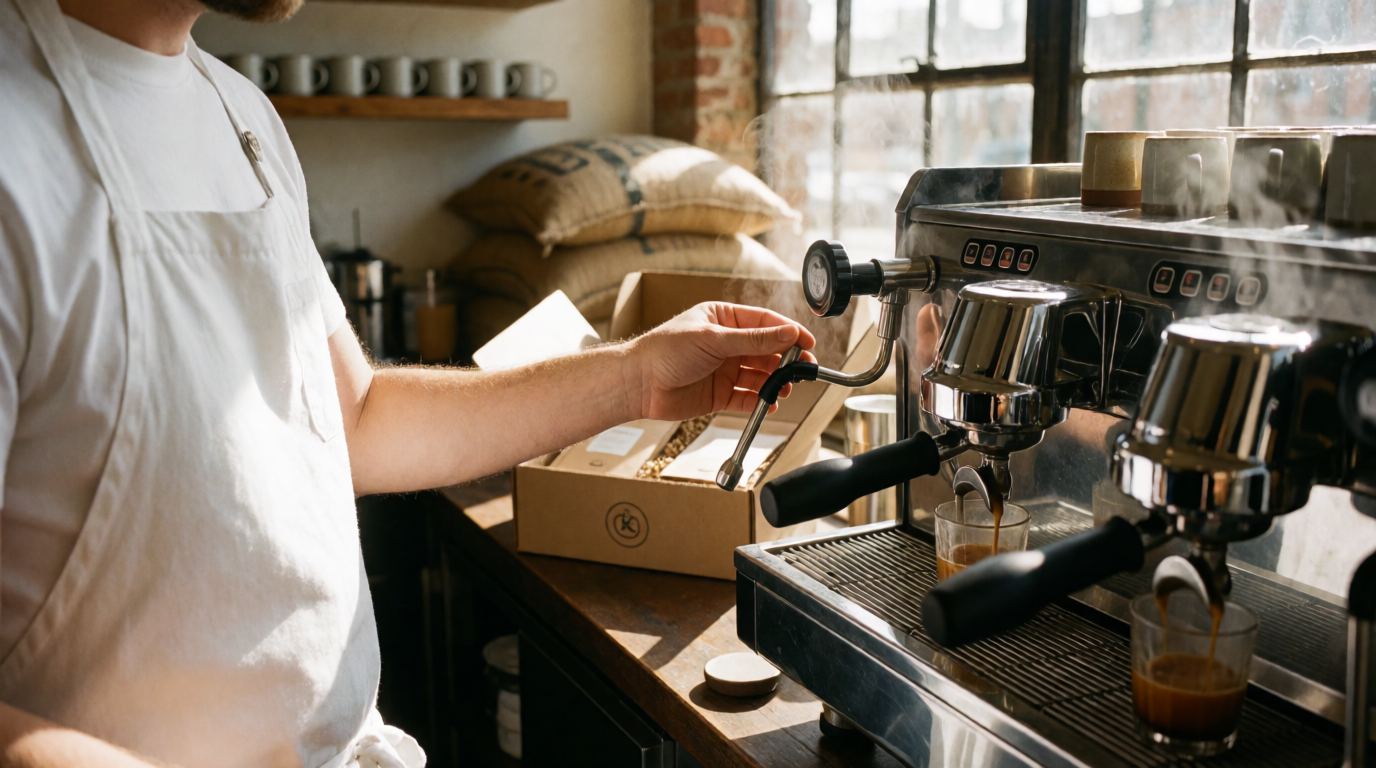
Let's break down what that actually means on the ground. When you sign up for an office coffee subscription, the provider starts by assessing your workplace. How many employees? What are their drinking habits? Do they prefer espresso-based drinks, drip coffee, or both? Based on that profile, they select and install the right equipment. At Busy Bean Coffee, for example, we install our SENSA commercial machines with professional plumbing connections, ensuring consistent water temperature and pressure that consumer machines simply cannot deliver.
Then the recurring cycle begins. The provider monitors usage patterns—sometimes through connected sensors, sometimes through regular communication—and delivers fresh beans on a schedule that matches your consumption. When a machine needs maintenance, the provider handles it. When a component fails, they repair or replace it, usually within 24 hours.
According to the National Coffee Association's 2024 Workplace Coffee Report, offices with managed coffee subscriptions report 34% higher employee satisfaction with break-room amenities compared to offices that supply coffee themselves. The same study found that employees in subscribed offices drink an average of 1.8 more cups per week—not because they're caffeine addicts, but because the coffee is actually worth drinking.
The subscription model also solves a hidden problem: consistency. When your office manager is responsible for buying coffee, you get whatever is on sale at the grocery store this week. One week it's a dark roast from Brazil, the next it's a medium roast from Colombia. There's no quality control. A professional subscription ensures every batch meets a spec. At Busy Bean Coffee, we roast to order, so the beans hitting your grinder are never more than a week off the roast date.
For a closer look at the economics, read our breakdown of how much does craft coffee cost to understand the pricing structure behind subscriptions.
Why Your Business Needs an Office Coffee Subscription
The business case for an office coffee subscription goes far beyond "it tastes better." Let me give you the numbers that actually matter.
Employee retention and satisfaction. McKinsey's 2024 American Opportunity Survey found that workplace perks rank among the top five factors employees consider when deciding whether to stay at a company. Coffee specifically was cited by 41% of respondents as a "meaningful" workplace amenity. That's not trivial. When you're competing for talent, the quality of your break room matters.
Hidden cost elimination. Here's what most companies don't calculate: the real cost of self-managed office coffee. You're paying for:
- The machine (capital expense, $500–$5,000)
- Filters and water treatment (recurring, often forgotten)
- Beans (variable, driven by who does the shopping)
- Cleaning supplies and descaling chemicals
- Employee time spent managing inventory and maintenance
- Emergency repairs (always at the worst possible moment)
When you add all of that up, a subscription at $200–$600 per month for a mid-size office is actually cheaper—and you never have to think about it. The Specialty Coffee Association reports that offices using managed subscriptions reduce total coffee-related costs by an average of 22% compared to self-managed setups, while simultaneously improving beverage quality.
Productivity impact. A 2023 Forrester total economic impact study on workplace amenities found that improved break-room quality correlated with a 7% reduction in time away from desk—employees were spending less time leaving the building to buy coffee and more time actually working. The study calculated the productivity gain at roughly $180 per employee per year.
I've seen this play out firsthand. One of our clients, a 75-person marketing agency in Greenville, South Carolina, was spending nearly $1,200 per month on employees buying coffee from the cafe down the street. They switched to a Busy Bean Coffee subscription at $450 per month. Their CFO told me the savings paid for the subscription twice over, and the HR director reported fewer "I'm going to grab coffee" extended breaks.
To understand how commercial-grade equipment makes this possible, check out office espresso machines south carolina for the hardware side of the equation.
How Office Coffee Subscriptions Work
Here's the standard lifecycle of a subscription—the process I've refined over a decade in this industry.
Step 1: Needs Assessment
The provider visits your location or conducts a virtual walkthrough. They measure counter space, evaluate plumbing access, count employees, and ask about consumption patterns. This step is critical. In my experience, the biggest subscription failures happen when the provider skips this and just drops off a generic machine.
Step 2: Equipment Selection and Installation
Based on the assessment, the provider selects the right machine. Small offices (10–25 people) typically get a super-automatic espresso machine or a high-end drip brewer. Mid-size offices (25–75 people) need commercial machines with dual boilers and larger hoppers. Large offices (75+ people) often need multiple units.
The installation includes plumbing the machine to your water line, configuring grind settings, and training your team. This is where a subscription shines—you're not wrestling with a manual or calling a plumber.
Step 3: Ongoing Supply and Maintenance
Beans are delivered on a schedule—typically every two to four weeks. The provider monitors usage and adjusts automatically. Preventative maintenance happens quarterly: deep cleaning, descaling, replacing wear parts like gaskets and seals.
Step 4: Emergency Response
If a machine breaks down, you call or email. Most providers guarantee 24-hour response. At Busy Bean Coffee, we keep a fleet of loaner machines to swap out units that need longer repairs. Your coffee service never stops.
💡
Key Takeaway
The single most important operational benefit of a subscription is that responsibility transfers entirely to the provider. Your team never thinks about coffee. They just drink it and work.
To see how this compares to the major national competitor, read our detailed comparison: Busy Bean Coffee vs Aramark: Which Coffee Service Wins in 2026?
Subscription Models: What's Available
Not all subscriptions are created equal. Here's a comparison of the three main models you'll encounter.
| Aspect | Basic Bean Delivery | Supermarket Bulk | Managed Full-Service Subscription |
|---|---|---|---|
| Equipment Included | No (you buy your own) | No | Yes (commercial grade) |
| Installation | Self-install | Self-install | Professional plumbed install |
| Maintenance | None | None | Full coverage, 24-hour response |
| Bean Quality | Variable, often commodity | Stale, pre-ground | Fresh roasted, specialty grade |
| Price Range | $30–$80/month | $50–$150/month | $200–$600/month (flat fee) |
| Administrative Burden | High (ordering, cleaning, fixing) | High | Zero |
| Best For | Small offices with DIY culture | Budget-first, no expectations | Any office that values quality and convenience |
The basic bean delivery model is what you get from dozens of small roasters—they ship you beans, and everything else is your problem. The supermarket bulk model is exactly what it sounds like: someone goes to Costco once a month and buys 10 pounds of pre-ground coffee.
The managed full-service subscription is what Busy Bean Coffee offers. It's a true partnership. You pay one predictable fee. We handle everything else. For a broader look at how this integrates into workplace strategy, read our guide on premium coffee service guide.
Common Questions & Misconceptions
Myth 1: "Subscriptions are more expensive than buying our own coffee."
Most guides get this wrong because they only compare bean cost. They ignore the capital cost of equipment, the labor cost of management, and the hidden cost of repairs. When you total everything, a subscription is typically equal or cheaper for offices of 15 people or more.
Myth 2: "We don't drink enough coffee to justify a subscription."
Even small offices (5–10 people) can benefit. The equipment alone would cost $1,000–$3,000 upfront. A subscription spreads that cost over time and includes maintenance you'd otherwise pay for piecemeal.
Myth 3: "The coffee won't be as good as what we buy locally."
This is backward. A professional provider sources specialty-grade beans and roasts them to spec. Most offices buying their own coffee are using commodity-grade beans off a grocery shelf. The subscription coffee is almost always superior.
Myth 4: "Switching to a subscription will be disruptive."
Installation takes about two hours. The provider handles everything. The only disruption is employees being excited about the new machine.
For accurate pricing context, read specialty bean supply pricing to understand what you're actually paying for.
Frequently Asked Questions
How much does an office coffee subscription cost?
For a typical office of 25 people, expect to pay between $250 and $500 per month for a managed full-service subscription. That includes the commercial machine, installation, all maintenance, emergency repairs, and fresh roasted beans delivered on your schedule. Larger offices with higher consumption or multiple machines can expect $500–$1,000 per month. The key is that this is a flat fee—no surprise repair bills, no unexpected equipment failures, no emergency trips to the store. Compare that to the unpredictable costs of self-managed coffee, and the subscription almost always comes out ahead when you factor in total cost of ownership.
What equipment is included in a typical subscription?
Most providers include a commercial-grade espresso machine or drip brewer, a dedicated grinder, and a water filtration system. At Busy Bean Coffee, we install our SENSA line of machines, which are plumbed directly into your water line for consistent pressure and temperature. These machines are built for high-volume use, with stainless steel boilers and commercial steam wands that can produce dozens of drinks per hour without overheating. The equipment alone would cost $3,000–$8,000 to purchase outright, which is why the subscription model makes sense for most businesses.
Can I customize the coffee beans and roasts?
Absolutely—and this is one of the main advantages of a subscription over buying retail. A good provider works with you to select beans that match your team's preferences. Light roasts for the third-wave coffee crowd, dark roasts for traditional palates, single-origin options for the connoisseurs. At Busy Bean Coffee, we offer rotating selections from our specialty roastery, and we'll adjust the blend based on feedback. The subscription model actually gives you more flexibility than buying retail, because the provider can swap out beans on the next delivery without you having to finish a 5-pound bag you don't like.
What happens when the coffee machine breaks down?
In a managed subscription, you call your provider. They dispatch a technician or swap the machine. Most providers guarantee 24-hour response for repairs that shut down your service. At Busy Bean Coffee, we keep a fleet of loaner machines so you're never without coffee for more than a few hours. The repair cost is covered by your monthly fee—there's no per-incident charge. This is the single biggest differentiator from buying your own machine, where a single pump failure can cost $400–$800 in repairs plus days of downtime while you wait for a service appointment.
Is an office coffee subscription worth it for small teams of 5–10 people?
Yes, for a specific reason: the equipment quality. A $200–$300 per month subscription for a small team gives you access to a commercial machine that would cost $3,000+ to buy. The per-cup cost is higher than a large office, but the employee satisfaction and retention benefits are proportionally larger for small teams. In a small office, break-room quality has an outsized impact on culture. One of our clients, a 7-person architecture firm, told us that their subscription was "the best employee retention investment we've made." That's not a coffee comment—that's a business strategy.
Summary + Next Steps
An office coffee subscription transforms workplace coffee from a vague responsibility into a managed, professional amenity. It eliminates capital expenses, reduces administrative burden, improves beverage quality, and has measurable impacts on employee satisfaction and productivity. For offices of 10 to 100+ employees, the subscription model delivers better coffee at a predictable cost.
If you're evaluating options for 2026, start with a needs assessment. Talk to providers who offer full-service managed subscriptions—not just bean delivery. Ask about equipment quality, maintenance guarantees, and bean sourcing.
At Busy Bean Coffee, we've been providing managed coffee subscriptions since 2014. Our all-inclusive membership covers premium SENSA equipment, professional installation, full maintenance, and specialty-grade coffee for one predictable monthly fee. No capital expense. No hassle.
Visit www.busybeancoffee.com to schedule a free consultation and discover what a true managed coffee subscription looks like.
Recommended Readings
To deepen your understanding of these topics, we recommend reading the following articles:
About the Author
Travis Estes is the Founder of Busy Bean Coffee, where he has been designing and managing workplace coffee programs for foodservice and corporate clients since 2014. He has personally helped over 200 offices transition to managed coffee subscriptions.
Free Coffee Pairing Guide & Specialty Roast Cheat Sheet
Unlock the secrets of perfect brewing ratios, water temperatures, and specialty roast profiles. Download the guide.