What Are Commercial Espresso Machines and How Do They Work?
Most business owners treat coffee equipment as a simple appliance purchase, but in the foodservice industry, the wrong machine is a liability that drains labor and kills margins. When we look at the operational demands of a high-volume cafe or hotel, commercial espresso machines are not just larger versions of home brewers; they are precision-engineered industrial tools designed for thermal stability, extreme durability, and rapid recovery times. These machines allow a barista to pull consecutive shots of espresso without the temperature dropping or the pressure fluctuating, ensuring that the 100th cup of the morning tastes exactly like the first.
📚
Definition
Commercial espresso machines are heavy-duty brewing systems designed to produce high-quality espresso consistently under high-volume conditions. Unlike consumer models, they feature larger boilers, professional-grade pumps, and specialized heat exchange or dual-boiler systems to handle simultaneous brewing and milk steaming.

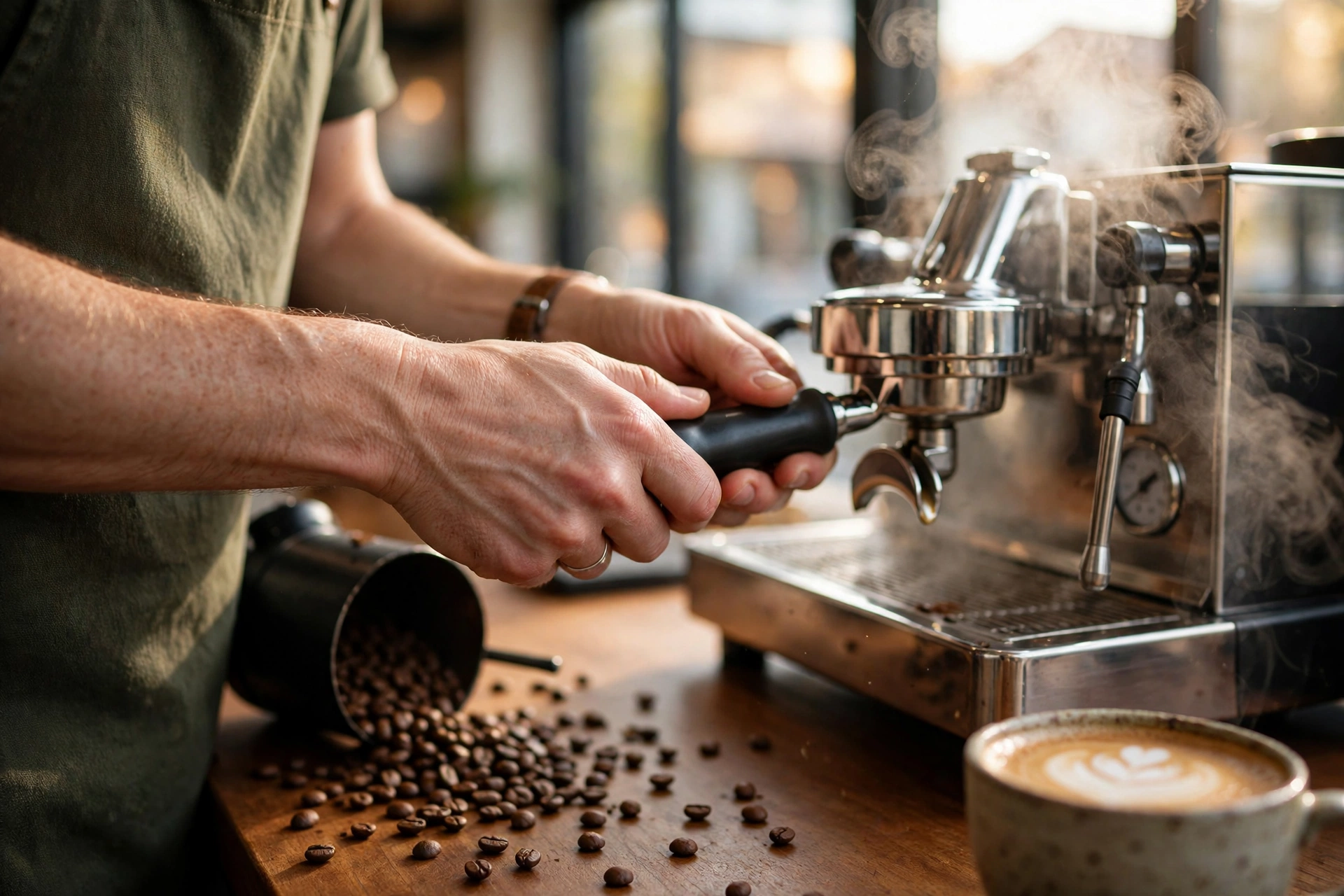
In my experience working with dozens of specialty coffee shops, the most common mistake I see is the "prosumer" trap. Business owners buy a high-end home machine thinking it can handle 50 lattes an hour. Within three months, the pump fails or the temperature swings become so erratic that the coffee tastes sour. A true commercial unit is built with components—like E61 groups or saturated groups—that can withstand 12 hours of continuous operation without breaking a sweat. These machines are the heartbeat of any beverage program, transforming a raw coffee bean into a concentrated shot of flavor through precise pressure and temperature control.
How Do These Machines Actually Produce a Consistent Shot?
To understand the mechanics of a professional system, you have to understand the relationship between pressure, temperature, and time. At its core, an espresso machine is a water heating and delivery system. To produce a true espresso, water must be forced through a compacted "puck" of finely ground Coffea arabica at approximately 9 bars of pressure. While many home machines claim to do this, they often struggle with "thermal drift," where the water temperature drops as soon as it hits the group head.
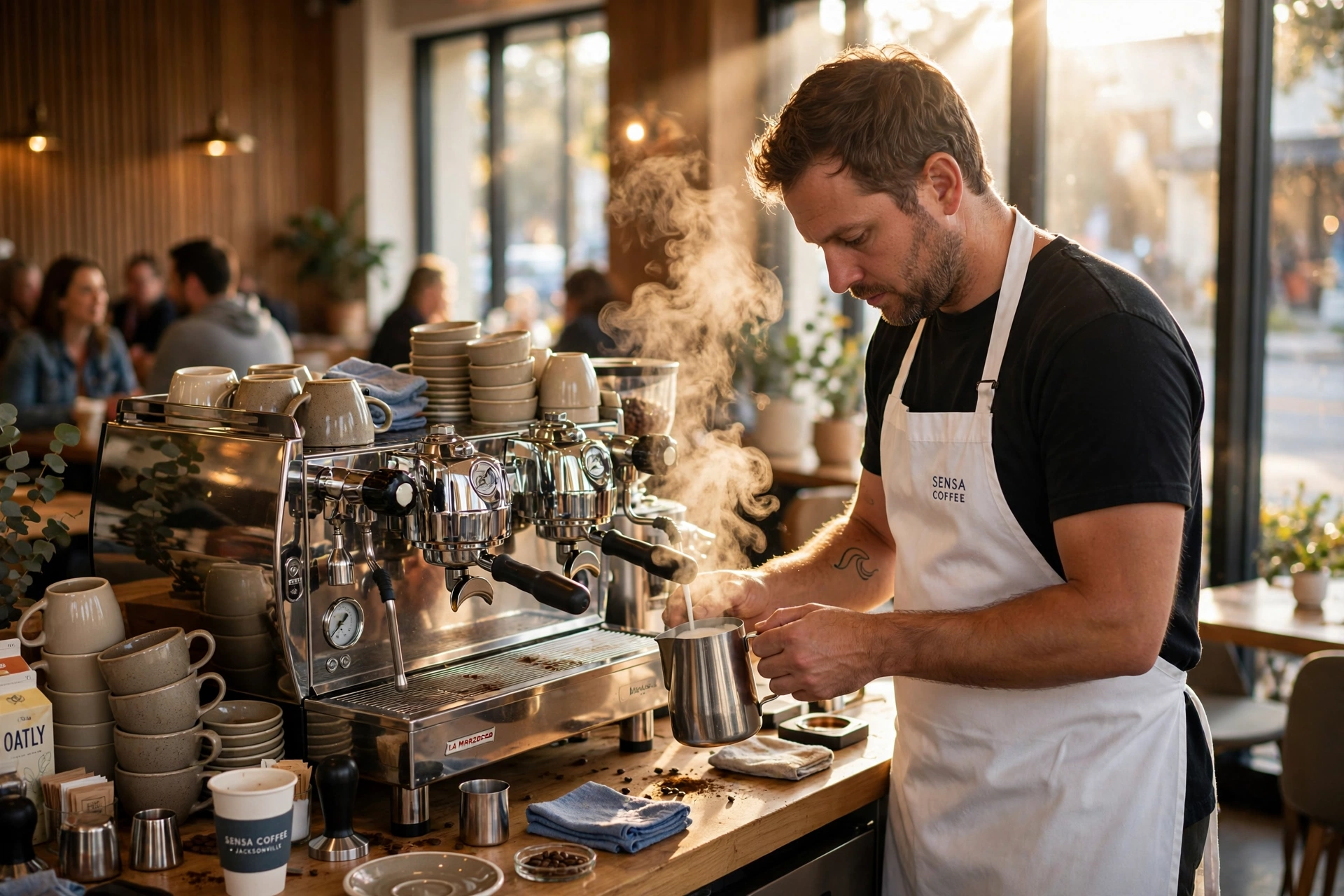
Commercial systems solve this through advanced engineering. For instance, many high-end models use a dual-boiler system: one dedicated boiler for the espresso extraction and another for the steam wand. This prevents the common "fighting" between brewing and steaming, allowing a barista to foam milk while simultaneously pulling shots. According to the Specialty Coffee Association (SCA), maintaining a strict temperature window—typically between 195°F and 205°F—is fundamental to extracting the complex sugars and acids of specialty coffee without introducing bitterness.
The internal plumbing of these machines is also a critical differentiator. Commercial units often utilize rotary pumps rather than vibration pumps. Rotary pumps are quieter, more durable, and allow for direct plumbing into a water line. This is where the logistics of a business come into play; you cannot realistically refill a small water tank during a Saturday morning rush. By integrating with a professional water filtration system, these machines protect their internal boilers from scale buildup, which is the number one killer of espresso equipment. When we design solutions at Busy Bean Coffee, we always emphasize that the machine is only as good as the water going into it.
Why Does Investing in Professional Equipment Matter for Your Bottom Line?
The decision to invest in high-grade commercial espresso machines is rarely about the "perfect sip" alone; it is about throughput and labor costs. In a commercial environment, "seconds" are the primary currency. If a machine takes 30 seconds to recover its temperature between shots, you are losing potential revenue every single minute. High-capacity machines offer "rapid recovery," meaning the boiler can replenish heat almost instantly, allowing for a seamless flow of service.
Beyond speed, there is the issue of consistency. According to market data from the National Coffee Association USA (NCA), consumer preferences are shifting toward higher-quality, specialty-grade beverages. If your machine produces a shot that is inconsistent—sometimes over-extracted and bitter, sometimes under-extracted and sour—you lose customer loyalty. A machine that maintains precise thermal stability ensures that your brand is associated with quality, regardless of who is operating the machine.
Furthermore, the cost of ownership is significantly lower over a five-year horizon when using professional gear. While the initial capital expenditure is higher, the build quality is vastly superior. A professional machine is designed to be serviced, not replaced. Components like gaskets, shower screens, and pump seals are standardized and replaceable. If you use a low-grade machine, a single blown seal can put your entire beverage program offline for a week. With a commercial setup, these are routine maintenance tasks that can be handled without shutting down the business.
💡
Key Takeaway
The ROI of a commercial espresso machine is found in the intersection of "shots per hour" and "machine uptime." A reliable machine reduces labor stress and prevents the revenue loss associated with equipment failure.
Practical Application: How to Choose and Implement the Right System
Choosing a machine isn't about buying the most expensive model; it is about matching the equipment to your specific volume and menu. I've seen shops buy 3-group machines when a 1-group would have sufficed, wasting precious counter space and electricity. Conversely, I've seen hotel breakfast bars install a single-group machine only to have it crash under the pressure of 100 guests arriving at 7:00 AM.
Here is the professional framework for implementation:
- Analyze Your Peak Volume: Determine the maximum number of drinks you expect to serve in your busiest hour. If you are pushing 60+ drinks an hour, you need a multi-group machine with a large steam boiler.
- Assess Your Water Quality: You cannot plug a commercial machine into a standard wall tap and expect it to last. You must install a commercial-grade filtration and softening system. This prevents calcium buildup that can ruin a boiler in months.
- Optimize Your Workflow: Place the machine in a "cockpit" arrangement. The barista should be able to reach the grinder, the machine, and the knock-box without taking more than one step.
- Train for Consistency: Equipment is only half the battle. Your staff must understand "dialing in"—the process of adjusting the grind size to match the flow rate of the machine.
- Establish a Maintenance Schedule: Daily backflushing with detergent and weekly deep cleans are non-negotiable.
At Busy Bean Coffee, we remove the guesswork from this process. Instead of forcing a business to manage the capital expense and technical setup, we provide all-inclusive managed coffee solutions. We handle the installation of premium SENSA equipment and provide the ongoing maintenance that keeps these machines running at peak efficiency. This transforms a complex technical challenge into a predictable monthly utility.

Comparing Your Equipment Options: Which Path is Right?
Not all "commercial" machines are created equal. Depending on your business model, you might need a fully manual machine, a semi-automatic, or a super-automatic system. The choice depends on your skill level and your priority: total control versus total convenience.
| Feature | Manual/Semi-Auto | Super-Automatic | Managed Solution (Busy Bean) |
|---|---|---|---|
| Control | Total (Barista controlled) | Minimal (Push button) | Professionally Calibrated |
| Speed | Medium (Depends on skill) | Fast (Automated) | High (Optimized Workflow) |
| Labor Cost | High (Requires trained staff) | Low (Anyone can use) | Optimized (Less downtime) |
| Consistency | Variable (Human error) | Consistent (Mechanical) | Guaranteed (Managed) |
| Upfront Cost | High CapEx | Medium to High CapEx | Zero/Low (Membership) |
| Best For | Specialty Coffee Shops | Hotels, Offices, Quick Serve | Growth-focused Foodservice |
Now, here is where it gets interesting: many businesses choose super-automatics because they don't want to hire a trained barista. While this solves the labor problem, it often creates a quality problem. Super-automatics can struggle with the nuances of coffee roasting, often producing a flatter, more generic cup. If your brand identity is built on "premium coffee," a semi-automatic machine paired with a skilled operator is the only way to go. However, if coffee is a secondary amenity to your main business, the efficiency of an automatic system is hard to beat.
Common Questions and Misconceptions About Professional Gear
Most guides on espresso machines get the "quality" conversation wrong. They tell you that a more expensive machine automatically means better coffee. That is simply not true. A $20,000 machine will produce terrible coffee if the beans are stale or the grind is incorrect. The machine is a delivery vehicle; the quality comes from the coffee bean and the skill of the operator.
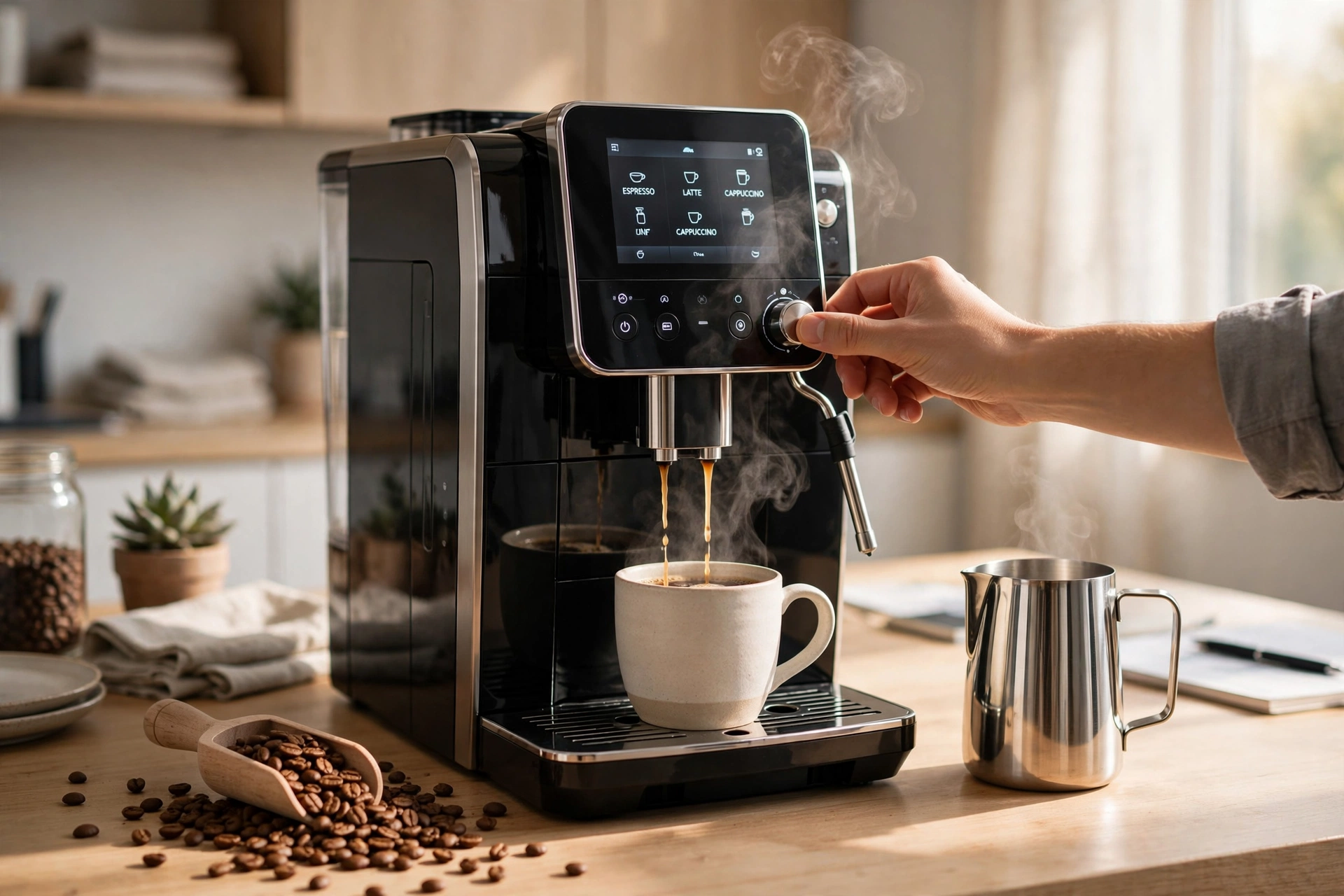
Another common myth is that "automatic" means "low quality." While that was true ten years ago, modern super-automatics have improved significantly. However, they still cannot replicate the "texture" of milk produced by a manual steam wand. The process of stretching and rolling the milk is an art form that requires human tactile feedback.
Finally, many owners believe that "commercial" just means it can handle more cups. That is a dangerous oversimplification. True commercial grade means the machine meets specific safety and sanitation standards. For example, equipment certified by NSF International ensures that the machine is constructed from materials that won't contaminate food and can be thoroughly sanitized. If you are operating a licensed commercial kitchen, using non-certified equipment can lead to failed health inspections and significant liability.
Frequently Asked Questions
What is the difference between a semi-automatic and an automatic commercial espresso machine?
A semi-automatic machine requires the barista to manually stop the shot based on the volume of espresso in the cup. This allows for the highest level of control and quality, as the operator can adjust for slight variations in the coffee's behavior. An automatic machine uses a programmable volumetric dose, meaning it stops the flow of water once a specific amount has passed through the group head. While automatic machines increase speed and consistency across multiple staff members, they remove the "human touch" and the ability to make real-time adjustments to the extraction.
How often should a commercial espresso machine be serviced?
Basic maintenance is a daily requirement, including backflushing the group heads and cleaning the steam wands. However, a professional deep-service should occur every three to six months. This includes replacing group gaskets, checking the pump pressure, and descaling the boilers if the water filtration system has any breakthrough. In my experience, ignoring the six-month service interval is the fastest way to destroy a machine's longevity. A small investment in a gasket today prevents a massive leak and a total system shutdown during your busiest season.
Do I need a dedicated water line for commercial espresso machines?
Yes, for any serious business, a direct water line is essential. Relying on a manual reservoir is not sustainable in a high-volume environment and increases the risk of the pump running dry, which can burn out the motor. A direct line, paired with a high-quality filtration system, ensures a constant supply of purified water. This not only protects the internal components from mineral buildup but also ensures that the taste of the coffee remains consistent, as local tap water variations can drastically alter the flavor profile of the espresso.
What is "thermal stability" and why does it matter in a professional setting?
Thermal stability refers to the machine's ability to maintain a constant water temperature throughout the entire extraction process. In home machines, you often see "temperature surfing," where the heat fluctuates wildly. In a commercial environment, if the temperature drops by even five degrees during a shot, the extraction fails, leading to a sour, under-extracted beverage. Professional machines use heavy brass group heads and PID controllers (Proportional-Integral-Derivative) to lock in the temperature, ensuring that every shot is chemically balanced.
Which is better: a single-boiler or a dual-boiler system for a business?
For any business that serves milk-based drinks (lattes, cappuccinos), a dual-boiler system is vastly superior. In a single-boiler machine, the unit must switch between "brew mode" and "steam mode," which creates a significant delay and forces the operator to wait. A dual-boiler system allows for simultaneous brewing and steaming without any compromise in pressure or temperature. If you are running a high-volume operation, a single-boiler machine will become a bottleneck that slows down your entire service line and frustrates your customers.
Final Thoughts on Commercial Espresso Machines
Understanding the technical requirements of commercial espresso machines is the first step in building a profitable beverage program. Whether you are opening a boutique cafe or adding a coffee station to a hotel lobby, the equipment you choose will either be an engine for growth or a constant source of operational friction. The key is to prioritize thermal stability, durability, and throughput over flashy features.
If the prospect of managing water filtration, technical maintenance, and capital expenditure feels overwhelming, there is a better way. At Busy Bean Coffee, we specialize in taking the headache out of coffee operations. Our all-inclusive managed coffee membership provides you with premium SENSA equipment, professional installation, and full maintenance coverage for one predictable monthly fee. You get the power of world-class machinery without the risk of ownership.
Stop worrying about pump failures and temperature swings. Focus on your guests and let us handle the gear. Visit www.busybeancoffee.com today to see how we can elevate your coffee service.
Recommended Readings
To deepen your understanding of these topics, we recommend reading the following articles:
- The Complete Guide to White Glove Coffee Service
- Ultimate Guide to All-Inclusive Coffee Service for Businesses
- Ultimate Guide to Automated Coffee Machines for Business
- Ultimate Guide to Specialty Coffee Equipment for Business
Reference Sources
For deeper context on this topic, these sources provide additional authoritative perspectives:
- Wikipedia — general knowledge reference
These references help establish a complete view of the subject matter.
Free Coffee Pairing Guide & Specialty Roast Cheat Sheet
Unlock the secrets of perfect brewing ratios, water temperatures, and specialty roast profiles. Download the guide.