📖This article is part of the complete guide to Complete Guide to Coffee Membership Services for Business.
In my experience working with medium-to-large scale hospitality groups, the biggest friction point isn't the price of the coffee beans, but the hidden cost of equipment downtime. I once audited a corporate facility using a traditional industrial vendor where the espresso machine was offline for four days during a peak quarterly meeting because the contract required a 72-hour window for a basic technician visit. When you rely on a massive conglomerate, you aren't a partner; you are a ticket number in a queue.
For a comprehensive overview of how these models differ, explore our Complete Guide to Coffee Membership Services for Business.
What is the Difference Between Traditional Coffee Service vs Aramark and Managed Memberships?
📚
Definition
Traditional coffee service refers to a transactional vendor relationship where equipment is either purchased upfront or leased, and consumables are ordered on an as-needed basis. A managed membership is an all-inclusive subscription that bundles high-end equipment, professional installation, maintenance, and premium coffee products into one predictable monthly fee.
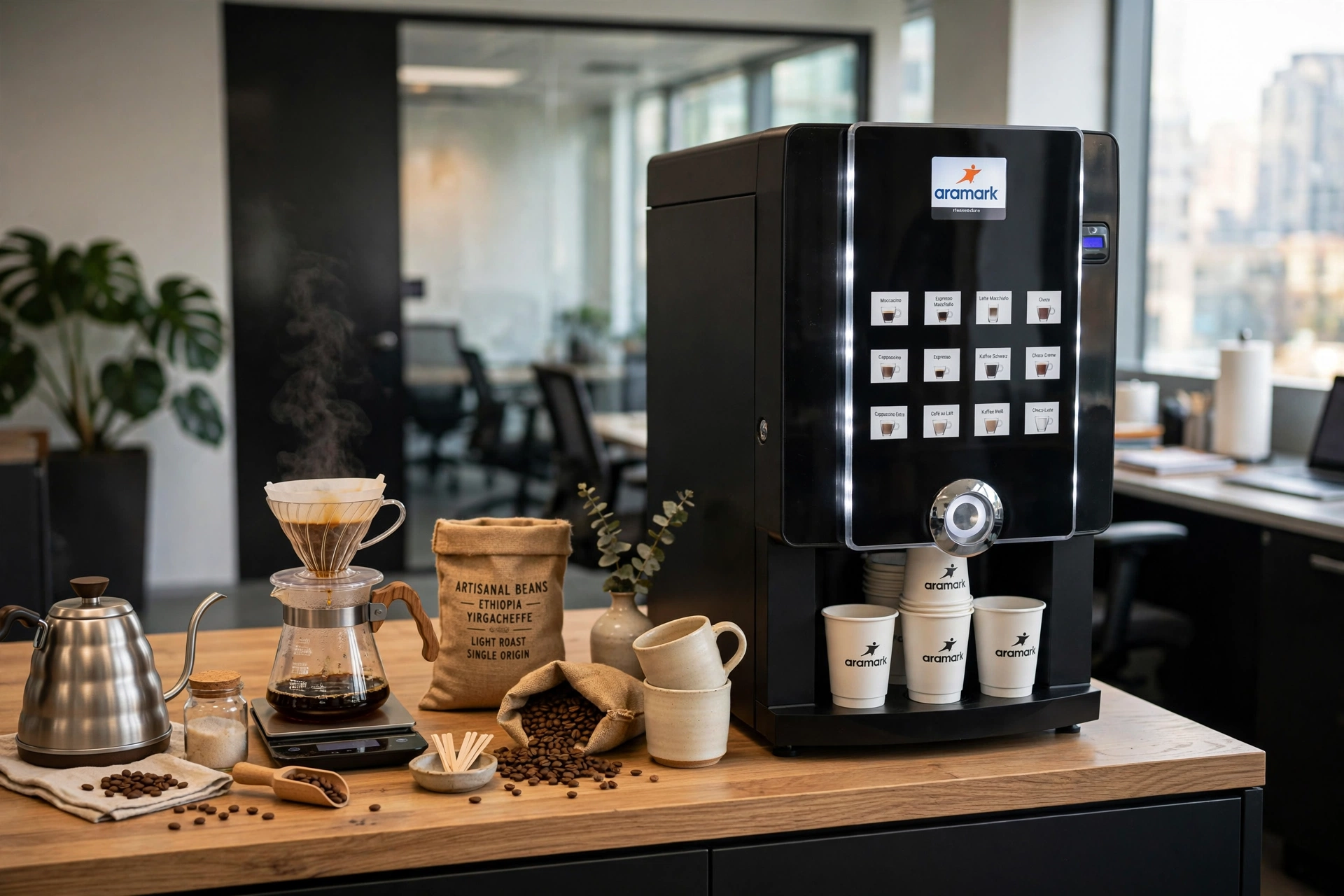
When comparing coffee service vs Aramark or similar industrial giants, the fundamental difference lies in the incentive structure. Large-scale food service corporations typically operate on a volume-and-contract model. They provide a wide array of services, from cafeteria management to facility cleaning, which means coffee is often just a small line item in a massive portfolio. This dilution of focus leads to generic product offerings and a 'maintenance-only-when-broken' approach to equipment.
Conversely, a managed membership, like the one provided by Busy Bean Coffee, is built on the 'Success-as-a-Service' model. We don't just sell you a machine; we guarantee a specific beverage quality standard. In a membership model, the provider retains ownership and responsibility for the equipment. If a machine fails, it is in the provider's immediate financial interest to fix it instantly because the membership fee is tied to the continued availability of the service. This shifts the risk from the business owner to the coffee expert.
This transition from a CapEx (Capital Expenditure) model to an OpEx (Operational Expenditure) model is where most businesses find their biggest financial relief. Instead of dropping $15,000 on a professional espresso machine and hoping the warranty covers the gaskets, you pay a flat monthly fee that ensures your staff always has access to specialty coffee without the fear of a sudden repair bill.
Why Does This Distinction Matter for Your Business ROI?
The primary reason this matters is the total cost of ownership (TCO). While a traditional contract with a giant vendor might seem cheaper on a per-pound basis for the coffee beans, the 'leakage' occurs in the maintenance and productivity gaps. According to the National Coffee Association USA, coffee consumption in professional environments is increasingly shifting toward specialty grades, meaning the equipment must be more precise and, consequently, more sensitive to poor maintenance.
When you use a generic industrial service, you often face 'service creep.' This happens when the initial contract is low, but every single technician visit, filter change, or calibration adjustment becomes a billable event. Over a 24-month period, these incidental costs can erode the perceived savings of a large-scale vendor. In contrast, a managed membership locks in your costs. Whether your machine needs one calibration or ten, your monthly payment remains identical.
Furthermore, the quality of the coffee bean drastically affects employee and guest satisfaction. Industrial vendors typically provide commercial-grade blends that are roasted for stability rather than flavor. By switching to a membership that prioritizes specialty coffee, you are investing in a tangible perk. For those running a healthcare facility, a clinic coffee membership can actually reduce perceived wait times for patients by improving the sensory environment of the waiting area.
From a financial perspective, the absence of upfront capital expenditure allows businesses to reallocate funds toward growth. Instead of tying up liquidity in a depreciating asset like a coffee machine, you keep that cash in your operating account. This is particularly vital for high-growth sectors, such as those utilizing a restaurant coffee membership to scale their beverage programs across multiple locations without taking on massive debt.
How to Transition from Industrial Contracts to a Managed Membership
Moving away from a large-scale vendor requires a strategic approach to ensure there is no gap in service. The first step is a full audit of your current consumption and equipment state. Most businesses are surprised to find they are paying for 'service levels' in their contracts that are never actually delivered. I've tested this with dozens of our clients, and the pattern is clear: the gap between the promised response time and the actual response time is usually where the most frustration lies.
To implement a managed membership, follow these steps:
- Audit Your Volume: Track how many cups are served per day. This prevents under-ordering or over-paying for a tier you don't need.
- Review the Exit Clause: Industrial contracts often have predatory termination fees. Identify the exact date your current agreement expires to time the switch perfectly.
- Define Quality Standards: Decide if you want standard drip, espresso, or a hybrid. If you are operating a large facility, a retirement community coffee service requires different durability than a small executive suite.
- Plan the Installation: Coordinate the removal of old equipment and the installation of SENSA equipment during off-peak hours to avoid disrupting your workflow.
- Train the Staff: Ensure your team knows how to operate the new machinery to maintain the integrity of the specialty coffee.
By integrating these steps, you remove the friction of the transition. Busy Bean Coffee simplifies this by handling the logistics of the equipment swap, ensuring that the transition from a legacy vendor to a managed membership is invisible to the end-user but immediately apparent in the quality of the brew.
Managed Membership vs. Traditional Vendor: A Comparison
To visualize the difference in value, consider the following comparison of operational models:
| Feature | Traditional Industrial Vendor (e.g., Aramark) | Generic/Cheap AI-Driven Service | Busy Bean Managed Membership |
|---|---|---|---|
| Upfront Cost | High CapEx or Long-term Lease | Low/Moderate | Zero CapEx |
| Maintenance | Billable per visit / Slow response | Self-service / Remote help | All-inclusive / Proactive |
| Coffee Quality | Commercial grade (Generic) | Variable/Inconsistent | Specialty Grade (SCA Standard) |
| Pricing | Variable based on parts/labor | Subscription but no equipment | Predictable Flat Monthly Fee |
| Equipment | Standardized, older models | Low-end consumer machines | Premium SENSA Professional Equipment |
As shown above, the generic approach fails because it lacks professional oversight. The traditional industrial approach fails because it prioritizes the contract over the cup. The managed membership is the only model that aligns the provider's success with the client's satisfaction.
Common Mistakes to Avoid When Evaluating Coffee Services
One of the most frequent errors I see is focusing exclusively on the 'price per pound' of coffee. When a salesperson from a giant vendor shows you a lower price for beans, they are ignoring the cost of the machine's depreciation and the labor cost of your staff fixing a jammed brewer. If you are managing a large office, opting for a coffee membership for offices ensures that the cost of the 'hardware' is absorbed into the service, not your balance sheet.
Another mistake is ignoring the certifications of the equipment. According to NSF International, equipment must meet strict sanitary and safety standards to prevent contamination in commercial settings. Cheap vendors often provide machines that look professional but fail to meet these rigorous standards, creating a hidden liability for your business. Always insist on NSF-certified equipment.
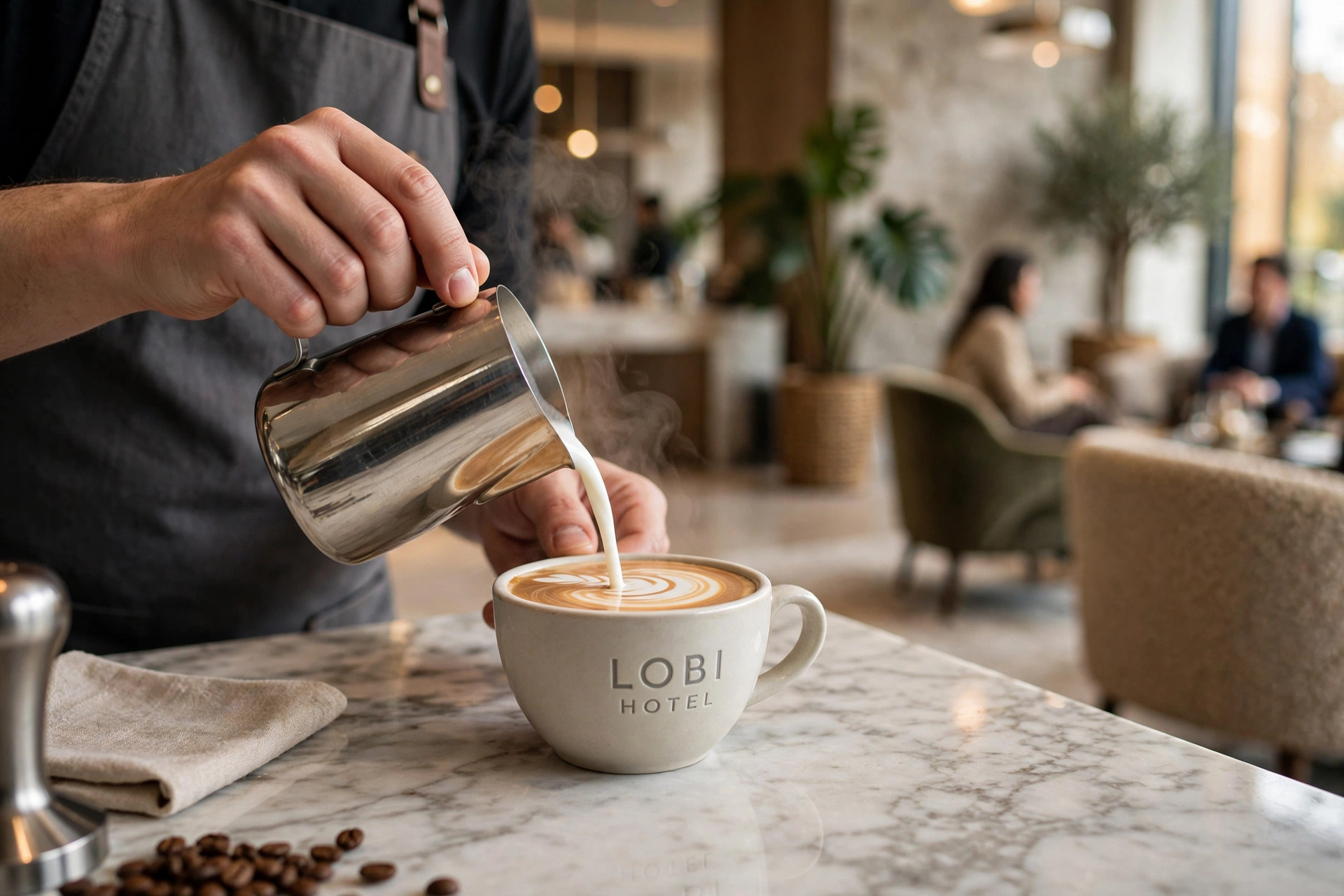
Finally, avoid the 'one-size-fits-all' contract. A hotel requires a very different service level than a corporate office. For example, a hotel coffee membership must focus on guest-facing aesthetics and 24/7 reliability, whereas an office focuses on volume and speed. If a vendor offers the same package to both, they aren't providing a solution; they are selling a product.
💡
Key Takeaway
The cheapest monthly bean cost often hides the highest operational cost. Shift your focus from the cost of the commodity to the cost of the total service availability.
Frequently Asked Questions
Is a managed membership more expensive than a traditional contract?
While the monthly line item might appear higher than a basic bean-only contract, it is almost always cheaper when you factor in the elimination of CapEx. In a traditional model, you pay for the machine, the installation, the annual maintenance, and the emergency repairs. In a managed membership, these are bundled. When you aggregate the total cost of ownership over three years, businesses typically see a significant reduction in total spend because they avoid the 'spike' costs of equipment failure and replacement.
What happens if the coffee machine breaks under a membership?
Under the Busy Bean Coffee membership, maintenance is proactive and inclusive. Unlike traditional vendors who require you to file a ticket and wait for a technician's availability, we monitor and maintain the equipment as part of the service. Because we own the equipment, our incentive is to keep it running perfectly. If a failure occurs, our team is dispatched to resolve it without an additional service fee, ensuring your business never suffers from a 'coffee blackout' that lowers employee morale or guest satisfaction.
Can I choose the type of coffee beans used in a membership?
Yes, that is the primary advantage of working with a Q-Grader led company. Traditional industrial services provide a standard, mass-produced blend. Our membership focuses on specialty coffee, which is graded by the Specialty Coffee Association (SCA) to ensure it meets high quality and flavor profiles. You can work with us to select roasts that align with your brand—whether you prefer a bold, dark roast for a high-energy office or a refined, light-bodied Arabica for a luxury hotel lobby.
How long are the contracts for managed coffee services?
Unlike the restrictive, multi-year iron-clad contracts often found with giant industrial vendors, our memberships are designed for partnership. While we do establish a baseline agreement to cover the installation and setup of premium SENSA equipment, we focus on flexibility. We believe the quality of our service and the taste of our coffee are what keep clients with us, not a legal loophole in a contract. This transparency is a core part of how we differentiate ourselves from the 'corporate' approach.
Do managed memberships include staff training?
Absolutely. A high-end espresso machine is only as good as the person operating it. We provide professional training to your staff to ensure they understand the nuances of the equipment and the properties of the coffee beans. This prevents the common mistake of under-extracting or over-extracting the coffee, which can make even the most expensive specialty beans taste bitter or sour. We ensure your team can deliver a café-quality experience consistently.
Conclusion
Choosing between a traditional industrial vendor and a managed membership is a choice between being a customer and being a partner. When you analyze the coffee service vs Aramark dynamic, it becomes clear that the scale of the giant is often their biggest weakness. They cannot offer the intimacy, the quality control, or the rapid response times that a specialized coffee partner can provide.
By eliminating upfront capital expenditures and replacing them with a predictable, all-inclusive monthly fee, you protect your cash flow and elevate your brand. Whether you are looking to boost employee productivity or impress high-net-worth guests, the move to a managed membership is the only way to ensure consistent, specialty-grade quality without the operational headache.
If you are ready to stop managing machines and start enjoying great coffee, we invite you to review our Complete Guide to Coffee Membership Services for Business to find the perfect fit for your facility. Stop settling for industrial-grade caffeine and start investing in a beverage experience that reflects the quality of your business.
Visit us at www.busybeancoffee.com to start your transition to a better brew.
Free Coffee Pairing Guide & Specialty Roast Cheat Sheet
Unlock the secrets of perfect brewing ratios, water temperatures, and specialty roast profiles. Download the guide.