Which Managed Coffee Service is Right for Your Business?
Deciding which coffee solution to implement often comes down to a trade-off between capital expenditure and long-term operational headache. Many business owners start by buying a high-end machine and a few bags of beans, only to realize that scale requires a level of maintenance and consistency they can't provide. For most high-volume foodservice environments, the best choice is usually a comprehensive model of managed coffee services that bundles equipment, premium roasts, and technical support into a single predictable monthly cost.
In my experience working with hotel and restaurant groups, the "DIY" approach almost always fails at the six-month mark when the first major scale buildup occurs or a pump fails. The shift from owning equipment to utilizing a managed service isn't just about convenience; it is a financial strategy to move an unpredictable capital expense into a stable operational expense. If you are managing a small office, you might prioritize automation; if you are running a luxury resort, you need a "white glove" approach where the equipment is maintained before it ever breaks down.
For those operating in specific regions, choosing a local partner is essential for rapid response times. For instance, businesses looking for a white glove coffee service in Los Angeles CA have very different requirements regarding delivery logistics and technician availability than a small boutique in the Midwest.
Understanding the Architecture of Managed Coffee Services
To choose the right option, you first have to understand what you are actually paying for. A managed coffee service is not just a delivery subscription; it is a partnership that handles the entire beverage lifecycle, from the sourcing of the coffee bean to the deep cleaning of the boiler.
📚
Definition
Managed coffee services are all-inclusive beverage programs where a provider supplies the machinery, installation, recurring coffee product delivery, and preventative maintenance for a fixed monthly fee or a volume-based contract.
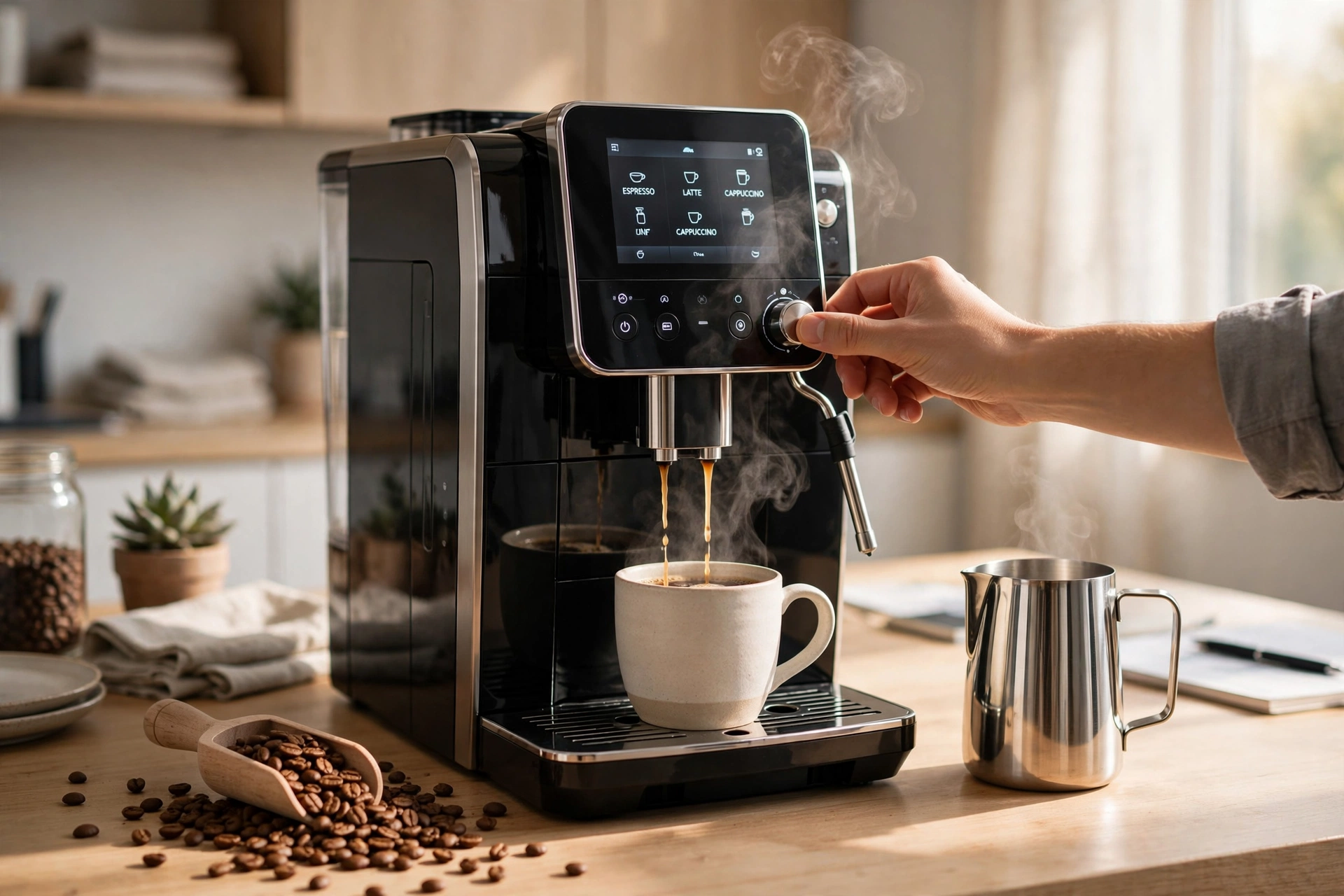
The core of a professional service revolves around the equipment. In the high-end sector, this typically means using SENSA-grade equipment or professional espresso machine setups that can handle hundreds of cycles per day without losing temperature stability. When we built our managed model at Busy Bean Coffee, we discovered that the biggest pain point for clients wasn't the cost of the coffee, but the "invisible" downtime. A broken machine on a Monday morning doesn't just mean no coffee; it means lost revenue and frustrated guests.
According to the Specialty Coffee Association (SCA), maintaining strict water chemistry and temperature controls is the only way to ensure that specialty coffee retains its flavor profile. A managed service ensures these variables are monitored by professionals, not left to a staff member who might be multitasking between three different roles.

The technical side of these services often involves "Preventative Maintenance" (PM). Instead of waiting for a leak to happen, a managed provider schedules quarterly descaling and gasket replacements. This proactive approach is what separates a professional service from a basic rental agreement. When you analyze the total cost of ownership (TCO), a managed service often proves cheaper because it eliminates the "emergency repair" premium that technicians charge for last-minute visits.
Why the Right Choice Impacts Your Bottom Line
The decision of which service to use directly affects your labor costs and customer retention. If your staff spends two hours a week cleaning machines and ordering supplies, you are paying for administrative labor that adds zero value to the guest experience.
The financial impact is measurable. Data from the National Coffee Association USA (NCA) indicates that consumer demand for high-quality, "cafe-style" coffee in non-traditional settings is steadily increasing. If your beverage quality is inconsistent, you aren't just losing the price of a cup of coffee; you are losing the "halo effect" that a premium coffee experience creates for your brand.
Consider the risk of equipment failure. In a busy foodservice environment, a single day of downtime for a primary coffee station can result in hundreds of dollars in lost sales. More importantly, the labor cost of an untrained employee trying to "fix" a professional machine often leads to further damage. I've seen dozens of clients try to save money by using generic rental services, only to find that the "support" involves a 48-hour waiting period for a part to arrive.
Furthermore, the regulatory environment makes professional management essential. The NSF International provides rigorous standards for food equipment safety and sanitation. Managed services ensure that the equipment used is NSF-certified and maintained according to these sanitary standards, reducing the risk of health code violations.
The business impact manifests in three areas:
- Predictable Cash Flow: Moving from a $15,000 equipment purchase to a $400/month service fee preserves working capital.
- Quality Assurance: Using Coffea arabica sourced from vetted roasters ensures a consistent taste profile that keeps customers coming back.
- Labor Optimization: Your barista or staff can focus on hospitality rather than equipment troubleshooting.
Practical Application: Implementing a Managed System
If you are transitioning from a manual setup to a managed one, the process should be a strategic rollout, not a sudden switch. The mistake I made early on—and that I see constantly with new clients—is trying to fit a "standard" package into a non-standard space. Every floor plan and customer flow is different.
First, conduct a volume audit. How many cups are you serving per hour during peak times? If you are in a high-traffic area, you might need an automated coffee service in Fort Worth TX to keep up with the pace without sacrificing quality. If you are a boutique hotel, you might prefer a slower, more artisanal approach.
Second, evaluate your water source. Coffee is 98% water. If your building has hard water, a managed service that doesn't include high-grade filtration is a waste of money. At Busy Bean Coffee, we prioritize the filtration stage because it protects the equipment and ensures the coffee roasting profile is actually tasted by the customer.
Third, define your "Service Level Agreement" (SLA). You need to know exactly how fast a technician will be on-site if the machine goes down. A "best effort" response is not enough for a commercial operation.
💡
Key Takeaway
The most successful managed coffee transitions happen when the provider treats the installation as a workflow optimization project, not just a hardware delivery.
Once the equipment is installed, the management phase begins. This involves regular delivery of fresh beans and a schedule of "wellness checks" for the machines. For those in the Carolinas, a dedicated coffee delivery service in Charlotte NC can ensure that your beans are roasted and delivered within a tight window to maximize freshness.
Comparing Your Managed Coffee Options
Not all managed services are created equal. Depending on your business model, you will likely fall into one of three categories. Here is how to weigh the trade-offs.
| Option | Pros | Cons | Best For |
|---|---|---|---|
| Traditional Rental | Low entry cost, basic support. | Poor coffee quality, slow repair times, old gear. | Low-traffic offices with minimal budget. |
| Generic AI/Auto-Kiosks | Zero labor, extremely fast, consistent. | No "soul," lack of customization, high failure rate of touchscreens. | Airports, hospitals, high-volume transit hubs. |
| Professional Managed (Busy Bean) | Premium specialty coffee, full maintenance, predictable ROI. | Requires a monthly commitment. | Hotels, upscale restaurants, corporate HQs. |
If you are managing a smaller team, you might not need a full-scale managed service but instead a curated set of the best office espresso machines for small teams in 2026. However, for any business where coffee is a primary revenue driver or a key part of the guest experience, the professional managed route is the only way to ensure scalability.
The "Generic" approach often fails because it treats coffee as a commodity. When you use a professional service, you are investing in the chemistry of the brew. This includes the precision of the grind and the temperature of the steam wand, which is why some pros even look for specialized latte art tools for foodservice pros to elevate the visual presentation of the drink.

Common Questions and Misconceptions
Most guides on coffee services get this wrong: they tell you to look for the cheapest monthly price. That is a recipe for disaster. In the world of managed services, a "cheap" contract usually means the provider is using refurbished, low-end equipment that will break down frequently.
Myth 1: "I can just call a local repairman when the machine breaks."
This is a costly mistake. Professional espresso machines require specific parts and calibrated tools. A general appliance repairman isn't trained in the nuances of pressure profiles or flow rates. By the time you find a specialist and they arrive, you've lost two days of revenue. A managed service includes the technician in the price, ensuring a priority response.
Myth 2: "Automatic machines taste the same as manual ones."
While super-automatic machines have improved, they cannot replicate the nuance of a professionally calibrated manual or semi-automatic setup. The difference lies in the "tamping" and the "extraction time." A managed service ensures that your equipment is calibrated weekly to account for changes in humidity and bean age.
Myth 3: "Managed services are only for huge corporations."
I see this all the time. Small cafes think they are too small for a managed contract. In reality, small businesses are the ones who suffer most from equipment failure. A $2,000 repair bill can wipe out a small cafe's monthly profit; for a managed client, that repair is covered by the monthly fee.
Frequently Asked Questions
Which managed coffee service is best for a high-turnover restaurant?
For high-turnover environments, you need a service that prioritizes "uptime" and speed. The best option is one that provides commercial-grade, high-volume espresso machines (like those provided by Busy Bean Coffee) paired with a rigorous preventative maintenance schedule. You should look for a provider that offers 24-hour or 48-hour guaranteed response times. In these settings, automation is helpful, but the quality of the coffee bean and the precision of the machine are what prevent guests from complaining about "burnt" or "watery" coffee during the rush.
How do I calculate the ROI of a managed coffee service?
To calculate ROI, compare the total cost of ownership (TCO) of owning equipment versus the monthly service fee. Add up the initial machine cost, the cost of annual maintenance, the price of beans, and the labor cost of the staff member cleaning the machine. Then, factor in the "cost of downtime"—the average revenue lost per hour when the machine is broken. Most businesses find that the managed service is not only cheaper over a 3-year period but also increases total revenue by ensuring consistent quality and 99% equipment availability.
Does a managed service include training for my staff?
A professional managed service should always include initial and ongoing training. It is not enough to provide a machine; your staff must know how to dial in the grind and froth milk correctly. Without this, even the most expensive equipment will produce poor coffee. Look for services that offer "Barista Certification" or periodic refreshers. This ensures that as you rotate staff, the quality of your beverage program doesn't dip, protecting your brand reputation and ensuring your barista skills remain sharp.
What is the difference between a coffee subscription and a managed service?
A coffee subscription is simply a product delivery—you get beans in the mail. A managed coffee service is an operational solution. It includes the hardware (the machine), the software (the calibration), and the labor (the maintenance and installation). If your machine leaks or the pump fails in a subscription model, you are on your own. In a managed service, the provider is responsible for the hardware's functionality, making it a "turnkey" solution for the business owner.
Can I customize the coffee blends in a managed service?
Yes, a high-quality provider will offer a variety of roasts, from light to dark, and can even help you select a signature blend that complements your food menu. The goal is to use specialty coffee that aligns with your brand's image. Whether you need a bold roast for a breakfast crowd or a nuanced, single-origin bean for a luxury lounge, a managed service should provide a curated selection and the expertise to help you choose the right profile for your specific clientele.
Final Thoughts on Managed Coffee Services
Choosing the right approach to your beverage program is a decision that balances quality, risk, and capital. Whether you are looking for an automated coffee service in Wilmington NC or a bespoke setup in a metropolitan hub, the goal is to remove the friction from your operation.
When you shift the burden of maintenance and sourcing to experts, you stop being a part-time technician and start being a full-time business owner again. The shift to managed coffee services allows you to provide a world-class experience without the stress of equipment failure or inconsistent roast quality.
If you are ready to stop worrying about your boilers and start focusing on your guests, we can help. At Busy Bean Coffee, we specialize in removing the hassle from high-end coffee. Visit us at www.busybeancoffee.com to explore our all-inclusive memberships and see how we can transform your coffee program into a seamless, revenue-generating asset.
Free Coffee Pairing Guide & Specialty Roast Cheat Sheet
Unlock the secrets of perfect brewing ratios, water temperatures, and specialty roast profiles. Download the guide.