Which Commercial Espresso Machine is Right for Your Business?
The cost of a wrong decision when purchasing commercial espresso machines can easily reach five figures when you account for downtime, wasted labor, and lost customers. The "right" machine isn't the most expensive one on the market; it is the one where the thermal stability and volumetric capacity align perfectly with your peak-hour transaction volume. For a high-volume cafe, a three-group boiler is non-negotiable, whereas a boutique hotel lounge might find a sophisticated super-automatic more profitable by reducing labor costs.
In my experience working with dozens of foodservice operators, the biggest mistake is over-buying capacity but under-buying reliability. I've seen owners buy a massive 3-group machine for a space that only does 20 lattes an hour, leading to massive energy waste and unnecessary scaling issues. Conversely, I've seen small bistros try to survive the morning rush on a single-group machine, resulting in "temperature surfing" and inconsistent shots that drive regulars away. To make the right choice, you must balance the three pillars of commercial coffee: throughput, consistency, and labor skill.
If you are managing a smaller corporate environment, you might find that the Best Office Espresso Machines for Small Teams in 2026 offer a more balanced ROI than a full-scale industrial unit.

Understanding the Technical Framework of Commercial Equipment
Choosing a machine requires moving beyond the brand name and looking at the engineering. At its core, the primary differentiator between "prosumer" and true commercial equipment is the ability to maintain a constant temperature while pulling multiple shots back-to-back.
📚
Definition
Thermal Stability is the ability of an espresso machine to maintain a consistent water temperature at the group head throughout the extraction process, regardless of how many drinks are being made.
The most common architecture is the Heat Exchanger (HX) or the Dual Boiler. An HX machine uses one large boiler to steam milk and a smaller pipe to heat the brewing water. This is efficient but can be prone to temperature swings if the machine sits idle. A Dual Boiler system, however, separates the brewing and steaming functions entirely, allowing for surgical precision over the brew temperature. This is fundamental when working with specialty coffee, where a difference of two degrees can transform a bright, acidic shot into something bitter and burnt.
According to the Specialty Coffee Association (SCA), strict adherence to brewing standards—including water temperature and pressure—is what separates specialty grade coffee from commodity coffee. When you are investing in commercial espresso machines, you are essentially buying a temperature management system. If the machine cannot hold 200°F (93°C) under the pressure of ten consecutive shots, it is not a commercial-grade tool.
Furthermore, you have to consider the power requirements. Many high-end machines require 220V power and dedicated plumbing. I've walked into many sites where the owner bought a beautiful Italian machine only to realize their electrical panel couldn't handle the load, forcing a costly electrical upgrade that wasn't in the budget. This is why a professional consultation is non-negotiable before the purchase.
Why Your Equipment Choice Dictates Your Bottom Line
The machine you choose doesn't just make coffee; it dictates your labor cost and your customer retention rate. In the foodservice industry, consistency is the only thing that builds loyalty. If a customer gets a perfect cappuccino on Tuesday and a lukewarm, watery one on Thursday, they won't blame the barista; they will blame the establishment.
The business impact of equipment failure is staggering. A broken group head during a Saturday morning rush can result in thousands of dollars in lost revenue in a single window. This is where the "cheap" option becomes the most expensive. According to the National Coffee Association USA (NCA), consumer preferences are shifting toward higher-quality, specialty-grade beverages, meaning the margin for error in extraction is shrinking.
When we analyze the ROI of a high-end machine, we look at "shots per hour." A high-capacity machine reduces the "wait time" per customer. If a machine can shave 15 seconds off every drink during a rush of 100 people, you've just recovered 25 minutes of productivity and potentially increased your throughput by 10-15%.
Beyond speed, there is the issue of sanitation and compliance. All professional equipment must meet strict safety standards to avoid health department citations. For instance, ensuring your equipment is certified by NSF International ensures that the machine is built with materials that are easy to sanitize and safe for food contact. Using non-certified equipment in a commercial kitchen is a risk that can lead to forced closures or expensive fines.
Practical Application: Mapping Machines to Use Cases
To decide which machine to buy, you must first map your "Peak Hour Demand." I always tell my clients to count their maximum projected transactions per hour during the busiest 60 minutes of the week.
Case 1: The High-Volume Cafe
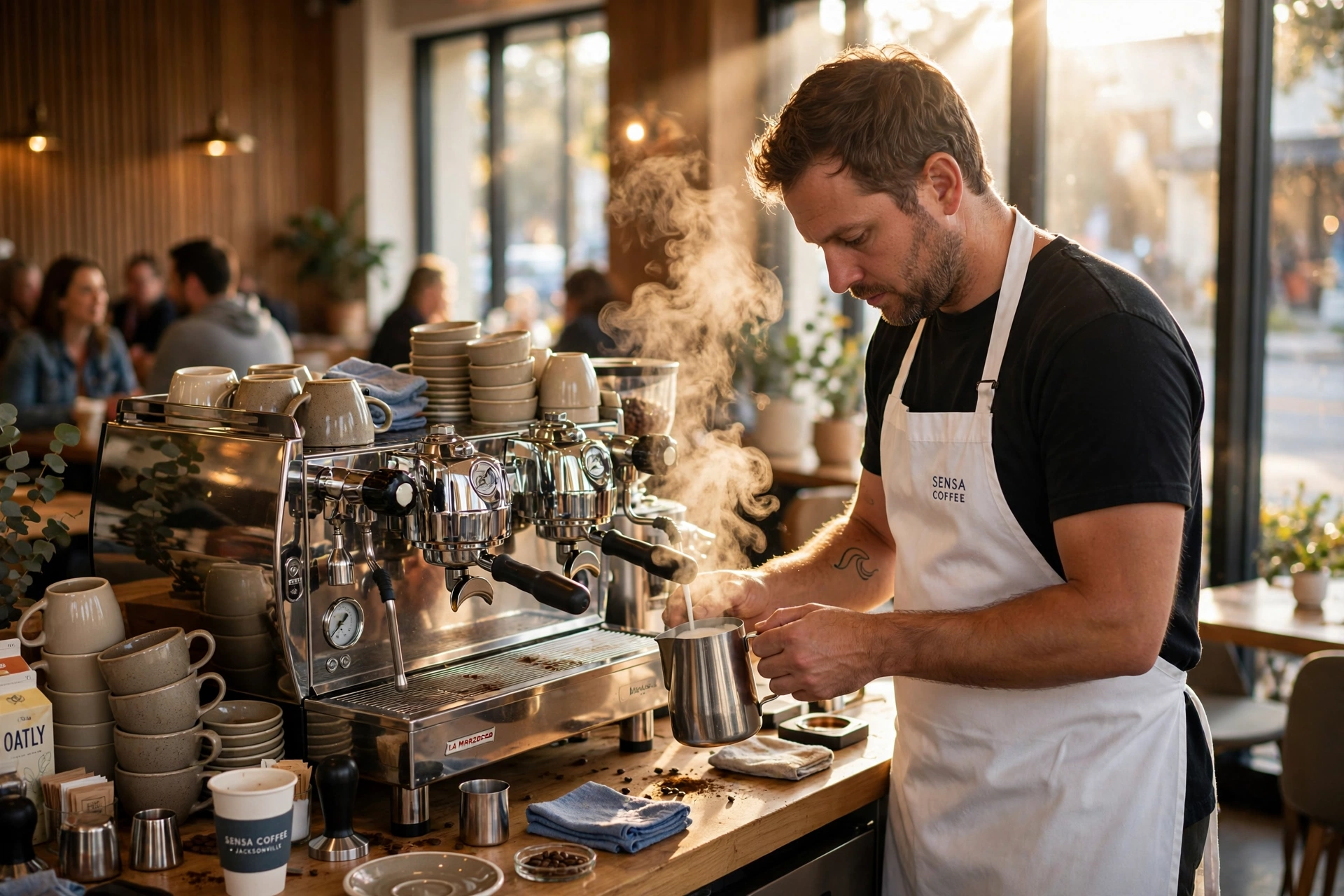
If you are pushing 60+ drinks per hour, you need a 3-group volumetric machine. Volumetric dosing allows the barista to push a button and walk away while the shot pours, freeing them up to steam milk or take the next order. In this environment, the focus is on "flow."
Case 2: The Boutique Hotel or Restaurant
Here, the volume is lower, but the expectation for quality is higher. A 1-group or 2-group dual boiler machine is ideal. Since the coffee is often a secondary offering to the food, you don't need the massive footprint of a 3-group, but you do need the precision to make a perfect Coffea arabica extraction.
Case 3: The Corporate Office or Managed Service
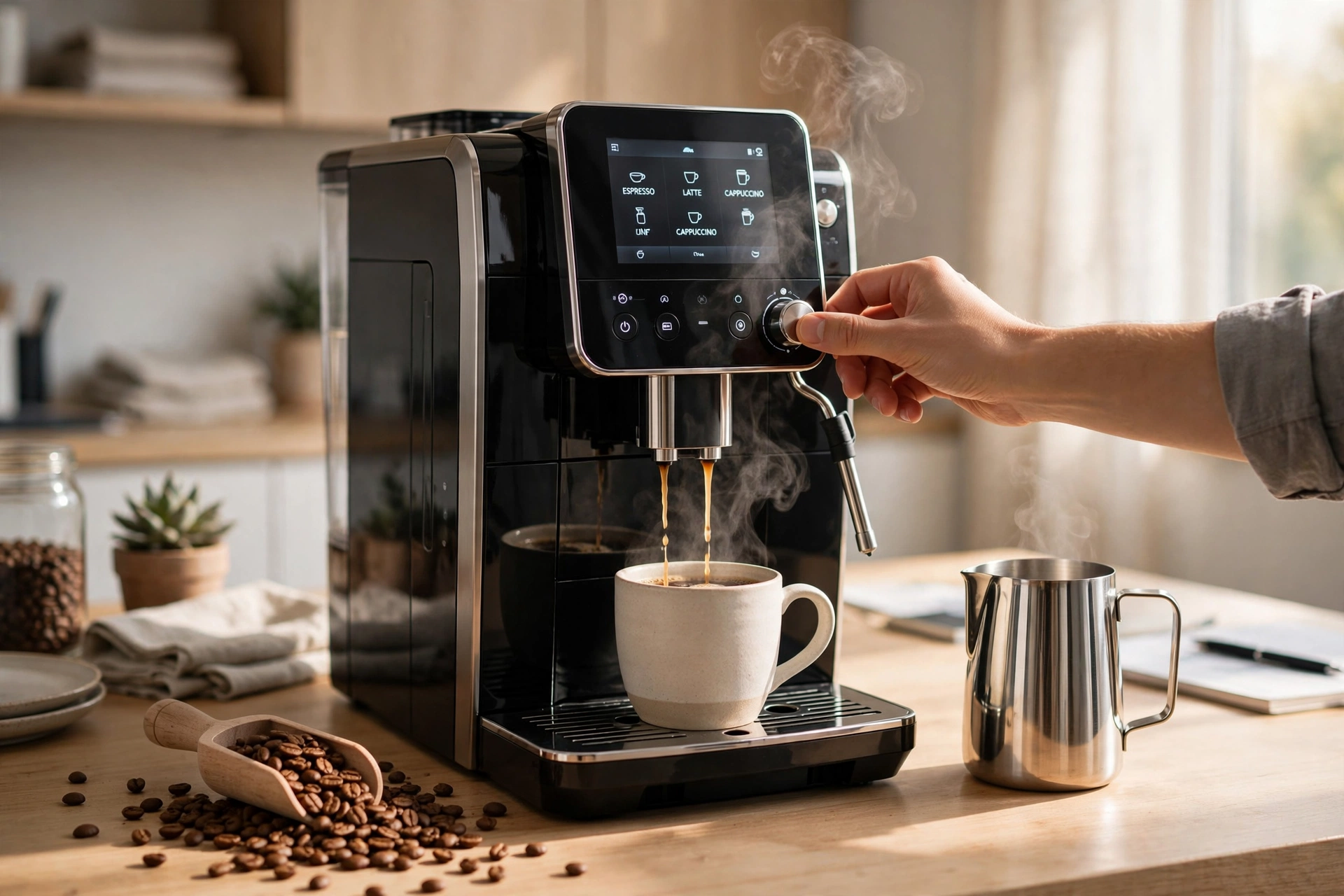
In these settings, labor is the enemy. You cannot afford to hire a full-time professional barista. This is where automated or "bean-to-cup" commercial machines excel. They provide a consistent result without requiring specialized training. If you're in a major hub, utilizing an Automated Coffee Service in Fort Worth TX - Complete Guide | Busy Bean Coffee can eliminate the headache of equipment maintenance and staffing.
💡
Key Takeaway
Match your machine's "Group Head" count to your peak-hour volume, not your average daily volume. Under-capacity leads to lost revenue; over-capacity leads to wasted energy and space.
For those who want the highest level of service without the operational stress, our White Glove Coffee Service in Los Angeles CA - Complete Guide | Busy Bean Coffee provides an end-to-end solution that handles everything from installation to daily calibration.
Comparing Commercial Espresso Machine Options
When choosing between different tiers of equipment, you are essentially trading off between control and convenience. The "Traditional" approach requires a skilled human, while the "Automated" approach relies on the machine's internal logic.
| Feature | Manual/Semi-Auto | Super-Automatic | Managed Service (Busy Bean) |
|---|---|---|---|
| Control | Total (Pressure/Temp) | Limited (Presets) | Optimized by Experts |
| Labor Req. | Professional Barista | Basic Training | Zero to Low |
| Consistency | Variable (Human error) | High (Programmed) | Guaranteed (Managed) |
| Initial Cost | High CapEx | Medium to High | Zero to Low (Monthly) |
| Best For | Specialty Coffee Shops | Office/Quick Service | Hotels/Restaurants/Cafes |
Now, here is where it gets interesting: many operators think the Super-Automatic is the "easy" way out. While it is easier to operate, it is often harder to maintain. A manual machine has fewer moving parts to break, but it requires a human who knows how to dial in a coffee bean based on humidity and roast date. The Managed Service model, which we champion at Busy Bean Coffee, removes the risk of both; we provide the high-end equipment and the professional maintenance to ensure it never goes down.
Common Questions and Misconceptions
Most guides will tell you to just "buy the best brand." That is lazy advice. The "best" brand is irrelevant if the machine doesn't fit your workflow. Here are a few myths I encounter constantly:
Myth 1: "More groups always mean more coffee."
Wrong. More groups only mean more coffee if you have enough baristas to operate them. A 3-group machine operated by one person is just a 1-group machine with two expensive paperweights attached to it. You must scale your equipment to your staffing level.
Myth 2: "Expensive machines don't need maintenance."
This is the most dangerous misconception in the industry. In fact, the more expensive the machine, the more precise the maintenance needs to be. Scale buildup in a high-end boiler can ruin a $15,000 machine in six months if you aren't using a professional water filtration system.
Myth 3: "Super-automatics can't make 'real' espresso."
This was true ten years ago. In 2026, high-end super-automatics use ceramic grinders and precise pressure profiling that can mimic a manual pull almost perfectly. For 90% of business use cases, the difference is imperceptible to the customer.
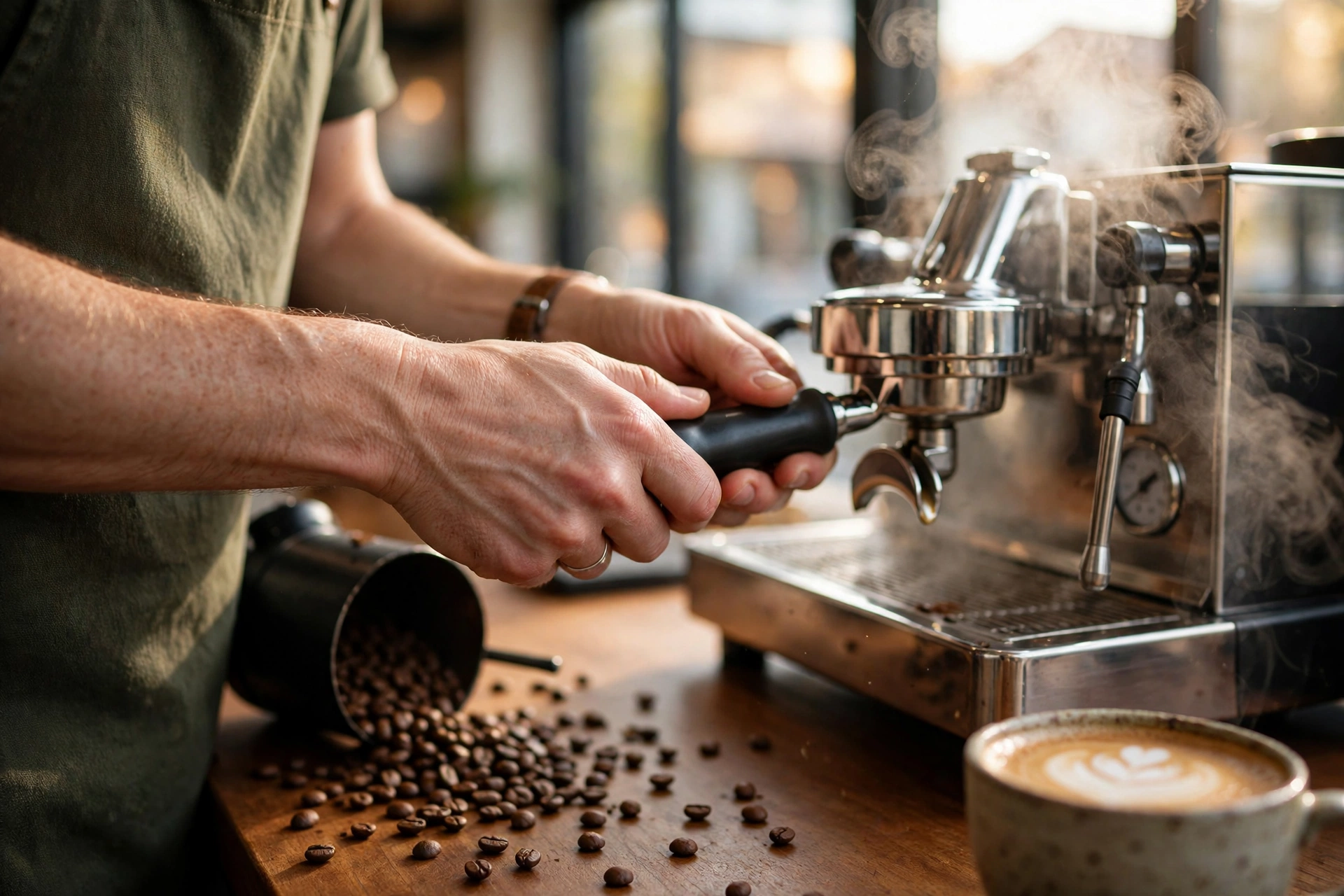
That said, if your brand identity is built on "craft" and "artisan" values, you need a manual machine. The theater of the barista grinding, tamping, and pouring is part of the product you are selling.
Frequently Asked Questions
How do I determine how many group heads I actually need?
To determine your group head requirement, calculate your "Peak Hour Volume." A single group head, operated by a skilled barista, can generally produce 20 to 30 quality drinks per hour. If your morning rush expects 60 drinks per hour, you need at least a 2-group machine to avoid bottlenecks. However, if you have two people working the machine, a 2-group can push closer to 80 drinks. The goal is to ensure that the machine is never the limiting factor in your customer's experience. I always recommend adding one "buffer" group head if you plan to grow your volume over the next 24 months.
What is the difference between a heat exchanger and a dual boiler?
A heat exchanger (HX) uses a single boiler to produce steam and heat the brewing water through a pipe. It is generally more affordable and energy-efficient but can suffer from "temperature surfing," where the water becomes too hot if the machine sits idle. A dual boiler has two completely separate boilers: one for steam and one for brewing. This allows for absolute precision over the brew temperature, which is essential for specialty coffee. In my experience, if you are charging a premium for your coffee, the dual boiler is a fundamental investment in quality control.
Why is water filtration so important for commercial machines?
Water is the primary ingredient in coffee and the primary enemy of your equipment. Minerals like calcium and magnesium create "scale" inside your boiler, which acts as an insulator, forcing the machine to work harder and eventually causing the heating elements to burn out. According to FDA guidelines regarding food equipment, maintaining sanitary and functional systems is a regulatory necessity. A high-quality reverse osmosis or carbon filtration system is not an "extra"—it is an insurance policy for your investment. Without it, you are essentially inviting a system failure.
Should I buy a new machine or a refurbished commercial unit?
Buying refurbished can save you 30-50% upfront, but it is a gamble unless the unit comes with a comprehensive warranty. The risk is "hidden" wear and tear—worn-out gaskets, pitted boilers, or failing pumps that aren't obvious during a quick demo. If you go the refurbished route, ensure it has been overhauled by a certified technician. However, for most businesses, the predictability of a new machine combined with a managed service agreement is more financially sound, as it eliminates the risk of unexpected downtime during your busiest seasons.
How much training does my staff need for these machines?
The level of training depends entirely on the machine type. A super-automatic requires about two hours of training on cleaning and loading. A semi-automatic machine requires a full certification in barista skills: understanding grind size, tamping pressure, and milk texturing. This is a significant labor investment. If you don't have the time to train staff, you are better off with a managed solution or an automated machine. Remember, a $20,000 machine in the hands of an untrained employee will produce $2 coffee.
Final Thoughts on Commercial Espresso Machines
Selecting the right equipment is a strategic business decision, not just a culinary one. Whether you need the raw power of a 3-group volumetric machine or the streamlined efficiency of an automated system, the goal is to remove friction from your workflow. When the equipment is invisible—meaning it works perfectly every time without the operator thinking about it—that is when your business can truly scale.
If you are overwhelmed by the options, remember that you don't have to carry the risk alone. At Busy Bean Coffee, we specialize in taking the guesswork out of the equation. We provide the premium equipment, professional installation, and ongoing maintenance for one predictable monthly fee. This allows you to focus on your customers and your growth, while we handle the technical complexities of the coffee service.
For those looking for a tailored approach in the Carolinas, check out our Coffee delivery service in Charlotte NC - Complete Guide | Busy Bean Coffee or explore our Automated Coffee Service in Wilmington NC - Complete Guide to see how we can optimize your beverage program.
Ready to upgrade your coffee game without the capital risk? Visit us at www.busybeancoffee.com to find the perfect solution for your business.
Free Coffee Pairing Guide & Specialty Roast Cheat Sheet
Unlock the secrets of perfect brewing ratios, water temperatures, and specialty roast profiles. Download the guide.