How Do You Implement a Premium Coffee Service in Your Business?
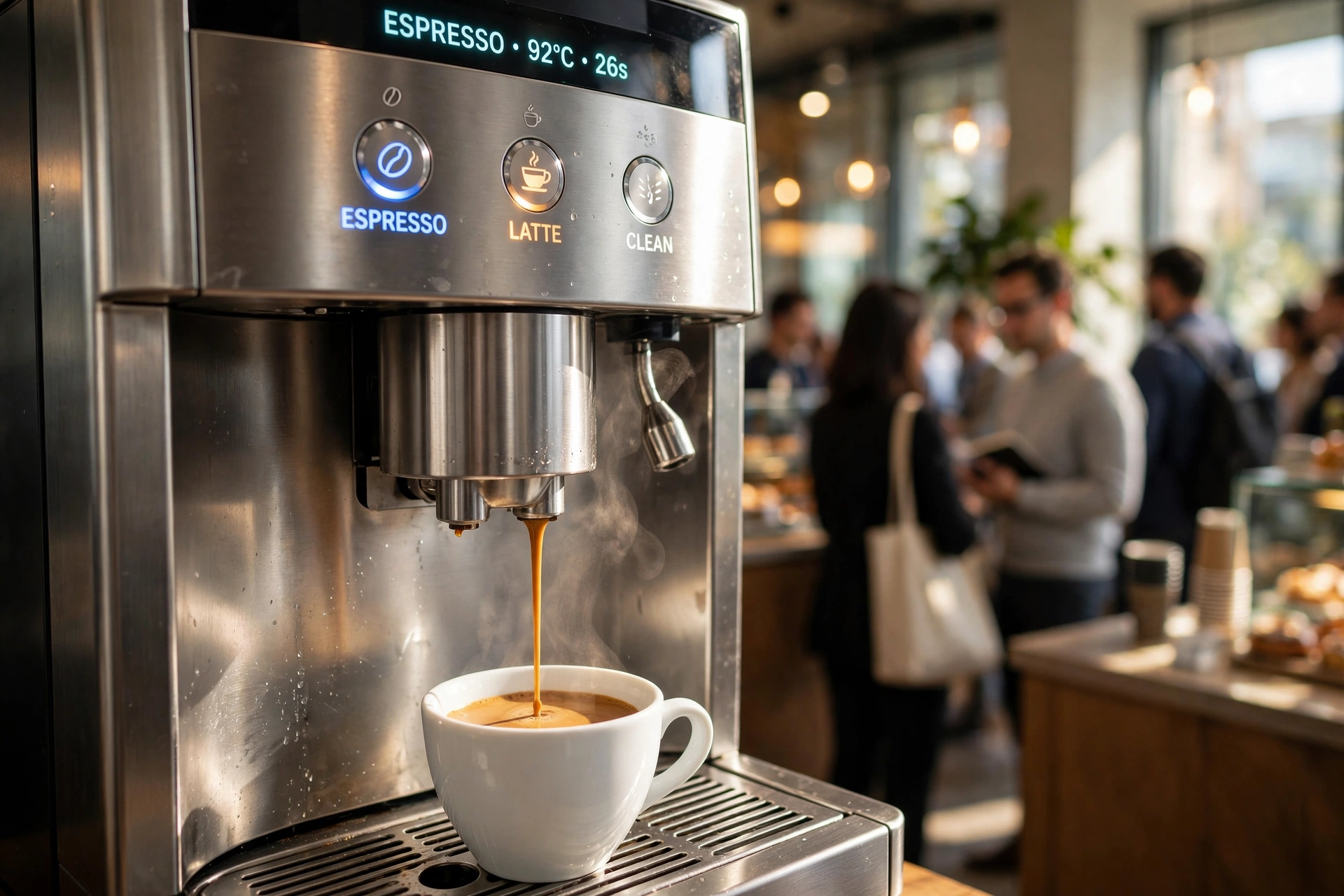
Establishing a high-end beverage program starts with the alignment of hardware, bean quality, and consistent execution. To implement a premium coffee service, you must first audit your current volume and customer expectations, select a professional-grade espresso machine that matches your output needs, and partner with a roaster providing fresh, specialty-grade beans. The process moves from infrastructure setup to barista training and finally to a rigorous quality control cycle. In my experience working with high-traffic hotels and restaurants, the most common failure isn't the machine; it's the lack of a standardized "recipe" that ensures the 100th cup of the day tastes exactly like the first.

What Defines a Truly Premium Coffee Service?
A high-tier beverage program is more than just buying an expensive machine; it is a holistic ecosystem where every variable is controlled. At its core, this means moving away from commodity-grade coffee and embracing the science of extraction.
📚
Definition
Specialty Coffee refers to coffee that scores 80 points or above on a 100-point scale as rated by a certified Q-Grader, characterized by unique flavor profiles and a lack of primary defects.
To achieve this, you need an integrated approach. This begins with the selection of Coffea arabica, specifically beans sourced from high-altitude regions that offer the complexity and acidity required for a premium experience. But the beans are only half the battle. You need precision equipment. A standard commercial brewer cannot produce the nuanced layers of a specialty roast. You need a machine capable of precise temperature stability and pressure profiling.
According to the Specialty Coffee Association (SCA), the quality of the final brew is determined by the "Golden Ratio", the specific balance of coffee to water. When businesses ignore this, they end up with "burnt" or "sour" coffee, regardless of how much they paid for the beans. After analyzing dozens of hospitality beverage programs, I've found that the gap between a "good" service and a "premium" service is usually found in the water filtration. If your water contains high mineral content or chlorine, it will neutralize the delicate oils of a specialty bean, effectively wasting your investment in high-end coffee.
Why Does Your Business Need a Professional Beverage Program?
The impact of coffee on customer perception is disproportionately high. In the hospitality sector, coffee is often the final touchpoint of a guest's experience. If a guest enjoys a five-star meal but finishes with a mediocre, bitter cup of coffee, the overall memory of the brand is diminished.
From a financial perspective, the margins on a premium coffee service are among the highest in the food and beverage industry. While the cost of specialty beans is higher than commodity coffee, the perceived value allows for a significantly higher price point per cup. A well-executed program transforms a cost center (free coffee) into a profit center (premium beverage menu).
The risk of ignoring this is not just lost revenue, but operational inefficiency. According to the National Coffee Association USA (NCA), consumer preference is shifting heavily toward "specialty" and "single-origin" options. Businesses that stick to traditional, low-quality brewers are seeing a decline in guest satisfaction scores. I've seen clients lose repeat business simply because their "coffee station" felt dated and produced inconsistent results.
Furthermore, there is a regulatory and safety component. Using equipment that isn't certified for commercial use leads to frequent breakdowns and sanitary risks. Ensuring your equipment meets NSF International standards is not just about compliance; it's about ensuring that your machine can withstand the rigors of a 12-hour shift without overheating or leaking.
Step-by-Step Guide to Implementing a Premium Coffee Service
Implementing a professional system requires a phased approach. You cannot simply "plug and play" a high-end machine; you must build the environment around it.
Step 1: The Infrastructure Audit
Before the equipment arrives, check your utilities. High-end espresso machines require specific electrical voltage and a dedicated water line. The mistake I made early on, and that I see constantly, is placing a machine in a spot where the drainage is insufficient. A premium service generates a lot of wastewater from "purging" the group heads. Ensure you have a professional floor drain or a high-capacity drip tray system.
Step 2: Equipment Selection (The Hardware)
You must choose between a super-automatic machine (for speed and consistency) and a semi-automatic machine (for artisan quality). For most foodservice businesses, a managed solution is the most sustainable path. This is where Busy Bean Coffee excels. Instead of a massive upfront capital expenditure, we provide a managed membership that includes the equipment, professional installation, and ongoing maintenance. This removes the risk of "down-time," which is the single biggest killer of coffee profits.
Step 3: Sourcing the Bean
You need a roast profile that matches your menu. A dark, chocolatey roast works best for milk-based drinks (lattes, cappuccinos), while a light, fruity roast is ideal for black coffee. Ensure your provider is roasting in small batches. Coffee begins to lose its volatile aromatic compounds shortly after roasting; for a truly premium service, your beans should be used within 2 to 4 weeks of the roast date.
Step 4: Barista Training and Calibration
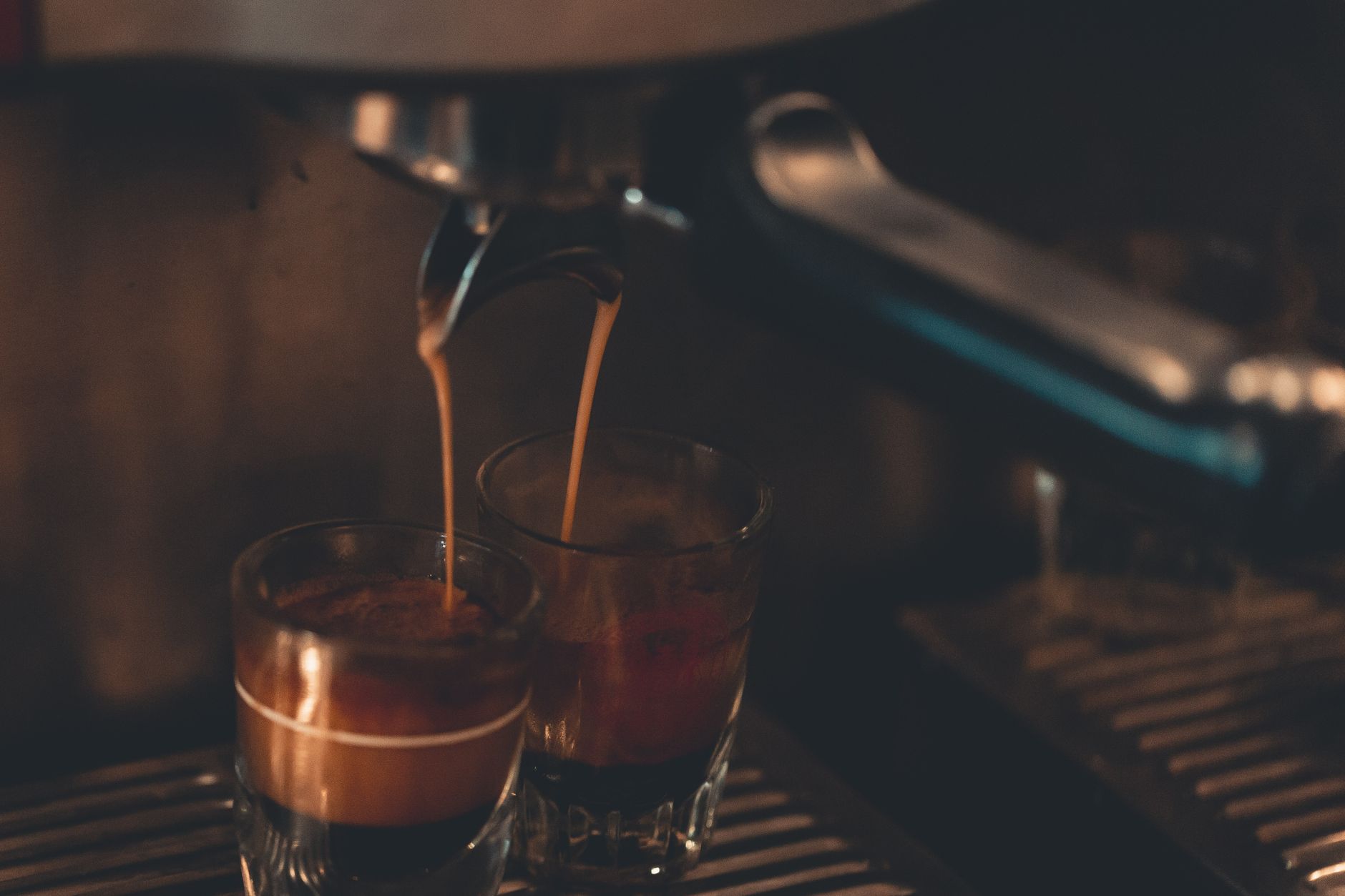
Equipment is useless without a trained operator. Your staff must understand "dialing in", the process of adjusting the grind size to account for humidity and temperature changes throughout the day. If the grind is too coarse, the water rushes through (under-extraction), resulting in a sour taste. If it's too fine, the water struggles to pass (over-extraction), resulting in a bitter, burnt taste.
Step 5: The Quality Control Loop
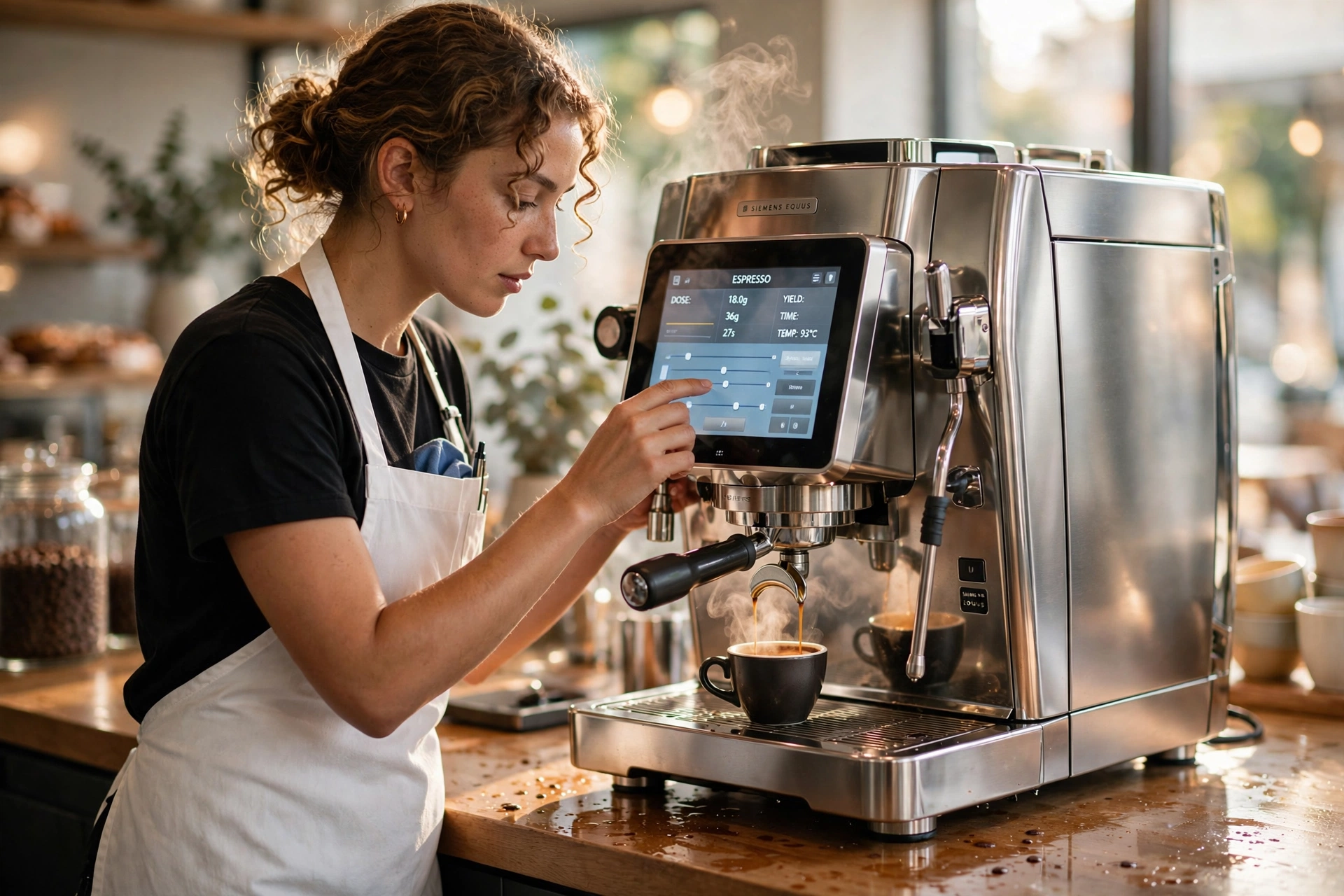
Establish a daily tasting schedule. The head barista or manager should taste the first espresso shot of the morning to ensure the machine is calibrated. Use a digital scale to measure the dose (the amount of dry coffee) and the yield (the weight of the liquid espresso).
💡
Key Takeaway
Consistency is the hallmark of luxury. A premium service isn't defined by one perfect cup, but by the ability to produce 500 identical cups every single day.

Comparing Coffee Service Models
When deciding how to bring a premium coffee service into your business, you generally have three paths. The choice depends on your budget and your willingness to manage the technical side of coffee roasting and machine maintenance.
| Feature | Traditional "Buy-and-Hope" | Generic Low-Cost AI/Auto | Managed Managed (Busy Bean) |
|---|---|---|---|
| Upfront Cost | Very High (CAPEX) | Medium | Low/Zero (Subscription) |
| Consistency | Variable (Depends on Staff) | High (but lacks flavor) | High (Professional Grade) |
| Maintenance | Your responsibility | Basic warranty | All-inclusive coverage |
| Bean Quality | Generic Commercial | Pre-ground/Industrial | Specialty Grade / Fresh |
| Training | Self-taught or Basic | None required | Professional Q-Grader led |
| Best For | Large corporations with internal tech teams | Low-volume kiosks | Hotels, Restaurants, Cafes |
Most businesses choose the traditional route and then realize that a broken boiler in the middle of a Saturday brunch is a nightmare. The "generic" route often results in coffee that tastes like burnt rubber because the machines use low-quality heating elements. The managed approach, such as the one we've perfected at Busy Bean Coffee, treats coffee as a service rather than a piece of hardware.
Common Misconceptions About High-End Coffee
Many business owners operate under a few myths that actually hinder their ability to scale a successful beverage program.
Myth 1: "The more expensive the machine, the better the coffee."
This is simply false. I've seen $20,000 machines producing terrible coffee because the user was using stale beans and unfiltered water. The machine is a tool for extraction; if the input (beans and water) is poor, the output will be poor regardless of the price tag.
Myth 2: "Specialty coffee is too niche for a general crowd."
Actually, the market has shifted. According to industry trends, the "average" consumer now recognizes the difference between commercial coffee and specialty coffee. Providing a high-end service isn't about appealing to "coffee snobs"; it's about meeting the elevated expectations of the modern consumer.
Myth 3: "Automatic machines can't be premium."
While purists argue for manual levers, modern super-automatic machines, when calibrated by experts, can produce exceptional results. The key is the quality of the internal grinders and the precision of the temperature control.
Myth 4: "Maintenance is just a yearly cleaning."
This is a dangerous assumption. In a professional environment, scale buildup in the boiler can happen in weeks if your water filtration is inadequate. A premium service requires weekly back-flushing and monthly deep cleans to maintain flavor integrity and machine longevity.
Frequently Asked Questions
How long does it actually take to set up a premium coffee service?
Depending on the infrastructure, a full setup typically takes between two and four weeks. The first week is dedicated to the site audit and utility verification, ensuring your electrical and plumbing can handle the load. The second week involves the delivery and installation of the equipment. The final week is the most critical: the calibration phase. During this time, we dial in the roast profiles to match your specific water chemistry and train your staff. When you partner with Busy Bean Coffee, we handle the heavy lifting, turning a complex technical installation into a seamless transition for your team.
What is the difference between "commercial" and "specialty" coffee services?
Commercial services focus on volume and cost-efficiency, often using Robusta beans or low-grade Arabica that is roasted very dark to hide defects. This results in a generic, bitter taste. A specialty service focuses on the "seed-to-cup" journey. It uses high-altitude Coffea arabica, precise roasting profiles that preserve the bean's origin characteristics, and equipment that allows for precise extraction. While commercial coffee is designed to be "tolerable," specialty coffee is designed to be "exceptional," providing a distinct flavor profile (such as citrus, berry, or chocolate) that elevates the guest experience.
Do I need to hire a full-time barista to run a premium service?
Not necessarily, but you do need "barista-trained" staff. You don't need a world-champion latte artist for every shift, but your team must understand the fundamentals of dosing, tamping, and milk steaming. If you use a managed service with high-end automatic equipment, the technical barrier is lowered significantly, allowing your existing staff to produce professional results. However, the "human element", the ability to taste the coffee and recognize when it's out of balance, is something that requires ongoing training. We provide this education as part of our managed membership to ensure your quality never dips.
How does water filtration affect the taste of the coffee?
Water is 98% of your drink, yet most businesses treat it as an afterthought. Minerals like calcium and magnesium are necessary for flavor extraction, but too much of them (hard water) creates scale buildup in your machine and makes the coffee taste "flat" or chalky. Conversely, water that is too soft or distilled can make the coffee taste overly acidic or sharp. A professional premium coffee service utilizes reverse osmosis or multi-stage carbon filtration to achieve a "balanced" mineral profile. This protects your equipment from costly repairs and ensures the chemical composition of the water enhances the bean's natural flavors.
What is the ROI of switching from a basic coffee setup to a premium one?
The ROI is realized through three channels: increased average check size, improved guest retention, and reduced equipment downtime. First, guests are willing to pay a premium, often 2x to 3x more, for a "specialty" latte than a "regular" one. Second, the "halo effect" of a high-end coffee program improves the overall perception of your brand, leading to higher loyalty. Third, by moving to a managed model like Busy Bean Coffee, you eliminate the unpredictable costs of emergency repairs and equipment replacement. When you stop paying for "broken machines" and start selling "premium experiences," the transition usually pays for itself within the first six months.
Final Thoughts on Building a Premium Coffee Service
Transitioning to a premium coffee service is not merely an upgrade in equipment; it is a strategic decision to elevate your brand's identity. By focusing on the three pillars of quality, specialty beans, precision hardware, and continuous training, you create a destination for your customers rather than just a stop along the way.
The complexity of managing these variables is exactly why many businesses struggle. You can either spend your time troubleshooting boilers and fighting with grind settings, or you can let a professional team handle the technicalities. At Busy Bean Coffee, we remove the friction of the "how" and provide the results. From professional SENSA equipment to all-inclusive maintenance and Q-Grader approved roasts, we ensure your beverage program is a source of pride and profit.
If you are ready to stop settling for "good enough" coffee and start providing an experience your guests will remember, visit us at www.busybeancoffee.com to explore our managed membership options.
Ready to Upgrade Your Business Coffee?
Café-quality coffee, zero maintenance headaches, and one predictable monthly price. Let's build your custom coffee program.
Free Coffee Pairing Guide & Specialty Roast Cheat Sheet
Unlock the secrets of perfect brewing ratios, water temperatures, and specialty roast profiles. Download the guide.