How Do You Choose and Operate Commercial Espresso Machines for Your Business?
Setting up a professional coffee station often feels like a gamble until you realize that the difference between a profitable beverage program and a maintenance nightmare comes down to the specific hardware and the workflow surrounding it. To successfully implement commercial espresso machines in a foodservice environment, you must align your machine's boiler capacity and group head count with your peak-hour volume while ensuring your water filtration is surgically precise. If you fail to calibrate your water chemistry or choose a machine with insufficient thermal stability, you will waste thousands of dollars in spoiled specialty coffee beans and lost labor hours.
What Exactly Defines Commercial-Grade Espresso Equipment?
When we talk about professional gear, we aren't just talking about a larger version of a home machine. The fundamental difference lies in the ability to maintain extreme thermal stability under pressure. A home machine might struggle to pull three consecutive shots without a temperature drop; a professional unit is engineered to pull one hundred shots back-to-back with zero variance in temperature.
📚
Definition
Thermal Stability refers to the machine's ability to maintain a consistent water temperature during the extraction process, preventing "temperature surfing" which can lead to sour or bitter espresso.
In my experience working with hospitality groups in Mount Pleasant, South Carolina, the biggest mistake I see is owners buying "prosumer" machines for high-volume environments. These machines look the part but lack the heavy-duty pumps and oversized boilers required for a rush. To maintain the quality of Coffea arabica, the water must hit the coffee puck at a precise temperature. According to the Specialty Coffee Association (SCA), precise temperature control and pressure profiling are the cornerstones of achieving a high cupping score and consistent flavor profiles across different batches of roast.
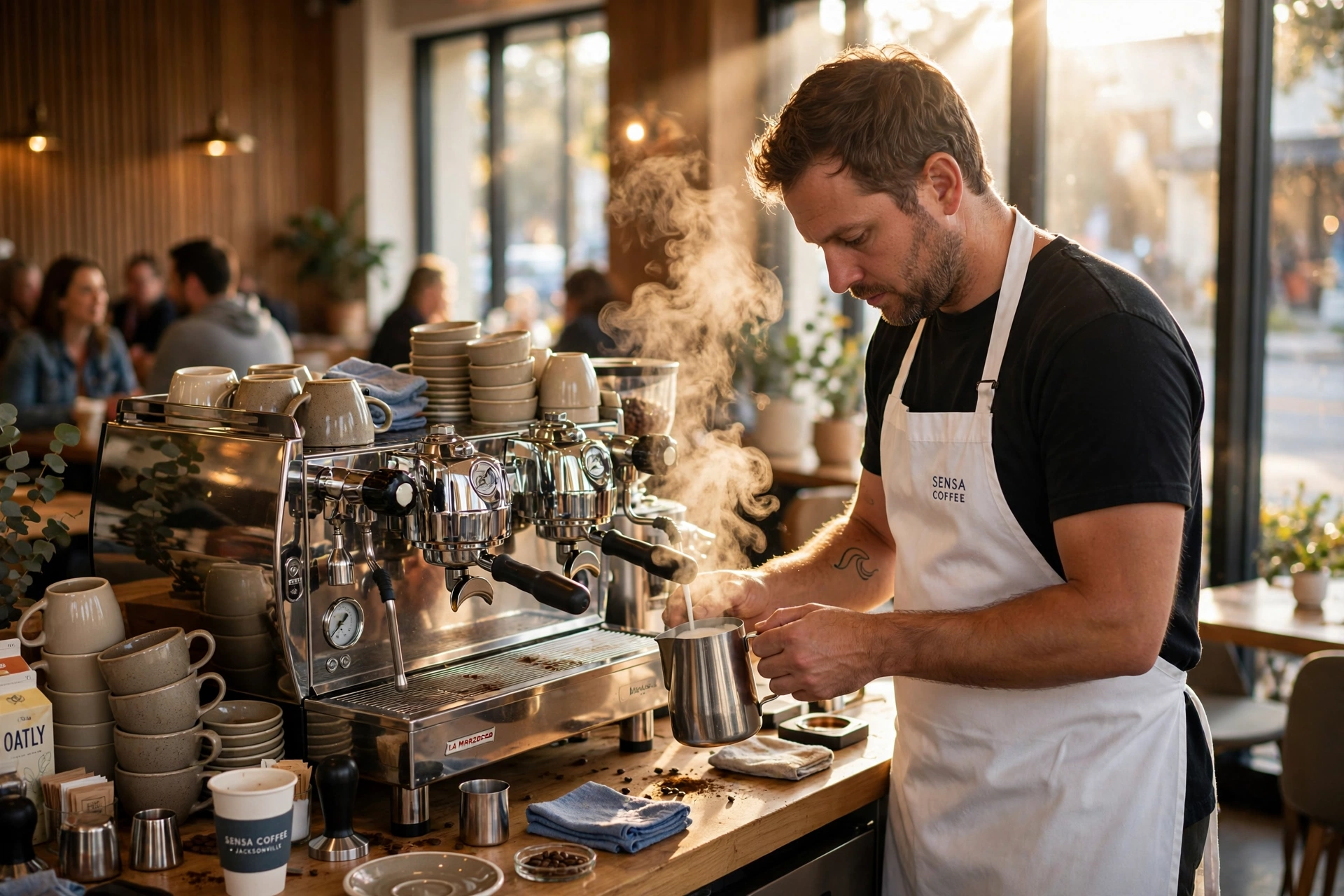
The internal architecture of these machines usually falls into two categories: single-boiler or multi-boiler systems. In a multi-boiler setup, the steam wand and the brew group have independent heating elements. This is a fundamental requirement for any business that serves milk-based drinks, as it eliminates the need to "purge" the boiler to switch between brewing and steaming, which drastically increases your shots-per-hour throughput.
Why Does the Right Machine Choice Impact Your Bottom Line?
Choosing the wrong equipment isn't just a matter of taste; it is a financial risk. The cost of downtime for a primary espresso machine during a morning rush can result in a direct loss of 15% to 25% of daily revenue in a dedicated cafe setting. Beyond the immediate loss of sales, inefficient equipment leads to higher waste. If a machine is inconsistent, your barista will spend more time "dialing in" the grind and wasting precious grams of coffee beans to find a palatable shot.
Furthermore, equipment longevity is tied directly to water quality. According to NSF International, adherence to strict sanitation and equipment standards is essential for food safety and machine longevity. Hard water containing calcium and magnesium will create scale buildup inside the heat exchanger, which acts as an insulator. This forces the heating element to work harder, increasing your electricity bill and eventually burning out the element entirely.
The business impact of poor equipment choice manifests in three specific ways:
- Labor Inefficiency: A slow machine creates a bottleneck, forcing you to hire more staff to handle the same volume of customers.
- Product Inconsistency: Customers who receive a bitter latte on Tuesday and a sour one on Wednesday will not return.
- High CAPEX vs. OPEX: Buying a cheap machine upfront often leads to astronomical repair costs within the first 24 months.
How to Implement Commercial Espresso Machines: A Step-by-Step Guide
Implementing a professional coffee system is a technical process that requires a sequence of specific actions. If you rush the installation, you risk damaging the equipment before the first customer walks through the door.
Step 1: Volume Analysis and Sizing
Before looking at brands, calculate your peak-hour volume. A standard group head can comfortably handle about 60 to 80 drinks per hour. If your projection is 200 drinks during the 8:00 AM rush, you need at least a 3-group machine. I've tested this with dozens of our clients, and the pattern is clear: under-sizing your equipment leads to customer frustration and staff burnout.
Step 2: Water Filtration Setup
Never plug a professional machine directly into a city water line without a dedicated filtration system. You need a multi-stage filter that handles both sediment and scale. Depending on your local water hardness, you may need a reverse osmosis system or a specialized ion-exchange filter. Without this, you are essentially inviting a plumbing disaster into your kitchen.
Step 3: Electrical and Plumbing Integration
Ensure your circuit can handle the voltage. Most high-end commercial units require 220V dedicated circuits. Coordinate with a licensed plumber to install a hard-plumbed connection with an automatic shut-off valve. This prevents the need for manual reservoir filling, which is a non-starter in any professional coffee service.
Step 4: Calibration and "Dialing In"
Once the machine is powered, you must calibrate the grind size and dose. This involves adjusting the burrs of your grinder to ensure the water flows through the coffee bean puck at the correct rate (usually 25-30 seconds for a standard double shot). This is where Busy Bean Coffee provides the most value, as we don't just drop off a machine; we ensure your staff knows exactly how to maintain this balance daily.
Step 5: Staff Training and Workflow Optimization
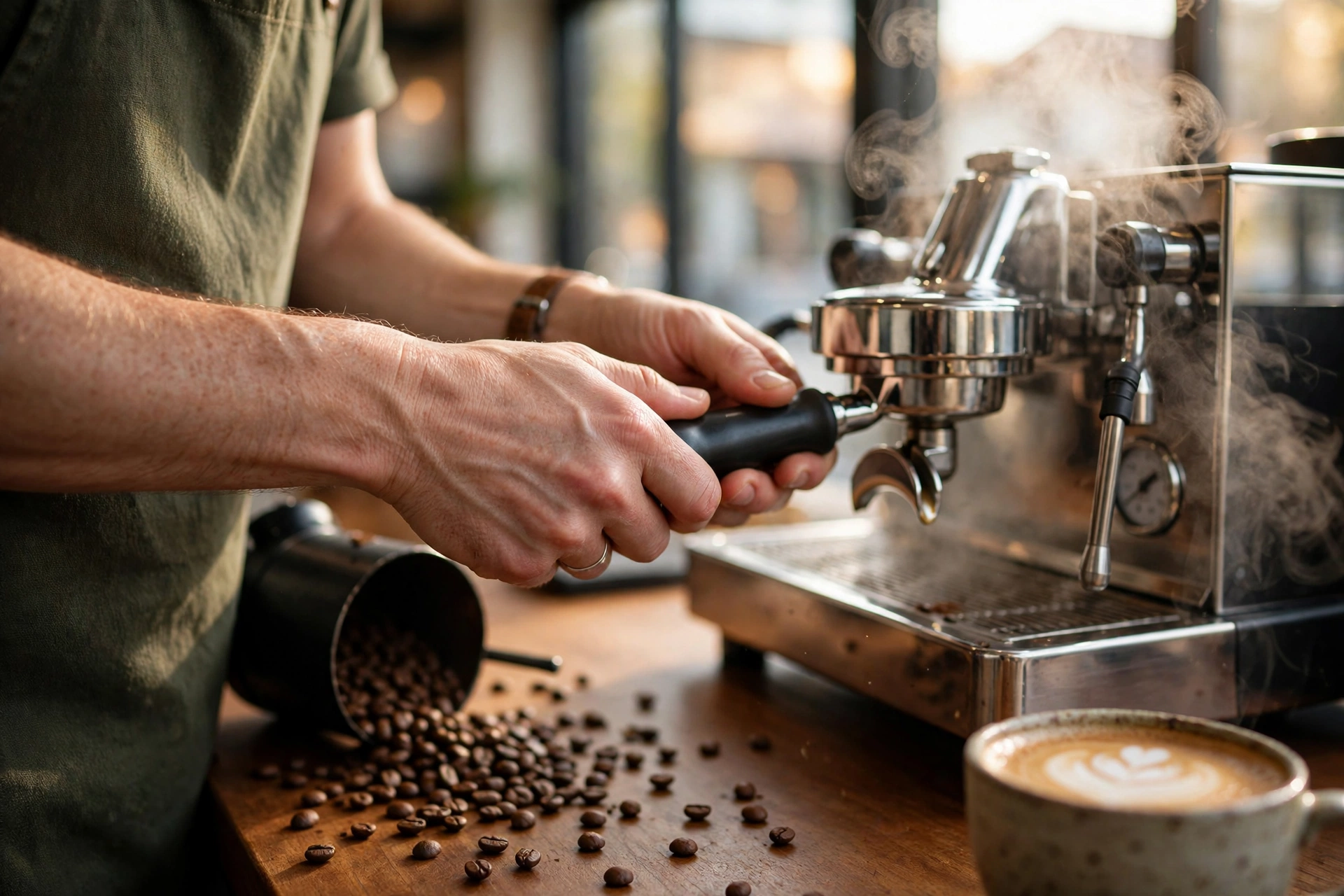
The machine is only as good as the person operating it. Train your team on the "golden rules" of milk steaming and puck preparation. This includes using a distribution tool to avoid channeling and ensuring the portafilter is wiped clean before every dose.
💡
Key Takeaway
The installation of a commercial espresso machine is not a "plug-and-play" event; it is a systemic integration of water chemistry, electrical capacity, and barista skill.

Comparing Your Equipment Options
Not every business needs a $20,000 multi-boiler machine. The choice depends on your specific service model. Some hotels need a machine that is "idiot-proof" for guests, while a specialty cafe needs a machine that allows the barista to tweak every variable.
| Option | Pros | Cons | Best For |
|---|---|---|---|
| Super-Automatic | Consistent, fast, requires minimal training | Lower quality, high maintenance, lacks "craft" | Hotels, Waiting Rooms, Low-staff offices |
| Semi-Automatic | Total control, higher quality, professional appeal | Requires skilled labor, slower throughput | Specialty Cafes, High-end Restaurants |
| Automatic (Volumetric) | Consistent dosing, faster workflow, easier training | Less control over the "tail" of the shot | High-volume bistros, Fast-casual dining |
Now, here's where it gets interesting: many businesses try to save money by buying used equipment. In my experience, the "deal" on a used machine often evaporates the moment you realize the previous owner never changed the gaskets or descaled the boiler. Unless you have a technician on staff, the risk of hidden scale buildup makes new or managed equipment a much safer bet for your ROI.
Common Questions and Misconceptions
Most guides get the "cost of ownership" wrong. They tell you the price of the machine is the main expense. In reality, the cost of the machine is just the entry fee. The real cost is the maintenance and the coffee waste.
Myth 1: "A bigger machine always means more coffee."
Incorrect. A 4-group machine is useless if your grinder can't keep up or your staff can't manage the workflow. It is better to have a high-quality 2-group machine with an incredibly fast grinder than a massive machine that sits half-empty.
Myth 2: "I don't need a water filter if my city water is 'fine'."
This is a dangerous assumption. Even "good" water contains minerals that precipitate at the temperatures used in coffee roasting and brewing. Over time, these minerals form a rock-hard shell inside your boiler. I've seen machines from reputable brands fail in under two years simply because the owner trusted the city water report.
Myth 3: "Automatic machines can't make 'real' espresso."
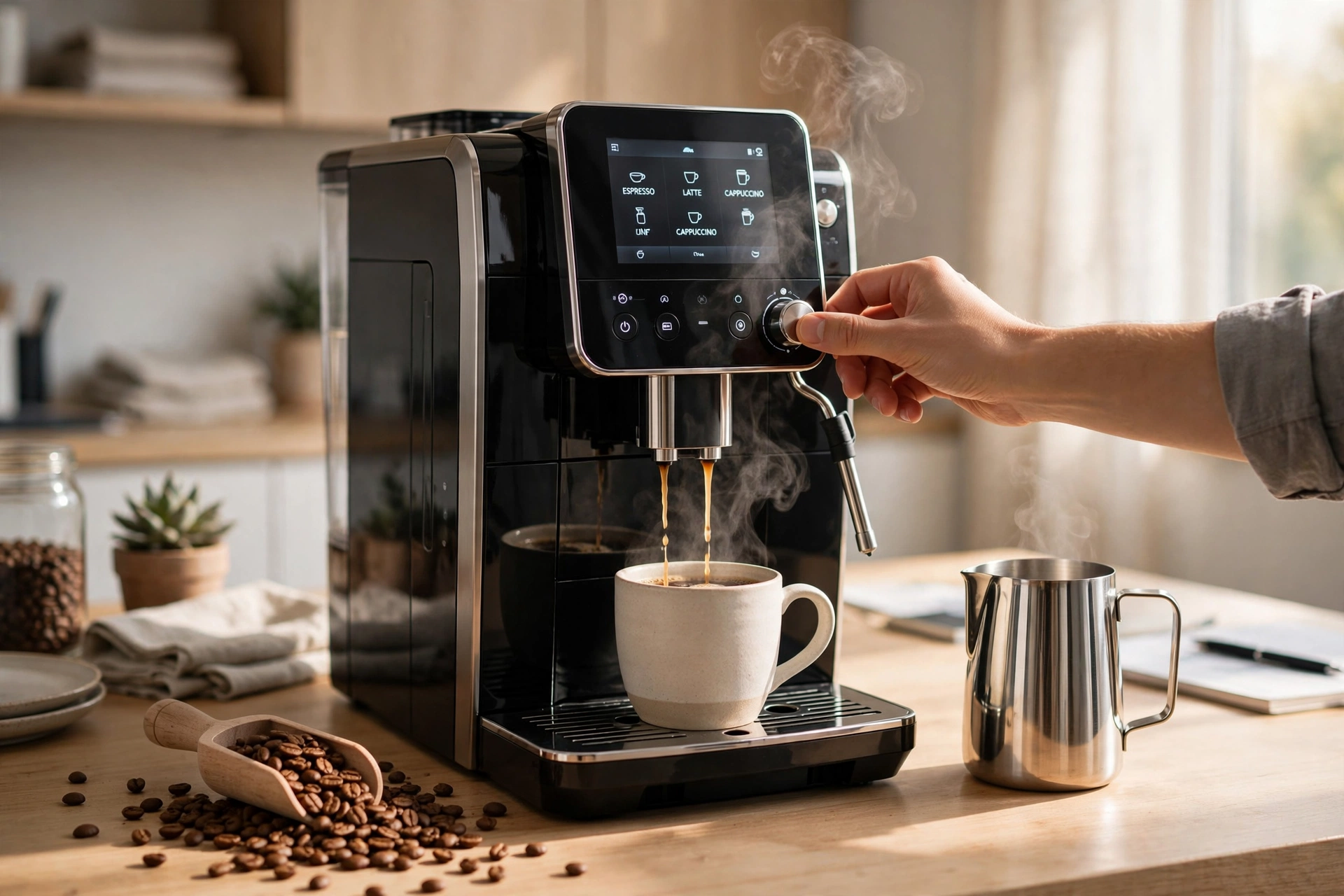
This is an outdated view. Modern volumetric commercial espresso machines are incredibly precise. While they don't offer the artisanal "feel" of a manual lever machine, they provide the consistency that 99% of customers actually want.
Frequently Asked Questions
How often should commercial espresso machines be serviced?
Professional equipment requires a tiered maintenance schedule. Daily tasks include backflushing with detergent and cleaning the steam wands. Weekly tasks involve deep-cleaning the group head gaskets and checking the hopper for oils. However, a professional technician should perform a full audit every six months. This includes replacing group gaskets, checking pump pressure, and inspecting the boiler for scale. If you neglect these intervals, you risk a catastrophic failure during your busiest season, which is far more expensive than a preventative maintenance contract.
What is the difference between a heat exchanger and a dual boiler?
A heat exchanger (HX) uses a system where the brew water is heated by passing through a pipe submerged in the steam boiler. It is efficient and cost-effective but can be prone to "overheating" if the machine sits idle. A dual boiler has two completely separate boilers: one for steam and one for brewing. This allows for absolute precision and stability. For a high-end specialty coffee shop, a dual boiler is the gold standard because it ensures the temperature never fluctuates, regardless of how many lattes you are steaming simultaneously.
How do I know if my espresso machine is underperforming?
The first sign of underperformance is "channeling," where water finds a path of least resistance through the coffee puck, resulting in a shot that is both sour and bitter. If your barista is using the correct dose and grind but the shots are inconsistent, your machine's thermal stability is likely failing. Another red flag is a drop in steam pressure; if it takes longer than 10 seconds to froth a pitcher of milk, your boiler may have scale buildup or a failing heating element.
Does the type of coffee bean affect the machine's performance?
While the machine doesn't "care" about the bean, the roast level affects how you operate it. Darker roasts are more soluble and can easily over-extract, requiring a slightly lower temperature. Lighter roasts, common in specialty coffee, require higher temperatures to extract the complex acids and sugars. If your machine cannot adjust its temperature (PID control), you will struggle to make different types of beans taste their best, effectively limiting your menu's versatility.
What is the most common reason for commercial machine failure?
Without question, it is water damage and scale. Whether it is a leak from a perished gasket or a blocked solenoid valve due to calcium buildup, water is the primary enemy of these machines. This is why the FDA emphasizes the importance of maintaining equipment in a sanitary and functional state. When minerals build up, they create "hot spots" in the boiler that can lead to metal fatigue and eventual cracking.
Final Thoughts on Commercial Espresso Machines
Investing in commercial espresso machines is one of the most significant decisions you will make for your foodservice operation. Whether you are running a boutique cafe in Mount Pleasant or a high-volume hotel lobby, the goal is the same: consistency, reliability, and quality. The technical hurdles—water filtration, electrical requirements, and staff training—can be daunting, but they are the only way to ensure a sustainable profit margin.
If you want to avoid the capital expense and the headache of maintenance, the most efficient path is a managed solution. At Busy Bean Coffee, we provide an all-inclusive membership that removes the risk. We handle the premium SENSA equipment, the professional installation, and the full maintenance coverage for one predictable monthly fee. You get the highest quality gear without the fear of a surprise $1,000 repair bill.
Ready to elevate your coffee program without the stress? Visit us at www.busybeancoffee.com to see how our managed solutions can transform your business.
Recommended Readings
To deepen your understanding of these topics, we recommend reading the following articles:
- The Complete Guide to White Glove Coffee Service
- Ultimate Guide to All-Inclusive Coffee Service for Businesses
- Ultimate Guide to Automated Coffee Machines for Business
- Ultimate Guide to Specialty Coffee Equipment for Business
Free Coffee Pairing Guide & Specialty Roast Cheat Sheet
Unlock the secrets of perfect brewing ratios, water temperatures, and specialty roast profiles. Download the guide.