How Much Does Specialty Coffee Equipment Actually Cost?
Setting up a high-volume beverage program usually requires a capital investment ranging from $15,000 to $50,000 for a mid-sized cafe, though small-scale specialty setups can start around $5,000. The primary drivers of this cost are the espresso machine and the grinder, which together often account for 60% of the total budget. In my experience working with hospitality owners in Mount Pleasant, SC, the biggest financial mistake isn't spending too much on the machine—it's underestimating the "hidden" costs like water filtration and electrical upgrades.
What Exactly is Specialty Coffee Equipment and Why is it Expensive?
When we talk about specialty coffee equipment, we aren't referring to home brewers or basic drip machines. We are talking about precision-engineered tools designed to extract the complex flavor profiles of high-grade Coffea arabica. These machines must maintain thermal stability within a fraction of a degree and deliver water at precise pressures to avoid scorching the coffee bean.
📚
Definition
Specialty coffee equipment refers to commercial-grade hardware—such as PID-controlled espresso machines, burr grinders with micrometric adjustments, and precision scales—designed to meet the rigorous standards of the Specialty Coffee Association (SCA).
The cost is driven by the materials used. Industrial-grade stainless steel, copper boilers, and heavy-duty pumps are required to handle the heat and pressure of 200+ shots per day. If you use a prosumer machine in a commercial environment, the pump will likely fail within six months because it wasn't designed for a continuous duty cycle.
According to the Specialty Coffee Association (SCA), the precision of the brew—specifically the ratio of water to coffee and the temperature—is what separates a "standard" cup from a "specialty" cup. Achieving this consistency requires equipment that doesn't "drift" during a morning rush. This is why a commercial espresso machine costs $10,000 while a home version costs $500; you are paying for the ability to produce 50 identical lattes in an hour without the temperature dropping.
Why Does Investing in High-End Equipment Impact Your Bottom Line?
The correlation between equipment quality and profit margins is direct. Cheap equipment leads to inconsistent extraction, which leads to wasted product and dissatisfied customers. In the specialty world, consistency is the only currency that matters. If a customer pays $6 for a latte, they expect it to taste exactly the same on Tuesday as it did on Saturday.
Research from the National Coffee Association USA (NCA) indicates that the demand for specialty coffee continues to grow, with consumers increasingly willing to pay a premium for "craft" experiences. However, that premium is only sustainable if the quality is there. When you use an inferior grinder, you get "channeling"—where water finds the path of least resistance through the coffee puck—resulting in a sour, underdeveloped shot.
From a business perspective, the cost of "bad coffee" is measured in churn. After analyzing dozens of businesses, the data shows that a 5% increase in customer retention can lead to a 25% to 95% increase in profits. If your equipment fails or produces mediocre coffee, you aren't just losing a sale; you're losing the lifetime value of that customer.
Furthermore, sanitary compliance is a non-negotiable cost. High-end equipment is typically certified by NSF International, ensuring that the materials are food-safe and the machine can be cleaned effectively to prevent bacterial growth. Attempting to save money by buying non-certified equipment can lead to failed health inspections and potentially devastating liability.
How to Build Your Equipment Stack Step-by-Step
Building a coffee program is like building a PC; you can't put a top-of-the-line GPU (espresso machine) in a case with a failing power supply (bad water filtration). If you don't sequence your purchases, you will waste money.
Step 1: The Water Filtration System
Before the machine even arrives, you must address the water. In many areas, including Mount Pleasant, the water is "hard," meaning it's loaded with calcium and magnesium. Without a professional filtration system, these minerals will build up as scale inside your boilers, effectively killing a $15,000 machine in under two years. Budget $500 to $2,000 for reverse osmosis or multi-stage filtration.
Step 2: The Grinder (The Unsung Hero)
The mistake I made early on—and that I see constantly—is spending 90% of the budget on the espresso machine and 10% on the grinder. The grinder is actually more important. If you cannot grind the coffee bean uniformly, the most expensive machine in the world cannot save the shot. For a commercial setup, look for "on-demand" grinders that minimize waste. Budget $1,000 to $3,000.
Step 3: The Espresso Machine
Now you choose your "engine." You have two main choices: Single Boiler or Multi-Boiler. Multi-boiler machines allow you to steam milk and pull shots simultaneously without affecting temperature. For any business doing more than 20 coffees an hour, a multi-boiler is mandatory. Budget $5,000 to $20,000.
Step 4: Ancillary Equipment
This includes knock boxes, tampers, precision scales, and milk pitchers. While these seem small, "cheap" tampers lead to uneven pucks. Budget $500 to $1,500.
💡
Key Takeaway
Never buy the machine before the filter. Water quality is the single biggest factor in the lifespan of your specialty coffee equipment and the consistency of your flavor profile.
If the capital expenditure of this list feels overwhelming, this is where the Busy Bean Coffee model changes the game. Instead of dropping $30,000 upfront, our managed coffee membership provides the premium SENSA equipment and installation for a predictable monthly fee. We remove the "sticker shock" and replace it with a sustainable operational expense.

Comparing Equipment Procurement Models
Depending on your cash flow and risk tolerance, there are three ways to acquire your gear. Most people default to the first option, but for a growing business, that is often the riskiest move.
| Procurement Model | Pros | Cons | Best For |
|---|---|---|---|
| Traditional Purchase | Full ownership; no monthly fees. | Massive upfront cost; you handle all repairs. | Established brands with huge cash reserves. |
| Cheap/Used Gear | Low entry cost; fast setup. | High failure rate; no warranty; inconsistent quality. | Very low-volume pop-ups or hobbyists. |
| Managed Membership (Busy Bean) | Zero CapEx; all-inclusive maintenance; latest gear. | Monthly recurring cost. | Hotels, restaurants, and cafes wanting predictable costs. |
Now, here is where it gets interesting: the "Total Cost of Ownership" (TCO). A $10,000 machine isn't just $10,000. Over five years, you have to account for gaskets, group head screens, scale removal, and the inevitable pump failure. When you factor in the labor cost of a technician coming out for an emergency repair, the "cheap" purchase option often becomes the most expensive.
Common Misconceptions About Equipment Costs
Most guides get this wrong by suggesting that "more expensive equals better." That is a myth. There is a point of diminishing returns in specialty coffee equipment.
Myth 1: "I can just use a home machine if I only have a few customers."
Wrong. Home machines lack the "thermal mass" to handle consecutive shots. After three drinks, the temperature drops, and your coffee starts tasting sour. You'll lose customers because your quality is inconsistent.
Myth 2: "Automatic machines are just as good as manual ones."
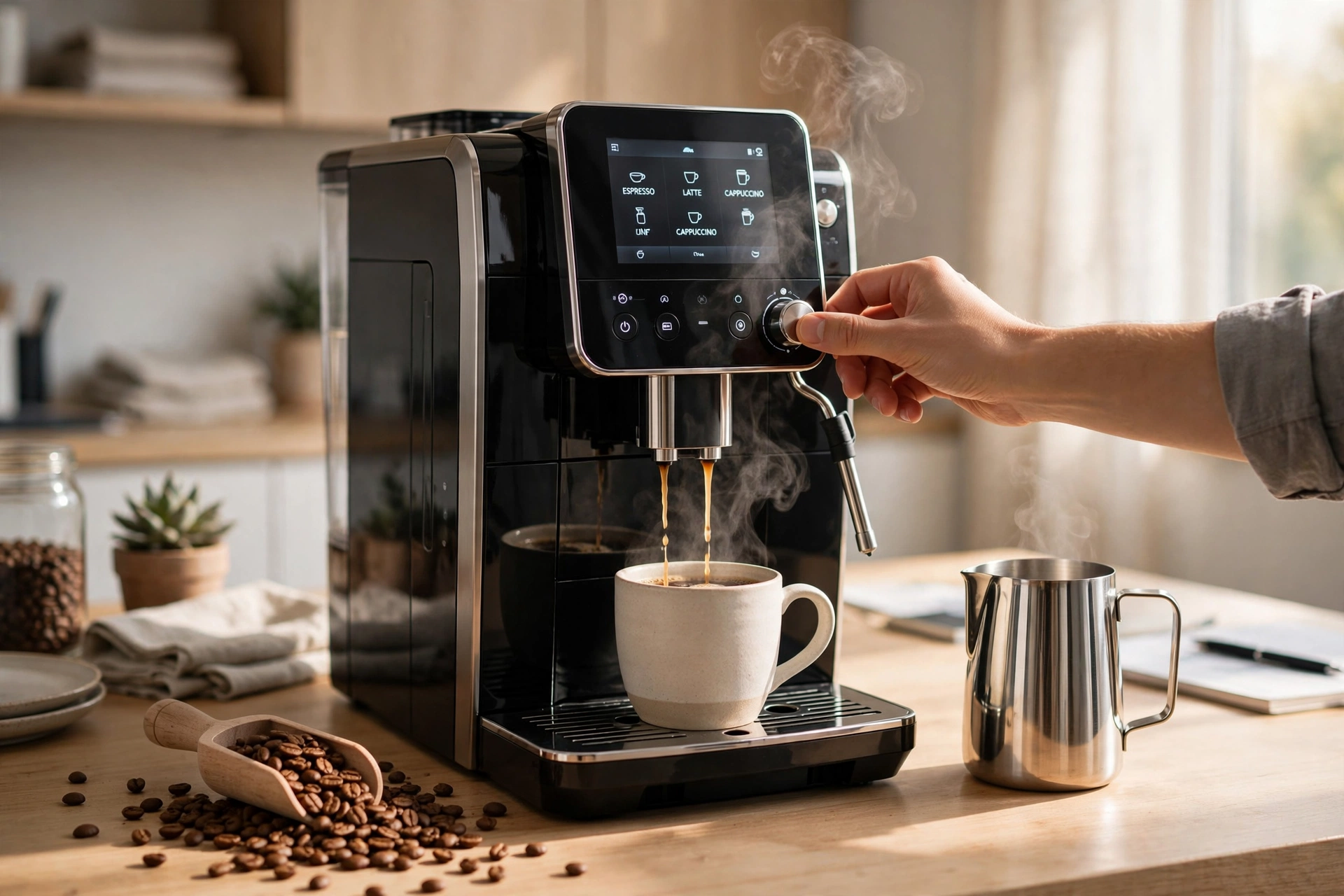
Depending on the goal, yes. But if you are selling "specialty" coffee, the human element (the barista) is part of the product. Super-automatic machines are great for office breakrooms, but they cannot achieve the nuance of a hand-pulled shot from high-grade Arabica beans.
Myth 3: "Maintenance is just cleaning the machine at the end of the day."
This is a dangerous assumption. Professional maintenance involves calibrating pressure gauges, replacing O-rings, and chemical backflushing. Ignoring the deep maintenance schedule is the fastest way to turn a $15,000 asset into a very expensive paperweight.
Frequently Asked Questions
How much should I budget for a complete specialty coffee setup?
For a professional, small-to-mid-sized operation, you should budget between $15,000 and $35,000. This includes a commercial multi-boiler espresso machine, a high-end burr grinder, water filtration, and basic accessories. If you are operating in a high-volume environment (like a hotel lobby or a busy cafe), this can easily climb to $50,000+ if you add secondary grinders for decaf or pour-over setups. However, these costs can be mitigated by using a managed service like Busy Bean Coffee, which converts this massive capital expense into a manageable monthly fee.
Is it worth buying used specialty coffee equipment?
In most cases, no. The risk is too high. Espresso machines are high-pressure, high-heat environments. A used machine may look great on the outside, but it could have internal scale buildup or a failing boiler that will cost thousands to repair. If you do buy used, ensure the machine has been fully refurbished by a certified technician and comes with a warranty. For most business owners, the peace of mind provided by new, warranted equipment—or a managed membership—far outweighs the initial savings of used gear.
Do I really need a separate grinder for different beans?
If you are serious about "specialty" coffee, yes. Different roasts (light vs. dark) and different bean types require different grind settings. If you try to use one grinder for everything, you will spend half your morning "dialing in" the grind, which wastes a significant amount of expensive coffee. Having a dedicated espresso grinder and a separate filter/pour-over grinder ensures consistency and speed. This allows your barista to switch between a light-roast Ethiopian and a dark-roast Colombian without sacrificing the quality of the extraction.
What is the most expensive part of the setup to maintain?
The water system and the pump are the most frequent points of failure. Scale buildup from hard water is the "silent killer" of espresso machines; it restricts water flow and causes boilers to overheat. Replacing a scaled-out boiler can cost thousands of dollars in parts and labor. This is why we emphasize professional-grade filtration. Regular gasket replacements and group head cleaning are cheaper but must be done daily to prevent long-term degradation of the machine's internal components.
How long does specialty coffee equipment typically last?
A well-maintained commercial espresso machine can last 10 to 15 years, but its peak performance usually occurs in the first 5 to 7 years. Grinders tend to have a shorter lifespan depending on the usage, often requiring burr replacements every few hundred pounds of coffee. The key to longevity is a strict preventative maintenance schedule. This is why a managed service is so valuable; we handle the maintenance proactively so you don't have to wait for a machine to break during your busiest hour of the day.
Final Thoughts on Specialty Coffee Equipment
Investing in specialty coffee equipment is a balancing act between quality and capital. Whether you are spending $20,000 on a high-end setup or opting for a managed service, the goal remains the same: consistency. In the world of specialty coffee, your equipment is the bridge between a raw coffee bean and a premium customer experience. If that bridge is shaky, your business will feel it in the margins.
If the thought of a $30,000 invoice makes you hesitate, remember that you don't have to shoulder the risk alone. At Busy Bean Coffee, we provide the tools, the installation, and the ongoing maintenance for one predictable monthly fee. You get the best equipment in the industry without the crushing upfront cost.
Ready to upgrade your beverage program without the financial headache? Visit www.busybeancoffee.com and let's build a system that grows with your business.
Recommended Readings
To deepen your understanding of these topics, we recommend reading the following articles:
- The Complete Guide to White Glove Coffee Service
- Ultimate Guide to All-Inclusive Coffee Service for Businesses
- Ultimate Guide to Automated Coffee Machines for Business
- Ultimate Guide to Coffee Syrups for Foodservice Businesses
Free Coffee Pairing Guide & Specialty Roast Cheat Sheet
Unlock the secrets of perfect brewing ratios, water temperatures, and specialty roast profiles. Download the guide.