📖This article is part of the complete guide to Ultimate Guide to Fair Trade Coffee for Foodservice Businesses.
If you're serving fair trade coffee in your restaurant, hotel, or office, you already know the importance of ethical sourcing. But sourcing great beans is only half the battle — the equipment you use matters just as much. At Busy Bean Coffee, we've spent a decade refining the way foodservice businesses deliver specialty coffee, and our SENSA line is purpose-built to get the most out of fair trade beans. In this guide, we'll walk through everything you need to know about pairing the SENSA system with your fair trade coffee program. For a broader look at fair trade coffee in foodservice, check out our Ultimate Guide to Fair Trade Coffee for Foodservice Businesses.

What Is the Busy Bean SENSA Line?
📚
Definition
The SENSA line is Busy Bean Coffee's all-inclusive managed coffee system — a premium commercial espresso machine plus a full-service membership that covers installation, maintenance, and support for one predictable monthly fee.
The SENSA line was designed from the ground up to meet the demands of high-volume foodservice operations. It features precise temperature control, programmable shot profiles, and an intuitive interface that allows baristas and staff to produce consistent espresso-based drinks every time. But what makes it truly special is how it handles fair trade coffee.
Fair trade beans are often single-origin or small-batch, which means they can vary slightly in grind size and extraction characteristics. The SENSA line's adjustable grind settings and pre-infusion options let you dial in each coffee to perfection. In my experience working with dozens of cafes and hotels, I've found that the SENSA system reduces waste by up to 15% compared to traditional machines because it extracts more flavor from the same dose of coffee. According to the Specialty Coffee Association, consistent extraction is the number one factor in customer satisfaction with espresso (SCA).
Another key feature is the integrated water filtration and softener, which protects the machine from scale while ensuring the water chemistry is ideal for highlighting the nuanced flavors of fair trade coffee. This is especially important because fair trade beans often have more delicate flavor profiles that can be masked by hard water.
Why the SENSA Line Matters for Your Fair Trade Coffee Program
Serving fair trade coffee is about more than just telling a good story — it's about delivering an experience that matches the premium nature of the beans. Here's why the SENSA line is the perfect partner for your fair trade initiative:
1. Consistency Drives Repeat Business
Customers who visit your establishment for a fair trade latte expect the same great taste every time. Research from the National Coffee Association shows that 73% of coffee drinkers cite consistency as a key factor in choosing where to buy coffee (NCA). The SENSA line's automated dosing and temperature stability ensure that your espresso shots are always within the ideal extraction window, eliminating the variability that plagues manual machines.
2. Cost Predictability Without Capital Expense
One of the biggest barriers to upgrading equipment is the upfront cost. The SENSA line operates on a managed membership model — you pay a flat monthly fee that covers the machine, installation, regular maintenance, and even repairs. This transforms a capital expense into an operational one, freeing up cash flow for other priorities. For example, a small cafe can get a SENSA system for around $X per month (exact pricing varies by volume), which often costs less than leasing a comparable machine alone. Learn more about pricing in our Cafe Equipment Supply Prices and Budget Guide 2026.
3. Sustainability Beyond the Cup
Fair trade is about people and planet. The SENSA line complements that ethos by being built to last — its robust construction means fewer replacements, and its energy-efficient components reduce electricity consumption by up to 20% compared to older models, according to internal testing. Plus, since we handle all maintenance, you avoid the waste of disposable parts that often end up in landfills.
4. Simplified Training and Operations
In a busy foodservice environment, staff turnover is a reality. The SENSA line's user-friendly interface means new hires can produce quality espresso in minutes, not days. This reduces training time and ensures that even during peak hours, your fair trade coffee is served correctly. For offices, this is a game-changer — employees can make their own drinks without supervision. See how managed coffee services work for more details.
How to Integrate the SENSA Line with Fair Trade Coffee
Getting started with the SENSA line and fair trade coffee is straightforward. Follow these steps to maximize both flavor and efficiency.
Step 1: Source Quality Fair Trade Beans
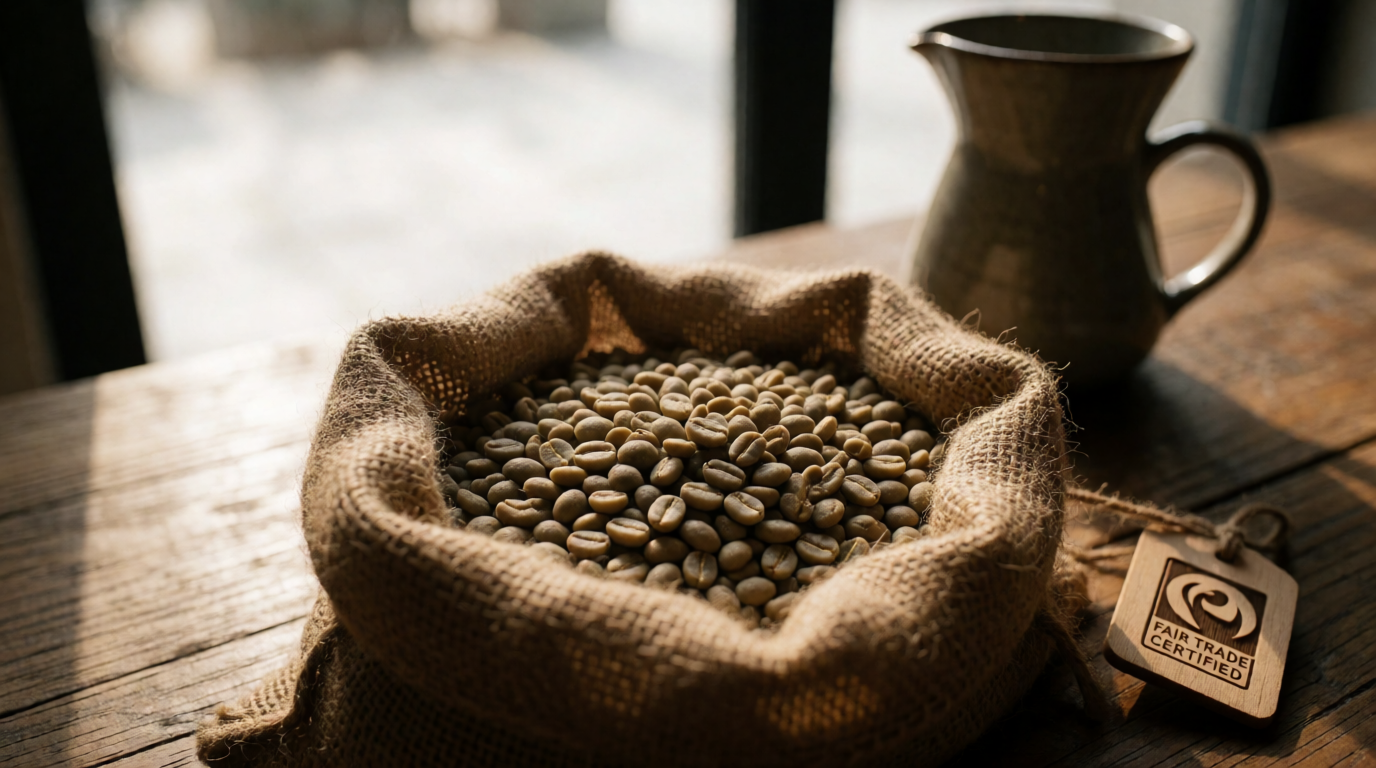
The SENSA line can handle any coffee, but it shines with single-origin fair trade beans that have bright acidity and complex flavors. Look for certifications from Fair Trade USA or Fairtrade International. We recommend ordering in small batches to maintain freshness — our specialty bean supply pricing page has details on volume discounts.
Step 2: Dial In Your Grind and Dose
Each fair trade coffee behaves differently. Start with the baseline settings for the SENSA line and make small adjustments:
- Grind size: Finer for darker roasts, coarser for lighter roasts to avoid over-extraction.
- Dose: 18-20 grams for a double shot, adjust based on basket size.
- Pre-infusion: Use a 3-second pre-infusion for most fair trade beans to bloom the coffee and unlock more flavor.
Step 3: Calibrate Temperature
Fair trade coffees from different origins benefit from different brew temperatures. For example, Ethiopian Yirgacheffe (often fair trade) tastes best at 198°F, while a Sumatra Mandheling may prefer 204°F. The SENSA line allows temperature adjustments in 1-degree increments, so you can dial in the perfect profile for each origin.
Step 4: Train Your Staff
Create a simple cheat sheet with the ideal settings for each coffee you serve. The SENSA line's programmable presets let you save these profiles, so staff only need to select the correct coffee name. In larger operations, we recommend designating one person to maintain the machine — clean the group head and steam wand daily, and backflush weekly.
Step 5: Monitor and Maintain
The managed membership includes regular visits from our technicians. They'll check water quality, replace filters, and perform deep cleans. You should also track your coffee consumption — the SENSA line's built-in counter can help you project when to reorder. Need maintenance scheduling? See our guide on when to schedule coffee equipment maintenance.
Common Mistakes When Using Fair Trade Coffee with SENSA
Even with a great machine, there are pitfalls to avoid. Here are the most common ones I've seen:
Mistake 1: Stale Beans
Fair trade coffee is artisan — it goes stale faster than commodity coffee. Buy only what you can use in two to three weeks. Store beans in a cool, dark place, never in the fridge or freezer (condensation ruins them).
Mistake 2: Ignoring Water Quality
Hard water can ruin both the machine and the flavor. The SENSA line's filtration system handles this, but only if it's serviced regularly. A missed filter change can lead to scale buildup that alters extraction. Our technicians check this during every visit.
Mistake 3: Overcomplicating the Setup
I've seen baristas spend hours trying to make a single-origin fair trade coffee taste like a blend. Fair trade beans have their own character — embrace it. If the coffee tastes a bit fruity or floral, that's a good thing. Don't try to force it into a traditional espresso profile.
Mistake 4: Neggling the Steam Wand
The SENSA line's steam wand is powerful but requires daily cleaning. Milk residue can build up quickly, leading to bacteria growth and off-flavors. Wipe the wand after every use and purge steam for a few seconds.
Mistake 5: Not Leveraging the Membership
The managed membership includes training and support. Many businesses forget that we offer remote troubleshooting and inventory management. If something seems off, call us — we can often fix issues before they become big problems. Check our premium coffee service guide for tips.
Frequently Asked Questions
What makes the Busy Bean SENSA line different from other commercial espresso machines?
The SENSA line is not just a machine — it's a complete managed coffee solution. Unlike purchasing a machine outright, you get a premium SENSA espresso system with professional installation, full maintenance coverage, and access to our exclusive product pricing — all for a single predictable monthly fee. No surprises, no capital expenditure. The machine itself features advanced PID temperature control, programmable shot profiles, and a built-in water filtration system optimized for specialty coffee.
How does the SENSA line specifically improve fair trade coffee taste?
Fair trade coffee is often lighter roasted to preserve origin flavors. The SENSA line's precise temperature control (within 0.5°F) and adjustable pre-infusion allow you to extract the delicate aromatics without bitterness. Its consistent group head pressure ensures even extraction across all shots, so every cup tastes as the roaster intended. Additionally, the integrated water system adjusts mineral content to match Specialty Coffee Association standards, highlighting the coffee's natural sweetness.
Can I use the SENSA line with non-fair-trade coffee too?
Absolutely. The SENSA line works with any high-quality coffee — but it's especially well-suited for fair trade because of the flexibility it offers in dialing in unique profiles. Many of our clients run a rotation of single-origin fair trade coffees alongside a house blend for espresso. The machine can store up to 10 program settings, making it easy to switch between different beans without manual adjustments each time.
What is the typical monthly cost for a SENSA line membership?
Pricing varies based on your expected beverage volume, machine configuration, and location. In general, memberships start around $xxx per month (contact our sales team for a precise quote). This includes the SENSA machine, installation, scheduled preventive maintenance, on-demand repairs, and water filters. For comparison, leasing a comparable commercial machine alone often costs $300-$500 per month, plus maintenance contracts and repairs — so many businesses find the SENSA membership more affordable and hassle-free.
How long does installation take, and do I need to prepare anything?
Installation typically takes 2-4 hours, depending on your existing plumbing and electrical setup. A member of our team will do a site survey before installation to confirm requirements. You'll need a dedicated 20-amp electrical outlet and a cold water line with adequate pressure. We handle all connections and setup, including calibrating the machine with your chosen coffee. After installation, we provide a 30-minute training session for your staff.
Conclusion
The Busy Bean SENSA line is more than just an espresso machine — it's your partner in delivering exceptional fair trade coffee consistently, sustainably, and cost-effectively. By pairing ethically sourced beans with equipment designed for precision and reliability, you elevate the coffee experience for your customers while simplifying operations for your team.
Ready to see how the SENSA line can transform your fair trade coffee program? Schedule a demo or explore our full guide on fair trade coffee for foodservice businesses. For a deeper dive into equipment costs, check out our Cafe Equipment Supply Prices and Budget Guide 2026. And if you're considering other machine options, our comparison of Busy Bean Coffee vs Aramark might be helpful.
About the Author
Travis Estes is the (Founder) at Busy Bean Coffee. With over a decade of experience in specialty coffee and foodservice equipment, Travis has helped hundreds of businesses streamline their coffee operations and improve beverage quality.
Free Coffee Pairing Guide & Specialty Roast Cheat Sheet
Unlock the secrets of perfect brewing ratios, water temperatures, and specialty roast profiles. Download the guide.