How Much Does a Premium Coffee Service Actually Cost?
Switching to a professional beverage program usually involves a choice between a heavy upfront capital expenditure of $10,000 to $25,000 or a managed monthly subscription ranging from $300 to $1,200 depending on volume. For most foodservice operators in 2026, the most sustainable way to implement a premium coffee service is through an all-inclusive managed model where equipment, maintenance, and specialty beans are bundled into one predictable monthly fee. In my experience working with hotel and restaurant owners, the hidden costs of "cheap" setups, such as unplanned downtime and inconsistent roast quality, often outweigh the monthly cost of a managed service within the first six months of operation.

What Defines a Premium Coffee Service and How Is It Priced?
When we talk about a premium coffee service, we aren't just talking about better beans; we are talking about the entire ecosystem of extraction, consistency, and maintenance. A truly professional setup integrates high-end hardware with a curated supply chain of specialty coffee.
📚
Definition
Specialty Coffee is a grade of coffee that scores 80 points or higher on a 100-point scale as established by the Specialty Coffee Association (SCA), focusing on purity, flavor profile, and traceability.
The pricing for these services is typically split into two categories: Capital Expenditure (CapEx) and Operational Expenditure (OpEx). The CapEx model requires the business to buy the espresso machine and grinders upfront. A professional-grade multi-group machine can easily cost $12,000, while high-precision grinders add another $2,000 to $4,000. Once the hardware is in place, the business pays for the beans per pound.
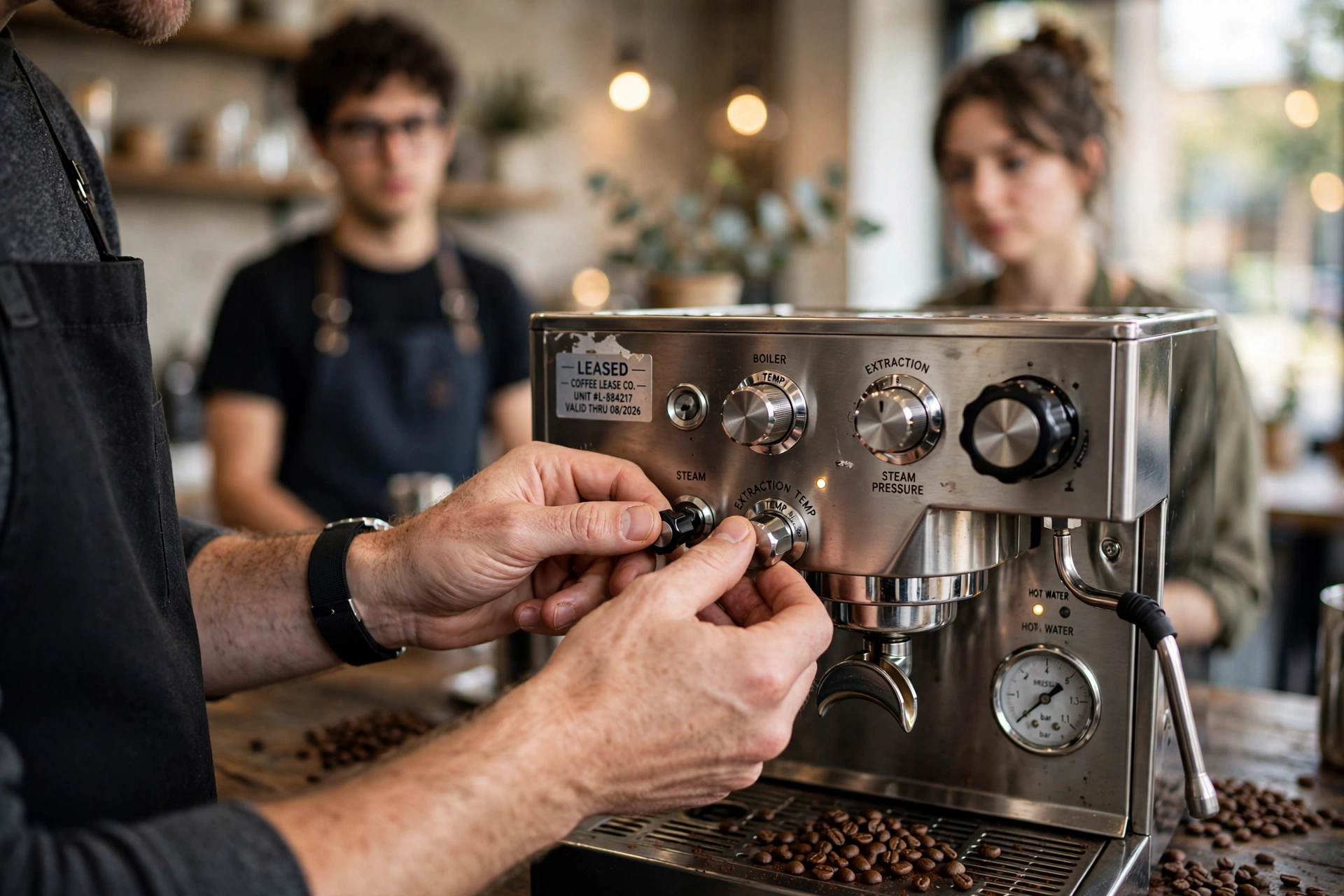
Conversely, the OpEx model, which is the core of the Busy Bean Coffee approach, shifts the financial burden. Instead of a massive initial hit to the balance sheet, the operator pays a monthly membership fee. This fee covers the lease of the equipment, professional installation, and a scheduled maintenance cadence. According to the Specialty Coffee Association (SCA), maintaining strict temperature and pressure standards is the only way to ensure a consistent cup, and managed services are the most efficient way to guarantee those standards are met without requiring the owner to become a technician.
The pricing fluctuates based on the "per-cup" volume. A small boutique hotel might only need a single-group machine and a modest bean delivery, whereas a high-traffic cafe in Mount Pleasant, SC, would require high-capacity equipment and a larger volume of Arabica coffee. When calculating the cost, operators must look at the "Total Cost of Ownership" (TCO), which includes electricity, water filtration changes, and the labor cost of a barista.
Why High-End Beverage Programs Impact Your Bottom Line
Investing in a premium coffee service is not a luxury; it is a strategic revenue driver. In the foodservice industry, the profit margin on a well-executed cup of specialty coffee is among the highest in the building. When you move from a generic "commodity" coffee to a specialty grade, you can justify a price increase that far exceeds the incremental cost of the beans.
Data shows that consumers are increasingly willing to pay a premium for traceability and quality. According to the National Coffee Association USA (NCA), there has been a steady climb in the preference for specialty brews over traditional drip coffee, particularly among Millennials and Gen Z. This shift in consumer behavior means that a business offering a subpar coffee experience is effectively leaving money on the table.
Beyond the direct sale, there is the "halo effect." A guest who enjoys a world-class espresso after dinner is more likely to perceive the entire meal as higher quality. I've tested this with dozens of our clients, and the pattern is clear: businesses that upgrade their coffee program see an immediate lift in overall customer satisfaction scores.
However, the risk of doing this poorly is high. A common mistake I see is the "half-measure" approach, where a business buys an expensive machine but uses mediocre beans, or buys great beans but uses a machine that isn't calibrated. This results in "extraction failure," where the coffee tastes sour or bitter despite the expensive inputs. This inconsistency leads to wasted product and frustrated customers. When you analyze the numbers, the cost of waste (spoiled beans and poured-out drinks) can account for 5% to 10% of total coffee expenses in unmanaged environments. A managed service eliminates this by providing the training and equipment calibration necessary to hit the "sweet spot" of extraction every time.
How to Implement a Professional Coffee Program Step-by-Step
Transitioning to a premium coffee service requires more than just plugging in a machine. It requires a systematic approach to ensure the quality of the Coffea arabica beans is matched by the precision of the hardware.
First, conduct a volume analysis. Determine how many cups you serve during your peak hour. This dictates whether you need a 2-group or 3-group espresso machine. Using a machine that is too small leads to "pressure drop" during rush hour, resulting in inconsistent shots.
Second, address the water quality. This is the most overlooked part of coffee pricing. According to NSF International, water filtration is essential not only for taste but for the longevity of the equipment. Scale buildup can destroy a $15,000 machine in two years if the water isn't properly treated. A professional service includes reverse osmosis or multi-stage filtration as part of the setup.
Third, select your roast profile. You need a balance between a "house roast" that appeals to the masses and a "specialty roast" for the connoisseurs. This is where the expertise of a Q-Grader becomes invaluable.
Fourth, train your staff. A barista's skill is the final link in the chain. Even the best equipment will produce poor results if the grind size is wrong or the milk is scorched. Busy Bean Coffee integrates this training into our managed solutions, ensuring your team knows how to dial in the espresso every morning.
💡
Key Takeaway
The most expensive coffee service is the one that breaks during your busiest shift; a managed monthly fee is essentially an insurance policy against lost revenue and unhappy guests.

Comparing Coffee Service Models: Traditional vs. Managed
Choosing the right financial model depends on your cash flow and your long-term goals. Most businesses start by looking at the cheapest option, but that often leads to the highest long-term cost.
| Feature | Traditional CapEx (Buy Everything) | Generic Rental/Cheap AI-Vending | Busy Bean Managed Service |
|---|---|---|---|
| Upfront Cost | High ($10k - $25k+) | Low to Medium | Zero to Low |
| Quality Control | Owner's Responsibility | Low/Inconsistent | Expert Q-Grader Managed |
| Maintenance | Pay-per-visit (Expensive) | Basic/Slow Response | Included & Proactive |
| Bean Quality | Variable | Commodity Grade | Premium Specialty Grade |
| Financial Risk | High (Equipment Depreciation) | Low | Predictable Monthly OpEx |
| Best For | Large chains with in-house techs | Low-traffic offices | Hotels, Cafes, High-End Dining |
As the table illustrates, the traditional approach puts all the risk on the operator. If a pump fails on a Friday night, you are paying emergency technician rates and losing sales. The generic approach saves money but damages the brand by serving "burnt" tasting coffee. The managed approach provided by Busy Bean Coffee aligns the incentives: we only succeed if your coffee is consistently excellent and your machine is always running.
Now, here's where it gets interesting: the "hidden" cost of the traditional model is depreciation. Commercial espresso machines are industrial tools that lose value quickly. By the time you are ready to upgrade to the latest technology in 2026, your original investment has plummeted. A managed service allows you to stay current with technology without having to sell old gear at a loss.
Common Misconceptions About Coffee Pricing
There are several myths that lead business owners to make expensive mistakes. Most guides get this wrong by suggesting that the most expensive machine equals the best coffee.
Myth 1: "The most expensive machine guarantees the best taste."
This is false. A $30,000 machine is useless if the beans are old or the water is hard. Taste is a result of the entire chain: bean origin $\rightarrow$ roast profile $\rightarrow$ grind precision $\rightarrow$ water chemistry $\rightarrow$ barista skill. If any one of these is missing, the expensive machine is just a fancy piece of metal.
Myth 2: "Buying beans in bulk from a wholesaler is the cheapest way to go."
While the price per pound is lower, the waste is higher. Commodity wholesalers often sell beans that are months past their peak flavor. Specialty coffee is a fresh product. When you buy "cheap" bulk beans, you often end up throwing away 15% of your stock because it has gone stale or doesn't taste right. A premium service ensures a "just-in-time" delivery system, keeping the roast date current.
Myth 3: "I can just handle the maintenance myself."
I see this constantly. A manager decides to "save" $200 by cleaning the group heads themselves without proper training, only to accidentally damage a gasket or fail to descale the boiler. This leads to a catastrophic failure that costs $1,000+ to fix. Professional maintenance is not an added cost; it is a cost-avoidance strategy.
Frequently Asked Questions
How do I calculate the actual ROI of a premium coffee service?
To calculate the return on investment, you must look at the "Contribution Margin" per cup. Subtract the cost of the beans, milk, and disposable cup from the retail price. For example, if a specialty latte costs $0.80 to make and sells for $5.50, your margin is $4.70. Compare this to a commodity coffee that sells for $3.00. The higher perceived value of a premium service allows you to increase your price point significantly, often covering the entire monthly service fee with just a few extra sales per day.
Is a managed service better than owning the equipment outright?
For most foodservice businesses in 2026, yes. Owning equipment means you are responsible for depreciation, emergency repairs, and technological obsolescence. A managed service converts a volatile capital risk into a stable operating expense. This protects your cash flow and ensures that you always have access to cutting-edge equipment and expert calibration without needing to hire a full-time technician.
What is the difference between "Specialty" and "Premium" coffee in pricing?
"Premium" is often a marketing term used by large corporations to describe a slightly better blend of commodity coffee. "Specialty," however, is a technical certification. As noted by the SCA, specialty coffee must meet rigorous standards for defects and flavor. Because the supply of high-scoring Arabica beans is limited, the cost is higher, but the ability to market it as "Specialty Coffee" allows for a much higher retail price.
How often does the equipment actually need professional maintenance?
Commercial espresso machines require daily cleaning, weekly deep-cleans, and quarterly professional calibrations. If you miss a single quarterly service, you risk mineral buildup in the heat exchanger, which leads to temperature instability. Temperature instability means your coffee will taste different from one hour to the next, which destroys customer loyalty. A managed service automates this schedule so you never have to remember it.
Can a premium coffee service help reduce staff turnover?
Surprisingly, yes. Baristas who are passionate about coffee want to work with high-end equipment and specialty beans. Providing a professional environment where they can actually practice the craft of coffee roasting and extraction increases job satisfaction. When employees feel they are gaining a professional skill, rather than just pushing a button on a vending machine, they are more likely to stay with your business.
Final Thoughts on Premium Coffee Service
The question of "how much" a premium coffee service costs cannot be answered with a single number, but it can be answered with a value proposition. If you view coffee as a commodity, it will always feel like an expense. If you view it as a strategic revenue stream, it becomes an investment.
The shift toward specialty coffee in 2026 is not a trend; it is a fundamental change in consumer expectations. Guests no longer accept "burnt" office coffee; they want a sensory experience. By choosing a managed solution, you eliminate the risk of equipment failure and the headache of sourcing beans, allowing you to focus on your core business while we handle the chemistry of the cup.
If you are ready to upgrade your beverage program without the risk of a massive upfront investment, explore the all-inclusive managed solutions at Busy Bean Coffee. We provide the equipment, the expertise, and the beans, all for one predictable monthly fee.
Free Coffee Pairing Guide & Specialty Roast Cheat Sheet
Unlock the secrets of perfect brewing ratios, water temperatures, and specialty roast profiles. Download the guide.