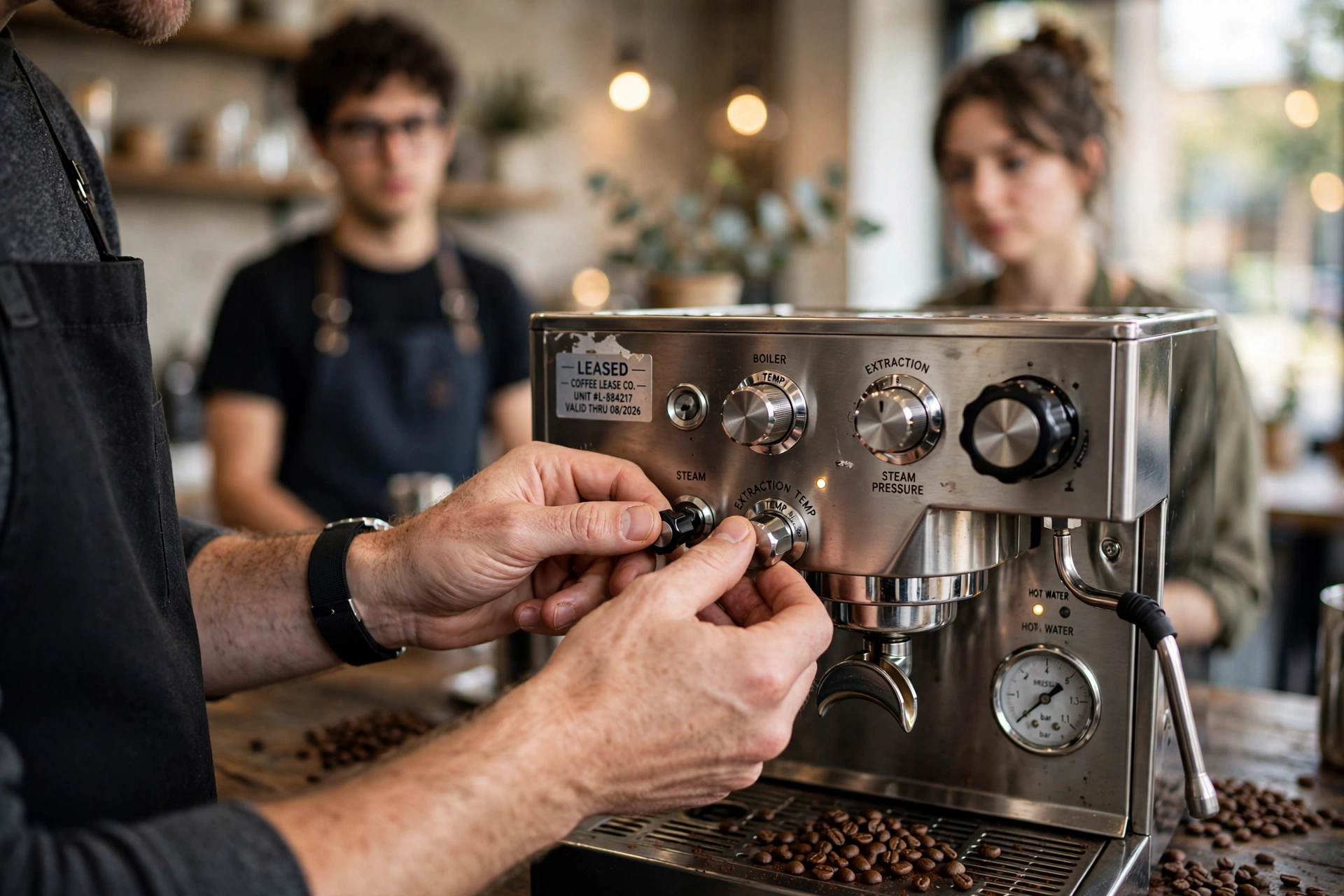
How Much Does a Premium Coffee Service Actually Cost?
Most hospitality managers are blindsided by the "hidden" costs of coffee; they look at the price per pound of beans but ignore the $5,000 repair bill for a neglected espresso machine or the 15% waste factor from poorly trained staff. For most mid-to-large foodservice operations in 2026, a comprehensive premium coffee service typically ranges from $500 to $2,500 per month as a managed subscription, or involves an upfront capital expenditure (CapEx) of $10,000 to $30,000 for equipment plus ongoing monthly consumables. The variance depends entirely on volume, the level of equipment automation, and whether you choose a managed membership model or a traditional purchase model.
In my experience working with hotels and high-end cafes, the biggest financial leak isn't the cost of the beans, it's the "invisible downtime." When a machine goes offline during a Saturday morning rush, you aren't just losing the price of a latte; you're losing the high-margin breakfast attachment and the customer's trust. A professional premium coffee service eliminates this volatility by shifting the risk from the business owner to the service provider.

What Exactly Defines a Premium Coffee Service?
To understand the cost, we first have to define what we are paying for. A basic coffee provider sells you beans and a machine; a premium service provides a curated beverage ecosystem. This includes the sourcing of specialty-grade beans, the installation of calibrated equipment, and a rigorous maintenance schedule that prevents failure.
📚
Definition
A Premium Coffee Service is an end-to-end managed solution that integrates high-grade Coffea arabica sourcing, professional-grade espresso machines, barista training, and preventative maintenance into a single operational workflow.
When we talk about "premium," we are referring to the quality of the bean and the precision of the extraction. According to the Specialty Coffee Association (SCA), specialty coffee must score 80 points or above on a 100-point scale. Achieving this consistency in a high-volume environment requires more than just a good roast; it requires a precise water filtration system and a machine that can maintain temperature stability within a fraction of a degree.
Now, here is where it gets interesting: the cost of a premium coffee service is often an investment in "yield." By using superior beans and calibrated equipment, you reduce the amount of wasted product. I've seen shops reduce their waste by 12% simply by switching from a "cheap" automated machine to a professionally managed service that includes weekly calibration. The cost is not just an expense; it is a hedge against inefficiency.
Why the Investment in Quality Impacts Your Bottom Line
The financial implication of choosing a premium coffee service over a generic one is most visible in the "Customer Lifetime Value" (CLV). Coffee is often the first touchpoint a guest has with your brand in the morning. If that experience is mediocre, it colors the perception of every other service you provide.
According to research from the National Coffee Association USA (NCA), there is a direct correlation between beverage quality and the average check size in hospitality settings. Guests who perceive a coffee offering as "premium" are significantly more likely to order high-margin food pairings. In a 2026 market, where consumers are more discerning about origin and roast profiles, "good enough" coffee is a liability.
The risk of not investing in a professional service manifests in three specific areas:
- Equipment Degradation: Without a managed service, scale buildup in boilers can lead to catastrophic failure. A single heating element replacement can cost $800 to $1,200 in parts and labor.
- Labor Inefficiency: Unskilled staff wasting coffee beans during the "dialing-in" process can cost a business hundreds of dollars per month in raw material loss.
- Brand Erosion: Serving burnt or sour coffee in a high-end establishment creates a cognitive dissonance for the customer, lowering the perceived value of your entire brand.
The mistake I made early on, and that I see constantly with new owners, is trying to save $200 a month on a "budget" service only to spend $3,000 on emergency repairs and lost revenue when the machine dies during a holiday weekend. The math simply doesn't add up in favor of the budget option.
How to Implement a Premium Coffee Solution Step-by-Step
Moving from a fragmented coffee setup to a managed premium coffee service requires a strategic transition. You cannot simply swap beans; you have to align your equipment, your people, and your budget.
First, you must conduct a volume audit. Calculate your average daily cup count and your peak hour demand. This determines whether you need a two-group or three-group espresso machine. Trying to push 200 lattes an hour through a machine designed for 50 is a recipe for equipment burnout and long lines.
Second, evaluate your water quality. Water is 98% of your coffee. A premium service will always include a professional water filtration system. Without this, the minerals in your local water will destroy your espresso machine from the inside out. As NSF International standards for food equipment suggest, sanitary and chemical stability in water is non-negotiable for equipment longevity.
Third, choose your financial model. You can either buy the equipment (CapEx) or enter a managed membership (OpEx). At Busy Bean Coffee, we advocate for the managed membership because it removes the burden of maintenance and depreciation from the business owner. You get the premium SENSA equipment and the expert roasting without the massive upfront hit to your cash flow.
💡
Key Takeaway
The most cost-effective way to scale coffee quality is to move from a "purchase and repair" model to a "managed membership" model, which converts unpredictable repair costs into a predictable monthly operating expense.
Fourth, implement a training cadence. A premium coffee service is only as good as the barista operating the machine. Regular "cupping" sessions and calibration training ensure that the coffee tastes the same on Tuesday morning as it does on Saturday afternoon.

Comparing Your Coffee Service Options
When determining how much to spend, you have to compare the three primary market paths. Most businesses fall into one of these categories, and the "cheapest" option is almost always the most expensive in the long run.
| Feature | Traditional "Budget" Approach | Generic AI/Automated Approach | Managed Premium Service (Busy Bean) |
|---|---|---|---|
| Upfront Cost | Low to Medium | Medium | Zero to Low (Membership) |
| Coffee Quality | Inconsistent/Commercial | Average/Processed | Specialty Grade (SCA 80+) |
| Maintenance | Reactive (Fix when broken) | Limited Warranty | Proactive (Preventative) |
| Staff Training | None/Self-taught | Basic | Professional Barista Training |
| Financial Risk | High (Unexpected repairs) | Medium (Depreciation) | Low (Predictable monthly fee) |
| Best For | Very low-volume kiosks | Low-skill environments | Hotels, Cafes, High-end Dining |
The generic "automated" approach is often marketed as a cost-saver because it requires less skill. However, these machines often use lower-quality beans to compensate for the lack of manual control, and their repair costs are frequently higher because the parts are proprietary and expensive. A true premium coffee service leverages the expertise of Q-Graders and professional technicians to ensure the hardware and the software (the beans) are in perfect harmony.
Common Misconceptions About Coffee Costs
Most guides get this wrong by focusing on the "cost per cup." While that is a useful metric for margins, it is a terrible metric for choosing a service provider.
Myth 1: "Buying the cheapest beans saves money."
Actually, cheap beans often have higher defect rates and inconsistent roast profiles. This means your baristas spend more time and more coffee "dialing in" the machine each morning. I've seen businesses waste 2 pounds of "cheap" coffee just trying to make it taste acceptable, whereas specialty beans from a premium service are roasted to a tight specification, meaning they are ready to go immediately.
Myth 2: "Automatic machines are cheaper to operate."
While they save on labor, the "hidden" cost is in the maintenance. Automatic machines have more moving parts and internal tubing that can clog. In a high-volume environment, the downtime for an automatic machine is often longer because they require specialized technicians. A professional-grade espresso machine is built for durability and is designed to be serviced without replacing the entire unit.
Myth 3: "A premium service is only for high-end cafes."
This is a fundamental misunderstanding of the 2026 consumer. Even in corporate offices or mid-range hotels, the expectation for coffee has shifted. According to industry trends, "coffee quality" is now a primary driver in guest satisfaction scores. Providing a premium coffee service is not a luxury; it is a strategic move to increase guest retention and average spend.
Frequently Asked Questions
How does a managed coffee membership reduce overall costs?
A managed membership replaces the "spike" of capital expenditure and emergency repairs with a flat, predictable monthly fee. Instead of paying $15,000 for a top-tier espresso machine and then $1,200 for an unplanned repair in month six, you pay a set amount that covers the equipment, the installation, and all maintenance. This allows for much more accurate budgeting and eliminates the financial risk of equipment failure during peak seasons. In essence, you are paying for the "uptime" and the certainty of quality rather than owning a piece of depreciating hardware.
What is the difference between "Specialty Coffee" and "Premium Coffee" in terms of cost?
In the industry, "Premium" is often a marketing term, but "Specialty" is a technical standard. As defined by the Specialty Coffee Association (SCA), specialty coffee refers to beans that score 80 or above. While specialty coffee costs more per pound, it offers a significantly higher ROI because it allows you to charge a premium price per cup. A standard commercial coffee might sell for $2.00, but a specialty-grade latte can easily command $5.00 to $7.00. The cost increase is minimal compared to the massive jump in potential revenue per unit.
How often does equipment maintenance happen in a premium service?
In a professional setup, maintenance is proactive, not reactive. This means quarterly deep-cleans, monthly gasket replacements, and weekly calibration checks. A premium service typically includes a schedule where technicians visit your site to check water hardness, replace filters, and calibrate the grind settings. This prevents the "catastrophic failure" scenario. When you manage it yourself, you usually wait for the machine to stop working, which results in lost revenue that far exceeds the cost of a monthly maintenance visit.
Can a premium coffee service help me reduce my labor costs?
Yes, but not by replacing people, by making them more efficient. A managed service includes professional barista training. When your staff knows exactly how to steam milk and dial in a grind, they work faster and waste less. I have seen the "waste" portion of a P&L statement drop by 10% simply because the staff stopped pouring out half-gallons of ruined milk and tossing out ruined espresso shots. Efficiency is a direct byproduct of expertise, and a premium service provides that expertise as part of the package.
Is it better to lease equipment or use a managed service?
Leasing is essentially a loan for hardware; you are still responsible for the "stuff" that happens to that hardware. A managed service, like the one provided by Busy Bean Coffee, is an operational partnership. If a pump fails in a lease, you still have to find a technician and pay for the repair. In a managed service, the provider ensures the machine is running. For a business owner, the managed service is far superior because it removes the operational headache and places the responsibility for performance on the experts.
Final Thoughts on Premium Coffee Service
When you analyze the true cost of a premium coffee service, you have to look past the monthly invoice and look at the total operational impact. The cost of "cheap" coffee is paid in lost guests, broken machines, and wasted product. The cost of a premium service is an investment in consistency and brand equity.
Whether you are running a boutique hotel in Mount Pleasant, SC, or a high-volume restaurant, the goal is the same: provide a world-class experience that justifies a premium price point. By shifting to a managed model, you ensure that your equipment is always peak-performing and your beans are always fresh, without the stress of managing it all yourself.
If you are tired of unpredictable repair bills and inconsistent brew quality, it is time to move toward a professional, all-inclusive solution.
Explore how we can stabilize your coffee costs and elevate your guest experience at Busy Bean Coffee.
Free Coffee Pairing Guide & Specialty Roast Cheat Sheet
Unlock the secrets of perfect brewing ratios, water temperatures, and specialty roast profiles. Download the guide.