How Much Do Professional Office Coffee Solutions Actually Cost in 2026?
The financial reality of keeping a team caffeinated usually falls into two extremes: the "bottom-barrel" approach with a cheap pot of burnt coffee or the "blank check" approach where a company spends thousands on high-end machinery only to have it break in six months. For most businesses, comprehensive office coffee solutions typically range from $150 to $800 per month, depending on headcount and service level. This monthly figure generally covers the equipment lease, premium beans, and essential maintenance, effectively shifting the cost from a volatile capital expenditure to a predictable operational expense.
In my experience working with dozens of corporate clients in Mount Pleasant, South Carolina, the biggest hidden cost isn't the coffee itself, but the "productivity leak." When employees leave the office for 20 minutes to find a quality latte because the breakroom coffee is undrinkable, you aren't just paying for beans; you are paying for lost billable hours. A professional setup doesn't just provide a beverage; it anchors the team to the office and improves morale.

What Exactly Are Managed Office Coffee Solutions?
When we talk about "managed" services, we are moving beyond the simple act of buying a machine at a big-box store. A managed approach integrates the hardware, the consumable supply chain, and the technical upkeep into a single ecosystem.
📚
Definition
Office coffee solutions refer to an end-to-end managed service where a provider supplies professional-grade brewing equipment, a consistent supply of specialty coffee, and ongoing technical maintenance for a fixed monthly or usage-based fee.
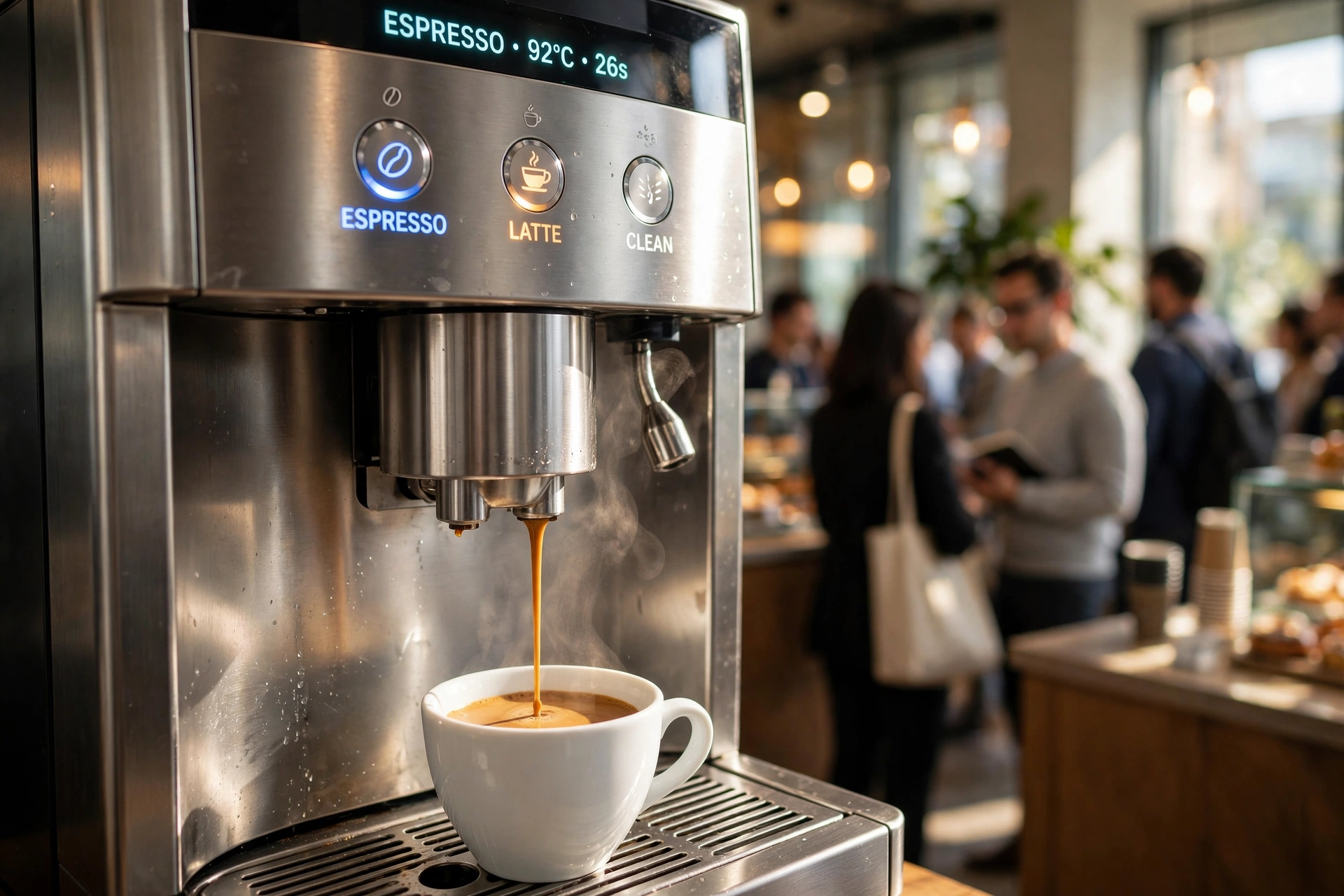
The core of this system is the removal of friction. Instead of an office manager spending three hours a month sourcing beans, tracking pods, and scrubbing descaling chemicals, the provider handles the logistics. This often involves the installation of an espresso machine or a high-volume brewer tailored to the specific volume of the office.
According to the National Coffee Association USA (NCA), coffee consumption patterns in the workplace have shifted toward "specialty" preferences, meaning employees now expect cafe-quality beverages rather than generic drip coffee. To meet this demand, professional solutions utilize Specialty Coffee (graded 80+ on a 100-point scale) and high-precision equipment that ensures every cup is consistent.
Now, here's where it gets interesting: the cost isn't just about the liquid in the cup. It includes the "uptime" guarantee. If a machine fails in a 200-person office, the resulting frustration is immediate. Professional solutions include preventative maintenance and rapid repair cycles, ensuring that the coffee service remains an asset rather than a liability.
Why Does the Quality of Your Coffee Service Impact the Bottom Line?
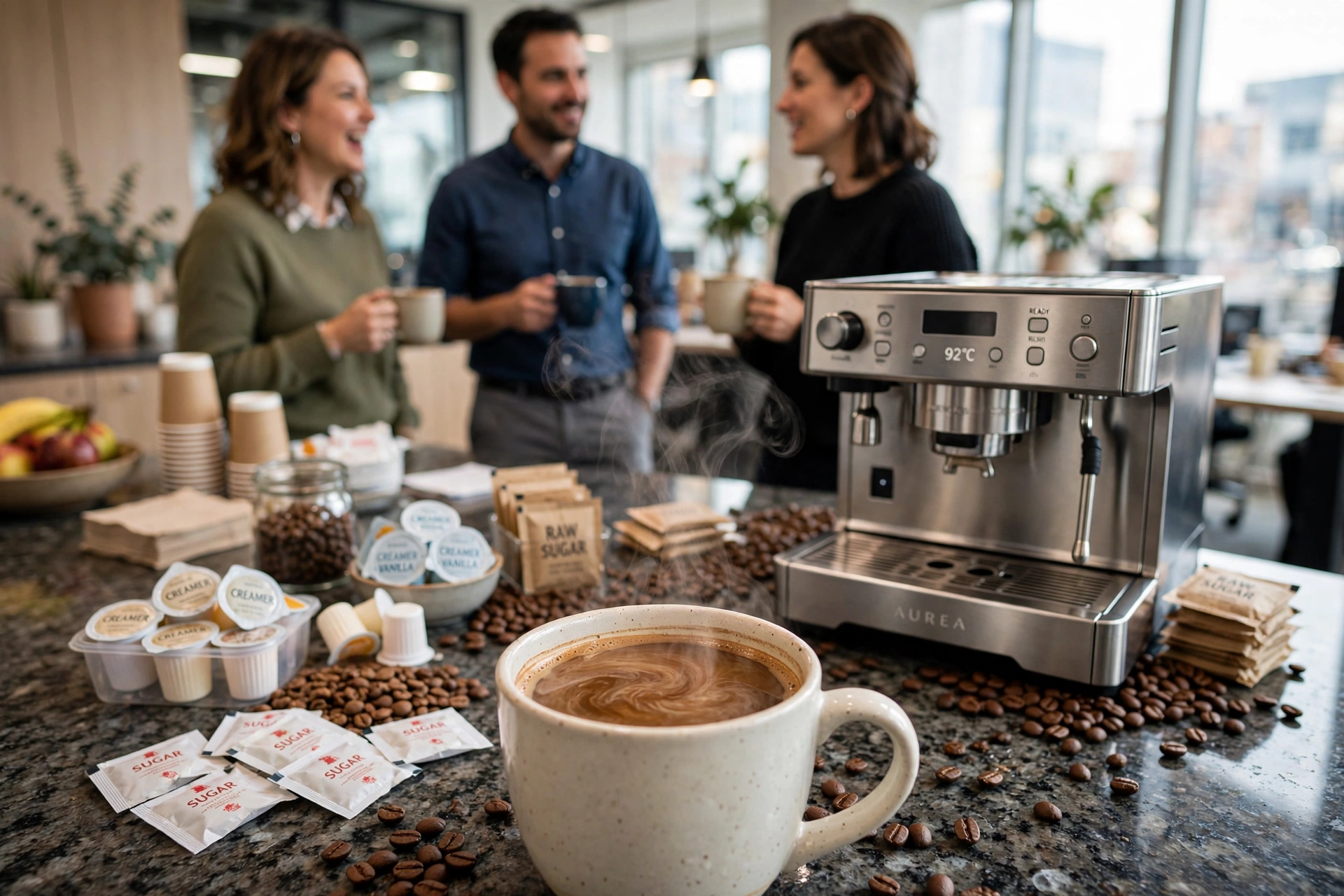
It is a common mistake to view coffee as a "perk" or a luxury. In reality, it is a strategic tool for employee retention and productivity. When you invest in high-quality office coffee solutions, you are essentially optimizing the "water cooler" effect, the spontaneous collaboration that happens when people gather in a shared space.
The data supports this. While specific corporate ROI on coffee is rarely tracked in isolation, the Specialty Coffee Association (SCA) emphasizes that the sensory experience of high-quality coffee enhances cognitive alertness and mood. From a business perspective, the cost of a premium subscription is negligible compared to the cost of employee turnover. In a competitive 2026 labor market, the "small things" like a professional espresso machine signal to employees that the company values their comfort and quality of life.
Furthermore, consider the hygiene and safety implications. Low-end, unmanaged machines are breeding grounds for mold and bacteria if not cleaned daily. Professional services ensure equipment meets NSF International standards for food safety, reducing the risk of health code violations or employee illness.
If you are calculating the cost, you must include the "external spend." If 50 employees each spend $6 on a Starbucks latte three times a week, the collective "coffee culture" of your office is leaking thousands of dollars of time and energy per month. By bringing that quality in-house, you create a hub of productivity. The cost of a managed solution is often offset by the increase in "on-site" time and the reduction in mid-morning exodus.
How to Implement a Coffee Program Without Breaking the Budget
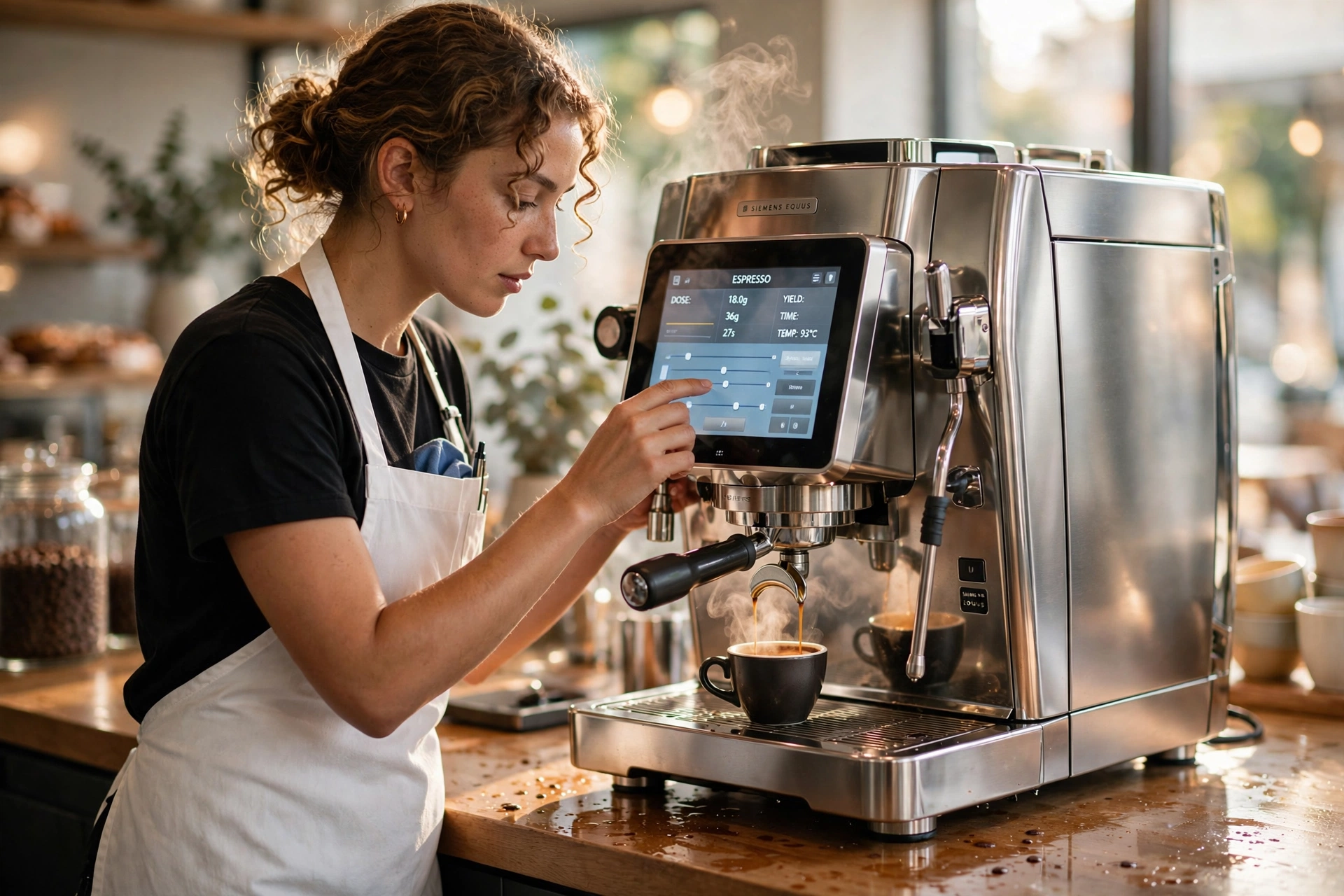
The mistake I see constantly, and one I made early in my career, is over-specing the equipment. I once saw a 10-person startup install a three-group head industrial espresso machine that required a dedicated water line and a 220V outlet. It was a financial disaster because the volume didn't justify the maintenance cost.
To implement a sustainable program, follow these steps:
- Audit Your Volume: Calculate the average number of cups per day. A 20-person office has vastly different needs than a 200-person headquarters.
- Determine the "Vibe": Do your employees want a quick caffeine hit (drip/pod) or a ritual (espresso/latte)? This dictates whether you need a bean-to-cup machine or a traditional brewer.
- Evaluate the Infrastructure: Check your water access. Do you have a direct line, or do you need a tank-based system? This affects the installation cost.
- Select a Managed Model: Instead of buying a $10,000 machine upfront, opt for a membership model. At Busy Bean Coffee, we provide the equipment, installation, and maintenance for one predictable monthly fee. This preserves your capital for growth while giving your team the best possible experience.
💡
Key Takeaway
Don't buy equipment based on the "best" specs; buy based on your actual consumption data. An oversized machine is a liability; an undersized one is a frustration.
By partnering with a provider like Busy Bean Coffee, you eliminate the "equipment gamble." We handle the professional installation and ensure your baristas (or the employees acting as such) are trained to use the machinery. This prevents the common scenario where a $5,000 machine is used incorrectly and breaks within the first ninety days.

Comparing Coffee Service Models: Which One Fits Your Budget?
Not all office coffee solutions are created equal. Depending on your budget and goals, you might choose between a DIY approach, a pod-based system, or a fully managed specialty service.
| Option | Monthly Cost | Quality | Pros | Cons | Best For |
|---|---|---|---|---|---|
| DIY / Retail | Low ($50-$150) | Variable | Low entry cost | High maintenance, inconsistent quality | Very small offices (<10 people) |
| Pod-Based Systems | Medium ($200-$500) | Average | Fast, easy to clean | Expensive per cup, environmental waste | Mid-sized offices with low-time capacity |
| Managed Specialty | Medium-High ($300-$800) | Premium | Zero hassle, cafe-quality, maintained | Higher monthly commitment | Growth-oriented businesses & corporate HQs |
Most guides get this wrong by suggesting that pods are the "cheapest" option. While the initial machine might be cheap, the cost per cup of pods is astronomically higher than whole-bean coffee. When you scale to 50+ employees, the "convenience" of pods becomes a significant financial drain.
A managed specialty service, like the one offered by Busy Bean Coffee, leverages economies of scale. We source Coffea arabica in bulk and provide the machinery, meaning your cost per cup actually drops as your volume increases, while the quality remains at a professional grade.
Common Misconceptions About Coffee Costs
There are several myths that lead office managers to make poor financial decisions regarding their beverage programs.
Myth 1: "Buying the machine outright is cheaper in the long run."
This is rarely true for professional equipment. High-end espresso machines require annual gaskets, group head cleaning, and occasional pump replacements. When you buy the machine, you are responsible for these costs. In a managed solution, these are baked into the monthly fee. If a part fails, the provider replaces it. The "ownership" model actually carries a higher risk of unexpected capital spikes.
Myth 2: "We can just use a Keurig and buy the cheapest pods."
As mentioned, the cost-per-cup of pods is a trap. More importantly, the quality is poor. Using low-grade coffee in a high-stress environment is a missed opportunity. If your team is drinking subpar coffee, they aren't getting the cognitive boost associated with specialty coffee, and they are more likely to leave the building to find a better cup.
Myth 3: "Managed services are only for huge corporations."
I've seen this assumption lead small businesses to struggle with manual setups. Even a 15-person office can benefit from a managed service. The value isn't just in the volume; it's in the time saved. If an office manager spends two hours a month managing coffee supplies, that's a productivity loss that often exceeds the cost of a professional subscription.
Frequently Asked Questions
How do I calculate the cost per cup for my office?
To find the true cost, you must divide the total monthly spend (equipment lease + beans + milk + electricity + labor for cleaning) by the total number of cups consumed. In a DIY setup, the labor cost is often ignored, but it's real. In a managed solution from Busy Bean Coffee, the cost is streamlined. Typically, professional specialty coffee costs between $0.40 and $0.80 per cup, which is a fraction of the $5.00 to $7.00 employees spend at a retail cafe.
Will a professional coffee solution require expensive renovations?
Not necessarily. While some industrial machines require dedicated plumbing and 220V power, many modern professional solutions are designed for versatility. We offer machines with internal reservoirs and standard 110V plugs that can be set up in minutes. The "cost" of installation is usually minimal unless you are building a full-scale corporate cafe. We evaluate your space during the initial consultation to ensure the solution fits your existing infrastructure.
Is it more cost-effective to provide coffee for free or charge employees?
In 2026, providing high-quality coffee for free is widely considered a high-return investment in employee wellness. Charging for coffee often creates a "nickel-and-diming" culture that hurts morale. When a company provides a premium office coffee solution, it's perceived as a benefit. The cost of the service is a predictable operational expense that is far cheaper than the cost of replacing a talented employee who feels undervalued.
How often does a professional machine actually need maintenance?
Depending on volume, a professional machine should undergo a deep clean weekly and a technical inspection quarterly. If you manage this yourself, you'll spend hours on descaling and scrubbing. In a managed membership, these intervals are handled by the provider. This prevents the "catastrophic failure" scenario where a machine is ignored for six months and then requires a $1,000 repair. Preventative maintenance is the only way to ensure a low total cost of ownership.
What happens if our headcount grows rapidly? Can the cost scale?
One of the primary benefits of a managed service is scalability. Rather than buying a second machine, we can adjust your bean delivery and move you to a higher-capacity equipment tier. Because you aren't locked into a specific piece of hardware you bought three years ago, you can pivot your solution as your team grows from 20 to 100 people without a massive upfront capital investment.
Final Thoughts on Office Coffee Solutions
Investing in professional office coffee solutions is not about the luxury of the beverage; it is about the efficiency of your workspace. Whether you are running a law firm in Mount Pleasant or a tech hub in the city, the way you handle your coffee service reflects your corporate culture. By moving from a fragmented, DIY approach to a managed membership, you eliminate waste, guarantee quality, and recover lost productivity.
The most cost-effective way to provide a cafe-level experience is to stop treating coffee as a grocery item and start treating it as a managed service. If you're tired of unpredictable costs and mediocre brews, it's time to professionalize your breakroom.
Visit Busy Bean Coffee Blog today to explore our all-inclusive managed coffee memberships and get a tailored quote based on your office size.
Ready to Upgrade Your Business Coffee?
Café-quality coffee, zero maintenance headaches, and one predictable monthly price. Let's build your custom coffee program.
Free Coffee Pairing Guide & Specialty Roast Cheat Sheet
Unlock the secrets of perfect brewing ratios, water temperatures, and specialty roast profiles. Download the guide.