📖This article is part of the complete guide to Ultimate Guide to Automatic Coffee Machines for Business.
Most foodservice managers treat coffee machine downtime as an inevitable cost of doing business, but it is actually a symptom of choosing the wrong equipment. In my experience working with high-volume cafes and hotel lobbies, the 'hidden' labor cost of daily deep-cleaning and descaling often exceeds the actual monthly lease of the machine. When a machine goes down during a morning rush, you aren't just losing a few cups of coffee; you are losing customer trust and employee productivity.
For a comprehensive overview of the landscape, explore our Ultimate Guide to Automatic Coffee Machines for Business.
What Exactly Are Maintenance-Free Coffee Machines?
📚
Definition
Maintenance-free coffee machines are high-end automated brewing systems engineered with self-cleaning cycles, automated descaling, and modular components that minimize the need for manual intervention and technical service calls.
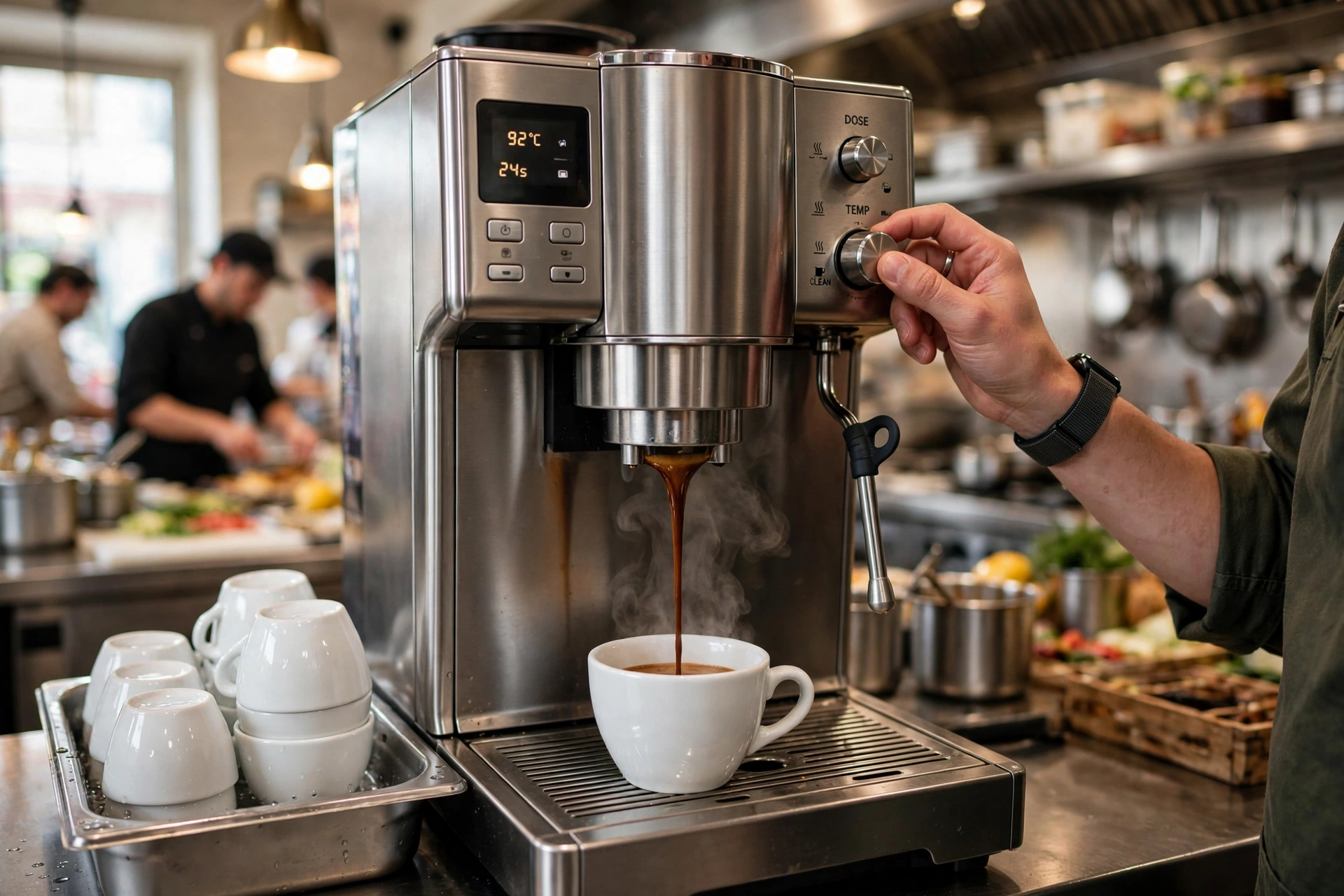
When we talk about "maintenance-free" in a professional setting, it is important to be realistic: no machine that handles water, heat, and organic coffee oils is truly zero-maintenance. However, the shift toward truly automated systems means the burden of upkeep has moved from the staff to the machine's internal software. Modern systems utilize sensors to detect scale buildup and automatically trigger cleaning cycles using specialized tablets or liquid detergents.
In the context of a busy operation, a maintenance-free approach focuses on removing the 'human error' element. Traditionally, a barista or staff member had to remember to backflush a machine or clean the milk frother every few hours. Maintenance-free systems integrate these steps into the brewing workflow. For example, many of the systems we deploy at Busy Bean Coffee use automated steam purging to keep milk lines clear, ensuring that hygiene standards are met without requiring a dedicated cleaning checklist for the staff.

Why Does Low-Maintenance Equipment Matter for Your Business?
Reducing the time spent on machine upkeep directly impacts your bottom line by lowering labor costs and increasing equipment uptime. According to the Specialty Coffee Association (SCA), the consistency of the brew is heavily dependent on the cleanliness of the group head and the precision of the grind. When machines are not maintained, the quality of the specialty coffee drops, leading to wasted beans and dissatisfied customers.
From a financial perspective, the 'maintenance gap' is where most businesses lose money. If a staff member spends 30 minutes a day cleaning a traditional machine, that is 3.5 hours of labor per week dedicated to a non-revenue generating activity. By switching to maintenance-free coffee machines, those hours are redirected toward customer service or increasing throughput. Furthermore, preventing scale buildup is a matter of safety and compliance. NSF International provides rigorous standards for food equipment sanitation, and automated cleaning cycles ensure that your operation remains in accordance with these health safety protocols without relying on a tired employee's memory at 11 PM.
Beyond the labor, there is the issue of equipment longevity. A machine that is poorly maintained will fail prematurely. I've seen dozens of businesses invest in expensive gear only to have the boiler fail within two years because they skipped descaling. Systems designed for low maintenance often include built-in water filtration and automated alerts, which essentially protect the investment for the owner.
How to Implement a Low-Maintenance Coffee Strategy
Implementing a low-maintenance strategy requires a shift in how you view your beverage program. You must move from a 'reactive' model (fixing things when they break) to a 'proactive' automated model. The first step is selecting equipment that prioritizes automated hygiene. If you are operating in a high-traffic environment, you should look for machines that offer automated milk system cleaning and integrated waste management.
For those managing larger facilities, integrating these machines into a wider service network is essential. For instance, businesses utilizing White Glove Coffee Service in Los Angeles CA often find that combining automated hardware with a managed membership eliminates the need for on-site technical expertise entirely. The hardware handles the daily cleaning, while the service provider handles the quarterly deep-dives.
To maximize the 'maintenance-free' experience, follow these three steps:
- Install Professional Grade Filtration: No matter how automated the machine is, poor water quality will kill it. Use a high-capacity reverse osmosis or carbon filtration system to remove minerals before they ever reach the boiler.
- Sync with Training: Even with automated machines, staff must know how to empty the dregs drawer and refill the bean hopper. Keep these tasks simple and visual.
- Automate the Supply Chain: Ensure that cleaning tablets and filters are delivered on a schedule so the machine never has to stop because you ran out of a descaling agent.
If you are looking for specific hardware recommendations, you might consider exploring Bean to Cup Coffee Machines: Complete Overview to see which automated levels fit your volume.
Comparing Maintenance Approaches
To understand the value of modern automated systems, it is helpful to compare them against the traditional methods most businesses use.
| Feature | Traditional Manual Approach | Generic/Cheap AI Machines | Modern Managed Approach (Busy Bean) |
|---|---|---|---|
| Daily Cleaning | 30-60 mins manual scrubbing | Basic rinse, often skipped | Fully automated self-cleaning cycles |
| Technical Risk | High (human error in cleaning) | High (cheap parts, frequent failure) | Low (industrial-grade, proactive alerts) |
| Labor Cost | High (Dedicated staff time) | Medium (Frequent DIY fixes) | Minimal (Managed membership) |
| Consistency | Variable (Depends on barista) | Low (Inconsistent extraction) | High (Digital precision every cup) |

Common Mistakes When Choosing "Maintenance-Free" Gear
One of the most common mistakes I see is the "Consumer Grade Trap." A business owner buys a high-end home machine thinking that because it has an "auto-clean" button, it is maintenance-free for a business. This is a recipe for disaster. Consumer machines are not built for the thermal stress of brewing 100 cups a day. They will overheat, and the "auto-clean" function will not be sufficient to handle the volume of milk proteins and coffee oils generated in a commercial environment. This leads to machines that are in desacordo com a legislação of health standards and prone to constant failure.
Another error is ignoring the water source. Many managers buy a maintenance-free machine but plug it into a standard water line without a dedicated softener or filter. According to the National Coffee Association USA (NCA), water quality is the single most important factor in both taste and machine longevity. When you allow hard water into an automated system, the automation can only do so much; the minerals will eventually calcify the internal valves, requiring a full teardown.
Lastly, some businesses fail to integrate their equipment with a professional service. Even the most automated machine needs a professional eye once or twice a year to calibrate the grinders and check the seals. Relying solely on the machine's internal computer without a human expert for a quarterly audit is a risk that can lead to sudden, catastrophic downtime. This is why we emphasize the importance of a managed coffee service, such as the Automated Coffee Service in Fort Worth TX, where professional oversight is baked into the model.
Deep Dive: The Role of Coffea Arabica and Equipment Wear
It is worth noting that the type of coffee you use impacts the maintenance needs of your machine. Using high-quality specialty coffee, specifically those sourced from Coffea arabica, generally results in a cleaner extraction process compared to low-grade robusta blends that may contain more impurities or inconsistent oils. When using Arabica coffee, the oils are more stable, but they still accumulate in the brew group.
In a high-volume operation, these oils undergo a process called polymerization, where they turn into a sticky resin that can clog the internal valves of an espresso machine. This is why the "maintenance-free" aspect of our SENSA equipment is so vital. By using precision temperature control and automated chemical flushing, the machine prevents this resin from building up, ensuring that the delicate flavor profiles of the coffee bean are preserved without the need for manual scrubbing with caustic chemicals.
Frequently Asked Questions
Can a coffee machine actually be 100% maintenance-free?
No machine is completely void of maintenance. When we use the term "maintenance-free," we refer to the elimination of daily manual technical tasks. You will still need to refill the water tank (if not plumbed), add coffee beans, and empty the waste bin. However, the complex technical tasks—like backflushing, descaling, and cleaning the milk lines—are handled by the machine's automated software.
How does automated cleaning affect the taste of the coffee?
Actually, it improves it. Manual cleaning is inconsistent; one employee might scrub the group head thoroughly, while another might rush through it. Automated systems use precise dosages of cleaning agents and specific water temperatures to ensure every part of the brew path is sterile. This prevents the "burnt" taste associated with old coffee oils and ensures that your specialty coffee tastes exactly as the roaster intended.
Are these machines more expensive than traditional ones?
The initial capital expenditure for a high-end automated machine is often higher than a basic manual one. However, when you calculate the Total Cost of Ownership (TCO), including labor costs for cleaning and the cost of downtime, automated machines are significantly cheaper over a 3-year period. At Busy Bean Coffee, we remove this barrier entirely through our managed membership, providing the equipment and maintenance for one predictable monthly fee.
Do I still need a water filter if the machine is automated?
Yes, absolutely. An automated machine manages the removal of scale, but a water filter prevents the scale from entering the machine in the first place. Using a high-quality filtration system reduces the frequency of automated descaling cycles, which extends the life of the internal seals and ensures the water chemistry is optimal for flavor extraction.
How often should a "maintenance-free" machine be professionally serviced?
While the machine handles daily and weekly tasks, I recommend a professional technical audit every six months. This involves checking the pump pressure, replacing O-rings, and calibrating the coffee grinder. This proactive approach prevents the "surprise" failures that can happen even with the most advanced automated systems.
Conclusion
For a busy operation, the goal isn't just to have a machine that makes great coffee, but to have a system that doesn't demand your constant attention. Transitioning to maintenance-free coffee machines allows you to reclaim hours of labor and eliminate the stress of unexpected equipment failure. By focusing on automated hygiene, professional filtration, and a managed service model, you can provide a consistent, high-quality beverage experience without sacrificing your staff's time or your sanity.
Whether you are running a boutique hotel or a high-traffic corporate office, the shift toward automation is the only way to scale quality without scaling your workload. If you are ready to stop worrying about descaling cycles and start focusing on your guests, we can help you implement the perfect system. For more detailed information on choosing the right hardware, return to our Ultimate Guide to Automatic Coffee Machines for Business.
Ready to upgrade your beverage program? Visit Busy Bean Coffee to learn more about our all-inclusive managed coffee solutions.
Free Coffee Pairing Guide & Specialty Roast Cheat Sheet
Unlock the secrets of perfect brewing ratios, water temperatures, and specialty roast profiles. Download the guide.