How Do You Choose a Premium Coffee Service That Actually Scales?
Most business owners treat their office or restaurant coffee as a utility, similar to electricity or water, until the machine breaks or the staff starts complaining about the taste. The reality is that a high-end beverage program is a strategic asset. To choose a premium coffee service, you must move beyond looking at the price per pound and instead evaluate the "Total Cost of Ownership," which includes equipment uptime, barista training, and the consistent quality of the roast. The most effective way to do this is by auditing your daily volume, defining your quality threshold (Specialty vs. Commercial), and selecting a partner that provides an all-inclusive managed membership rather than just a vendor relationship.
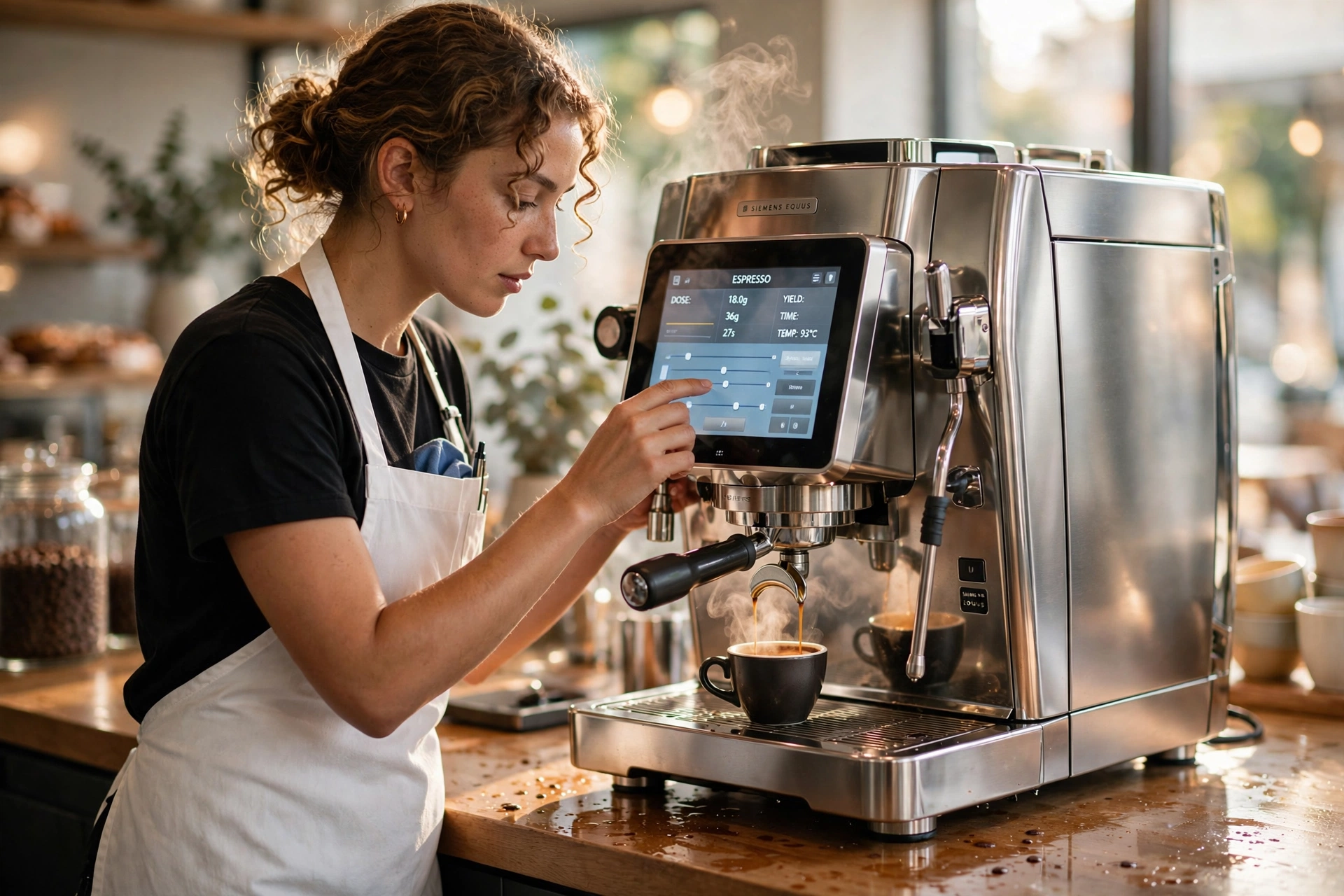
In my experience working with high-volume hospitality groups in Mount Pleasant, SC, I've seen a recurring pattern: businesses buy the most expensive espresso machine available, only to let it sit idle for three days because they didn't have a maintenance contract. The mistake I made early on, and that I see constantly, is prioritizing the hardware over the service ecosystem. A machine is just a tool; the service is what ensures that tool actually produces a profit.

What Exactly Defines a Premium Coffee Service?
To make an informed decision, you first need to understand that "premium" in the coffee industry isn't just a marketing term; it refers to a specific set of standards regarding sourcing, roasting, and technical support. A true premium service integrates the entire supply chain, from the selection of the coffee bean to the final extraction in the cup.
📚
Definition
A premium coffee service is an end-to-end managed solution that provides specialty-grade coffee, professional-grade equipment (such as high-performance espresso machines), and ongoing technical maintenance to ensure beverage consistency and operational uptime.
When we analyze the market, the distinction usually comes down to the quality of the beans. Most generic services use "commodity coffee," which is traded on the C-market and often lacks traceability. A premium service focuses on specialty coffee, which is graded by certified Q-Graders and scores 80 points or higher on a 100-point scale. According to the Specialty Coffee Association (SCA), these standards ensure that the coffee is free of primary defects and possesses a complex flavor profile.
Beyond the bean, the service must encompass the technical side. This means the provider doesn't just drop off bags of coffee; they manage the water filtration systems, calibrate the grinders, and provide a preventative maintenance schedule. If your provider isn't talking to you about water hardness or burr wear, they aren't providing a premium service; they are simply selling you beans. For a business in Mount Pleasant, SC, where water quality can vary significantly, this technical oversight is the difference between a machine that lasts ten years and one that scales with lime deposits in eighteen months.
Why Does the Right Coffee Choice Impact Your Bottom Line?
Choosing a subpar service doesn't just result in bad taste; it creates a hidden drain on your operational budget. When a machine goes down during a morning rush, you aren't just losing the cost of a few lattes; you are losing customer trust and employee productivity.
Data from the National Coffee Association USA (NCA) suggests that coffee consumption trends are shifting toward "premiumization," where consumers are willing to pay a significant premium for high-quality, ethically sourced brews. If your service is mediocre, you are leaving money on the table. Businesses that transition to a specialty-grade program often see an immediate increase in average transaction value because they can justify a higher price point for a superior product.
Furthermore, the cost of downtime is staggering. In a commercial foodservice environment, an unplanned equipment failure can cost a business hundreds of dollars per hour in lost revenue. When you factor in the cost of emergency repairs, which are often 3x the cost of preventative maintenance, the "cheap" service becomes the most expensive option.
Consider the impact on employee retention. In 2026, the office coffee experience is a key component of the return-to-office incentive. A high-quality coffee service acts as a low-cost, high-impact perk that improves morale. If the coffee is burnt or the machine is perpetually "out of order," it sends a subtle message to your team that the details don't matter. Conversely, a seamless, high-end experience signals a commitment to quality that permeates the rest of the corporate culture.
How to Implement a Premium Coffee Strategy Step-by-Step
Selecting the right partner requires a systematic approach. You cannot simply browse a website and pick a plan; you need to audit your specific needs. Here is the professional framework for selecting and implementing a premium coffee service.
Step 1: Conduct a Volume and Use-Case Audit
Before talking to vendors, determine your "Peak Hour" volume. How many cups are served between 7:00 AM and 10:00 AM? This determines whether you need a single-group or multi-group espresso machine. If you are a hotel in Mount Pleasant, SC, your needs differ wildly from a corporate office. A hotel needs durability and consistency across different staff members, while an office needs ease of use and speed.
Step 2: Define Your Quality Benchmark
Decide if you want a "convenience premium" (high-quality beans, automated machines) or a "craft premium" (specialty beans, manual control, trained barista). If your brand is built on luxury, a super-automatic machine might not be enough; you may need the theatricality and precision of a manual process.
Step 3: Evaluate the Equipment Ecosystem
Don't just look at the brand of the machine. Ask about the installation and the water filtration. According to NSF International, food equipment must meet strict sanitary standards to prevent contamination. Ensure your provider uses NSF-certified equipment and provides a documented installation plan that includes water treatment.
Step 4: Vet the Maintenance Agreement
This is where most businesses fail. You must ask: "What is the guaranteed response time if the machine fails?" A premium service should offer a 24-to-48 hour onsite resolution. If the answer is "we'll send a technician when one is available," walk away.
Step 5: Partner with a Managed Solution
Instead of buying equipment and paying for beans separately, look for an all-inclusive model. This is exactly how we structure things at Busy Bean Coffee. We provide the SENSA equipment, the professional installation, and the full maintenance coverage for one predictable monthly fee. This removes the capital expenditure (CapEx) and converts it into an operational expense (OpEx), which is significantly healthier for your cash flow.
💡
Key Takeaway
Shift your perspective from "buying a machine" to "securing an uptime guarantee." The value of a premium coffee service is not in the hardware, but in the guarantee that your business never stops serving high-quality coffee.

Comparing Your Service Options: Which Path is Right for You?
Not every business needs the same level of service. Depending on your goals, you will likely fall into one of three categories. The following table breaks down the trade-offs between the traditional approach and a modern managed service.
| Feature | Traditional Vendor (Cheap) | Generic AI/Auto Approach | Busy Bean Managed Service |
|---|---|---|---|
| Coffee Quality | Commodity / Burnt | Consistent but Bland | Specialty / Q-Grader Approved |
| Equipment Cost | High Upfront CapEx | Moderate CapEx | Zero Upfront (Membership) |
| Maintenance | Reactive (Wait for break) | Basic/Self-Service | Proactive & All-Inclusive |
| Training | None or Minimal | Basic Tutorial | Professional Barista Training |
| ROI Focus | Lowest Initial Cost | Speed of Service | Lifetime Value & Quality |
| Best For | Low-traffic breakrooms | High-speed, low-margin kiosks | Hotels, Cafes, Premium Offices |
Most guides get this wrong by telling you to look for the lowest "price per pound." That is a commodity mindset. If you are running a business, you should be looking for the lowest "cost per perfect cup." When you factor in the labor cost of a frustrated employee trying to fix a jammed machine or the lost revenue of a customer who leaves because the coffee is sour, the "expensive" managed service is actually the most economical choice.
Common Misconceptions About Premium Coffee
There are several myths in the industry that lead business owners to make poor decisions. Let's debunk them with a bit of reality.
Myth 1: "Expensive machines automatically make better coffee."
This is a dangerous assumption. A $20,000 machine will produce terrible coffee if the water is hard and the beans are old. Coffee quality is a result of the system: Water $\rightarrow$ Roast $\rightarrow$ Grind $\rightarrow$ Extraction. If any one of those is off, the machine's price is irrelevant.
Myth 2: "Automatic machines are just as good as manual ones."
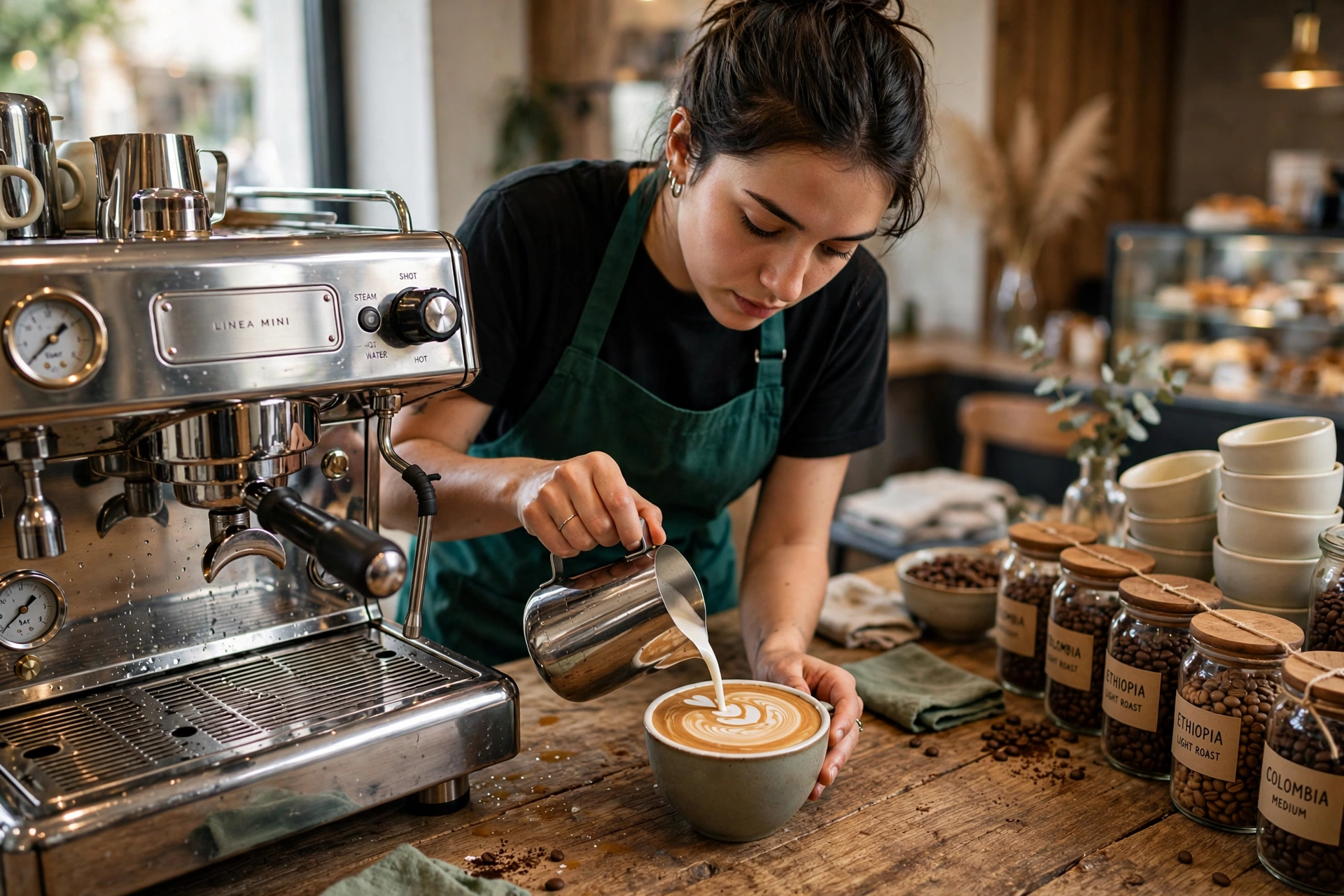
While super-automatic machines have improved, they cannot replicate the nuance and texture of a manually steamed latte created by a trained barista. If your goal is to provide a "destination" coffee experience, automation is your enemy. If your goal is "fast and decent," automation is your friend.
Myth 3: "I can just buy the beans and handle the maintenance myself."
I see this constantly. A business owner thinks they can save money by doing the weekly deep-cleans themselves. Then, they miss three weeks of backflushing, the group head clogs, and the pump burns out. Professional equipment requires a level of discipline that most busy managers simply do not have. Outsourcing this to a managed service isn't a luxury; it's a risk-mitigation strategy.
Frequently Asked Questions
How do I calculate the ROI of a premium coffee service?
To calculate ROI, you must look beyond the monthly fee. Start by totaling your current costs: bean purchases, machine depreciation, and the average cost of annual repairs. Then, estimate the "lost opportunity cost", the revenue lost during machine downtime. Compare this to the flat monthly fee of a managed service like Busy Bean Coffee. Most businesses find that the predictability of a membership model, combined with the ability to charge more for specialty coffee, results in a positive ROI within the first six months.
What is the difference between specialty coffee and commercial coffee?
Commercial coffee is produced for mass consumption, often prioritizing yield over flavor, which results in a flat, bitter taste. Specialty coffee is defined by the Specialty Coffee Association (SCA) as coffee that scores 80+ points. This means the Coffea arabica beans are grown at higher altitudes, harvested at peak ripeness, and roasted in small batches to highlight the unique terroir of the region. It transforms coffee from a caffeine delivery system into a culinary experience.
How often should my commercial coffee equipment be serviced?
A premium service should follow a preventative maintenance schedule rather than a reactive one. At a minimum, water filters should be replaced every six months, and professional calibrations of the grinders should happen monthly. Deep-cleaning of the boiler and group heads should occur weekly. If your provider only comes out when something is broken, you are not receiving a premium service. We advocate for a "zero-downtime" approach where maintenance happens during off-peak hours.
Do I need a dedicated barista for a premium service?
It depends on your equipment. If you choose a high-end super-automatic system, you don't need a professional barista; you just need staff who can keep the hopper full. However, if you are installing a manual espresso machine to elevate your brand, training is essential. A premium service provider should offer "train-the-trainer" sessions to ensure your staff understands the science of extraction, milk frothing, and temperature control.
How does water quality affect the taste and lifespan of the machine?
Water is 98% of your coffee. If your water has high mineral content (common in coastal areas like Mount Pleasant, SC), it will create scale buildup inside your boiler, which acts as an insulator and ruins temperature stability. More importantly, minerals react with the coffee oils to create a metallic or "flat" taste. A premium service includes a commercial-grade filtration system that balances minerals for taste while protecting the machine's internal components.
Final Thoughts on Choosing a Premium Coffee Service
Selecting a premium coffee service is ultimately a decision about what your brand stands for. If you view coffee as a mere amenity, a cheap vendor will suffice. But if you view coffee as a tool for customer acquisition, employee retention, and brand elevation, you need a partner that manages the entire ecosystem.
The transition from a "vendor" to a "managed partner" removes the stress of equipment failure and the guesswork of quality control. By focusing on a membership model, where the equipment, maintenance, and specialty beans are bundled, you protect your cash flow and ensure that every cup served meets the highest standards.
If you're ready to stop worrying about your machines and start serving world-class coffee, we would love to help you build a customized program. Visit us at www.busybeancoffee.com to explore our all-inclusive managed coffee solutions.
Ready to Upgrade Your Business Coffee?
Café-quality coffee, zero maintenance headaches, and one predictable monthly price. Let's build your custom coffee program.
Free Coffee Pairing Guide & Specialty Roast Cheat Sheet
Unlock the secrets of perfect brewing ratios, water temperatures, and specialty roast profiles. Download the guide.