How to Choose the Right Commercial Espresso Machines for Your Business
Buying a high-end machine is often the single most expensive equipment decision a cafe owner makes, yet many treat it like a commodity purchase. In my experience working with dozens of foodservice operators, the most common mistake is buying for the business you hope to have in three years rather than the one you have today, or worse, buying a machine that your staff cannot actually operate during a morning rush. To choose the right commercial espresso machines, you must align your projected peak-hour volume with the boiler capacity and group head count of the machine, while ensuring your electrical infrastructure can support the load.

What Defines a Commercial-Grade Espresso Machine?
When we talk about professional equipment, we aren't just talking about a larger version of a home machine. A true professional unit is engineered for thermal stability and volumetric consistency over hundreds of consecutive cycles. The core difference lies in the boiler system and the pump. While a consumer machine might struggle to maintain temperature after two lattes, a commercial unit uses massive boilers and PID controllers to ensure the water hitting the coffee puck is exactly the same temperature every single time.
📚
Definition
Thermal Stability is the ability of an espresso machine to maintain a consistent water temperature throughout the extraction process, preventing "temperature surfing" and ensuring a balanced flavor profile.
The architecture of these machines generally falls into three categories: heat exchangers, dual boilers, and saturated groups. Heat exchangers use one large boiler to steam milk and a smaller pipe to heat brew water; dual boilers have separate dedicated tanks for each function. Saturated groups take this further by integrating the group head directly into the boiler circuit, virtually eliminating heat loss.
According to the Specialty Coffee Association (SCA), the precision of water temperature and pressure is the foundation of specialty coffee quality. If your temperature fluctuates by even two degrees Celsius, you risk over-extracting the coffee, leading to a bitter, burnt taste that no amount of high-quality beans can fix. This is why investing in a machine with a PID (Proportional-Integral-Derivative) controller is no longer optional for those targeting the specialty market.
Why Selecting the Correct Equipment Impacts Your Bottom Line
The ripple effect of choosing the wrong machine extends far beyond a few bad cups of coffee; it impacts your labor costs, customer retention, and utility bills. I've seen shops buy a four-group machine for a low-volume boutique, only to realize they are wasting hundreds of dollars a month in electricity just to keep an oversized boiler hot. Conversely, I've seen businesses attempt to run a 200-cup-per-hour rush on a single-group machine, resulting in long lines, stressed baristas, and customers who never return because the wait was too long.
The business impact is quantifiable. If a machine's slow recovery time adds 30 seconds to every drink during a rush, and you serve 100 drinks in a peak window, you've just lost nearly an hour of potential throughput. In a high-traffic urban environment, that is a direct loss of revenue. Furthermore, the cost of downtime is catastrophic. A machine that isn't NSF certified or is bought from a non-supporting vendor can leave you offline for days.
According to the National Coffee Association USA (NCA), consumer expectations for "premium" coffee experiences are at an all-time high. Customers are no longer just buying caffeine; they are buying a specific sensory experience. If your equipment fails to deliver that consistency, you aren't just losing a sale; you are damaging your brand equity. When we analyze the ROI of premium equipment, we don't just look at the price of the machine, but at the "cost per cup" over five years, factoring in maintenance and waste.
Step-by-Step Guide to Choosing Your Machine
Selecting the right unit requires a clinical approach to your operational data. You cannot guess your volume; you must calculate it.
Step 1: Calculate Your Peak Hourly Volume
Don't look at your daily average. Look at your busiest 60 minutes. If you expect to serve 60 lattes per hour, you need a machine capable of producing one drink per minute per group head, including steaming time. A two-group machine is usually sufficient for this, but if you scale to 120+ drinks, a three-group machine becomes essential to prevent bottlenecks.
Step 2: Assess Your Electrical and Plumbing Infrastructure
This is where most owners stumble. Commercial espresso machines require significant power—often 220V or 240V with high amperage. I've walked into sites where the owner bought a beautiful Italian machine only to find their circuit breaker tripped the moment the boiler hit temperature. Check your panel. Additionally, determine if you have a dedicated water line and if you have a water filtration system.
Step 3: Determine Your Staff's Skill Level
If you are hiring seasoned baristas, a manual or semi-automatic machine allows for the artistry and control they crave. However, if you are running a high-turnover operation with entry-level staff, a volumetric (automatic) machine is a lifesaver. It ensures that every shot is timed and measured identically, regardless of who is pulling the lever.
Step 4: Prioritize Serviceability and Parts Availability
A machine is only as good as the technician who can fix it. When we provide managed solutions at Busy Bean Coffee, we focus on SENSA equipment because we know exactly how to service it and have the parts on hand. Buying a rare, "boutique" brand from overseas might look great on Instagram, but if a gasket blows on a Friday morning and the part has to ship from Milan, your business is closed for the weekend.
💡
Key Takeaway
Always prioritize "uptime" over "features." A machine with fewer bells and whistles that has a local technician and a 48-hour parts guarantee is infinitely more valuable than a feature-rich machine that takes two weeks to repair.

Comparing Commercial Espresso Machine Options
Depending on your business model, the "best" machine changes. A hotel lobby has different needs than a standalone specialty cafe or a fast-casual restaurant.
| Machine Type | Pros | Cons | Best For |
|---|---|---|---|
| Semi-Automatic | Maximum control, allows for barista creativity | Higher skill requirement, inconsistent if staff is tired | Specialty Coffee Shops, Artisan Cafes |
| Volumetric/Auto | Extreme consistency, faster training, reduces waste | Less flexibility for unique bean profiles | High-Volume Cafes, Fast-Casual, Hotels |
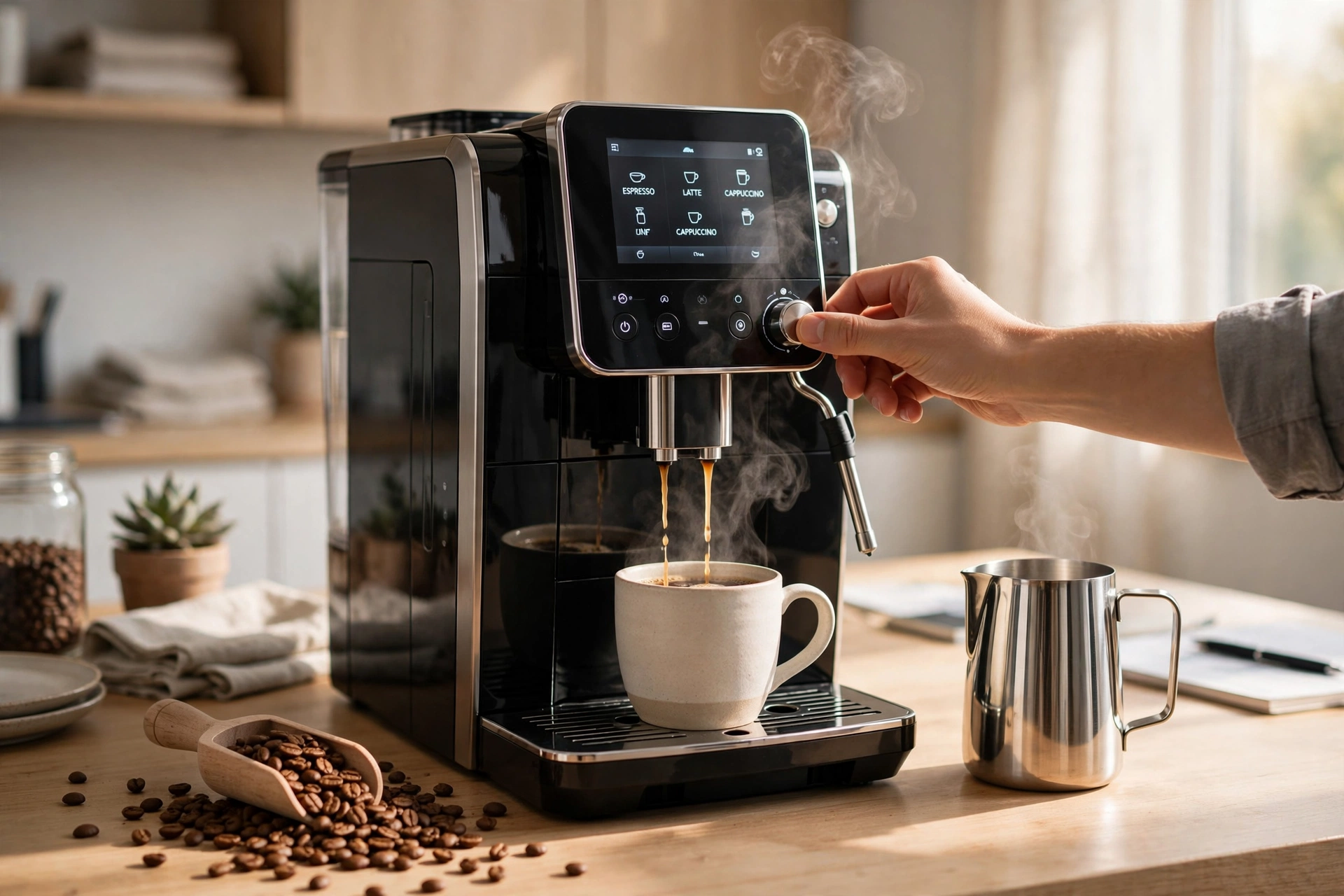
| Super-Automatic | One-touch operation, no barista needed | Highest cost, lower quality, difficult to clean | Offices, Convenience Stores, Low-Labor Settings |
| Manual (Lever) | Low electricity use, unique aesthetic, high prestige | Very slow, steep learning curve, physically demanding | Boutique "Slow Coffee" Bars, Concept Cafes |
Now, here is where it gets interesting: many owners think they need the most expensive machine on the menu to get "specialty" quality. That is a myth. The quality of the coffee depends more on the grinder and the water quality than whether you have a $20,000 machine versus a $12,000 machine. The expensive machines usually offer better thermal stability at extreme volumes, but for a mid-sized shop, the mid-range professional units often deliver identical taste profiles.
Common Misconceptions About Professional Equipment
Most guides will tell you to just "buy the biggest boiler you can afford." I disagree. Over-specifying your equipment leads to wasted energy and unnecessary maintenance. Here are the most common myths I encounter in the field.
Myth 1: "More group heads always mean more speed."
This is only true if you have the staff to man them. A four-group machine is a waste of space and money if you only have one barista. You are better off with a high-performance two-group machine and a second, high-efficiency grinder to reduce the workflow bottleneck.
Myth 2: "Expensive machines don't need water filters."
This is the most dangerous misconception in the industry. Scale buildup is the number one killer of commercial espresso machines. According to NSF International, sanitary and equipment standards for food service emphasize the importance of water quality to prevent microbial growth and mineral deposits. Without a professional filtration system, you are essentially inviting a plumbing disaster into your machine.
Myth 3: "Super-automatics can replace a barista."
They can replace the labor, but they cannot replace the quality. A super-automatic machine cannot "dial in" a roast. It cannot adjust for the humidity of the room or the age of the bean. If your brand is built on the quality of the coffee, a super-automatic is a liability, not an asset.
Frequently Asked Questions
How do I know if I need a single, double, or triple group head machine?
The decision should be based on your peak transactions per hour. A single group head is suitable for low-volume environments or as a secondary machine for decaf. A double group head is the industry standard for most small-to-mid-sized cafes, as it allows one barista to steam milk while another pulls shots, or one person to handle two drinks simultaneously. Triple or four-group machines are reserved for high-traffic locations, such as airport kiosks or flagship downtown cafes, where the volume exceeds 100 drinks per hour. If you are unsure, it is often better to invest in a high-quality two-group machine and focus on optimizing your workflow and grinder speed.
What is the difference between a heat exchanger and a dual boiler?
A heat exchanger (HX) machine uses one large boiler to create steam; the brew water is heated by passing through a pipe inside that boiler. This is cost-effective and space-saving, but it can lead to temperature instability if the machine sits idle. A dual boiler machine has two entirely separate boilers—one for steam and one for brewing. This allows for precise, independent temperature control for each, which is essential for specialty coffee where a 1-degree difference can change the taste. While dual boilers are more expensive and consume more power, they provide the consistency required for high-end specialty coffee services.
Why is water filtration so important for commercial machines?
Water is the primary ingredient in espresso, and most city water contains minerals like calcium and magnesium that create "scale" when heated. Scale acts like insulation, forcing your heating elements to work harder and eventually causing them to burn out. It also clogs the narrow valves and solenoids inside the machine. Using a system that meets FDA safety standards and professional filtration ensures that your machine lasts for a decade instead of three years. Proper filtration also removes chlorine and other chemicals that can make your coffee taste like a swimming pool.
Should I buy a new machine or a refurbished one?
Refurbished machines can be a great way to get a high-end brand on a budget, but only if they come with a warranty and were serviced by a certified technician. The risk with "used" machines is the hidden scale buildup in the boiler, which can lead to a catastrophic failure shortly after purchase. In my experience, for a primary revenue-generating machine, new is almost always better because of the manufacturer's warranty and the peace of mind. However, for a secondary "decaf" or "seasonal" machine, a professionally refurbished unit is a smart financial move.
How often does a commercial espresso machine need maintenance?
Maintenance is not a "once a year" event; it is a daily, weekly, and quarterly discipline. Daily, you must backflush the group heads with detergent to remove coffee oils. Weekly, you should deep-clean the steam wands and shower screens. Quarterly, a professional technician should check the pump pressure, inspect gaskets, and check the water filtration levels. Neglecting these small steps leads to "bitter" coffee and eventually a total system breakdown. This is exactly why many businesses prefer the managed membership model at Busy Bean Coffee, as it removes the guesswork from maintenance.
Final Thoughts on Choosing Commercial Espresso Machines
Choosing the right commercial espresso machines is not about finding the most expensive piece of Italian engineering; it is about finding the tool that fits your specific volume, skill level, and infrastructure. When you align your equipment with your actual operational data, you reduce waste, empower your staff, and provide a consistent experience for your customers.
Whether you are starting a boutique cafe in Mount Pleasant or scaling a multi-location foodservice operation, the goal is the same: eliminate the friction between the bean and the cup. If the idea of managing boilers, electrical upgrades, and maintenance schedules feels overwhelming, there is a simpler way.
At Busy Bean Coffee, we provide all-inclusive managed coffee solutions. Instead of a massive upfront capital expense, we provide the premium SENSA equipment, professional installation, and full maintenance coverage for one predictable monthly fee. You get the high-end performance of professional commercial espresso machines without the headache of ownership.
Ready to upgrade your coffee game without the stress? Visit www.busybeancoffee.com to see how our managed memberships can transform your business.
Recommended Readings
To deepen your understanding of these topics, we recommend reading the following articles:
- The Complete Guide to White Glove Coffee Service
- Ultimate Guide to All-Inclusive Coffee Service for Businesses
- Ultimate Guide to Automated Coffee Machines for Business
- Ultimate Guide to Specialty Coffee Equipment for Business
Free Coffee Pairing Guide & Specialty Roast Cheat Sheet
Unlock the secrets of perfect brewing ratios, water temperatures, and specialty roast profiles. Download the guide.