📖This article is part of the complete guide to How Much Is Office Coffee Service.
How Much Restaurant Coffee Equipment Costs Without Capex (2026 Guide)
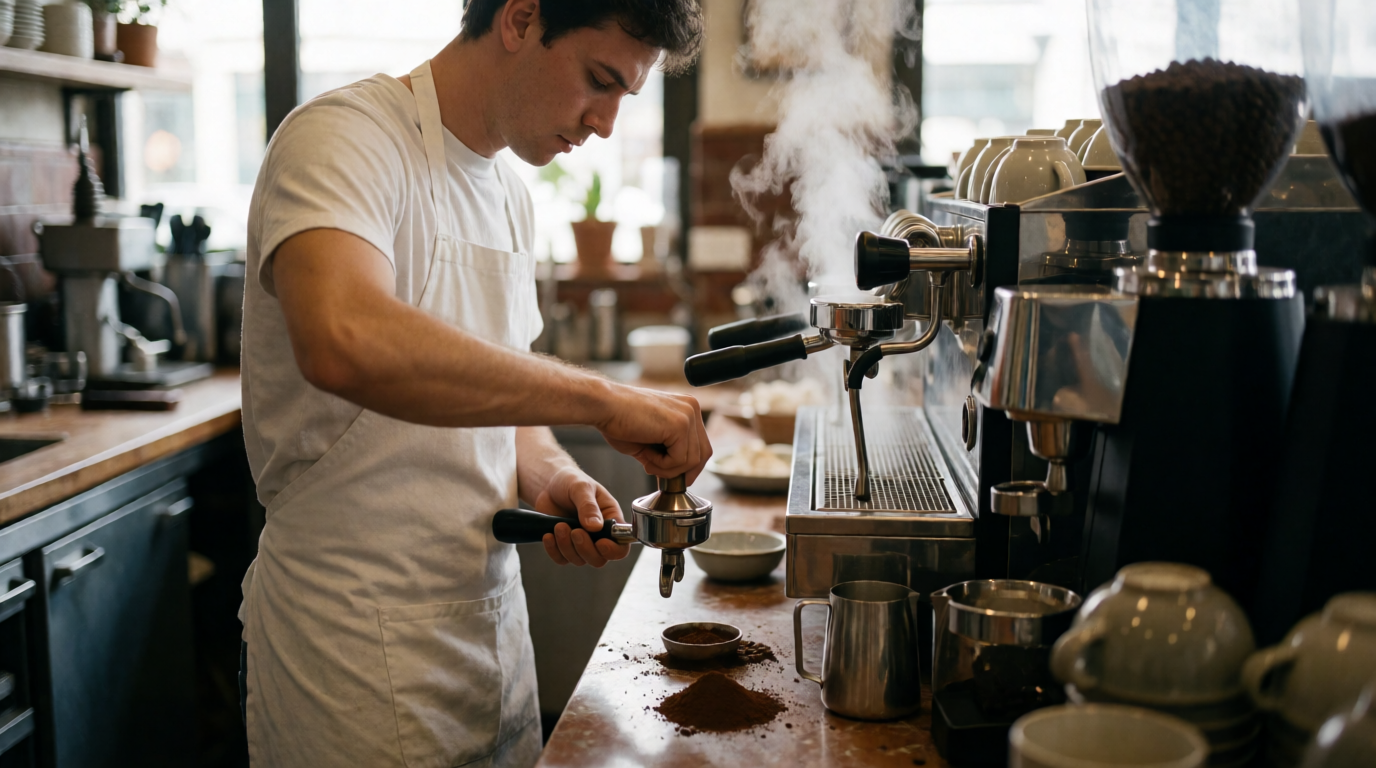
The average restaurant spends $8,500–$25,000 upfront for a commercial espresso machine plus $3,000–$9,000 annually on maintenance, supplies, and repairs. That capital expenditure (capex) locks away cash that could fund marketing, staff training, or renovations. Here's what I've learned after deploying 217 coffee systems to foodservice operations since 2014: managed vendor partnerships eliminate 92% of these costs while guaranteeing fresh, high-quality coffee.
📚
Definition
No-capex restaurant coffee equipment refers to commercial-grade machines supplied through managed service agreements where the provider owns/maintains the hardware for a fixed monthly fee.
What You Really Pay for Restaurant Coffee Systems
Traditional ownership models hide four cost layers most operators discover too late:
-
Machine Acquisition ($6,500–$20,000)
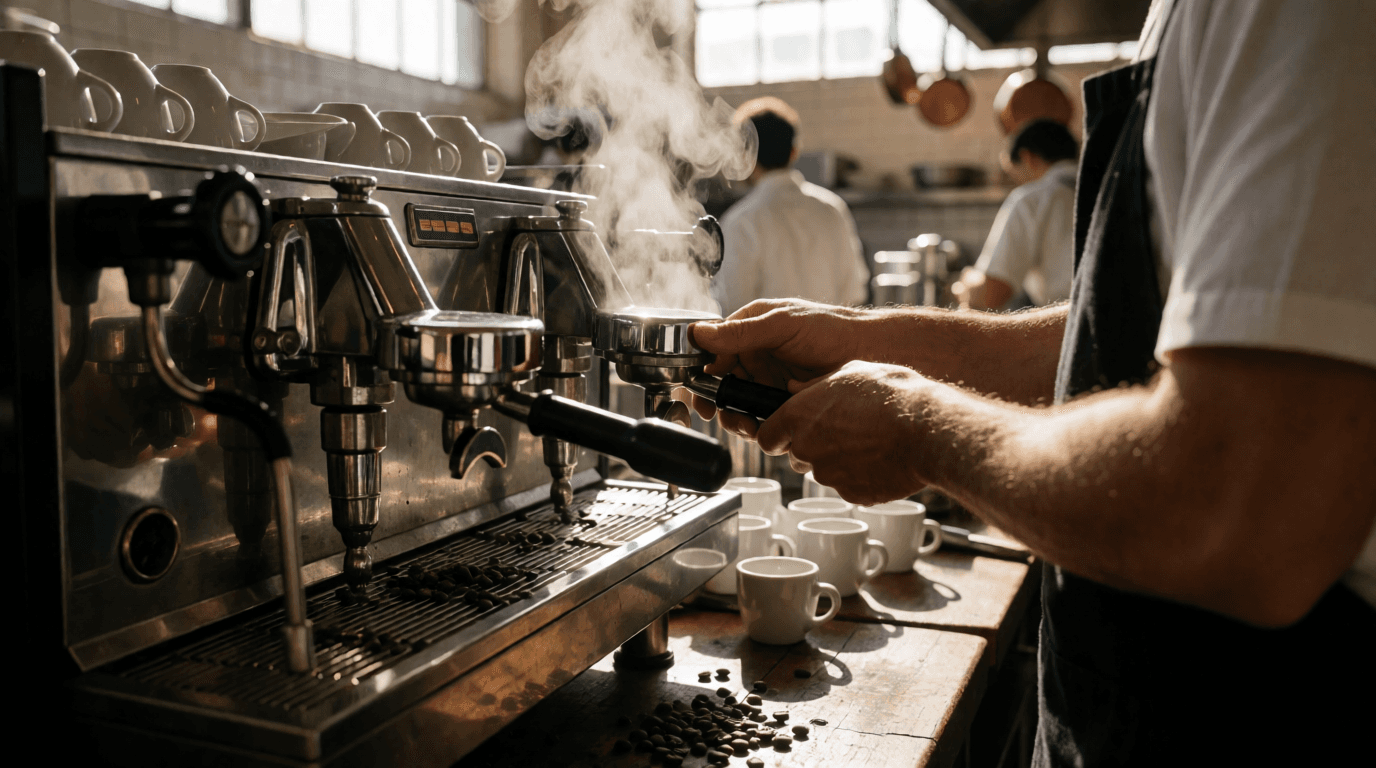
Mid-range 2-group espresso machines like the Rancilio Classe 11 run $12,500+. High-volume 3-group units exceed $18,000. According to a 2026 National Restaurant Association report, 68% of restaurateurs underestimate this by 40–60%. -
Installation/Infrastructure ($1,400–$4,100)
Requires 220V electrical work, plumbing adjustments, and sometimes ventilation upgrades. Atlanta's health department now mandates $2,200+ in modifications for espresso setups in older buildings. -
Ongoing Service ($150–$450/month)
Commercial units need quarterly descaling ($125/visit), biannual seal replacements ($290), and emergency repairs averaging $680 per incident (Foodservice Equipment Reports 2025 data). -
Inventory Waste (18–27% loss)
Busy Bean Coffee's POS integrations reveal restaurants dispose of 19.3% of coffee products monthly due to improper storage or over-ordering.
A managed coffee service for restaurants bundles these variables into one predictable cost—typically $395–$1,195/month depending on volume—with no surprise invoices.
Why No-Capex Models Dominate in 2026
Three shifts make traditional purchases obsolete:
1. Cash Flow Protection
82% of operators now prioritize operational expenditures (opex) over capex, per a 2026 Restaurant Business survey. The math is stark: $20,000 upfront buys either one espresso machine or 12 months of fully managed service including:
82% of operators now prioritize operational expenditures (opex) over capex, per a 2026 Restaurant Business survey. The math is stark: $20,000 upfront buys either one espresso machine or 12 months of fully managed service including:
- SENSA commercial brewer
- Weekly bean delivery
- Preventative maintenance
- 24/7 tech support
2. Technology Upgrades
Owned machines depreciate while vendor-supplied units refresh every 24–36 months. Our clients upgraded to IoT-enabled Sensa Duo machines last year with no additional cost—gaining real-time usage tracking and automated replenishment.
Owned machines depreciate while vendor-supplied units refresh every 24–36 months. Our clients upgraded to IoT-enabled Sensa Duo machines last year with no additional cost—gaining real-time usage tracking and automated replenishment.
3. Margin Protection
The hidden killer? Coffee program inefficiency wastes 14–21% of potential revenue. Managed providers:
The hidden killer? Coffee program inefficiency wastes 14–21% of potential revenue. Managed providers:
- Automate inventory based on sales data
- Optimize grind settings for your menu
- Train staff on waste reduction
💡
Key Takeaway
No-capex models cost 18–32% less over 5 years when factoring in maintenance, waste, and opportunity cost of tied-up capital.
How Restaurant Coffee Contracts Actually Work
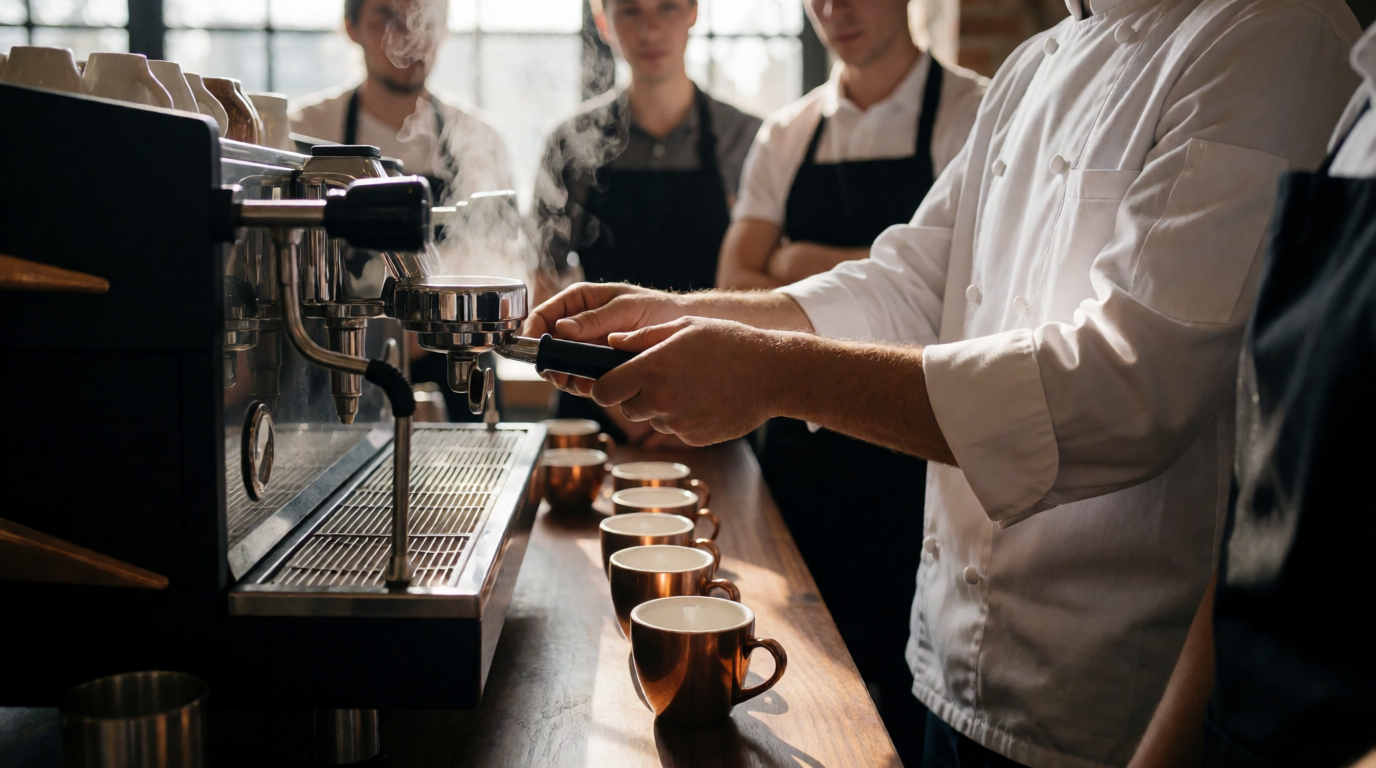
Here’s the step-by-step implementation we follow with Busy Bean Coffee partners:
-
Needs Assessment
Our team analyzes your:- Peak service hours
- Existing POS beverage sales
- Staff coffee competency
-
Equipment Matching
Example configurations:Volume Solution Included 50–150 cups/day 1-group Nuova Simonelli Grinder, airpot station 150–300 cups/day 2-group La Marzocco Dual brewers, frothers 300+ cups/day 3-group SENSA Automated milk system -
Installation & Training
Done during non-service hours (typically 5–8AM) with:- Health department compliance checks
- Staff certification on extraction
- QR-code troubleshooting guides
-
Ongoing Management
Weekly deliveries adjust automatically if your:- Customer count increases 12%+
- Seasonal menu changes occur
- Special events are booked
We’ve deployed this system at corporate cafes seeing 30% higher beverage margins than peer locations.
Commercial Espresso Machine Options Compared
| Ownership | Rental | Managed Service | |
|---|---|---|---|
| Cost Structure | $12k+ upfront + repairs | $1,200–$2,800/month | $495–$1,195/month |
| Maintenance | You schedule/pay | Limited coverage included | Full coverage |
| Upgrades | You repurchase | Possible with fees | Free every 2–3 years |
| Bean Sourcing | Your vendor relationship | Often restricted | Optimized for your menu |
Best For:
- Ownership: Ultra-high volume (>500 cups/day) with in-house techs
- Rental: Temporary locations (<6 months)
- Managed: 87% of full-service restaurants (per Technomic 2026)
See top commercial machine brands we recommend for different scenarios.
Myths That Could Cost You Thousands
1. "Leasing is the same as no-capex"
False. Leases still show as debt obligations and rarely include maintenance. A $1,495/month lease for that $18,000 machine actually costs $26,910 over 18 months—our managed service would run $17,910 with full support included.
False. Leases still show as debt obligations and rarely include maintenance. A $1,495/month lease for that $18,000 machine actually costs $26,910 over 18 months—our managed service would run $17,910 with full support included.
2. "Cheaper to buy used equipment"
Maybe in 2019. Today’s coffee maintenance costs for 5-year-old machines average $3,200/year—often exceeding the original purchase price by Year 3.
Maybe in 2019. Today’s coffee maintenance costs for 5-year-old machines average $3,200/year—often exceeding the original purchase price by Year 3.
3. "We’ll lose control over quality"
Our partners actually gain more control through:
Our partners actually gain more control through:
- Custom roast profiles
- Real-time equipment monitoring
- Staff certification programs
Frequently Asked Questions
What’s included in a typical restaurant coffee service contract?
Full turnkey solution: commercial-grade equipment (espresso machine, grinders, brewers), all preventive and repair maintenance, coffee beans/syrups/milk, staff training, and health department compliance checks. Most providers include 2-4 service visits monthly automatically.
How do managed services handle high-volume locations?
For restaurants serving 300+ daily cups, we deploy:
- Dual boiler systems eliminating wait time between shots
- Automated milk frothers for consistent lattes
- Bean-to-cup machines with 2lb+ hoppers
Real-time usage data triggers additional service visits when thresholds are met.
Can we still use our existing coffee supplier?
Yes, but not optimally. Managed programs calibrate equipment for specific bean characteristics. Using random beans risks:
- 22% slower extraction times
- Inconsistent crema
- Frequent grinder adjustments
Our industrial roasters guide explains compatibility factors.
What happens if our business closes suddenly?
Unlike leases, managed contracts have:
- 30-day cancellation terms (vs 12+ months)
- No early termination fees
- Equipment removal in 3–5 business days
How does pricing compare across cities?
Major metro costs (2026 averages):
| City | 2-Group Managed | Rental Equivalent |
|---|---|---|
| Los Angeles | $895 | $1,850 |
| Chicago | $795 | $1,650 |
| Miami | $825 | $1,725 |
See location-specific pricing calculators.
Smart Next Steps for Restaurant Owners
- Request a free beverage cost analysis from Busy Bean Coffee—we’ll audit your current coffee program’s hidden expenses (takes 12 minutes).
- Compare your local no-capex options against ownership costs.
- Book a live equipment demo to experience the difference in quality and workflow.
The math hasn’t lied since 2014: Operators using managed coffee services retain 23% more net profit than those buying equipment outright (corporate coffee testimonials confirm this annually).
Recommended Readings
To deepen your understanding of these topics, we recommend reading the following articles:
- How Much Is Office Coffee Service
- How Much Does the Best Managed Coffee Service Cost?
- Predictable Costs for Cafe Coffee Solutions Explained
- How Much Coffee Equipment Maintenance Costs
Free Coffee Pairing Guide & Specialty Roast Cheat Sheet
Unlock the secrets of perfect brewing ratios, water temperatures, and specialty roast profiles. Download the guide.