How Do Commercial Espresso Machines Actually Work?
Most café owners view their brewing equipment as a "black box" where water goes in and coffee comes out, but the physics inside are far more complex. To understand how commercial espresso machines function, you have to look at the interaction between thermal stability, hydraulic pressure, and the chemistry of the coffee bean. Essentially, these machines work by forcing a precise volume of near-boiling water through a compacted puck of finely ground Coffea arabica at high pressure, typically around 9 bars, to emulsify oils and dissolve solids into a concentrated shot of espresso.
In my experience working with dozens of high-volume cafes, the biggest point of failure isn't usually the machine itself, but a lack of understanding of these mechanics. When a barista doesn't understand how the pump interacts with the boiler, they can't troubleshoot a shot that's running too fast or tasting sour. This isn't just about pushing a button; it is about managing a delicate balance of temperature and pressure to ensure that the specialty coffee you've invested in actually tastes the way it should to the customer.

The Core Mechanics: Heat, Pressure, and Extraction
To get a professional result, a machine must solve two primary problems: maintaining a constant temperature and generating immense pressure. Unlike a home machine, commercial espresso machines are designed for "thermal mass," meaning they use heavy-duty boilers and brass group heads to prevent the temperature from dipping when cold water enters the system.
📚
Definition
Extraction is the process where water acts as a solvent to dissolve the soluble flavor compounds, oils, and caffeine from the coffee grounds.
The process begins with the pump. In most high-end commercial setups, a rotary pump is used because it is quieter and more stable than the vibratory pumps found in consumer gear. This pump pushes water into the boiler, where it is heated to a precise temperature—usually between 195°F and 205°F. According to the Specialty Coffee Association (SCA), maintaining a tight temperature window is fundamental to avoiding "channeling," where water finds the path of least resistance through the coffee puck, leaving some grounds under-extracted and others over-extracted.
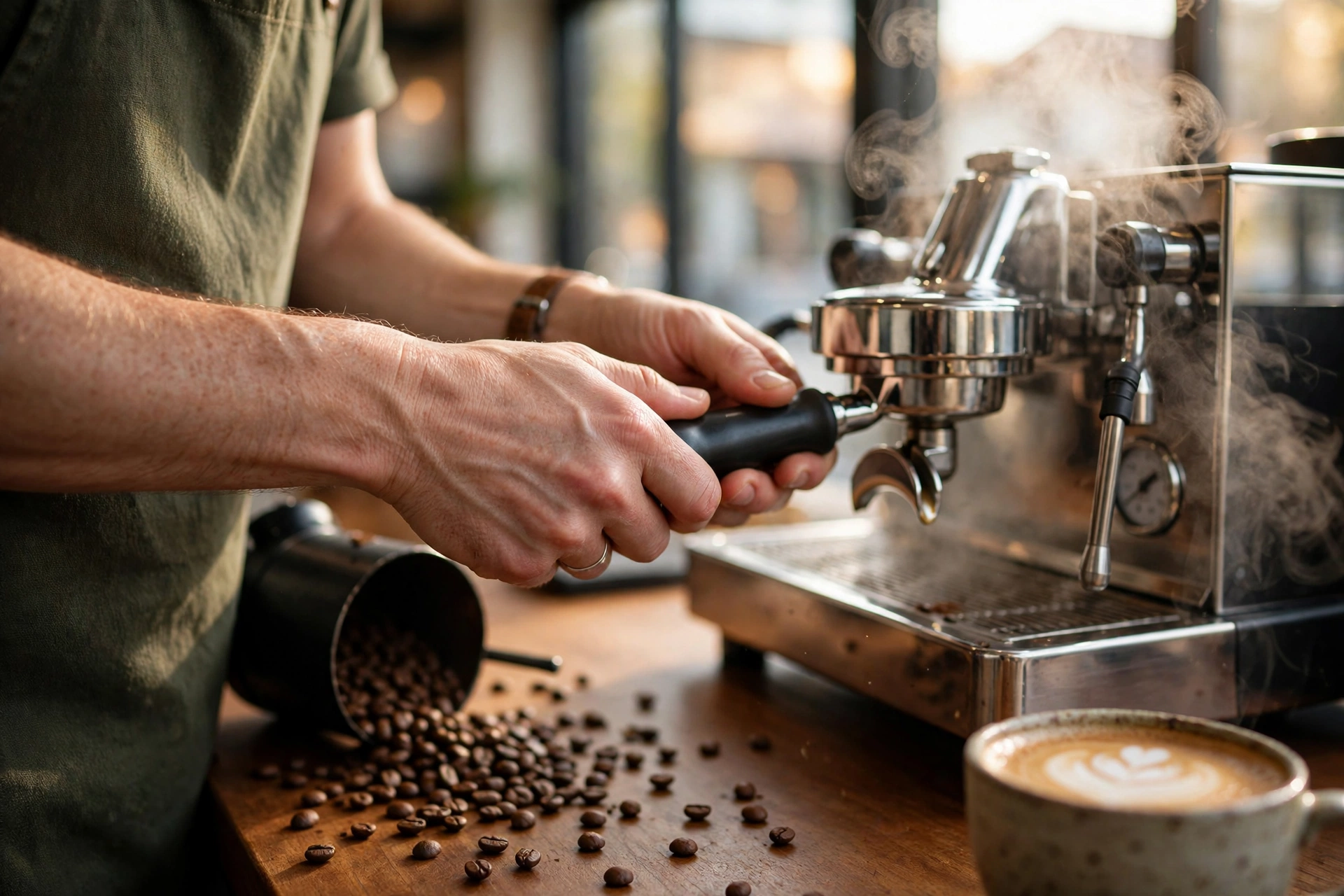
Once the water is heated, it is pushed through the group head and into the portafilter. Here, the pressure reaches the critical 9-bar threshold. This pressure is what creates the "crema," the golden-brown foam on top of the shot. The crema is actually an emulsion of coffee oils and carbon dioxide, which happens because the high pressure forces air and oils into the liquid. Without this specific mechanical force, you are simply making very strong drip coffee, not espresso.
Now, here's where it gets interesting: the "PID" (Proportional-Integral-Derivative) controller. Modern commercial machines use this digital technology to monitor the boiler temperature in real-time, adjusting the heating element in milliseconds. This ensures that the 100th shot of the morning is exactly the same temperature as the first, which is the only way to maintain consistency in a professional environment.
Why Precision Engineering Matters for Your Bottom Line
If you are running a business in Mount Pleasant, SC, or anywhere else, you quickly realize that a 2-degree variance in water temperature can be the difference between a customer returning and a customer leaving a negative review. The financial implications of equipment failure or inconsistency are staggering. When a machine fluctuates in temperature, the flavor profile shifts from sweet and balanced to acidic or burnt.
According to the National Coffee Association USA (NCA), the demand for specialty coffee continues to rise, and consumers are becoming more discerning about the quality of their beverage. This means the "margin for error" has shrunk. If your espresso machine is inconsistent, you are effectively wasting your most expensive ingredient: the coffee bean.
The cost of "shot waste"—throwing away poorly extracted drinks—can eat 3% to 5% of a cafe's daily gross profit. Furthermore, the downtime associated with improper maintenance of these complex systems is a silent killer. A boiler scale buildup that leads to a heating element failure during a Saturday morning rush doesn't just cost the price of the repair; it costs the lifetime value of every customer who walked away because you couldn't serve them.
The real business impact is found in the "flow rate." A machine that can maintain a steady 9 bars of pressure throughout the entire 25-30 second extraction allows a barista to dial in the grind with precision. If the pressure fluctuates, the barista has to constantly adjust the grinder, leading to more wasted coffee and slower service times. In a high-volume environment, a 10-second delay per drink can result in a significant loss of throughput over a fiscal quarter.
How to Operate and Maintain Commercial Espresso Machines
Operating these machines is a science. To get the most out of your equipment, you need to follow a rigorous protocol that respects the mechanical limits of the machine. The mistake I made early on—and that I see constantly with new owners—is treating the machine like a kitchen appliance rather than a piece of industrial equipment.
Step-by-Step Extraction Process
- Purge and Prep: Start by flushing the group head to remove any old grounds and stabilize the temperature.
- The Dose: Weigh your specialty coffee grounds to the tenth of a gram. Consistency starts with the input.
- The Distribution: Ensure the grounds are level. If there are clumps, the water will create "channels," bypassing most of the coffee.
- The Tamp: Apply an even, perpendicular pressure. You aren't trying to crush the coffee into a rock; you are simply removing air pockets to create a uniform resistance.
- The Pull: Engage the pump. The first few drops should appear within 4-7 seconds. If it takes 12 seconds, your grind is too coarse; if it gushes immediately, it is too fine.
- The Cut: Stop the shot when the liquid begins to "blonde" (turn pale yellow), as the final stage of extraction often brings out bitter, astringent flavors.

Long-Term Maintenance for Reliability
To keep these systems running, you must address the "enemy" of every espresso machine: mineral buildup. Water contains calcium and magnesium that crystallize inside the boiler. This is why a professional water filtration system is not optional; it is mandatory.
At Busy Bean Coffee, we emphasize that the "managed" part of our service is what saves businesses from catastrophic failure. We handle the descaling and group head gaskets that most owners forget until the machine starts leaking. Backflushing with a specialized detergent every night is the only way to clear the three-way solenoid valve of coffee oils that otherwise turn rancid and ruin the taste of your espresso.
💡
Key Takeaway
Mechanical consistency is the foundation of flavor. If your water filtration and daily cleaning protocols are lacking, no amount of expensive coffee roasting can save the final taste of your drink.
Choosing the Right System: Comparison of Approaches
Not every business needs the same type of machine. Depending on your volume and your staff's skill level, you might choose between different heating architectures.
| System Type | Pros | Cons | Best For |
|---|---|---|---|
| Single Boiler | Low cost, simple design | Cannot steam and brew simultaneously | Low-volume cafes or "slow bars" |
| Heat Exchanger (HX) | Faster heat-up, dual function | Temperature can drift; requires "cooling flushes" | Mid-sized cafes with moderate volume |
| Dual Boiler | Absolute temperature stability, independent control | Expensive, higher energy consumption | High-volume specialty shops,追求 consistency |
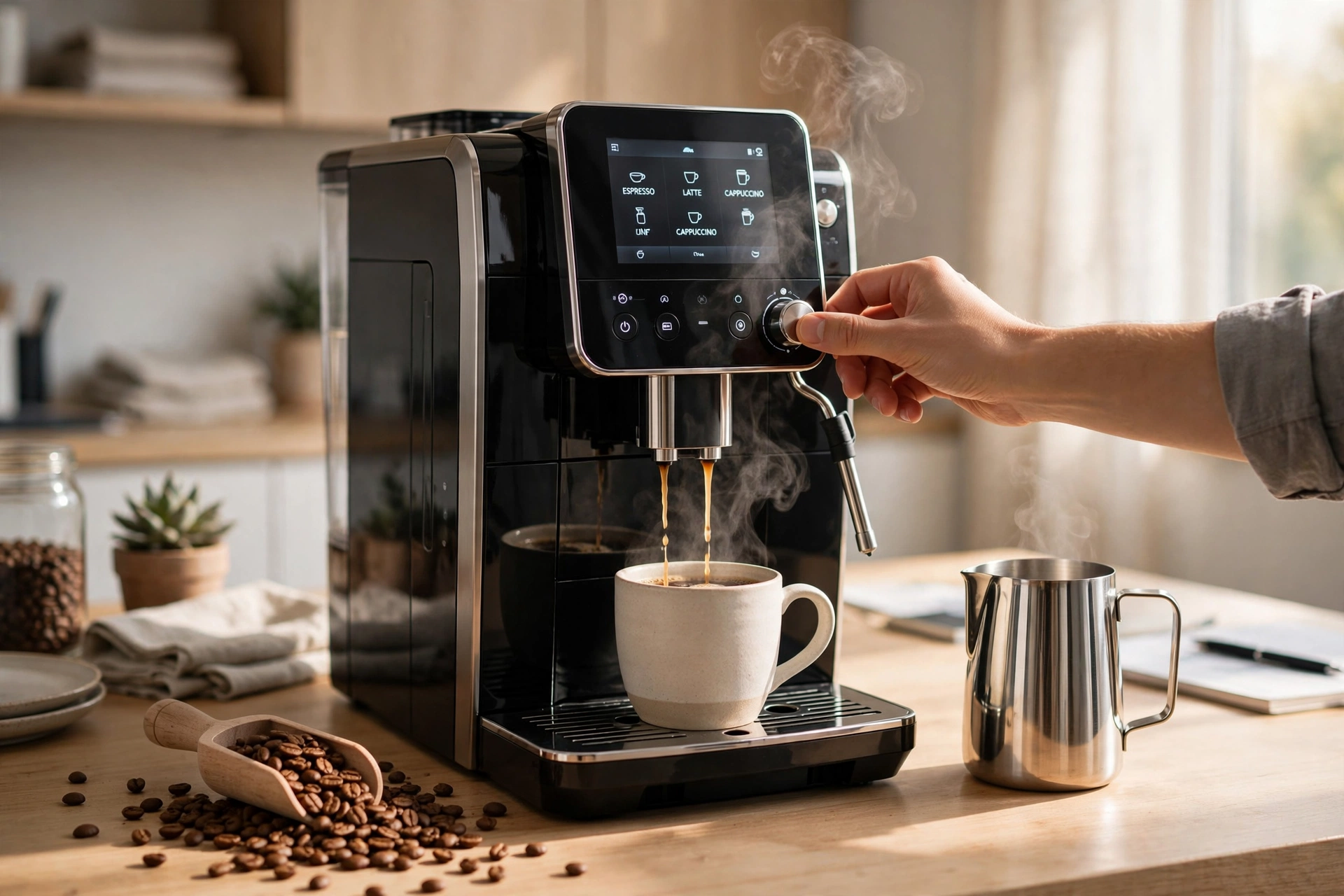
| Super-Automatic | One-touch operation, zero barista skill needed | Lower quality, high maintenance, no "artisan" touch | Hotels, offices, and quick-service kiosks |
When deciding, consider the "throughput" requirement. A Dual Boiler system allows a barista to pull shots and steam milk for a latte simultaneously without any drop in pressure or temperature. For a business focusing on high-end specialty coffee, this is the only viable option. For a hotel lobby where speed and ease of use are more important than the nuance of a 92-degree extraction, a super-automatic might be the better choice.
Common Questions & Misconceptions
Most guides get the "pressure" conversation wrong. They tell you that 9 bars is a magic number, but they don't explain why. Some believe that increasing the pressure to 11 or 12 bars will result in a "stronger" coffee. In reality, too much pressure can actually compress the coffee puck too tightly, causing the water to struggle to move through and resulting in an over-extracted, bitter mess.
Another common myth is that a more expensive machine automatically makes better coffee. This is a dangerous assumption. A $20,000 machine used with stale beans and a dirty group head will produce a worse shot than a $3,000 machine that is perfectly calibrated and cleaned daily. The machine is a tool; the result is a product of the operator's skill and the quality of the coffee bean.
Finally, many believe that "dark roast" coffee requires different pressure settings. While the roast level affects the grind size (darker roasts are generally more porous and extract faster), the mechanical target of 9 bars remains the industry standard. The adjustment happens at the grinder, not at the machine's pump settings.
Frequently Asked Questions
Why does my espresso machine make a loud vibrating noise during extraction?
The noise you hear is typically the pump working to maintain the necessary 9 bars of pressure. In cheaper machines, vibratory pumps create a loud, buzzing sound because they use a piston and spring. In high-end commercial espresso machines, rotary pumps are used, which are significantly quieter and provide a more linear pressure delivery. If a rotary pump suddenly becomes loud or "shudders," it is often a sign of an air bubble in the line or a failing pump seal that needs immediate professional attention.
What is the difference between a group head and a portafilter?
The group head is the stationary part of the machine where the hot water exits the boiler and enters the brewing chamber. The portafilter is the handle-based basket that holds the coffee grounds and locks into the group head. A critical part of the "how it works" process is the gasket—a rubber ring inside the group head—that creates a watertight seal between these two components. If the gasket is worn, water will leak from the sides, causing a drop in pressure and a failed extraction.
How does the steam wand work to froth milk?
The steam wand uses a dedicated part of the boiler (or a separate boiler in dual systems) to push pressurized steam into the milk. This process introduces tiny air bubbles into the milk's proteins and fats, creating a microfoam. The key is the "venturi effect," where the high-velocity steam pulls the milk into a vortex. This is why the position of the pitcher is so critical; if the wand is too deep, you only heat the milk; if it's too shallow, you create large, soapy bubbles instead of a creamy texture.
Why is water filtration so important for commercial machines?
Because these machines rely on precise heating elements, mineral deposits (scale) are a primary cause of failure. According to NSF International, equipment that isn't properly sanitized or protected from mineral buildup can lead to both mechanical failure and food safety risks. Scale acts as an insulator, meaning the heating element has to work harder to heat the water, eventually burning out. A proper filtration system removes these minerals before they ever reach the boiler.
What happens if the water temperature is too low during brewing?
When the water temperature drops below the ideal range (typically below 190°F), the extraction process slows down and fails to dissolve the complex sugars in the coffee. This results in "under-extraction," which tastes sour, salty, and thin. This is why "temperature surfing" is common in home machines but unacceptable in commercial settings. Professional machines use heavy brass components to ensure that the water hitting the coffee is exactly the temperature set on the PID controller.
Recommended Readings
To deepen your understanding of these topics, we recommend reading the following articles:
- The Complete Guide to White Glove Coffee Service
- Ultimate Guide to All-Inclusive Coffee Service for Businesses
- Ultimate Guide to Automated Coffee Machines for Business
- Ultimate Guide to Specialty Coffee Equipment for Business
Conclusion
Understanding how commercial espresso machines work is the first step in moving from "making coffee" to "managing a beverage program." By controlling the variables of temperature, pressure, and water quality, you can ensure that every cup served is a reflection of the quality of your specialty coffee. From the precision of the rotary pump to the stability of the dual boiler, every mechanical detail serves one goal: the perfect extraction.
If you're tired of worrying about equipment downtime and the hidden costs of maintenance, it's time to move toward a managed solution. At Busy Bean Coffee, we provide all-inclusive managed coffee memberships that take the guesswork out of the equation. We provide the premium equipment and the professional maintenance so you can focus on your customers, not your boiler pressure.
Stop gambling with your equipment reliability. Visit www.busybeancoffee.com today to see how our managed solutions can stabilize your operations and elevate your coffee game in 2026.
Free Coffee Pairing Guide & Specialty Roast Cheat Sheet
Unlock the secrets of perfect brewing ratios, water temperatures, and specialty roast profiles. Download the guide.