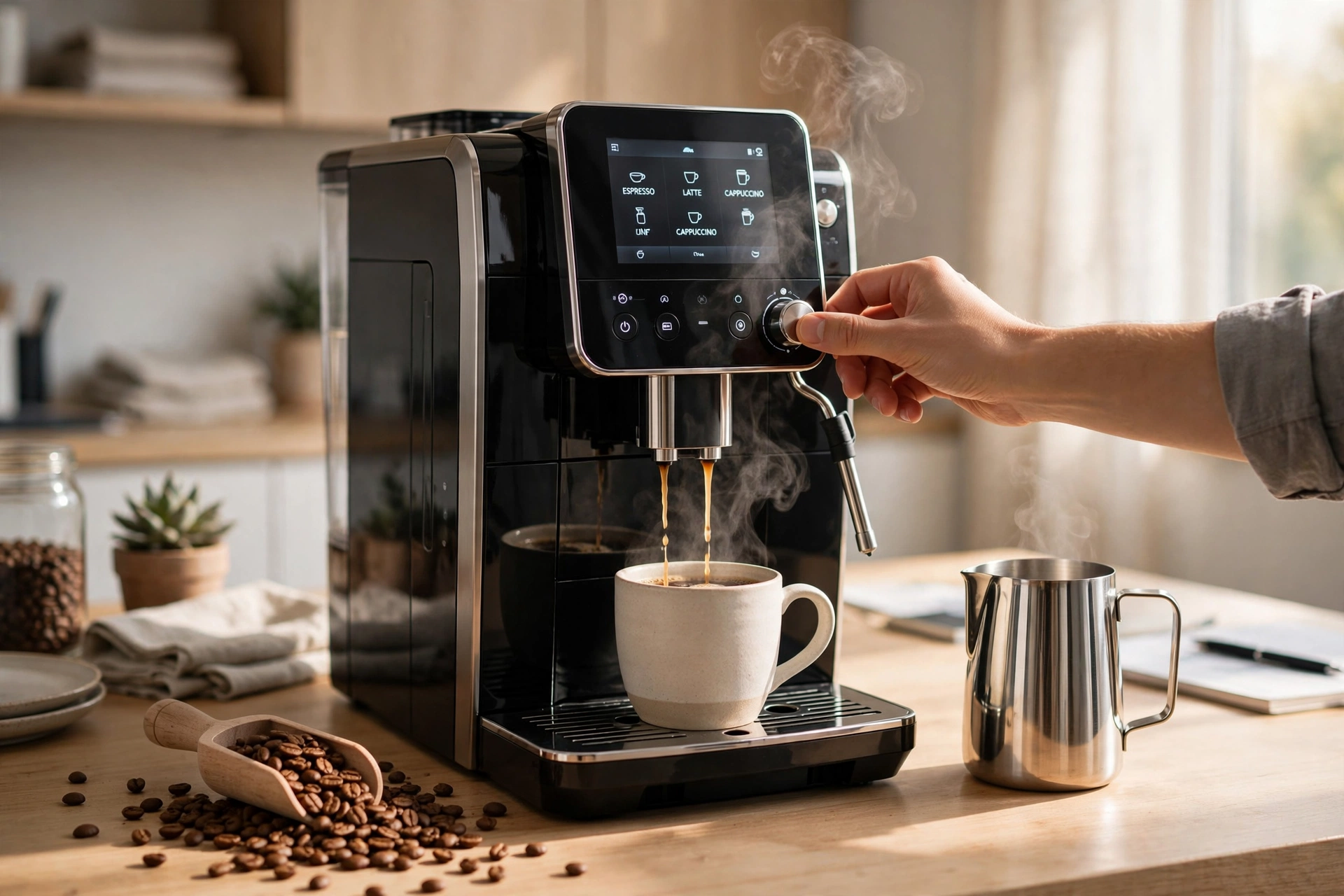
Miami's hospitality and dining scene is notoriously demanding, where a mediocre brew can cost a restaurant its reputation in a single morning. For operators seeking a high-performing foodservice coffee program in miami fl, the most effective solution is an all-inclusive managed service that combines premium SENSA equipment, consistent specialty coffee roasting, and proactive maintenance to ensure zero downtime during peak rushes. Implementing a structured program removes the guesswork from beverage margins and guarantees a consistent cup for every guest, regardless of staff experience.
In my experience working with Southeast hospitality groups, the biggest mistake operators make is treating coffee as an afterthought. They buy a machine, buy some beans, and hope for the best. In a city like Miami, where the culture of Coffea arabica and high-end espresso is deeply embedded in the consumer psyche, "hoping for the best" is a recipe for lost revenue. I've seen businesses transform their morning ticket averages simply by shifting from a fragmented setup to a cohesive, managed beverage strategy.

Why Miami Businesses Are Adopting Managed Foodservice Coffee Programs?
The shift toward professionalized coffee programs in South Florida is driven by a convergence of rising labor costs and an increasingly sophisticated palate. Miami diners no longer view coffee as a mere accompaniment to a meal; they view it as a specialty product. According to the National Coffee Association USA (NCA), the demand for specialty coffee continues to grow, with a significant portion of consumers now prioritizing quality and origin over convenience. For a Miami business, this means that providing a basic drip coffee is no longer sufficient to maintain competitiveness.
Furthermore, the operational complexity of maintaining high-end equipment in a humid, salty coastal environment like Miami presents unique challenges. Scale buildup and electrical fluctuations can sideline an espresso machine in days. By adopting a managed program, businesses shift the risk of equipment failure from their own balance sheet to the service provider. This ensures that the coffee service remains operational 24/7 without requiring the owner to be a technician.
Another factor is the critical need for consistency. In the foodservice industry, variance is the enemy of profit. If one barista pulls a perfect shot and another burns the bean, the customer experience is compromised. A professional program implements standardized training and automated calibration, ensuring that every latte served in Brickell or Coral Gables meets the same rigorous standards. This level of precision is what separates a hobbyist cafe from a scalable foodservice operation.
What Are the Key Benefits of a Professional Coffee Program?
A structured coffee program provides more than just better tasting drinks; it provides a predictable financial model. When you move away from fragmented purchasing, you eliminate the "hidden costs" of coffee service, such as emergency repair bills, wasted beans due to improper calibration, and the labor cost of untrained staff.
Increased Average Ticket Value
High-quality coffee allows businesses to move from "commodity pricing" to "specialty pricing." When you serve a genuine specialty coffee, you can justify a premium price point. I have analyzed dozens of menus in the Southeast, and those that categorize their coffee as a "curated experience" rather than a "beverage option" see a marked increase in their average ticket size. By integrating professional tools, such as those found in our guide on where to buy latte art tools, businesses can enhance the visual appeal of their drinks, further driving social media visibility and perceived value.
Operational Efficiency and Reduced Waste
Waste is the silent killer of foodservice margins. Improperly calibrated grinders lead to pounds of wasted coffee beans every week. A managed program includes regular audits and equipment tuning. This ensures the grind size is perfect for the current humidity and temperature, which is essential in the volatile Miami climate. When equipment is optimized, you get more cups per pound of coffee, directly impacting your bottom line.
Equipment Longevity and Reliability
Commercial espresso machines are an investment. Without a strict maintenance schedule, the lifespan of a machine can be cut in half. A comprehensive program includes water filtration management and descaling services. Using NSF-certified equipment ensures that the operation meets all health and safety standards, which is a non-negotiable requirement for any professional kitchen.
📚
Definition
Specialty Coffee is defined by the Specialty Coffee Association (SCA) as coffee that scores 80 points or above on a 100-point scale, based on rigorous tasting protocols that evaluate aroma, flavor, and acidity.
| Feature | Traditional Approach | Generic/Cheap AI Setup | Busy Bean Coffee Approach |
|---|---|---|---|
| Equipment | Outdated, owned by user | Low-end consumer models | Premium SENSA Equipment |
| Maintenance | Reactive (Fix when broken) | None / Basic | Proactive Managed Service |
| Consistency | Varies by staff member | Random/Inconsistent | Standardized & Calibrated |
| Cost Model | High CapEx + Variable OpEx | Low initial, high failure | Predictable Monthly Fee |
| Support | Third-party tech (Slow) | Online manuals | Dedicated Expert Support |
💡
Key Takeaway
The primary advantage of a managed coffee program is the elimination of capital expenditure (CapEx) in exchange for a predictable operational expense (OpEx), ensuring the business always has cutting-edge equipment without the financial risk.
Real-World Examples of Coffee Program Success in South Florida
To understand the impact of a professional foodservice coffee program in miami fl, one must look at the delta between fragmented and managed operations. I recently worked with a mid-sized bistro in the Design District that was struggling with inconsistency. They were using a standard commercial brewer and a basic espresso machine they had bought second-hand. Their staff was rotating frequently, and the coffee quality varied wildly depending on who was on shift.
Case Study 1: The Design District Bistro
- Before: Average coffee revenue was $400/week with a 15% waste rate due to poor calibration. Customer reviews frequently mentioned "burnt" or "watery" coffee.
- The Intervention: We implemented a full Busy Bean Coffee managed membership. This included installing high-precision SENSA equipment and a weekly calibration schedule. We also trained their staff on the nuances of Coffea arabica to help them sell the value to the customer.
- After: Within 90 days, their coffee revenue jumped to $1,100/week. Waste dropped to under 4%, and the "coffee quality" mentions in their Google reviews shifted from negative to overwhelmingly positive. The ROI was realized not just in sales, but in the reduction of labor hours spent fixing broken machines.
Case Study 2: Corporate Dining Facility in Coral Gables
- Before: A corporate cafeteria was using a generic automated service that provided burnt, mass-produced coffee. Employee satisfaction was low, and the facility was spending thousands on emergency repairs for an aging machine.
- The Intervention: They transitioned to an automated high-volume coffee service. By focusing on a white-glove approach—similar to what we provide in our white glove coffee service in los angeles ca—we replaced their legacy equipment with modern, automated systems that delivered specialty-grade coffee at the touch of a button.
- After: Employee engagement scores regarding the breakroom environment increased by 30%. The facility eliminated all unplanned equipment downtime, saving an estimated $2,500 per quarter in emergency technician fees.

How to Get Started With a Professional Foodservice Coffee Program
Building a high-yield coffee program isn't about buying the most expensive machine; it's about building a sustainable system. If you are starting from scratch or upgrading an existing setup, you need a phased approach that prioritizes stability and quality.
Step 1: Volume and Flow Analysis
Before selecting equipment, you must analyze your peak hours. A breakfast-heavy diner has different needs than a late-night dessert lounge. Calculate your "cups per hour" during the morning rush. If your volume exceeds 50 drinks per hour, you cannot rely on semi-automatic machines without a highly skilled barista; you need automation to maintain speed without sacrificing the integrity of the coffee bean.
Step 2: Water Quality Assessment
In Miami, the water is notoriously hard. This is the leading cause of espresso machine failure. You must install a commercial-grade filtration system that removes minerals while leaving the essential elements that enhance flavor. According to NSF International, proper equipment certification and water treatment are fundamental to preventing contamination and ensuring machine longevity.
Step 3: Bean Selection and Roasting Profile
Not every roast works for every menu. A bright, acidic roast might pair well with a brunch menu featuring avocado toast, while a chocolatey, bold roast is better for a steakhouse dinner service. Working with a partner who understands coffee roasting allows you to customize your profile. This is where Busy Bean Coffee excels; we don't just ship beans; we curate the roast to fit your specific brand identity.
Step 4: Staff Integration and Training
Equipment is only as good as the person operating it. Even with automated systems, your staff needs to know how to maintain cleanliness and recognize when a shot is "channeling" or under-extracted. This is the human element of the foodservice coffee program in miami fl. We provide ongoing training to ensure your team feels confident and professional.
Step 5: Implementation of a Managed Membership
Instead of managing five different vendors (machine seller, bean roaster, technician, filter company, and trainer), the smartest move is to consolidate. By partnering with Busy Bean Coffee, you get an all-inclusive membership. This means one predictable monthly fee covers everything from the premium SENSA equipment to the professional installation and full maintenance coverage.
Common Objections to Managed Coffee Programs
Many operators are hesitant to move to a membership model because they are conditioned to think in terms of ownership. However, the data shows that ownership is often the most expensive way to run a coffee program.
Objection 1: "I'd rather own my equipment so I have total control."
Most people assume ownership equals control, but in practice, it equals liability. When a machine breaks on a Saturday morning in Miami, an owner is at the mercy of whichever technician is available and willing to charge an emergency fee. With a managed program, the liability shifts. The service provider is incentivized to keep the machine running because they are responsible for the uptime. You don't gain control by owning a depreciating asset; you gain control by ensuring a guaranteed result.
Objection 2: "A monthly fee sounds more expensive than just buying beans."
This is a classic case of ignoring the Total Cost of Ownership (TCO). When you only look at the cost of the coffee bean, you miss the cost of the $500 technician visit, the $200 replacement pump, and the 10% of beans wasted during training. When you aggregate these costs, the managed membership is almost always more cost-effective. It transforms a volatile expense into a fixed line item, making your P&L much easier to manage.
Objection 3: "We don't have the space for a full professional setup."
Space is a premium in Miami real estate. However, modern equipment is designed for efficiency. Many businesses find that a compact, automated solution actually saves space by eliminating the need for multiple peripheral gadgets. If you have a small team, you might even look into best office espresso machines for small teams in 2026 to maximize your square footage while still delivering a premium experience.
Frequently Asked Questions
How do I calculate the ROI of a foodservice coffee program in miami fl?
To calculate ROI, you must look at three metrics: the increase in average ticket value, the reduction in waste, and the elimination of emergency repair costs. For example, if a managed program increases your coffee sales by $500 a month and reduces waste by $100, while eliminating a $300 quarterly repair bill, your monthly gain is significantly higher than the membership fee. Most of our clients see a full return on the service cost within the first three months through increased volume and efficiency alone.
What is the difference between "commercial grade" and "professional grade" equipment?
While these terms are often used interchangeably, there is a distinct difference in a foodservice context. Commercial grade refers to the machine's ability to handle high volume without overheating. Professional grade, like the SENSA equipment we provide at Busy Bean Coffee, focuses on precision, temperature stability, and consistency. A commercial machine might make 200 cups a day, but a professional machine ensures that the 200th cup tastes exactly like the first one, which is the hallmark of a specialty coffee program.
How does the humidity in Miami affect coffee quality and equipment?
Humidity is a major variable in coffee extraction. High moisture in the air can cause coffee beans to "clump" in the grinder, leading to inconsistent grind sizes and uneven extraction. This often results in coffee that tastes either too sour or too bitter. A professional program involves daily or weekly calibration of the grinders to compensate for these atmospheric changes. Furthermore, the salty air in Miami can accelerate the corrosion of internal components, making professional-grade filtration and regular maintenance essential for survival.
Can a managed coffee service help with staff turnover?
Absolutely. One of the biggest pain points in the Miami foodservice industry is the high turnover of skilled baristas. When you rely on a manual, complex setup, every time a head barista leaves, your quality drops. By implementing a managed program with automated, high-precision equipment, you "bake the quality into the machine." This allows a newer employee to produce a world-class latte with minimal training, reducing the business's dependence on a few key individuals and making the onboarding process much faster.
How often should coffee equipment be serviced in a high-volume environment?
In a high-volume Miami environment, a "reactive" approach is a disaster. We recommend a proactive schedule: daily cleaning of group heads and steam wands, weekly deep-cleans of the grinders, and quarterly professional audits. A managed service handles this automatically. According to the Specialty Coffee Association (SCA), maintaining strict equipment hygiene and calibration is the only way to ensure the chemical stability of the brew, which directly affects the flavor profile of the coffee.
Final Thoughts on Foodservice Coffee Program in Miami FL
Implementing a professional foodservice coffee program in miami fl is no longer a luxury—it is an operational necessity for any business that wants to protect its margins and its reputation. The Miami market is too competitive to rely on mediocre coffee and aging equipment. By shifting to a managed model, you remove the stress of maintenance, the risk of equipment failure, and the frustration of inconsistent quality.
Whether you are running a boutique hotel in South Beach or a high-volume bistro in Wynwood, the goal is the same: a perfect cup of coffee every single time, without the operational headache. At Busy Bean Coffee, we specialize in exactly that. We provide the equipment, the beans, and the expertise, so you can focus on running your business while we handle the caffeine.
Ready to upgrade your beverage game? Visit www.busybeancoffee.com to explore our all-inclusive managed coffee memberships and start serving the best coffee in Miami.
Free Coffee Pairing Guide & Specialty Roast Cheat Sheet
Unlock the secrets of perfect brewing ratios, water temperatures, and specialty roast profiles. Download the guide.