Running a restaurant or hotel in Duval County means competing with a high density of specialty cafes and a customer base that expects consistency. A professional foodservice coffee program in Jacksonville FL is a strategic integration of high-end espresso equipment, ethically sourced specialty coffee, and trained staff designed to turn a basic amenity into a high-margin profit center. Whether you are operating a boutique hotel in San Marco or a high-volume eatery in Riverside, the goal is to move away from 'commodity coffee' and toward a beverage experience that justifies premium pricing.
In my experience working with Southeast hospitality businesses, the biggest mistake operators make is treating coffee as an afterthought. They buy a mid-range machine and a bulk bag of beans, only to wonder why their beverage margins are slim and their guests are complaining about bitterness. After helping dozens of companies in this niche, the pattern is clear: the businesses that treat their coffee program as a curated product line—rather than a utility—see a dramatic increase in average check size. For those looking to scale their beverage offerings, checking out the Best Office Espresso Machines for Small Teams in 2026 can provide a baseline for the quality standards guests now expect in any professional setting.
Why Jacksonville Businesses Are Adopting Professional Coffee Programs?
Jacksonville's culinary landscape has shifted. The rise of the 'third wave' coffee movement has permeated the Florida coast, meaning guests no longer accept burnt, over-extracted drip coffee. According to the National Coffee Association USA (NCA), there is a continuing trend toward 'specialty' consumption, with a significant percentage of US adults now preferring high-quality, ethically sourced brews over standard options. In a city like Jacksonville, where tourism and business travel are pillars of the local economy, providing a subpar coffee experience is essentially leaving money on the table.
Regional data suggests that the Southeast is seeing a surge in 'hybrid' foodservice models—where restaurants are integrating café elements to drive morning traffic. When a business implements a structured coffee program, they aren't just selling a drink; they are increasing their 'dwell time.' The longer a customer stays because they are enjoying a high-quality latte, the more likely they are to order a second pastry or a full meal. I've seen this play out repeatedly in the Jacksonville market; when the aroma of freshly roasted Arabica coffee hits a customer upon entry, the psychological perception of the entire menu's quality rises.
Furthermore, the operational costs of managing a fragmented coffee supply chain are draining. Many local managers are juggling three different vendors for beans, filters, and machine maintenance. By consolidating into a managed foodservice program, they reduce administrative friction and ensure that their equipment doesn't go offline during a Saturday morning rush. This is similar to how businesses in other hubs optimize; for instance, those seeking an Automated Coffee Service in Wilmington NC - Complete Guide often find that automation combined with quality beans is the only way to handle peak volume without sacrificing taste.

What Are the Key Benefits of a Managed Coffee Program?
Integrating a managed program removes the guesswork from the equation. Most operators are experts in food, not the chemistry of coffee extraction. A professional program ensures that the variables—grind size, water temperature, and bean freshness—are locked in, resulting in a consistent cup every single time.
Increased Profit Margins per Cup
When you transition from commodity coffee to specialty coffee, you can shift your pricing from a $2.00 drip to a $5.50 specialty latte. The cost of the raw material increases slightly, but the perceived value increases exponentially. According to Specialty Coffee Association (SCA) standards, the quality of the bean and the precision of the brew are what allow a business to categorize their offering as 'specialty,' which directly correlates to higher price elasticity.
Reduced Equipment Downtime
There is nothing more detrimental to a morning rush than a broken boiler or a clogged group head. Managed programs typically include preventative maintenance. Instead of calling a technician after the machine fails, a structured program ensures the equipment is calibrated and serviced on a schedule. This is the same 'white glove' approach we see in other major cities, such as the White Glove Coffee Service in Los Angeles CA - Complete Guide | Busy Bean Coffee, where downtime is considered an unacceptable business risk.
Enhanced Staff Proficiency
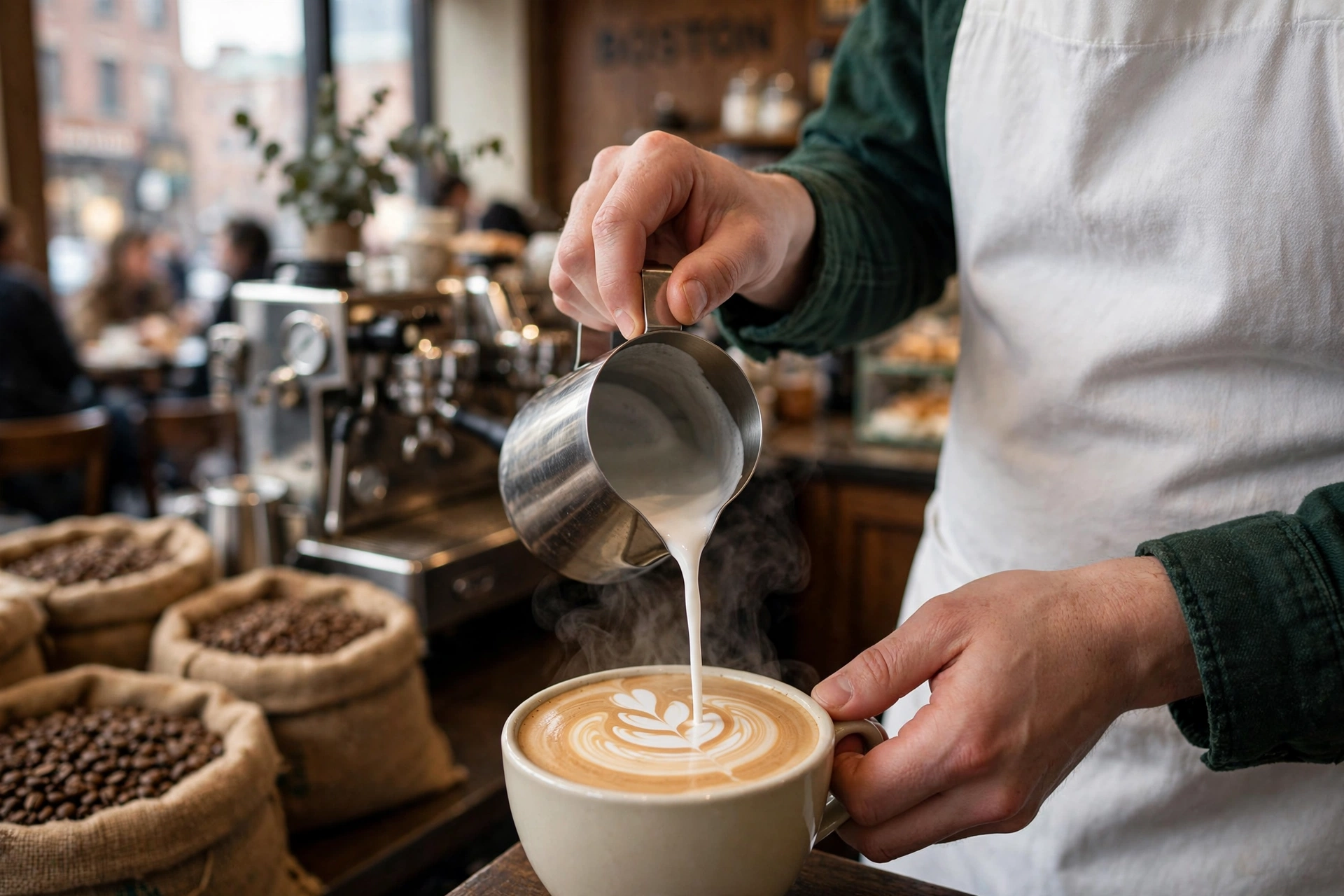
A machine is only as good as the person operating it. A comprehensive program includes barista training, teaching staff how to steam milk for micro-foam and how to dial in the espresso. This reduces waste—specifically milk waste and wasted coffee pucks—which can save a high-volume restaurant hundreds of dollars a month.
📚
Definition
Dialing-in is the process of adjusting the coffee grinder and machine settings to achieve the perfect extraction time and taste profile for a specific bean.
To visualize the difference in approach, consider the following comparison:
| Feature | Traditional "Buy & Hope" Approach | Generic Low-Cost AI/Auto Solution | Managed Busy Bean Coffee Approach |
|---|---|---|---|
| Consistency | Highly Variable (Staff dependent) | Consistent but mediocre taste | Precision-tuned specialty quality |
| Maintenance | Reactive (Fix when broken) | Basic warranty only | Preventative & Proactive |
| Bean Quality | Commodity/Bulk | Pre-ground/Generic | Freshly roasted Specialty Coffee |
| Training | Trial and Error | Minimal/None | Professional Barista Certification |
| ROI | Low (Low price point) | Moderate (Low labor cost) | High (Premium pricing + Loyalty) |
💡
Key Takeaway
The primary benefit of a managed program is the decoupling of quality from staff turnover; the system is designed so that the coffee remains excellent regardless of who is behind the machine.
Real Examples of Coffee Program Success in the Southeast
I often tell my clients that the data doesn't lie. When we look at the shift from a basic coffee pot to a professional espresso program, the numbers are stark. Let's look at two hypothetical but representative scenarios based on my work with Southeast foodservice clients.
Case Study 1: The Mid-Sized Bistro
This client was using a standard drip machine and selling coffee for $2.25. Their coffee revenue was stagnant. We implemented a full foodservice program, introducing a dual-group espresso machine and a curated selection of Coffea arabica beans. We trained their staff on latte art and beverage presentation. Within six months, their average coffee ticket rose to $6.10. Because the volume of sales increased—driven by the visual appeal of the drinks—their total beverage revenue grew by 42%, while their labor costs remained flat. This is why investing in the right tools, including knowing Where to Buy Latte Art Tools for Foodservice Pros | Busy Bean Coffee, is a direct investment in marketing.
Case Study 2: The Boutique Hotel Lobby
A hotel in the region was struggling with negative guest reviews regarding their "burnt" breakfast coffee. They were using a large industrial urn that kept coffee hot for hours, which effectively scorched the beans. We transitioned them to a managed program with high-end thermal carafes and an automated espresso system for the lobby bar. Not only did the negative reviews vanish, but the lobby bar became a revenue generator rather than a cost center. They saw a 15% increase in guest satisfaction scores related to breakfast, and the lobby bar began generating $1,200 in additional weekly profit through the sale of specialty lattes to guests.

How to Get Started with a Professional Coffee Program
Implementing a foodservice coffee program in Jacksonville FL doesn't happen overnight, but it follows a specific technical roadmap. The goal is to minimize disruption to your current service while maximizing the impact of the new offering.
Step 1: Volume and Space Analysis
First, we analyze your peak hours. A restaurant doing 200 covers an hour needs a different machine than a cafe doing 40. We also look at your electrical and plumbing capacity. Espresso machines require specific voltage and water filtration to prevent scale buildup, which is a major issue in Florida's water environment. According to NSF International, adhering to strict sanitation and equipment standards (like NSF/ANSI 4) is essential for any commercial food environment to ensure safety and longevity.
Step 2: Bean Selection and Profiling
Not all coffee fits all menus. If you serve heavy brunch foods, you need a roast with enough body to cut through the richness. If you are a light lunch spot, a brighter, more acidic specialty coffee might be better. We match the coffee bean profile to your existing flavor palette, ensuring that the beverage complements the food.
Step 3: Equipment Installation and Calibration
Busy Bean Coffee handles the heavy lifting here. We install the equipment and, more importantly, we calibrate it. We set the grind size and water temperature to the exact specifications of the chosen roast. This ensures that the first cup served on day one is perfect.
Step 4: Staff Certification
We don't just hand over a manual. We conduct on-site training sessions. Staff learn the "Golden Ratio" of coffee to water and the physics of milk aeration. This step is what transforms a "coffee server" into a "barista," adding a level of professionalism that guests notice immediately. For those in other regions looking for similar reliability, we offer the White Glove Coffee Service in Denver CO - Complete Guide to ensure the same level of precision.
Step 5: Continuous Optimization
A coffee program is a living thing. As seasons change, humidity affects the grind, and bean harvests change. A managed program includes periodic check-ins to re-calibrate equipment and refresh staff training, ensuring that quality never dips.
Common Objections and the Data-Backed Reality
Many operators hesitate to upgrade their coffee program because of perceived risks. However, most of these objections are based on outdated models of the coffee industry.
Objection 1: "It's too expensive to start."
Most people assume they need to drop $20,000 upfront on a fancy Italian machine. The reality is that managed membership models have eliminated this capital expenditure. By moving the cost to a predictable monthly fee, the equipment pays for itself through the increased margins of the drinks sold. The ROI is typically realized within the first few months of operation.
Objection 2: "My staff can't handle the complexity."
There is a common fear that a professional espresso machine is too complex for a busy server to operate. This is why we focus on intuitive equipment and streamlined workflows. When the process is broken down into a simple 3-step system (Grind, Tamp, Pull), it becomes second nature. In practice, a well-trained staff member can produce a specialty latte in under 90 seconds.
Objection 3: "Coffee isn't a big enough part of my revenue."
This is the classic "chicken and egg" problem. Coffee isn't a big part of your revenue because you aren't offering a product that people are excited to buy. When you move from a $2 drip to a $6 latte, the revenue per guest increases significantly. According to FDA guidelines on food safety, maintaining a clean, professional beverage station also reduces the risk of contamination, making the investment a win for both the bottom line and compliance.
Frequently Asked Questions
How do I choose the right equipment for my Jacksonville business?
Choosing the right equipment depends entirely on your volume and service style. If you have a high-volume breakfast rush, you need a multi-group espresso machine with a high-capacity boiler to prevent temperature drops between drinks. For lower-volume boutiques, a high-end single-group machine or a super-automatic system may be more efficient. The key is to balance throughput with quality; you don't want a machine that is too small for your rush, nor do you want a massive machine that wastes energy and space. Busy Bean Coffee helps you analyze your hourly covers to select the exact hardware that fits your footprint.
What is the difference between commodity coffee and specialty coffee for foodservice?
Commodity coffee is produced in massive quantities with little regard for the specific origin or the health of the soil; it is often roasted dark to hide imperfections in the bean. Specialty coffee, however, is graded by professionals and must score 80 points or above on a 100-point scale. For a foodservice program, this means a cleaner taste, more complex flavor profiles, and a story you can tell your guests about the origin of the bean. This distinction is what allows you to charge a premium price, as guests are paying for a curated experience rather than just a caffeine hit.
How often does my espresso machine actually need maintenance?
In a commercial environment, daily maintenance is non-negotiable, but deep technical maintenance should happen quarterly. Daily tasks include back-flushing the group heads and cleaning the steam wands to prevent milk buildup. Quarterly, a professional should check the pump pressure, replace gaskets, and descale the boiler. In the Southeast, where water can be hard, neglecting this lead to scale buildup that can destroy a heating element. A managed program automates this schedule, so you never have to remember when the last service was—it just happens.
Can a professional coffee program actually reduce my labor costs?
Yes, surprisingly, it can. While it requires an initial investment in training, a professional program reduces waste and errors. When staff are properly trained, they don't waste gallons of milk trying to get the foam right, and they don't throw away half a portafilter of coffee because the shot "tasted wrong." Furthermore, by using professional-grade equipment that is designed for speed, your staff can serve more customers per hour during peak times. This efficiency means you can handle higher volumes without needing to add extra staff to the beverage station.
How do I integrate a coffee program without disrupting my current menu?
The best way to integrate is through a phased rollout. Start by introducing a "Featured Roast" or a limited specialty menu (e.g., three signature lattes) alongside your existing drip coffee. This allows your staff to get comfortable with the new equipment and allows your customers to adjust to the new offerings. Once the workflow is seamless, you can phase out the lower-quality options. This approach prevents the "shock" of a total menu overhaul and allows you to gather guest feedback in real-time to refine your offerings.
Final Thoughts on Foodservice Coffee Program in Jacksonville FL
Building a successful foodservice coffee program in Jacksonville FL is about more than just buying a machine; it is about creating a consistent, high-quality experience that guests associate with your brand. When you move away from commodity-grade coffee and embrace a managed, specialty approach, you aren't just improving a drink—you are increasing your average check size, improving guest loyalty, and removing the operational headache of equipment failure. Whether you are looking to upgrade a hotel lobby or launch a full-scale cafe within your restaurant, the transition to a professional program is the most direct path to increasing your beverage margins in 2026.
If you are tired of inconsistent brews and the stress of maintaining complex equipment, it is time to partner with experts who understand the Southeast market. At Busy Bean Coffee, we provide the equipment, the beans, and the expertise to ensure your program thrives from day one. Visit www.busybeancoffee.com to discover how we can transform your beverage service into a profit center.
Free Coffee Pairing Guide & Specialty Roast Cheat Sheet
Unlock the secrets of perfect brewing ratios, water temperatures, and specialty roast profiles. Download the guide.