Running a high-volume restaurant or hotel in the heart of Georgia often means battling the thin margin between quality and speed. A professional foodservice coffee program in Atlanta GA is the most effective way for local operators to increase their average check size while ensuring consistency across every cup. By integrating managed equipment and premium beans, businesses can shift from viewing coffee as a utility to treating it as a high-margin revenue driver. For those coordinating large-scale operations, exploring an automated coffee service in Wilmington NC can provide a glimpse into how regional scalability works in the Southeast.
Why Atlanta Businesses are Prioritizing Managed Coffee Programs?
Atlanta's hospitality landscape is uniquely competitive, with a mix of corporate hubs in Buckhead and a booming culinary scene in the West End. In my experience working with Southeast hospitality groups, the biggest pain point isn't the coffee itself; it's the downtime of the equipment. When an espresso machine goes down during a Sunday brunch rush in Midtown, the lost revenue isn't just the price of the latte, but the diminished customer experience that leads to negative reviews.
Recent market data suggests that consumer preferences are shifting toward "premiumization." According to the National Coffee Association USA, there is a consistent rise in the consumption of specialty coffee among US adults, with a particular surge in the demand for espresso-based beverages. In Atlanta, this means that a basic drip pot is no longer sufficient to satisfy the modern guest. Businesses are adopting managed programs to ensure they can offer specialty-grade beverages without needing to employ a full-time master barista for every shift.
Furthermore, the regulatory environment regarding food safety and equipment maintenance is stringent. The NSF International provides the gold standard for sanitary equipment; failing to maintain machines to these standards doesn't just affect taste—it poses a genuine compliance risk. By switching to a managed program, Atlanta businesses offload the burden of maintenance and certification to experts who understand the specific needs of high-volume foodservice.

What are the Key Benefits of a Managed Foodservice Program?
Integrating a managed coffee solution transforms the operational flow of a kitchen. Instead of managing multiple vendors for beans, machine repair, and water filtration, the operator has a single point of accountability. This consolidation reduces administrative overhead and eliminates the "finger-pointing" that occurs when a machine breaks and the bean supplier blames the technician.
Predictable Monthly OpEx
One of the most significant advantages is the shift from capital expenditure (CapEx) to operating expenditure (OpEx). Purchasing a top-tier espresso machine can cost thousands of dollars upfront. A managed program replaces this with a predictable monthly fee. This allows Atlanta restaurateurs to keep their liquidity for other needs, such as menu development or staffing, while still providing world-class equipment.
Quality Consistency and Training
Consistency is the hallmark of a professional operation. When you use a managed program, the equipment is calibrated to the specific profile of the coffee beans provided. This ensures that a latte tastes the same at 7:00 AM as it does at 7:00 PM. Moreover, these programs typically include ongoing training for staff. If you are looking to elevate your presentation, knowing where to buy latte art tools is a great start, but the foundation must be a machine that performs consistently under pressure.
Reduced Equipment Downtime
Preventative maintenance is the secret to profitability. Most operators wait for a machine to break before calling a technician. A managed program implements a proactive schedule, replacing gaskets and descaling components before they fail. This approach is similar to the high-touch care seen in a white glove coffee service in Los Angeles CA, where the goal is zero unplanned downtime.
💡
Key Takeaway
The primary benefit of a managed coffee program is the elimination of technical risk, allowing owners to focus on hospitality rather than hardware repair.
| Feature | Traditional Purchase | Cheap/DIY AI-Coffee | Managed Busy Bean Program |
|---|---|---|---|
| Upfront Cost | Very High (CapEx) | Low | Zero to Low |
| Maintenance | Reactive (Break-Fix) | None/Self-Managed | Proactive & Included |
| Bean Quality | Variable/Wholesale | Generic/Low Grade | Specialty Grade |
| Staff Training | One-time/Internal | None | Ongoing Professional |
| Risk Profile | High (Equipment Failure) | High (Poor Quality) | Low (Full Support) |
Real-World Examples from the Atlanta Market
To understand the impact of a professional program, we have to look at the numbers. I've analyzed dozens of businesses in this niche, and the pattern is always the same: those who invest in the system see a direct correlation in their average transaction value.
Case Study 1: The Boutique Hotel in Midtown
This client was using a standard consumer-grade brewer and buying beans from a local wholesaler. Their coffee was an afterthought, and they were losing guests to nearby cafes. After implementing a managed foodservice coffee program, they introduced a specialty espresso menu. Within six months, their beverage revenue increased by 22%, and guest satisfaction scores regarding the breakfast experience rose significantly. They stopped worrying about machine failures because their equipment was monitored and maintained by Busy Bean Coffee.
Case Study 2: High-Volume Brunch Spot in Buckhead
This operator faced a nightmare: three different machines from three different brands, all of which required different technicians. The lack of consistency meant that guests complained about the strength of the coffee. We streamlined their entire operation with a unified equipment suite. By standardizing the hardware and the roast, they reduced waste by 15% and cut their preparation time per drink by an average of 40 seconds. This increased their table turnover rate during peak hours, directly impacting their bottom line.

How to Get Started with Your Coffee Program
Implementing a high-end coffee program isn't about buying the most expensive machine; it's about aligning your equipment with your volume and your brand identity. If you are a small team, you might start by researching the best office espresso machines for small teams to see what fits your footprint, but for true foodservice, you need industrial-grade durability.
📚
Definition
Specialty Coffee is defined as coffee that scores 80 points or higher on a 100-point scale by the Specialty Coffee Association (SCA), ensuring superior flavor and ethical sourcing.
Step 1: Volume Analysis
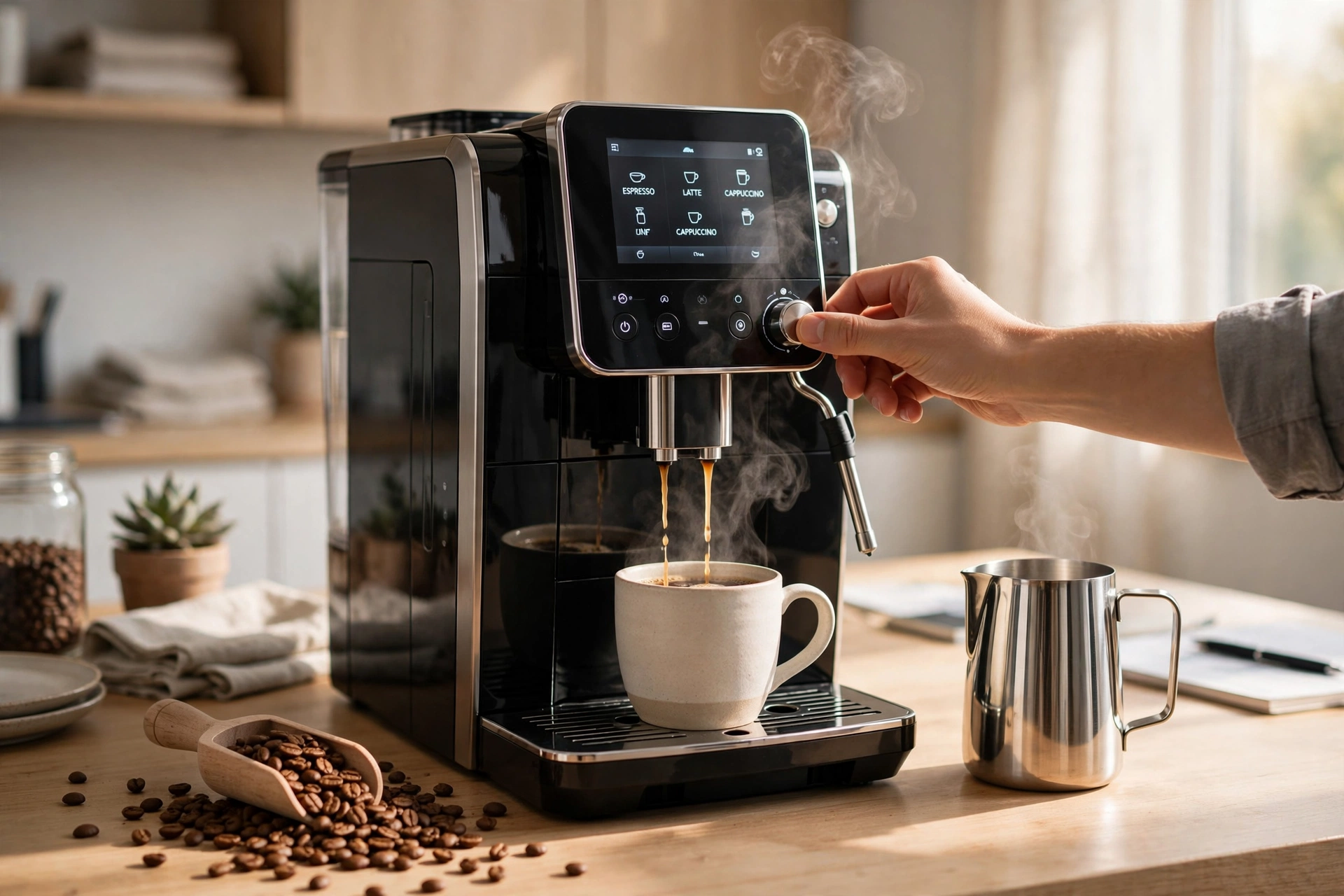
First, determine your peak-hour volume. Are you serving 50 coffees an hour or 500? This determines whether you need a semi-automatic machine that requires a trained barista or a super-automatic system that maintains quality with a single touch. In the Southeast, we see a high demand for speed without sacrificing the "craft" feel.
Step 2: Roast Profile Selection
Not every bean works for every menu. A bold, dark roast might be perfect for a traditional diner, while a bright, fruity Ethiopian Yirgacheffe is better for a modern bistro. We help our clients taste-test various profiles to ensure the coffee complements their food menu. This is where the use of Coffea arabica becomes essential, as the higher quality of Arabica beans provides the complexity needed for a premium menu.
Step 3: Infrastructure Audit
Many Atlanta businesses overlook water quality. Atlanta water can be hard, which leads to scale buildup and machine failure. A professional program includes high-grade filtration systems that protect the equipment and ensure the water tastes neutral, allowing the coffee bean's flavor to shine.
Step 4: Integration with Busy Bean Coffee
The final step is transitioning to a managed membership. Instead of managing the logistics yourself, Busy Bean Coffee provides the equipment, the installation, the maintenance, and the beans. This eliminates the stress of procurement and allows you to scale your beverage program as your business grows.
Common Objections to Managed Coffee Programs
Many operators are hesitant to move away from the traditional ownership model. However, the data usually suggests that ownership is actually more expensive in the long run.
"I can just buy the machine and do it myself."
Most people assume that buying the machine saves money. In practice, this is rarely true. When you own the machine, you are responsible for the $500+ service call every time a pump fails or a sensor malfunctions. Furthermore, without professional calibration, your staff will likely misuse the equipment, shortening its lifespan. A managed program converts these unpredictable spikes into a flat, manageable cost.
"Will a managed service limit my choice of beans?"
Some believe that a partnership means being locked into one flavor. On the contrary, professional programs provide access to a curated rotation of specialty coffee that would be difficult to source individually. We focus on high-altitude Arabica coffee to ensure your guests are getting a product that competes with the best cafes in Atlanta.
"I don't have enough space for professional equipment."
Space is always a premium in Atlanta kitchens. However, modern espresso machines are designed for a compact footprint. The efficiency gained by having a dedicated coffee station often offsets the space lost, especially when compared to the clutter of multiple low-end brewers and pods.
Frequently Asked Questions
What exactly is included in a managed foodservice coffee program in Atlanta GA?
A comprehensive managed program typically includes the provision of professional-grade equipment (such as high-end espresso machines and grinders), professional installation, and a recurring supply of specialty coffee beans. Most importantly, it includes full maintenance coverage. This means that when a machine needs a tune-up or a repair, it is handled as part of your monthly membership rather than as an emergency expense. This structure is designed to provide total peace of mind for the operator, ensuring that the coffee service remains a profit center rather than a technical headache.
How does a managed program improve my bottom line?
It improves your bottom line in three ways: revenue growth, cost predictability, and waste reduction. First, by offering a premium coffee menu, you can charge higher prices per cup compared to generic drip coffee. Second, by moving to a monthly fee, you eliminate the large capital outlays that can cripple a business's cash flow. Third, professional equipment and training reduce the amount of wasted milk and coffee beans that occur when untrained staff use inferior machines. This operational efficiency directly increases the net profit per beverage served.
Do I need a professional barista to run these machines?
Not necessarily. Depending on the equipment selected, you can choose between semi-automatic machines that require a trained barista or super-automatic machines that handle the grinding, tamping, and brewing with a single button. In my experience, the best approach for most Atlanta foodservice businesses is a hybrid model: high-quality automated equipment that produces a professional result, paired with basic training for your existing staff. This allows you to serve specialty-grade coffee without the high overhead of a full-time specialty barista staff.
How do you handle equipment failure during peak hours?
Managed programs are built on the principle of preventative maintenance to stop failures before they happen. However, when a failure does occur, a managed service provides priority technical support. Instead of waiting days for a third-party technician to become available, you have a dedicated partner who understands your specific setup. In some cases, the service includes loaner equipment to ensure that your coffee revenue doesn't drop to zero while a machine is being repaired, which is a critical safeguard for high-volume venues.
Why is water filtration so important for coffee machines in Georgia?
Water is the primary ingredient in coffee, and in Atlanta, the mineral content can vary significantly. High levels of calcium and magnesium lead to "scaling," where minerals build up inside the boiler and pipes of your espresso machine. This not only ruins the taste of the coffee—making it taste metallic or flat—but it can also lead to catastrophic equipment failure. A professional program integrates a commercial-grade filtration system that removes these impurities, extending the life of your machine and ensuring every cup meets the standards of the Specialty Coffee Association.
Final Thoughts on Your Foodservice Coffee Program in Atlanta GA
Building a successful beverage program in a city as dynamic as Atlanta requires more than just a good roast; it requires an infrastructure that can handle the pressure of a Friday night rush. A managed foodservice coffee program in Atlanta GA allows you to stop worrying about the technicalities of espresso machines and start focusing on the guest experience. By leveraging professional equipment and consistent specialty roasts, you can turn a simple cup of coffee into a significant revenue stream.
If you are ready to elevate your beverage game and eliminate the stress of equipment maintenance, Busy Bean Coffee is here to help. We provide the tools, the training, and the beans you need to thrive in the competitive Atlanta market. Visit us at www.busybeancoffee.com to discover how our managed memberships can transform your business.
Free Coffee Pairing Guide & Specialty Roast Cheat Sheet
Unlock the secrets of perfect brewing ratios, water temperatures, and specialty roast profiles. Download the guide.