
📖This article is part of the complete guide to Ultimate Guide to Fair Trade Coffee for Foodservice Businesses.
For decades, coffee farmers have struggled with volatile commodity prices that often fall below production costs. Fair trade certification emerged as a powerful mechanism to ensure farmers receive a fair wage and invest in their communities. But what exactly does this certification entail, and how can foodservice businesses leverage it to boost their brand and bottom line?
For a comprehensive look at how to offer fair trade coffee in your foodservice business, check out our Ultimate Guide to Fair Trade Coffee for Foodservice Businesses.

What Is Fair Trade Certification for Coffee?
📚
Definition
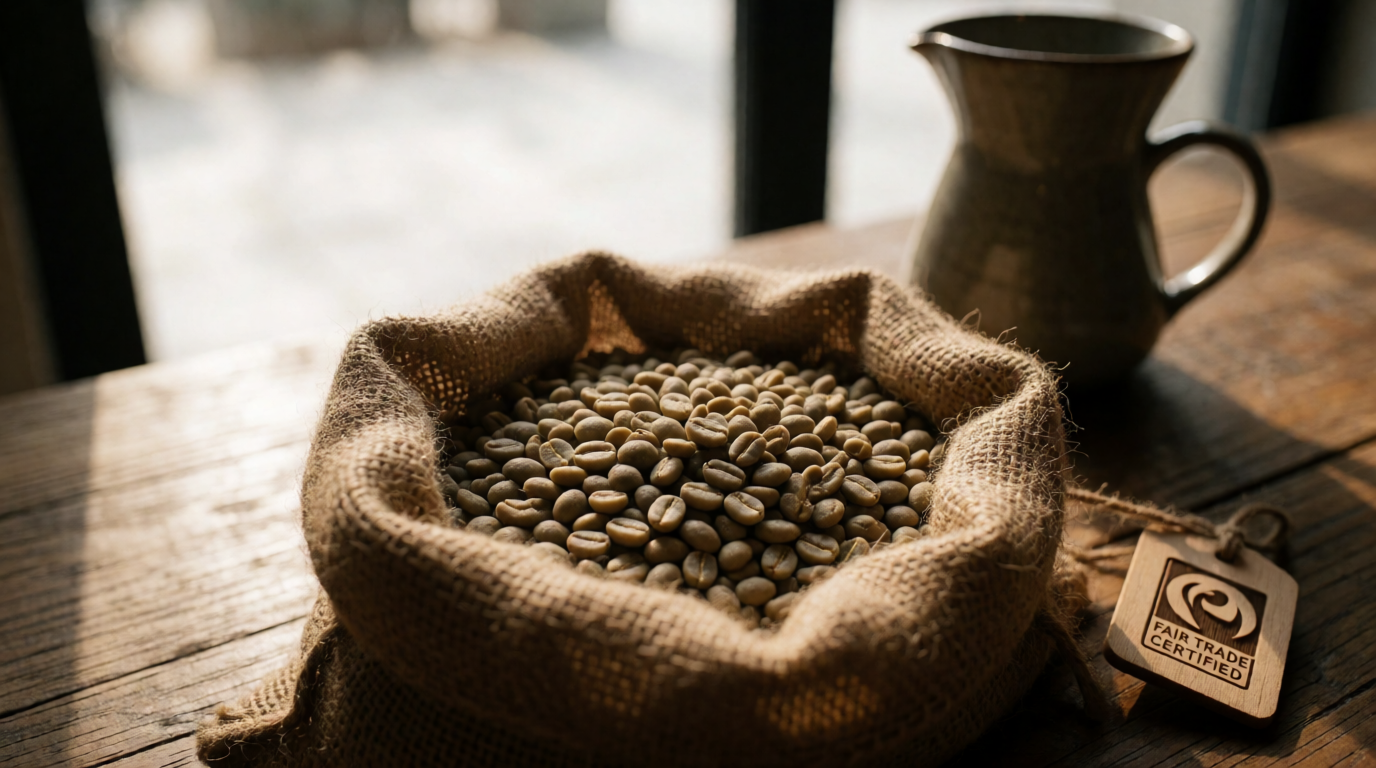
Fair trade certification is a third-party verified system that ensures coffee farmers receive a minimum price for their beans, along with an additional premium to invest in community projects like education, healthcare, and infrastructure.
The concept originated in the 1980s with the Max Havelaar label in the Netherlands. Today, the two primary certifiers are Fairtrade International (often called Fairtrade) and Fair Trade USA, which split from Fairtrade International in 2011. Both organizations set standards that prohibit child labor, promote environmental sustainability, and require democratic organization of farmer cooperatives.
According to Fairtrade International, over 1.6 million farmers and workers are part of Fairtrade-certified coffee networks globally, and the minimum price for Arabica coffee is set at $1.80 per pound for conventional and $2.20 per pound for organic (as of 2024). When market prices rise above these floors, farmers receive the higher market price plus the premium.
💡
Key Takeaway
Fair trade certification guarantees farmers a safety net price and a premium for community development, distinguishing it from conventional coffee trade where prices fluctuate wildly.
Certification audits are conducted by independent bodies like FLOCERT. Coffee is traceable from farm to roaster through a chain of custody system. However, it's important to note that fair trade does not guarantee organic certification—though many fair trade farmers also pursue organic because of the combined price premium.
Why Fair Trade Certification Matters for Your Business
Consumers today care deeply about ethical sourcing. A 2023 NielsenIQ study found that 78% of U.S. consumers say sustainability is important to their purchasing decisions. By serving fair trade coffee, your cafe, restaurant, or hotel signals a commitment to social responsibility—which can differentiate you in a crowded market and justify premium pricing.
Moreover, fair trade coffee often comes from high-quality specialty beans grown by smallholder farmers who take pride in their craft. When you partner with a roaster like Busy Bean Coffee that sources fair trade beans, you gain access to unique single-origin coffees with exceptional flavor profiles—something your customers will taste and appreciate.
From a business perspective, fair trade certification can be a powerful marketing tool. Highlighting it on your menu and website builds trust and encourages repeat visits. According to research from the University of Michigan, consumers are willing to pay up to 15% more for products with ethical certifications.
For inspiration, read about the Benefits of Fair Trade Coffee for Restaurants, how Fair Trade Coffee for Hotels to Elevate Guest Experience, and how Fair Trade Coffee in Offices to Cut Starbucks Costs.
How to Source Fair Trade Certified Coffee for Your Business
Sourcing fair trade coffee is straightforward with the right partner. Here are the key steps:
1. Look for certification logos. Reputable roasters display Fairtrade International or Fair Trade USA seals on their packaging and promotional materials. Verify that the roaster holds a valid license and can trace the beans back to a certified cooperative.
2. Choose a roaster that prioritizes ethical sourcing. Busy Bean Coffee works directly with fair trade cooperatives in Latin America and East Africa, ensuring full transparency. Our managed coffee service includes fair trade options at competitive prices, with no hidden fees.
3. Consider organic certification as a complement. Many fair trade coffees are also organic, which can appeal to environmentally conscious customers. Check with your supplier about dual-certified options.
4. Test different origins. Fair trade beans are available from numerous origins—Ethiopia, Colombia, Guatemala, Sumatra, and more. Each offers distinct flavors. Work with your roaster to find profiles that match your customers' preferences.
5. Communicate the story. Use signage, coasters, or digital menus to tell customers about the farmers who grew their coffee. People love knowing they're making a difference.
For equipment recommendations, see our guide on Best Commercial Machines for Fair Trade Coffee. And for specific brand recommendations, check out Best Fair Trade Coffee Brands for Businesses.

Common Mistakes When Choosing Fair Trade Coffee
1. Assuming all fair trade is the same quality. Fair trade certification focuses on farmer compensation, not flavor. While many fair trade coffees are specialty grade, some can be average. Always taste before committing. Work with a roaster that emphasizes quality.
2. Ignoring direct trade as an alternative. Some roasters prefer direct trade, where they pay even higher prices than fair trade minimums and build direct relationships with farmers. Direct trade often results in higher quality, but lacks third-party verification.
3. Not verifying certification. Some suppliers may claim "fair trade" without being certified. Always ask for proof and look for the official logo on packaging. Busy Bean Coffee is fully transparent about our certifications.
4. Overlooking price premiums. Fair trade beans can cost $0.20–$0.50 more per pound than conventional. You need to factor this into your pricing strategy—either pass it on to customers or absorb it as a marketing investment.
5. Failing to educate staff and customers. If your team can't explain why your coffee is fair trade, you're missing an opportunity. Train baristas and servers on the story behind the beans. Use table tents or menu stickers.
Here's a quick comparison:
| Aspect | Conventional Coffee | Fair Trade Certified | Direct Trade (No Certification) |
|---|---|---|---|
| Price floor | None, fluctuates with market | Minimum $1.80/lb (conventional), $2.20/lb (organic) | No floor, often higher than fair trade |
| Community premium | No | Yes, $0.20/lb | Sometimes, but not guaranteed |
| Third-party audit | No | Yes, by FLOCERT or similar | Rarely; based on roaster's own verification |
| Environmental standards | Varies | Prohibits child labor, encourages biodiversity | Varies widely |
| Farmer organization | Independent | Required to form cooperatives | Direct relationship with individual farms |
In my experience working with dozens of foodservice businesses, the most common mistake is treating fair trade as a checkbox rather than a story. The businesses that thrive with fair trade are those that weave it into their brand identity—training staff to share the mission and creating menu copy that explains the impact.
Frequently Asked Questions
What does fair trade certification mean for coffee?
Fair trade certification means the coffee was purchased from a certified cooperative of smallholder farmers at a guaranteed minimum price (currently $1.80/lb for conventional Arabica, $2.20 for organic). Farmers also receive an additional premium—typically $0.20/lb—to invest in community projects like schools, healthcare, or cooperative infrastructure. Certification is verified by independent bodies like FLOCERT.
How do I verify if coffee is fair trade certified?
Look for the official Fairtrade International (white, green, and black) or Fair Trade USA (blue and black) certification logo on the packaging or the roaster's website. You can also search the Fairtrade International or Fair Trade USA databases by brand or cooperative. Busy Bean Coffee provides certification documentation upon request for all our fair trade offerings.
Is fair trade coffee more expensive?
Yes, typically $0.20 to $0.50 more per pound than conventional coffee. This covers the minimum price guarantee, premium, and certification costs. However, many businesses find they can charge a higher retail price for fair trade coffee, offsetting the cost. Some customers are willing to pay 10–15% more for an ethically sourced cup.
Does fair trade coffee taste better?
Not automatically. Fair trade certification focuses on economic fairness, not flavor. However, many specialty-grade fair trade coffees are excellent because they come from smallholder farmers who use traditional, quality-focused growing methods. The best approach is to taste samples from different origins. Our Best Fair Trade Coffee Brands for Businesses guide highlights top-rated options.
Can I get fair trade coffee through a managed coffee service?
Absolutely. Busy Bean Coffee offers fair trade options as part of our all-inclusive managed coffee service. We source from certified cooperatives and provide the equipment, setup, and ongoing support. You get premium coffee, full-service maintenance, and guaranteed quality—all for a predictable monthly fee. Contact us to discuss your fair trade coffee needs.
Conclusion
Fair trade certification is a powerful tool for ensuring coffee farmers receive equitable compensation while giving foodservice businesses a compelling story to share with customers. By understanding what the certification really means—and what it doesn't—you can make informed sourcing decisions that align with your values and your customers' expectations.
Whether you're a small cafe or a large hotel chain, integrating fair trade coffee into your offering can boost customer loyalty and differentiate your brand. To dive deeper into the strategy behind offering fair trade coffee, revisit our Ultimate Guide to Fair Trade Coffee for Foodservice Businesses.
Ready to make the switch? Busy Bean Coffee provides premium fair trade coffee as part of our managed coffee service. We handle sourcing, equipment, and maintenance, so you can focus on delighting your customers. Get in touch today.
About the Author
Travis Estes is the CEO & Founder at Busy Bean Coffee. With over a decade of experience in specialty coffee, he has helped hundreds of foodservice businesses source ethical, high-quality coffee while simplifying their operations.
Free Coffee Pairing Guide & Specialty Roast Cheat Sheet
Unlock the secrets of perfect brewing ratios, water temperatures, and specialty roast profiles. Download the guide.