What Are Commercial Espresso Machines and How Do They Differ From Home Units?
I remember the first time a client tried to run a high-volume breakfast rush using a "prosumer" machine they bought online; by 9:00 AM, the boiler was exhausted, the temperature had plummeted, and the line of frustrated customers stretched out the door. This is the fundamental difference between consumer-grade gear and professional hardware. At its core, commercial espresso machines are heavy-duty beverage systems engineered to maintain precise thermal stability and consistent pressure while producing hundreds of cups of coffee per day without failure. Unlike home machines, these units feature oversized boilers, professional-grade pumps, and reinforced chassis designed for 12 to 18 hours of continuous operation.
For those managing a workspace or a cafe, understanding the nuances of these machines is the first step toward operational efficiency. If you are scaling a corporate environment, you might want to explore the Best Office Espresso Machines for Small Teams in 2026 to balance quality with ease of use. Commercial units aren't just about "more coffee"; they are about the ability to steam milk and pull shots simultaneously without a drop in pressure, ensuring that the tenth latte of the morning tastes exactly like the first.
📚
Definition
Commercial espresso machines are industrial-grade coffee brewers designed for high-volume environments, characterized by their ability to maintain stable temperature and pressure through large boilers and dedicated heating elements.

How Do Commercial Espresso Machines Work?
To understand these machines, you have to understand the physics of extraction. Espresso is not just "strong coffee"; it is a concentrated emulsion created by forcing hot water through a compacted puck of finely ground Coffea arabica at high pressure. Commercial machines achieve this by utilizing a dedicated pump—usually a rotary vane pump—which is far quieter and more durable than the vibration pumps found in home units.
The heart of the machine is the boiler. In a commercial setting, thermal stability is the only metric that truly matters. If your water temperature fluctuates by even two degrees, the chemical composition of the extraction changes, leading to sour or bitter shots. This is why professional machines use massive brass or stainless steel boilers and, in high-end models, "PID" (Proportional-Integral-Derivative) controllers to manage heat with surgical precision.
According to the Specialty Coffee Association (SCA), the gold standard for extraction requires precise control over the brew ratio, temperature, and time. Commercial machines facilitate this by offering programmable volumetric dosing, meaning the machine stops the water flow automatically at a precise milliliter count. This removes human error and ensures that every barista on the team produces a consistent result.
In my experience working with hospitality groups, the most common failure point isn't the machine itself, but the water quality. Scale buildup in a commercial boiler can ruin a $15,000 machine in six months. This is why professional installations always include a dedicated water filtration and softening system. Without it, you aren't buying an asset; you're buying a future maintenance nightmare.
Why Does Investing in Commercial Hardware Matter for Your Business?
The transition from a standard coffee pot to professional commercial espresso machines is a strategic business decision based on ROI, throughput, and brand perception. When you serve a beverage in a professional environment, the consistency of that beverage becomes a proxy for the quality of your entire operation. If the coffee is inconsistent, the customer subconsciously assumes your attention to detail in other areas of the business is also lacking.
From a data perspective, the impact is measurable. According to the National Coffee Association USA (NCA), the demand for espresso-based beverages continues to grow across all demographics, particularly in the "premium" segment. Businesses that provide high-quality, specialty coffee see an increase in customer dwell time and a higher average transaction value. A well-placed espresso station can turn a waiting room into a lounge and a lobby into a destination.
Furthermore, the durability of commercial gear drastically reduces the Total Cost of Ownership (TCO) over a five-year period. A home machine used in a commercial setting will likely fail within three months, requiring constant replacement and leading to lost revenue during downtime. Commercial units are built for serviceability. Every part—from the group gaskets to the heating elements—is designed to be replaced without scrapping the entire machine.
If you are operating in a specific region, logistics and support are just as important as the hardware. For example, businesses looking for an Automated Coffee Service in Fort Worth TX - Complete Guide | Busy Bean Coffee often find that the value lies not just in the machine, but in the managed service that prevents downtime. When a machine goes down in a high-traffic environment, you aren't just losing the cost of a cup of coffee; you're losing the customer's trust.
How to Implement a Commercial Coffee Program Step-by-Step
Implementing a professional coffee program isn't as simple as plugging in a machine. It requires a coordinated effort between electrical, plumbing, and staffing. The mistake I made early on—and that I see constantly—is underestimating the power requirements. A commercial machine often requires a 220v dedicated circuit and a direct water line connection.
Here is the professional workflow for implementation:
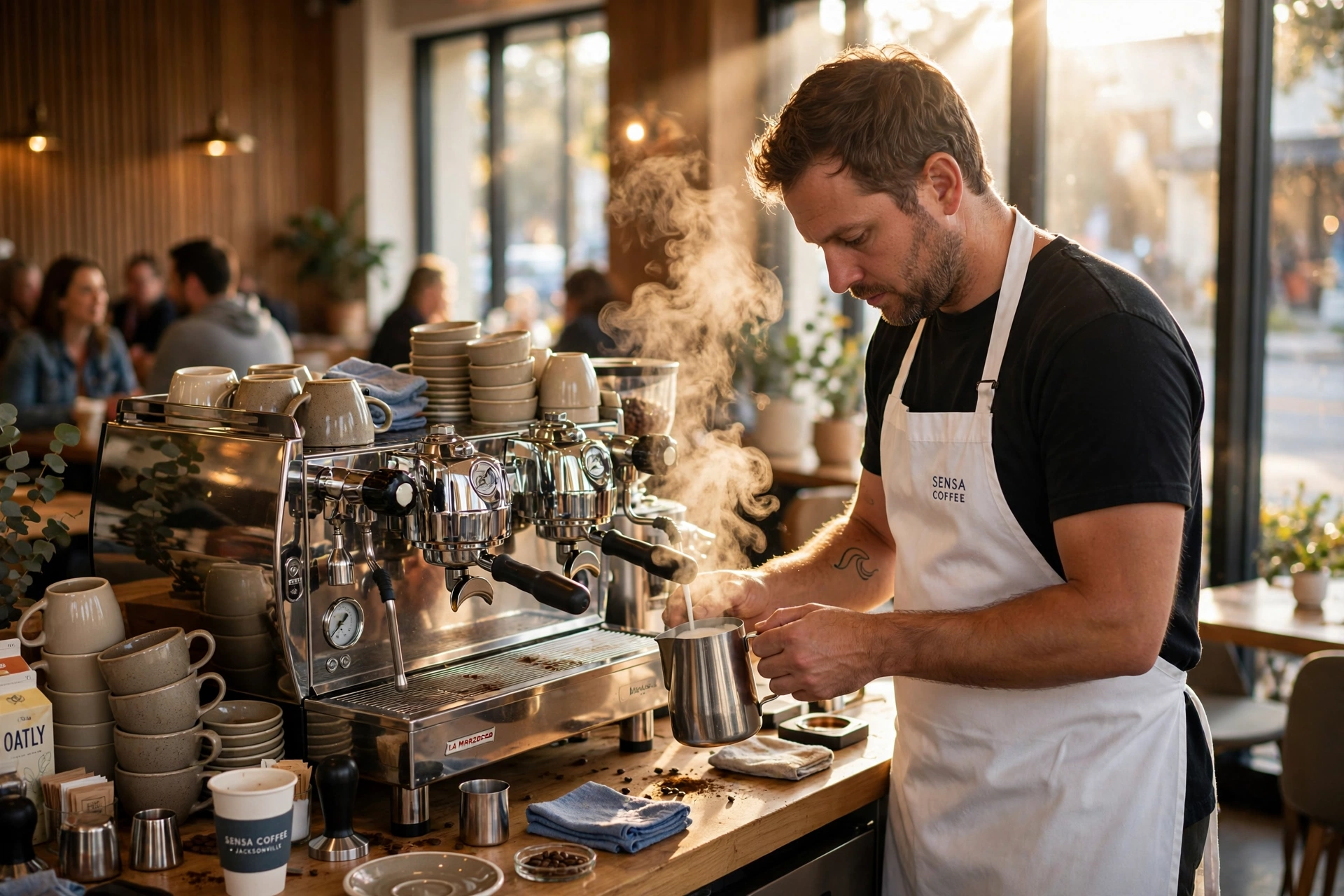
- Capacity Analysis: Calculate your peak hour volume. If you expect 50 drinks per hour, a single-group machine will create a bottleneck. You'll need at least a two-group machine to allow one barista to steam milk while another pulls shots.
- Water Infrastructure: Install a high-capacity filtration system. The NSF International provides standards for food equipment safety and sanitation, and following these guidelines for water filtration prevents the mineral buildup that kills boilers.
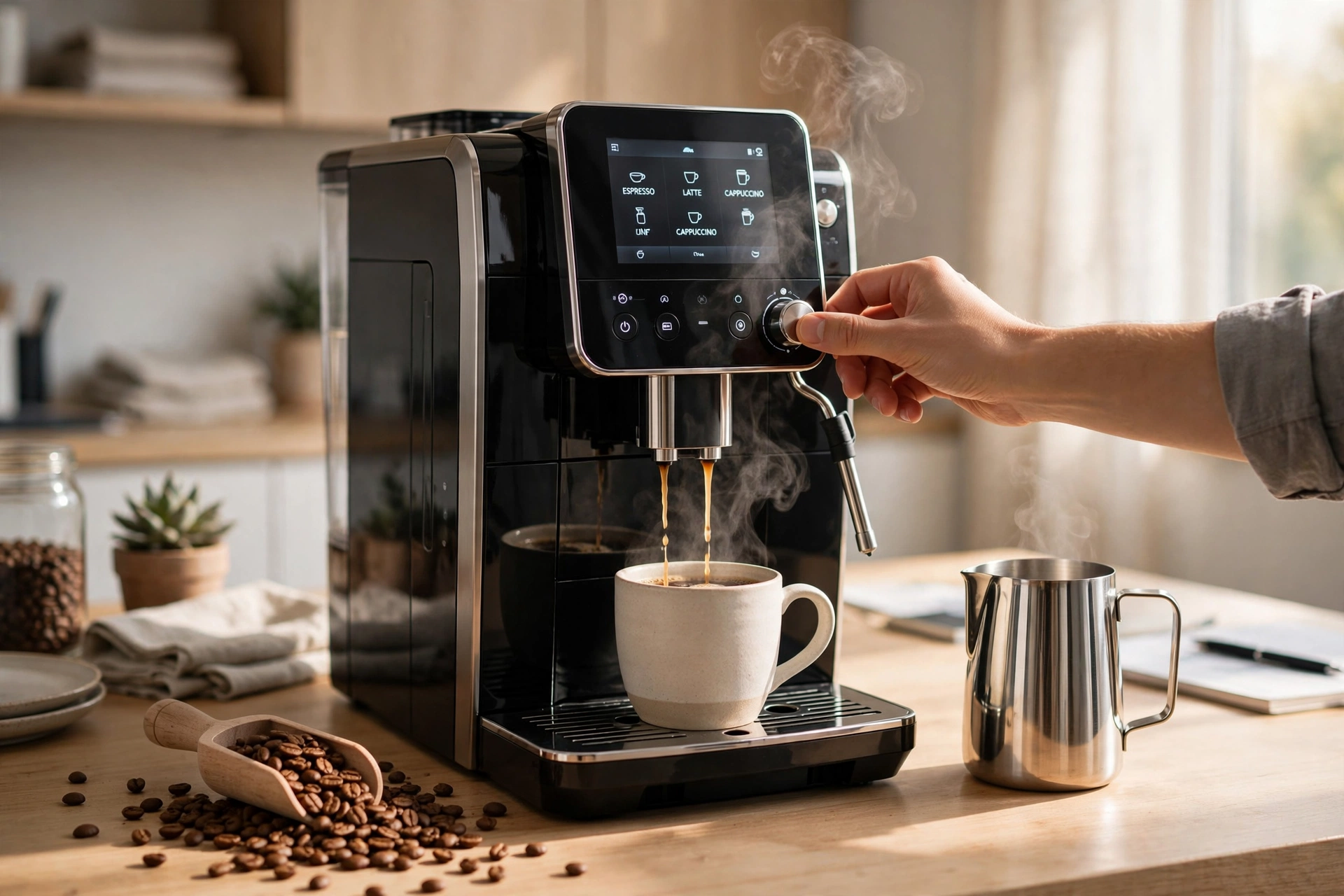
- Equipment Selection: Choose between semi-automatic (where the barista controls the stop) and automatic (where the machine handles the volume). For high-turnover environments, automation is a lifesaver.
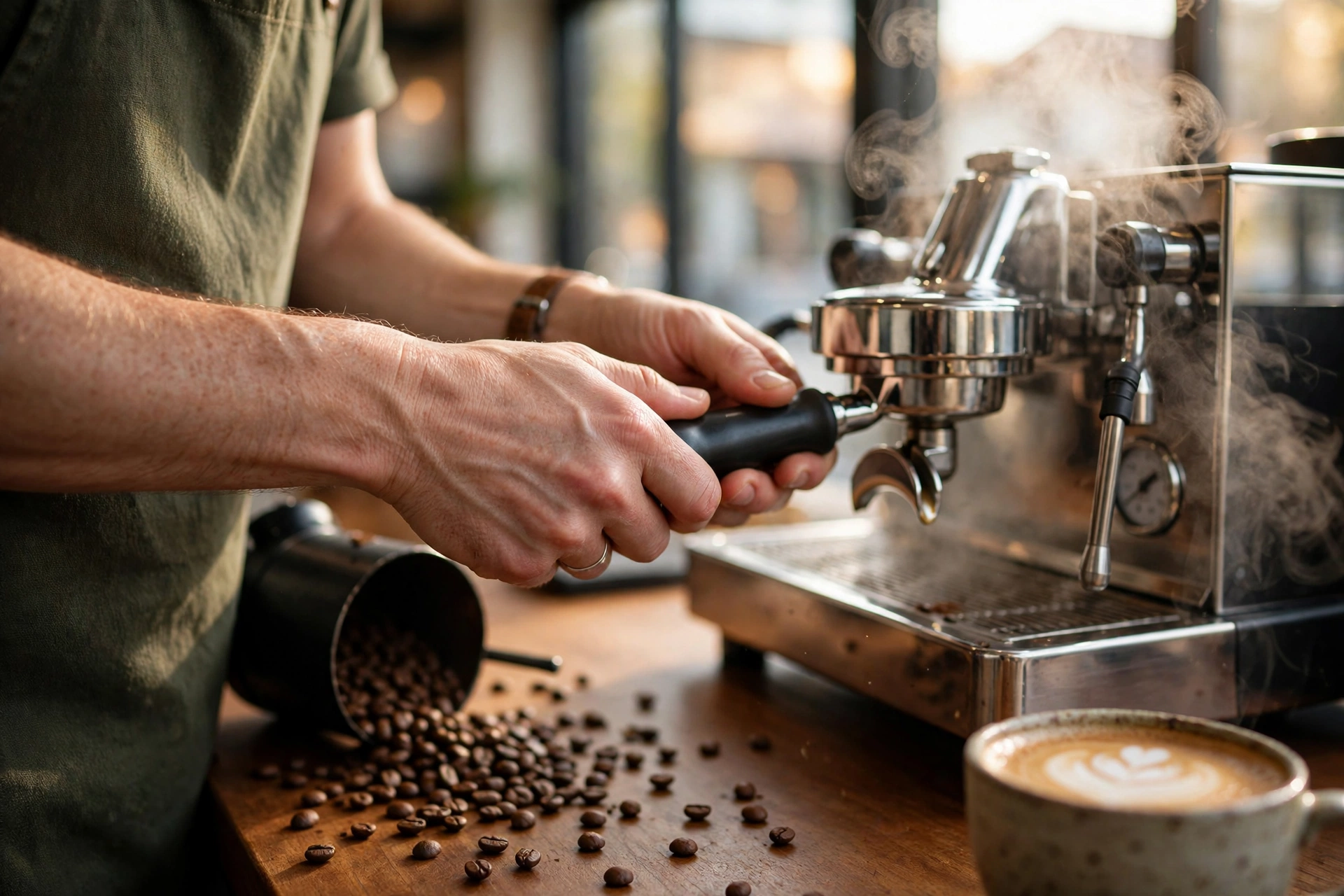
- Staff Training: A $20,000 machine is useless if the operator doesn't know how to "dial in" the coffee bean. This involves adjusting the grind size to ensure the espresso flows at the correct rate—typically 25-30 seconds for a double shot.
- Maintenance Schedule: Establish a daily, weekly, and monthly cleaning cadence. This includes back-flushing the group heads with detergent and soaking portafilters.
At Busy Bean Coffee, we simplify this entire process through our managed membership. Instead of navigating the complexity of installation and maintenance alone, our clients get an all-inclusive solution that covers everything from the premium SENSA equipment to the professional installation and ongoing maintenance. This removes the capital expense and the technical headache, allowing business owners to focus on their guests rather than their boiler pressure.
💡
Key Takeaway
The success of a commercial coffee program depends less on the price of the machine and more on the synergy between water quality, technician support, and barista training.

Comparing Espresso Machine Types: Which is Right for You?
Not all commercial espresso machines are created equal. Depending on whether you are running a boutique hotel, a corporate office, or a full-scale cafe, your needs will vary. The primary divide is between manual control and automated convenience.
| Feature | Semi-Automatic | Super-Automatic | Managed Service (Busy Bean) |
|---|---|---|---|
| Control | Full manual control | One-touch buttons | Professionally managed |
| Skill Level | High (Trained Barista) | Low (Any Employee) | Zero (We handle the tech) |
| Consistency | Variable (Depends on Skill) | High (Programmed) | Maximum (Regular Tuning) |
| Maintenance | User-responsible | User-responsible | Fully Included |
| Best For | Specialty Coffee Shops | High-Traffic Offices | Hotels & Foodservice |
If you're prioritizing the "art" of coffee and have the budget for a dedicated staff, semi-automatics allow for the level of precision required for world-class specialty coffee. However, for most foodservice businesses, the super-automatic or a managed service is the logical choice.
For those in specific urban hubs, the choice often comes down to the level of "white glove" support available. For instance, those seeking White Glove Coffee Service in Los Angeles CA - Complete Guide | Busy Bean Coffee typically prefer a model where the equipment is maintained proactively, ensuring they never have to troubleshoot a leaking valve during a morning rush.
Common Misconceptions About Commercial Equipment
Most guides get this wrong: they tell you that more groups equal more coffee. That is a simplification. Adding more groups to a machine doesn't necessarily increase your speed if your grinder is the bottleneck. I've seen shops buy four-group machines but use a cheap, slow grinder, resulting in a massive machine that still only produces one drink every two minutes.
Another common myth is that "automatic" means "lower quality." While this was true ten years ago, modern volumetric technology has closed the gap. In a fast-paced environment, a machine that delivers a consistent 36g yield every single time is far superior to a manual machine operated by a tired employee who forgets to start the timer.
Finally, many believe that a commercial machine is a "set it and forget it" appliance. This is the fastest way to void a warranty. Commercial gear requires active engagement. If you aren't back-flushing your machine daily and checking your water filters monthly, you are essentially inviting a system failure. The "set it and forget it" mentality only works when you have a managed partner like Busy Bean Coffee handling the technical upkeep for you.
Frequently Asked Questions
Do I really need a commercial machine for a small office?
Yes, if you have more than 10 employees who drink coffee. A home machine is not designed for the thermal load of 20 consecutive lattes. The boiler will lose temperature, and the pump will overheat. Investing in a small-scale commercial unit or exploring Best Office Espresso Machines for Small Teams in 2026 ensures that the machine lasts for years rather than months. The cost per cup is actually lower over time because you avoid the frequent replacement costs associated with consumer gear.
How often should a commercial espresso machine be serviced?
Basic cleaning happens daily, but professional servicing should occur every three to six months. This includes replacing group gaskets (which harden and leak over time), descaling the boiler, and calibrating the pump pressure. Neglecting this leads to "channeling" in the coffee puck, which ruins the taste. In a managed service model, this is handled proactively so you never experience a breakdown.
What is the difference between a single-boiler and a dual-boiler machine?
In a single-boiler machine, the same water source is used for both brewing coffee and steaming milk. This means you have to switch modes and wait for the temperature to adjust. A dual-boiler system has one boiler dedicated to the brew group and another for the steam wand. This allows a barista to pull a shot and steam milk simultaneously, which is essential for any business that doesn't want a queue of customers waiting.
Why is water filtration so emphasized for these machines?
Coffee is 98% water. If your water contains high levels of calcium or magnesium, those minerals precipitate out of the water and form "scale" inside the heating elements. This acts as an insulator, forcing the machine to work harder to heat the water, eventually burning out the element. According to guidelines from the FDA regarding food safety and equipment, maintaining clean, filtered water systems is essential for both machine longevity and beverage safety.
Can I use any coffee bean in a commercial machine?
Technically yes, but practically no. Commercial espresso machines are designed for precision. Using low-grade, oily, or improperly roasted beans can clog the grinders and lead to inconsistent extractions. To get the most out of your hardware, you should use high-quality specialty coffee roasted specifically for espresso. If you are in the Carolinas, looking into a Coffee delivery service in Charlotte NC - Complete Guide | Busy Bean Coffee can ensure you have a fresh supply of beans that are calibrated for your specific equipment.
Final Thoughts on Commercial Espresso Machines
Navigating the world of commercial espresso machines can feel overwhelming, but it boils down to three things: throughput, consistency, and reliability. Whether you are looking to enhance a corporate breakroom or launch a full-scale cafe, the hardware you choose dictates your operational ceiling. You cannot scale a premium beverage program on equipment that wasn't built for the grind.
The most successful businesses move away from the "buy and pray" model of equipment ownership and move toward managed solutions. By removing the capital expenditure and the stress of maintenance, you can focus on what actually matters: the customer experience. If you want to elevate your coffee game without the technical headaches, we invite you to explore the all-inclusive managed coffee membership at Busy Bean Coffee. From professional installation to exclusive product pricing, we ensure your business serves a perfect cup every single time.
For more localized information on scaling your service, check out our Automated Coffee Service in Wilmington NC - Complete Guide or our White Glove Coffee Service in Denver CO - Complete Guide.
Free Coffee Pairing Guide & Specialty Roast Cheat Sheet
Unlock the secrets of perfect brewing ratios, water temperatures, and specialty roast profiles. Download the guide.