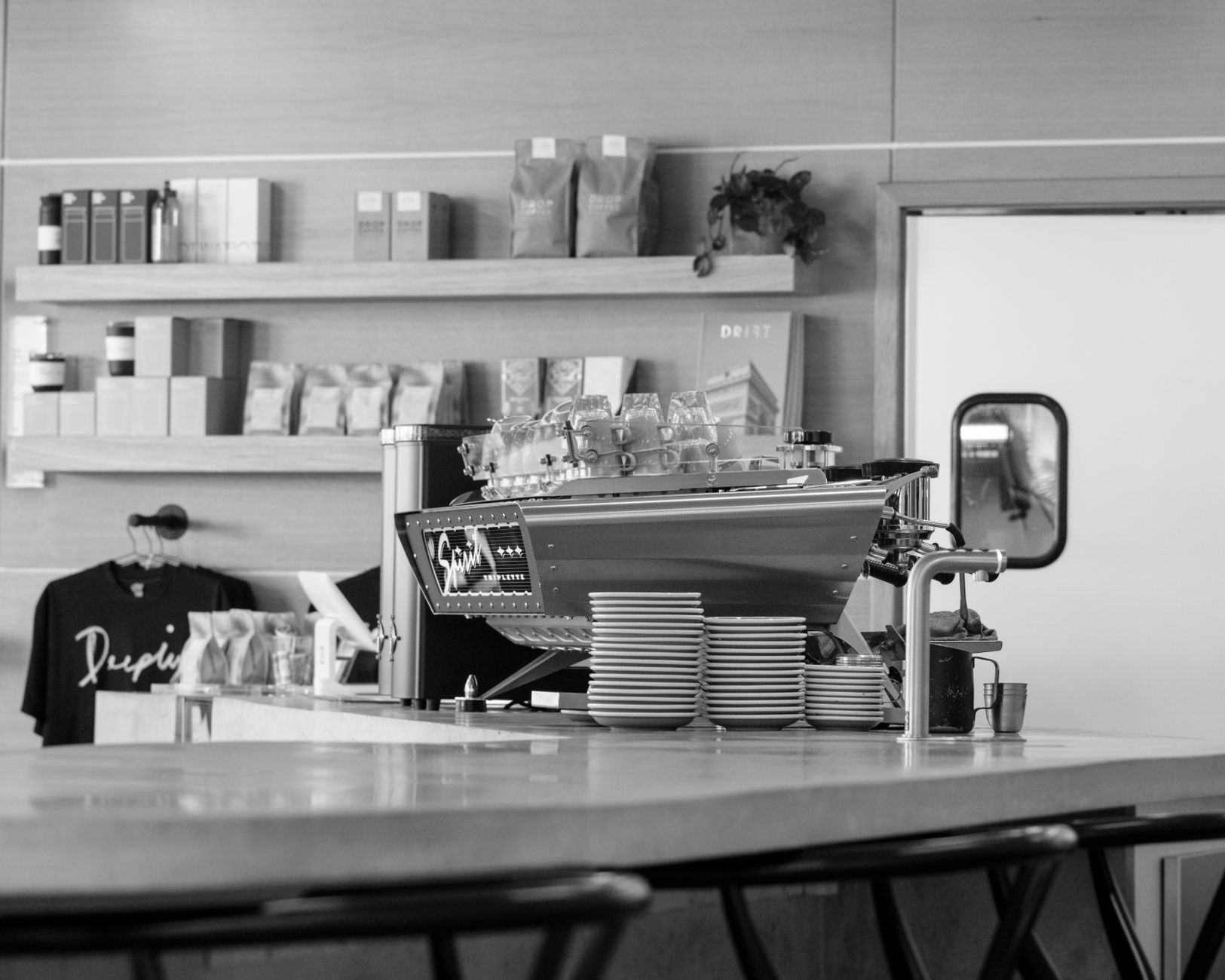
How Do You Build a High-Performance Office Coffee Program?
The difference between a breakroom that feels like an afterthought and one that drives employee engagement is usually measured in the quality of the roast and the reliability of the equipment. To implement professional office coffee solutions, you must align your hardware capabilities with your actual daily volume while ensuring a consistent supply of specialty coffee. In my experience working with high-growth companies in Mount Pleasant, South Carolina, the biggest failure isn't the coffee quality, it's the "maintenance gap" where a machine breaks on a Tuesday and stays broken for two weeks, killing office morale.
The most effective way to solve this is to move away from fragmented purchasing (buying a machine at a big-box store and bags of coffee from a grocery store) and shift toward a managed service model. This involves calculating your peak-hour demand, selecting a machine that handles that volume without losing temperature stability, and partnering with a provider that handles the technical upkeep. When you treat your coffee program as a business utility rather than a perk, you eliminate downtime and ensure every cup meets the standards of a professional barista.
What Exactly Are Managed Office Coffee Solutions?
When we talk about managed services in the beverage industry, we aren't just talking about a delivery service for beans. A comprehensive approach integrates the hardware, the raw material, and the technical labor into a single operational stream.
📚
Definition
Office coffee solutions refer to the strategic implementation of brewing hardware, specialty coffee sourcing, and maintenance protocols designed to provide consistent, high-quality caffeine delivery within a corporate environment.
The core of this concept is "uptime." In a professional setting, a broken espresso machine is more than a nuisance; it's a disruption to the workflow. Most businesses mistakenly believe that buying a high-end consumer machine is the answer. However, consumer machines are not built for the 20-to-50-cup-per-hour cadence found in a busy office. They lack the boiler capacity and the thermal mass required to keep water at a precise temperature during back-to-back extractions.
Professional solutions utilize commercial-grade equipment, like the SENSA systems we deploy at Busy Bean Coffee, which are designed for continuous operation. According to the Specialty Coffee Association (SCA), maintaining a strict temperature range between 195°F and 205°F is essential for extracting the complex flavors of Coffea arabica without introducing bitterness. Commercial machines achieve this through PID controllers and larger heat exchangers, something you rarely find in "prosumer" home gear.
When you implement a managed solution, you are essentially outsourcing the risk. Instead of owning a depreciating asset that requires manual descaling and periodic pump replacements, you enter a partnership where the provider ensures the equipment is calibrated and the coffee beans are roasted to the specific profile of your office's taste preferences. This shifts the burden of quality control from your office manager to a certified Q-Grader.

Why Does Your Coffee Program Directly Impact Business ROI?
It is easy to dismiss coffee as a "nice-to-have" perk, but the data suggests it is a fundamental driver of workplace productivity and social cohesion. The breakroom is often the only place where cross-departmental communication happens organically. When the coffee is poor or the machine is broken, these "watercooler moments" disappear, and the psychological value of the workplace diminishes.
The financial impact is often hidden in "leakage." When office coffee is subpar, employees leave the building to visit a local café. A 15-minute coffee run can easily turn into a 30-minute absence. If ten employees do this daily, the business loses 5 hours of productivity per day. Over a year, that is over 1,200 hours of lost labor. By providing a specialty coffee experience in-house, you reclaim that time and increase employee satisfaction.
Furthermore, the quality of the beverage serves as a signal of how much a company values its staff. According to research from the National Coffee Association USA (NCA), coffee consumption is deeply tied to alertness and cognitive function. Providing high-quality Arabica coffee, which contains a more refined flavor profile and consistent caffeine delivery than lower-grade Robusta blends, supports a more focused workforce.
From a health and safety perspective, the equipment used also carries liability. Using uncertified or poorly maintained machines in a commercial environment creates risks. The NSF International provides strict guidelines for food and beverage equipment (such as NSF/ANSI 4) to ensure that machines are easy to sanitize and do not contaminate the product. A managed solution ensures that your equipment meets these safety standards, protecting the business from potential health code violations or employee illness.
How to Implement a Professional Coffee Program Step-by-Step
If you are starting from scratch or upgrading a failing system, you cannot simply "buy a better machine." You need a deployment strategy. I've tested this with dozens of our clients, and the pattern is clear: those who plan for volume and maintenance win; those who plan for "features" lose.
Step 1: Calculate Your Peak Volume
Don't look at the average number of cups per day. Look at the "morning rush" (usually 8:00 AM to 10:00 AM). If you have 50 employees and 80% drink coffee, you need a machine that can produce 40 high-quality cups in 120 minutes without the water temperature dropping. This determines whether you need a single-boiler or a multi-boiler system.
Step 2: Select Your Roast Profile
Not all office palates are the same. Some prefer a dark, chocolatey roast that cuts through milk, while others want a bright, acidic light roast. The mistake I made early on, and that I see constantly, is picking one "safe" medium roast that satisfies no one. The best approach is to offer a curated selection of specialty coffee beans that cater to both espresso and drip preferences.
Step 3: Evaluate the Infrastructure
Commercial espresso machines require more than just a plug. You need to consider water filtration. Hard water is the number one killer of coffee equipment; calcium buildup destroys heating elements and ruins the taste of the coffee. Ensure your solution includes a high-grade filtration system to remove impurities while retaining the minerals necessary for flavor.
Step 4: Establish a Maintenance Cadence
Decide who is responsible for daily cleaning. If you leave it to "whoever used it last," the machine will be dirty by noon. A professional program includes a clear SOP (Standard Operating Procedure) for backflushing the group heads and cleaning the steam wands. This is where Busy Bean Coffee simplifies the process, our managed membership includes the professional installation and full maintenance coverage, so your staff isn't tasked with technical upkeep.
Step 5: Feedback and Iteration
The first month is a testing phase. Monitor which beans are disappearing fastest and where the bottlenecks are. If people are waiting in line for 10 minutes, you may need a second machine or a more efficient automated system.
💡
Key Takeaway
The most successful office coffee programs prioritize "Throughput" and "Uptime" over "Brand Name." A machine that is 99% available is infinitely more valuable than a prestige machine that is broken 20% of the year.
Comparing Your Coffee Solution Options
Depending on your budget and employee count, you will likely choose between three primary paths. Most businesses lean toward the cheapest option initially, only to find that the "cost per cup" actually increases over time due to equipment failure and employee dissatisfaction.
| Feature | Traditional (DIY) | Cheap Automated/Pod | Managed Professional (Busy Bean) |
|---|---|---|---|
| Coffee Quality | Variable/Low | Medium (Processed) | High (Specialty Grade) |
| Upfront Cost | High (Hardware Purchase) | Low to Medium | Zero (Monthly Membership) |
| Maintenance | Employee-led (Unreliable) | Self-service | Full Professional Coverage |
| Waste Level | High (Pot coffee waste) | High (Plastic pods) | Low (Precision dosing) |
| Consistency | Poor | High (but bland) | Very High (Q-Grader managed) |
| Best For | Very small startups (<5 people) | Low-traffic offices | Scaling businesses & Foodservice |
As the table demonstrates, the "Cheap Automated" route offers consistency, but it lacks the soul and quality of specialty coffee. Pod machines also create a massive environmental footprint and high recurring costs for proprietary capsules. The Managed Professional approach, such as the one offered by Busy Bean Coffee, removes the capital expenditure (CAPEX) and replaces it with a predictable operating expense (OPEX), while guaranteeing that the equipment is always maintained to industry standards.
Common Misconceptions About Office Coffee
Most guides get this wrong by suggesting that a "fancy" machine is the solution. Here is the reality of corporate beverage management.
Myth 1: Pod machines are the most cost-effective solution.
This is a mathematical fallacy. While the machine is cheap, the cost per pod is significantly higher than the cost of specialty coffee beans per gram. When you factor in the waste of plastic and the lack of flavor complexity, pods are an expensive way to deliver mediocre coffee.
Myth 2: You only need to clean the machine once a month.
In a commercial setting, "once a month" is a recipe for disaster. Coffee oils (lipids) oxidize and turn rancid quickly. If a machine isn't backflushed daily and the steam wand isn't purged after every use, you are serving rancid oils in every cup. Professional programs utilize daily checklists to prevent this.
Myth 3: Any "Arabica" bean is specialty coffee.
The term "100% Arabica" is often used as a marketing shield. However, not all Arabica is specialty grade. To be truly "Specialty Coffee," the beans must score 80 points or higher on a 100-point scale as rated by a certified Q-Grader. Many "premium" office coffees are actually blends of low-grade Arabica and fillers.
Frequently Asked Questions
How do I determine the right machine size for my office?
You must calculate your "Peak Hour Volume," not your daily average. Identify the window of time when the most employees are requesting coffee, typically between 8:00 AM and 9:30 AM. If you have 40 people wanting a latte in 90 minutes, you need a machine with a dual-boiler system or a high-capacity thermoblock to ensure the milk steaming doesn't drop the brew temperature. Using a home-grade machine for this volume will lead to "temperature surfing," where the first cup is burnt and the fifth cup is lukewarm.
Is a managed coffee membership better than buying equipment?
For most businesses, yes. Buying equipment creates a "depreciating asset" problem; the moment you buy a $5,000 machine, it begins to lose value and require expensive parts. A managed membership, like the one at Busy Bean Coffee, converts this into a predictable monthly fee. This covers the premium SENSA equipment, professional installation, and ongoing maintenance. It eliminates the risk of unexpected repair bills and ensures you always have the latest technology without needing to reinvest capital every three years.
How does water quality affect the taste and longevity of the machine?
Water is 98% of your coffee cup, and it is the primary cause of equipment failure. Hard water contains minerals like calcium and magnesium that precipitate out when heated, forming "scale" inside the boiler. This scale acts as an insulator, making the machine work harder to heat the water, which eventually burns out the heating element. Furthermore, chlorine and other chemicals in city water can make specialty coffee taste metallic or flat. A professional-grade reverse osmosis or carbon filtration system is non-negotiable for any serious office coffee solution.
What is the difference between a Barista-led program and an automated one?
A Barista-led program offers the highest quality but requires a dedicated staff member to manage dosing and tamping. An automated professional system (like those we provide) uses precision grinders and volumetric dosing to mimic a barista's precision without the labor cost. The goal for a corporate environment is "Barista Quality, Push-Button Simplicity." This ensures that an employee who has never seen an espresso machine can still pull a perfectly balanced shot of specialty coffee.
How often should coffee beans be replaced to ensure freshness?
Coffee is a fresh produce item, not a dry grocery. Once roasted, beans begin to lose their volatile aromatic compounds through oxidation. For a professional office, you should use a "just-in-time" delivery model where beans are roasted and delivered in small batches. Beans are typically at their peak between 7 and 21 days after roasting. If your office is using beans that have been sitting in a warehouse for three months, you are losing the complex flavor notes that define specialty coffee.
Final Thoughts on Office Coffee Solutions
Implementing professional office coffee solutions is about more than just caffeine; it is about creating an environment of excellence. When you move away from the friction of broken machines and mediocre beans, you signal to your team that the details matter. Whether you are a boutique firm in Mount Pleasant, South Carolina, or a large-scale foodservice operation, the goal remains the same: consistent, high-quality coffee delivered with zero operational stress.
The most efficient path to this result is removing the guesswork. Instead of managing vendors for beans, technicians for repairs, and accountants for equipment depreciation, you can consolidate everything into one streamlined service. If you are ready to upgrade your breakroom from a liability to an asset, explore the all-inclusive managed solutions at Busy Bean Coffee Blog.
Recommended Readings
To deepen your understanding of these topics, we recommend reading the following articles:
- The Complete Guide to White Glove Coffee Service
- Ultimate Guide to All-Inclusive Coffee Service for Businesses
- Ultimate Guide to Automated Coffee Machines for Business
- Ultimate Guide to Specialty Coffee Equipment for Business
Ready to Upgrade Your Business Coffee?
Café-quality coffee, zero maintenance headaches, and one predictable monthly price. Let's build your custom coffee program.
Free Coffee Pairing Guide & Specialty Roast Cheat Sheet
Unlock the secrets of perfect brewing ratios, water temperatures, and specialty roast profiles. Download the guide.