What Exactly Are Commercial Espresso Machines?
Most new cafe owners assume that a high-end home machine is enough to get a business off the ground, but they quickly discover the brutal reality of "thermal instability." After installing equipment for dozens of clients, I've seen this pattern repeatedly: a business invests in a prosumer machine, only to have the temperature drop after three consecutive lattes, resulting in sour, under-extracted coffee that drives customers away. This is why professional-grade commercial espresso machines are non-negotiable for any foodservice operation; they are engineered for high-volume consistency, rapid recovery times, and industrial durability that home units simply cannot match.
📚
Definition
Commercial espresso machines are heavy-duty beverage systems designed to maintain precise temperature and pressure stability while producing a high volume of shots continuously throughout a business day. Unlike home machines, they often feature larger boilers, professional group heads, and dedicated steam paths to ensure that the thousandth espresso of the day tastes exactly like the first.
How Do Commercial Espresso Machines Differ From Home Units?
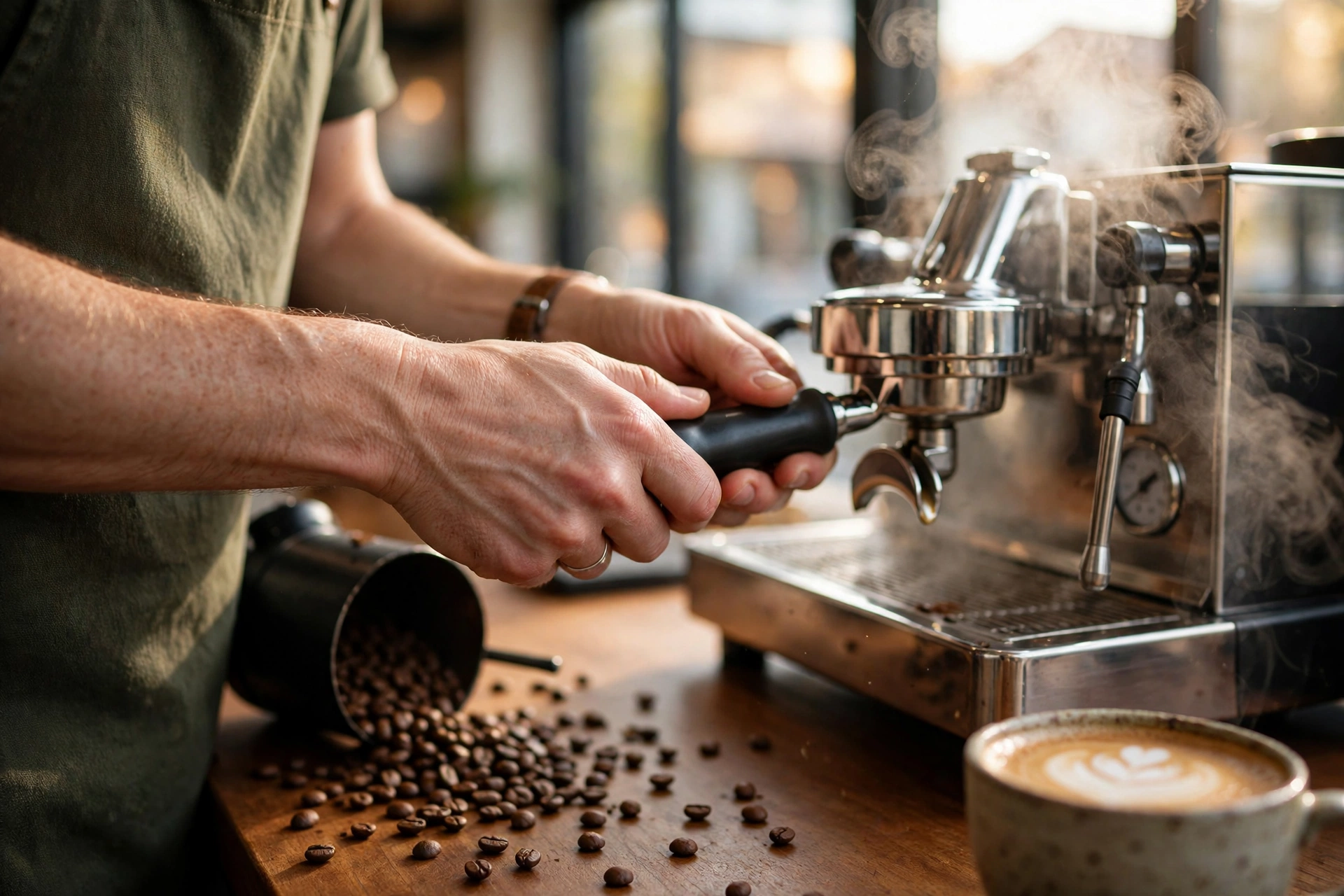
The fundamental difference lies in the "duty cycle." A home machine is designed to make four or five drinks and then rest. A commercial unit is designed to run for ten hours straight without a dip in performance. The core of this capability is the boiler system and the group head. In a commercial setting, the group head—the part where the water meets the coffee—is often heated independently or linked to a massive heat exchanger to prevent the "temperature surf" common in cheaper models.
When we analyze the technical specs, we look at "thermal mass." A larger boiler doesn't just hold more water; it acts as a heat sink, ensuring that the water hitting the coffee bean puck is exactly 200°F (93°C) every single time. This precision is what allows a barista to dial in a specific roast of specialty coffee and maintain that profile for an entire shift.
According to the Specialty Coffee Association (SCA), the standards for espresso preparation require strict adherence to temperature and pressure variables to achieve a "specialty" score. If your machine fluctuates by even five degrees, you are no longer serving specialty coffee; you are serving a gamble. In my experience working with hotels and cafes, the most common failure point isn't the coffee quality itself, but the equipment's inability to handle the "rush." When a line of ten people forms, a home machine's steam wand loses pressure, leaving you with flat, bubbly milk instead of the micro-foam required for latte art.
Why Does Your Business Need Industrial-Grade Equipment?
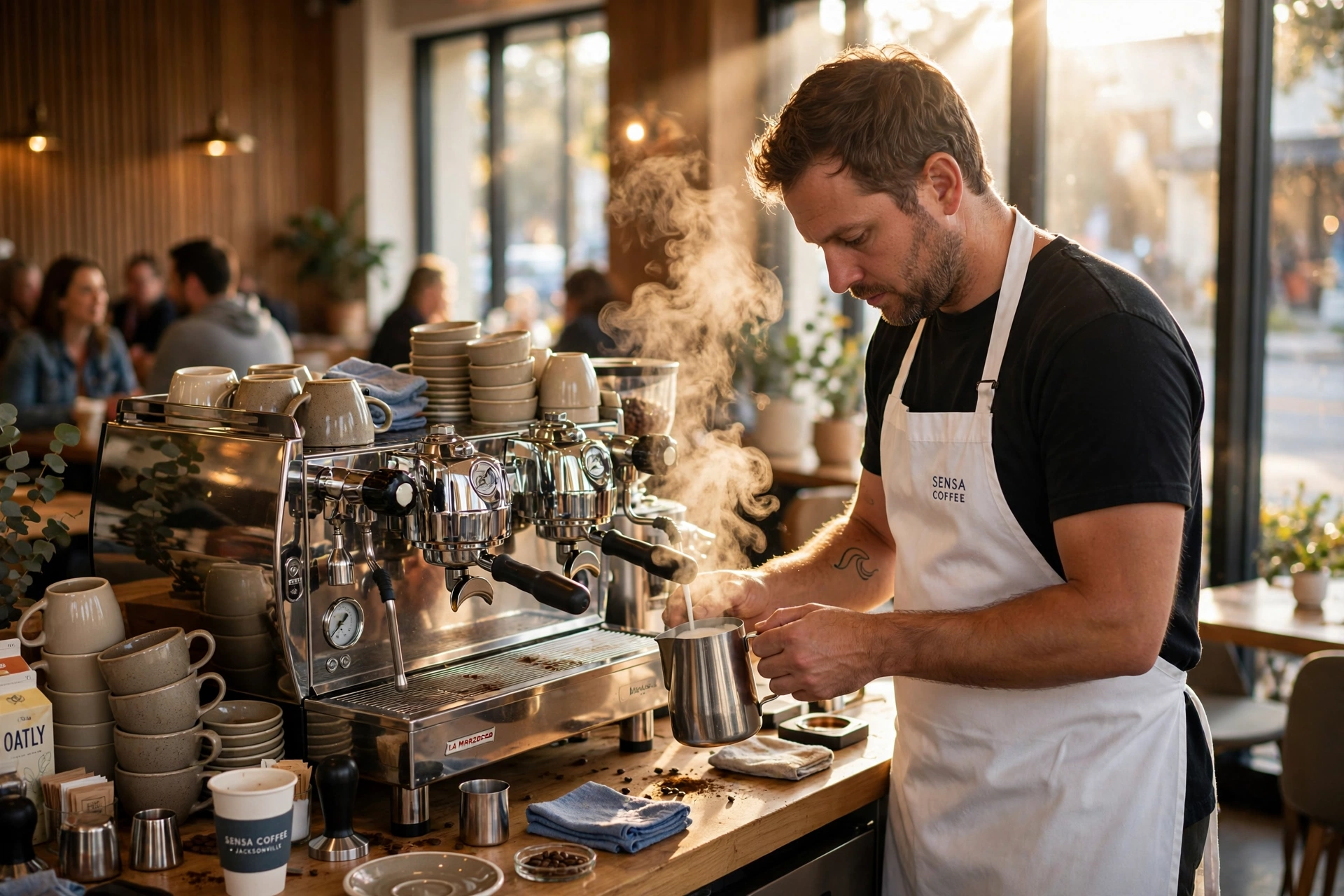
The business implication of choosing a commercial unit over a cheaper alternative comes down to throughput and waste. If a machine takes two minutes to recover its steam pressure between drinks, your maximum output is capped, and your labor costs per cup skyrocket. Industrial machines allow for simultaneous brewing and steaming, meaning a barista can pull a double shot while steaming milk for another drink, effectively doubling the speed of service.
Furthermore, the cost of downtime is catastrophic. A residential machine used in a commercial environment will likely fail within six months due to pump burnout or scale buildup. Commercial machines are built with modular components—meaning if a gasket blows or a heating element fails, it can be replaced in minutes without scrapping the entire unit.
From a regulatory and safety standpoint, the stakes are even higher. In the United States, commercial food equipment must meet specific sanitary and safety standards. According to NSF International, equipment used in commercial kitchens must adhere to strict materials and design standards (such as NSF/ANSI 4) to prevent bacterial growth and ensure operator safety. Using a non-certified home machine in a commercial kitchen can lead to failed health inspections or insurance liabilities.
Data from the National Coffee Association USA (NCA) indicates that the demand for high-quality, specialty-grade coffee continues to grow among US consumers. As customers become more educated about Coffea arabica and tasting notes, their tolerance for "average" coffee vanishes. Investing in professional commercial espresso machines isn't just about making coffee; it's about protecting your brand's reputation for quality.
How to Choose and Implement Your First Commercial Setup
Selecting the right machine requires a cold, hard look at your projected volume. The mistake I made early on—and that I see constantly with new entrepreneurs—is overbuying. You don't need a four-group monster if you're only serving 50 lattes a day. Conversely, buying a single-group machine for a busy breakfast spot is a recipe for operational collapse.
Here is the step-by-step process for implementation:
- Calculate Your Peak Volume: Determine how many drinks you expect to serve during your busiest hour. If you're hitting 30+ drinks per hour, a two-group machine is the bare minimum.
- Evaluate Your Water Quality: This is the most ignored step. Commercial machines are sensitive to mineral buildup. You must install a professional filtration and softening system. Without it, you'll be calling for a descaling service every three months.
- Plan Your Electrical and Plumbing: Most commercial espresso machines require dedicated 220V circuits and a direct water line. Do not attempt to use a standard 110V outlet with an adapter; you will trip breakers and potentially damage the heating elements.
- Standardize the Workflow: Place your grinder, knock-box, and machine in a "cockpit" configuration to minimize the barista's movement. Every inch saved is a second shaved off the ticket time.
At Busy Bean Coffee, we simplify this entire process through our managed solutions. Instead of worrying about the massive upfront capital expense of a high-end machine and the inevitable stress of maintenance, we provide the equipment, installation, and ongoing support for a predictable monthly fee. This removes the guesswork for beginners and ensures you have a machine that actually matches your volume.
💡
Key Takeaway
Equipment choice should be driven by "peak hour" volume, not average daily volume. If your machine can't handle your busiest 60 minutes of the day, it is the wrong machine.

Comparing Commercial Espresso Machine Options
When browsing the market, you'll encounter three main architectures. Understanding these is the difference between a machine that works and a machine that makes you money.
| Feature | Semi-Automatic | Automatic (Volumetric) | Super-Automatic |
|---|---|---|---|
| Control | Full manual control of extraction | Pre-set volumes for consistency | One-touch operation |
| Skill Required | High (Requires trained barista) | Medium (Requires basic training) | Low (Push-button) |
| Consistency | Variable (Depends on human) | High (Machine stops flow) | Very High (Standardized) |
| Best For | Specialty Coffee Shops | High-Volume Cafes / Hotels | Offices / Quick Service |
| Maintenance | Moderate | Moderate | High (More moving parts) |
Semi-Automatic machines are the gold standard for specialty coffee. They allow the barista to judge the shot by eye and stop the flow exactly when the flavor peaks. However, this requires a skilled professional.
Automatic (Volumetric) machines use flow meters to stop the water at a precise volume. This is essential for consistency across multiple staff members. If you have a rotating team of employees, this is the safest bet to ensure the customer gets the same drink every time.
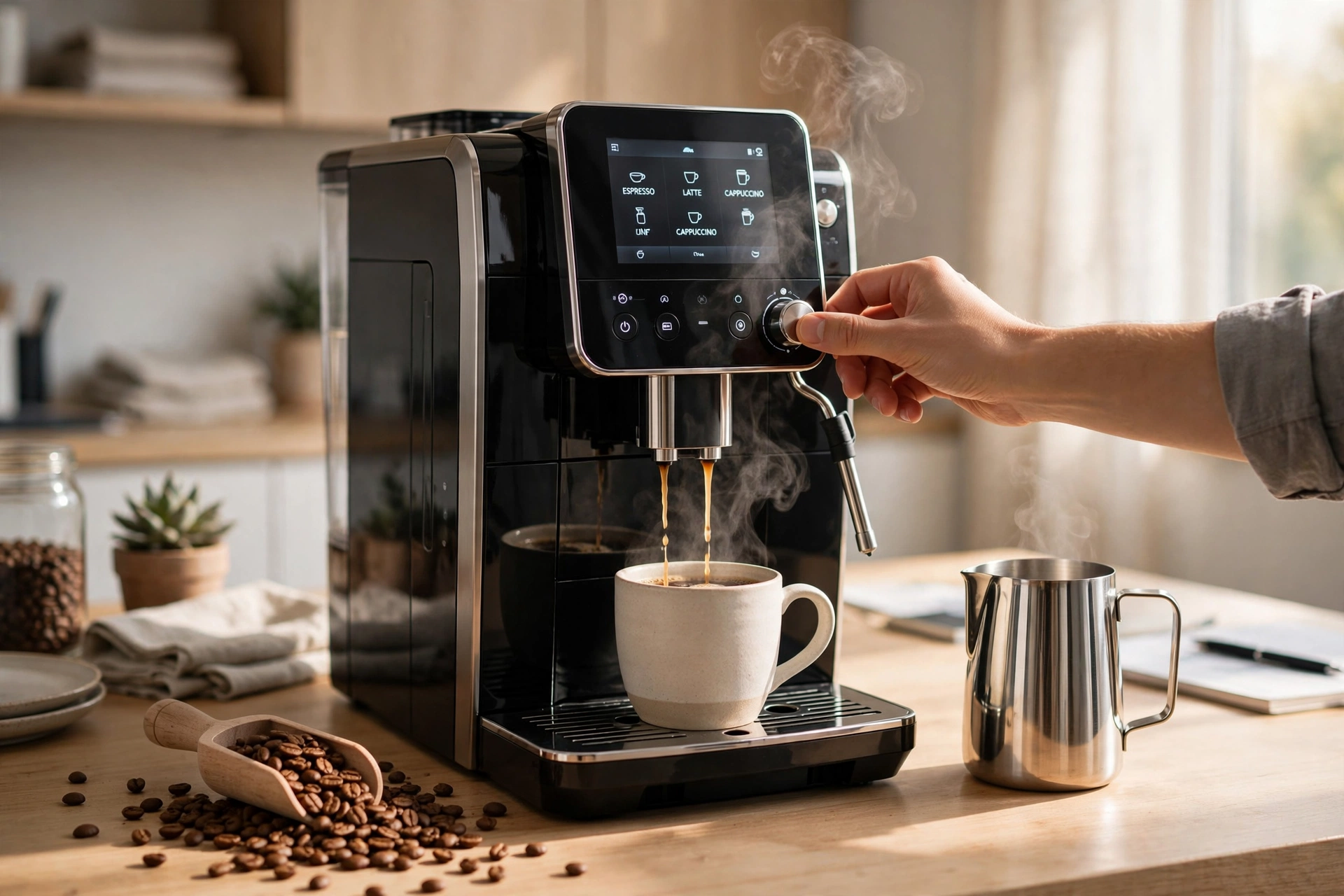
Super-Automatic machines handle everything from grinding the coffee bean to frothing the milk. While convenient, they often lack the nuance of a hand-pulled shot and are significantly more expensive to maintain due to the complex internal robotics.
Common Questions and Misconceptions
Most "beginner guides" treat all professional machines as a monolith, but that's a mistake. Here are the most common myths I encounter when consulting with new business owners.
Myth 1: "A more expensive machine automatically means better coffee."
This is simply false. A $20,000 machine will produce terrible coffee if you're using stale beans or a poor-quality grinder. In the espresso world, the grinder is actually more important than the machine. If your grind size is inconsistent, the most expensive boiler in the world can't save the shot.
Myth 2: "I can just use a high-end home machine to start and upgrade later."
I've seen this "lean" strategy fail repeatedly. Not only does the home machine wear out, but you also build a workflow based on a slow machine. When you finally upgrade to professional commercial espresso machines, your staff has to relearn every movement, and your customers may actually notice a shift in taste because the thermal stability has suddenly improved.
Myth 3: "Automatic machines are 'cheating' and don't taste as good."
This is a purist's argument that doesn't hold up in a business context. A volumetric machine doesn't change the chemistry of the coffee; it simply removes the human error of timing the shot with a stopwatch. In a high-pressure environment, consistency is the highest form of quality.
Frequently Asked Questions
Do commercial espresso machines require special plumbing?
Yes, almost all professional units require a direct connection to a water line and a drainage system for the drip tray. You cannot realistically run a high-volume business on a manual water tank because the labor cost of constantly refilling it would eat your margins. More importantly, direct plumbing allows for the installation of an inline water filtration system. Because commercial machines use high-pressure pumps, any mineral buildup from "hard water" can cause catastrophic boiler failure. A professional setup involves a dedicated water line, a high-capacity filter, and a pressure-reducing valve to protect the machine's internal seals.
How often should a commercial machine be serviced?
Preventative maintenance should happen on a daily, weekly, and quarterly cycle. Daily, the barista must perform a "backflush" with detergent to remove coffee oils from the group head. Weekly, the steam wands should be deep-cleaned to prevent milk stone buildup. Quarterly, a professional technician should inspect the gaskets, shower screens, and pump pressure. In my experience, businesses that skip the quarterly check-up end up facing "emergency" repairs that cost three times as much and result in days of lost revenue. Regular maintenance ensures the machine stays within the tight temperature tolerances required for specialty coffee.
What is the difference between a single-boiler and a dual-boiler machine?
A single-boiler machine uses one tank for both brewing coffee and steaming milk. This means you have to wait for the boiler to change temperature between the two tasks, which is a death sentence for efficiency in a cafe. A dual-boiler system has two separate tanks: one dedicated to the brew head and one for the steam wand. This allows the barista to pull shots and froth milk simultaneously without any loss in pressure or temperature. For any business intending to sell lattes or cappuccinos, a dual-boiler or a high-efficiency heat exchanger is the only viable option.
How long do commercial espresso machines typically last?
If properly maintained and paired with a high-quality water filtration system, a professional machine can easily last 10 to 15 years. However, the "internal" components like rubber gaskets and shower screens are consumables and must be replaced every few months. The primary cause of premature machine death is water scale. When minerals build up inside the boiler, they create "hot spots" that can cause the metal to warp or the heating element to burn out. This is why we emphasize water quality over almost everything else during the installation process at Busy Bean Coffee.
Can I use any coffee beans in a commercial machine?
While you can technically use any bean, commercial espresso machines are designed to excel with high-quality coffee roasting profiles. Because these machines apply immense pressure (typically 9 bars), they will amplify any flaws in the bean. If you use low-grade, over-roasted beans, the machine will produce a bitter, burnt taste. For the best results, I recommend using fresh specialty coffee beans roasted within the last two to four weeks. Using a consistent roast profile allows you to "lock in" your grind settings, meaning you won't have to spend an hour every morning readjusting your grinder.
Final Thoughts on Commercial Espresso Machines
Stepping into the world of professional coffee can feel overwhelming, but the equipment is the foundation of your entire operation. Whether you are launching a boutique cafe in Mount Pleasant, SC, or adding a coffee station to a hotel lobby, the choice of commercial espresso machines will dictate your speed of service, your consistency, and ultimately, your profit margins.
Don't let the technical jargon of boilers and group heads intimidate you. Focus on your peak volume, prioritize your water quality, and never compromise on the durability of your hardware. The goal is to create a seamless experience where the technology disappears, and the customer is left only with the taste of a perfect espresso.
If you're ready to upgrade your beverage program without the stress of massive upfront costs and maintenance headaches, we can help. At Busy Bean Coffee, we provide all-inclusive managed coffee solutions that give you the best equipment in the industry with full maintenance coverage.
Recommended Readings
To deepen your understanding of these topics, we recommend reading the following articles:
- The Complete Guide to White Glove Coffee Service
- Ultimate Guide to All-Inclusive Coffee Service for Businesses
- Ultimate Guide to Automated Coffee Machines for Business
- Ultimate Guide to Specialty Coffee Equipment for Business
Free Coffee Pairing Guide & Specialty Roast Cheat Sheet
Unlock the secrets of perfect brewing ratios, water temperatures, and specialty roast profiles. Download the guide.