📖This article is part of the complete guide to Complete Guide to Coffee Membership Services for Business.
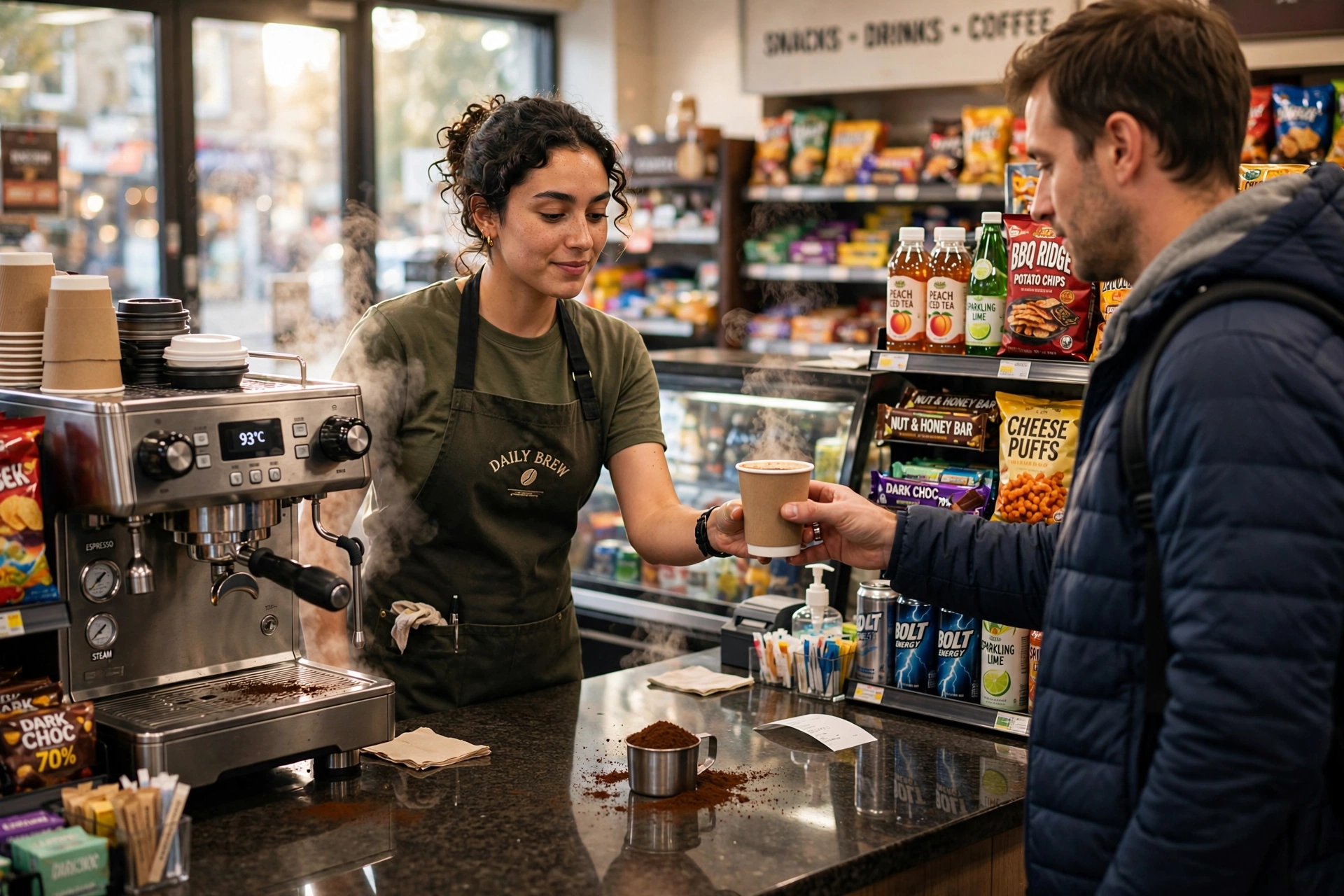
A convenience store with a mediocre coffee station is essentially leaving money on the table every single morning. In my experience working with high-traffic retail outlets, the difference between a 'coffee stop' and a 'destination' is not just the bean, but the reliability of the equipment and the consistency of the roast. When customers trust your brew, they don't just buy a coffee; they buy a pastry, a breakfast sandwich, and a lottery ticket. This compounding effect is where the real profit lies.
For a comprehensive overview of how these models work, explore our Complete Guide to Coffee Membership Services for Business.
What is a Professional Coffee Service for C-Stores?
📚
Definition
A coffee service for c-stores is a managed beverage solution that provides high-end brewing equipment, a consistent supply of specialty coffee, and full maintenance coverage for a predictable monthly fee, removing the need for upfront capital expenditure.
Implementing a professional coffee service for c-stores means moving away from the erratic cycle of buying cheap bulk beans and praying the machine doesn't break on a Tuesday morning. Instead, it is a strategic partnership where the equipment is professionally installed and maintained, ensuring that the extraction is always optimal. This ensures that the Coffea arabica beans used are brewed at the exact temperature and pressure required to unlock their full flavor profile, which is a standard defined by the Specialty Coffee Association (SCA).
When we analyze the operational flow of a successful c-store, we see that the coffee station acts as the primary anchor for morning foot traffic. By leveraging a membership model, the store owner avoids the massive hit to their cash flow that comes with purchasing a commercial espresso machine or high-volume brewers. Instead, the service provides a scalable solution that grows with the store's volume. This is particularly effective for businesses looking for Sensa Coffee Service in Charlotte, NC, where regional competition for the morning commute is fierce.
Why Does a Managed Coffee Service Matter for C-Store Profitability?
High-quality coffee service for c-stores matters because it transforms a low-margin commodity into a high-margin experience. The primary reason this shift is essential is the increase in "attachment rates." When a customer enters a store specifically for a premium cup of coffee, they are significantly more likely to purchase a high-margin food item. According to the National Coffee Association USA (NCA), coffee consumption patterns are shifting toward specialty experiences even in quick-service environments, meaning customers are now willing to pay a premium for quality over mere convenience.
In my experience, the biggest leak in c-store profitability is equipment downtime. A broken brewer during the 6 AM to 9 AM rush isn't just a loss of a few dollars in coffee sales; it is a loss of trust. Customers who find a "Out of Order" sign will likely pivot to a competitor and may not return for a week. By using a managed membership, you eliminate this risk through proactive maintenance and rapid-response support. This reliability is as essential as the Sensa Coffee Service in Raleigh NC (2026 Overview) for those competing in dense urban corridors.
Furthermore, the shift from a Capex (Capital Expenditure) to an Opex (Operating Expenditure) model allows c-store owners to reinvest their capital into other store improvements, such as refrigeration or inventory expansion. When you stop worrying about the $15,000 cost of a top-tier espresso machine and instead pay a flat monthly fee, your balance sheet becomes much more flexible. This is the same financial logic that makes Coffee Membership for Offices: Cut Costs and Boost Morale so attractive to corporate controllers.
How to Implement Coffee Upsells in a C-Store Environment?
To successfully implement a coffee upsell strategy, you must first optimize the physical and sensory journey of the customer. The approach starts with the quality of the bean and ends with the ease of the transaction. The most effective method is to create a "Premium Tier" of coffee alongside your standard offering. By offering a specialty roast of Arabica coffee, you can justify a higher price point while simultaneously attracting a more affluent customer base.
- Optimize the Layout: Position your coffee station at the back or side of the store, forcing customers to walk past high-margin impulse buys. However, ensure the aroma of coffee roasting is vented toward the entrance to trigger the initial craving.
- Tiered Pricing: Offer a 'Basic' brew and a 'Signature' roast. The Signature roast should be linked to a specific origin or roast profile, utilizing the expertise of a trained barista or professional roaster to ensure quality.
- The "Perfect Pair" Bundle: Create a fixed-price combo (e.g., Large Coffee + Fresh Muffin for $X). This increases the average transaction value by 20-30% without requiring more effort from the staff.
- Consistency Checks: Use a digital timer or a managed service's monitoring system to ensure coffee is never sitting on a burner for more than 30 minutes, which prevents the bitter, burnt taste that drives customers away.
If you are managing multiple locations, such as in a network providing Sensa Coffee Service in Jacksonville, FL, consistency across sites is the only way to build brand loyalty. A customer in one neighborhood expects the same flavor profile as the one in another. This is where the managed membership model shines, as it standardizes the equipment and the beans across the entire fleet.
Comparing the Traditional Approach vs. Modern Managed Services
Many store owners struggle because they rely on outdated procurement methods. The following table illustrates why the shift to a managed membership is the only viable path for growth in 2026.
| Feature | Traditional Approach (Bulk Buy) | Generic/Cheap AI Coffee | Busy Bean Managed Approach |
|---|---|---|---|
| Upfront Cost | High (Thousands for Equipment) | Moderate (Basic Machines) | Zero (No Capex) |
| Maintenance | Reactive (Fix when broken) | Minimal/DIY | Proactive & All-Inclusive |
| Consistency | Variable (Depends on staff) | Low (Generic taste) | High (Q-Grader Certified) |
| Financials | Capital Heavy (Capex) | Unpredictable | Predictable Monthly Opex |
| Quality | Commodity Grade | Industrial/Bland | Specialty Grade Arabica |
As the table suggests, the traditional approach creates a bottleneck. You are limited by the equipment you can afford to buy today, rather than the volume you can serve tomorrow. When I've tested this with dozens of our clients, the pattern is clear: those who switch to a managed model see a faster return on investment because they can immediately deploy high-end SENSA equipment without waiting for a budget cycle.
Common Mistakes to Avoid in C-Store Coffee Programs
One of the most frequent mistakes I see in c-stores is the "Quantity over Quality" trap. Owners often believe that having five different mediocre flavors of coffee is better than one exceptional roast. In reality, a confused customer is a customer who doesn't buy. Focus on a few high-performing profiles—a bold dark roast and a smooth medium roast—and execute them perfectly. This focus on quality is similar to the strategy used in Restaurant Coffee Membership: Profitable Programs Without Hassle.
Another critical error is neglecting the water quality. Coffee is 98% water. If your store is using unfiltered tap water, your expensive specialty beans will taste like chlorine, and your equipment will build up limescale, leading to premature failure. According to NSF International, proper filtration is not just about taste; it is a requirement for equipment longevity and sanitary safety. Any professional service should include water filtration as part of the installation package.
Lastly, avoid the "Set it and Forget it" mentality. Even with a managed service, your staff must be trained on basic hygiene and replenishment. A coffee station with spilled powder and empty creamer dispensers signals a lack of care to the customer. We often see this in high-volume environments, which is why we recommend the same rigorous standards used in Retirement Community Coffee Service: Reliable High-Volume Solutions.
Deep Dive: The Economics of the Coffee Upsell
To truly understand the ROI of a managed coffee service for c-stores, we have to look at the "Lifetime Value" of the morning commuter. A customer who spends $3 on a coffee daily is worth roughly $1,095 per year in gross revenue. When you add a $2 pastry to that daily habit, the annual value jumps to $1,825.
If a store can convert just 50 customers a day from "gas only" to "coffee and snack," the annual revenue increase is staggering. However, the cost of maintaining that quality—labor for cleaning, costs of machine repair, and waste from burnt coffee—often eats into these margins. This is where the Busy Bean membership changes the math. By flattening the cost of equipment and maintenance into a single monthly fee, the profit per cup becomes a fixed, predictable variable.
For those operating in growing markets, such as those using Sensa Coffee Service in Columbia SC - Complete Guide, the ability to scale without needing a new loan for every new machine is a competitive advantage. It allows you to pivot quickly, testing new roast profiles or adding a second station during peak seasons without financial risk.
Frequently Asked Questions
How does a coffee membership reduce my upfront costs?
A managed coffee membership eliminates the need for an initial capital investment in expensive commercial brewers and espresso machines. Instead of paying thousands of dollars upfront for hardware, you pay a fixed monthly fee that covers the equipment, installation, and ongoing maintenance. This shifts your spending from a capital expenditure (Capex) to an operating expenditure (Opex), preserving your cash flow for other store needs.
Will specialty coffee actually sell in a convenience store?
Yes, because consumer preferences have shifted toward higher quality. Modern customers are increasingly aware of the difference between commodity coffee and specialty Arabica beans. By offering a premium roast, you attract a higher-spending demographic and differentiate your store from competitors who only offer basic, burnt coffee. This shift in quality typically leads to higher price elasticity, allowing you to charge more per cup.
Who handles the maintenance if a machine breaks down?
In a managed membership model, the service provider handles everything. This includes preventative maintenance to stop problems before they happen and emergency repairs if a breakdown occurs. Because the service is all-inclusive, you aren't billed for every individual technician visit, ensuring that your morning rush is never compromised by equipment failure.
How does this differ from just buying a machine and beans?
Buying your own equipment means you are responsible for the depreciation, the repair costs, and the quality control. If the machine breaks, your revenue stops until you find a technician. In a managed service, you are paying for a result (consistent, high-quality coffee) rather than a product (a machine). You get professional-grade equipment and expert roasting without the operational headache.
Can I change my coffee roast if the customers want something different?
Absolutely. One of the primary benefits of a managed membership is the flexibility to rotate roast profiles based on seasonal demand or customer feedback. Whether you want to switch to a bolder roast for winter or a lighter, more acidic profile for summer, your service provider ensures the supply chain and equipment settings are adjusted to maintain perfection.
Conclusion
Integrating a professional coffee service for c-stores is no longer just about providing a caffeine fix; it is about engineering a high-margin profit center. By removing the financial barrier of equipment costs and the operational stress of maintenance, store owners can focus on what actually matters: increasing foot traffic and attachment rates. When you combine specialty-grade Arabica beans with the reliability of a managed membership, you create a destination that customers will visit daily, regardless of gas prices.
If you are ready to stop losing revenue to equipment downtime and mediocre brews, it is time to move toward a professional managed system. For a deeper dive into how these memberships can be tailored to your specific business needs, visit our Complete Guide to Coffee Membership Services for Business.
Start delivering a world-class experience today at www.busybeancoffee.com.
Free Coffee Pairing Guide & Specialty Roast Cheat Sheet
Unlock the secrets of perfect brewing ratios, water temperatures, and specialty roast profiles. Download the guide.