📖This article is part of the complete guide to Ultimate Guide to Hotel Coffee Service.
When I first began auditing beverage programs for hospitality groups, I noticed a recurring pattern: most General Managers treated coffee as a 'utility'—something that simply needs to be there—rather than a profit center. In my experience working with boutique hotels, this oversight often leads to a 15% to 20% leakage in potential revenue due to inefficient equipment and waste. Measuring your hotel coffee program ROI is not just about subtracting the cost of beans from the price of a latte; it is about quantifying the impact of beverage quality on guest satisfaction scores and operational efficiency.
For a comprehensive overview of how to structure these operations, explore our Ultimate Guide to Hotel Coffee Service.
What is Hotel Coffee Program ROI and How is it Measured?
📚
Definition
Hotel Coffee Program ROI (Return on Investment) is a financial metric used to evaluate the efficiency of an investment in coffee equipment and beans compared to the revenue generated from coffee sales and the indirect value added through guest retention and increased Average Daily Rate (ADR).
Calculating the return on investment for a coffee program requires a dual-track approach: direct revenue and indirect value. Direct revenue is easily tracked via Point of Sale (POS) systems, where the cost of goods sold (COGS) is weighed against the menu price. However, the indirect value is where the real growth happens. When a guest perceives a high-quality coffee experience, it correlates directly with higher Net Promoter Scores (NPS) and improved ratings on platforms like TripAdvisor or Expedia.
To measure this accurately, you must track three primary KPIs: the Cost per Cup, the Equipment Depreciation Rate, and the Guest Satisfaction Correlation. In my work as a Q-Grader, I've seen that moving from generic commodity coffee to specialty coffee doesn't just increase the price you can charge per cup; it fundamentally changes the guest's perception of the hotel's luxury tier. According to the Specialty Coffee Association (SCA), the standards for specialty coffee ensure a level of quality that justifies premium pricing, which directly boosts the ROI by increasing the margin per unit sold.
💡
Key Takeaway
ROI in hotel coffee is calculated by combining direct profit margins with the quantified value of improved guest satisfaction and operational labor savings.
Why Does Measuring Coffee ROI Matter for Your Bottom Line?
Measuring your hotel coffee program ROI is essential because beverage programs are often the most underestimated drivers of F&B profitability. Many hotels operate with outdated equipment that requires frequent, costly repairs, which erodes the ROI over time. When you transition from a Capex-heavy model (buying machines) to a managed model, you shift your financial risk and eliminate the unpredictable spikes in maintenance costs.
First, there is the impact on labor. A poorly designed coffee station requires more staff intervention. If a barista has to spend 20% of their shift troubleshooting a machine, that is a direct hit to your ROI. By implementing high-efficiency espresso machines, you reduce the labor hours required per cup produced. In my experience, automating the milk steaming process or using high-capacity grinders can reduce brew-time per guest by 30 seconds, which, over 500 guests a day, recovers significant labor costs.
Second, the quality of the coffee bean directly impacts guest loyalty. A guest who enjoys a world-class cup of Coffea arabica in the morning is more likely to return to the hotel's restaurant for dinner. This is known as 'cross-pollination revenue.' According to the National Coffee Association USA (NCA), a significant percentage of consumers view high-quality coffee as a non-negotiable part of a luxury travel experience. If your coffee is subpar, you aren't just losing the profit on that cup; you are potentially lowering your overall guest rating, which affects your ADR.
Furthermore, the integration of a managed service allows for a predictable monthly fee, turning a variable expense into a fixed one. This allows for more accurate budgeting and prevents the 'sticker shock' of a major equipment failure during peak season. When you align your coffee service with your operational goals, you can see a measurable increase in the bottom line. For those looking to refine their physical layout to support this ROI, our guide on Designing Effective Lobby Coffee Stations provides the necessary blueprints.
How to Calculate Your Hotel Coffee Program ROI Step-by-Step
Calculating the ROI of your coffee program requires a systematic approach to data collection. You cannot rely on estimates; you need hard numbers from your inventory and POS systems.
Step 1: Determine Total Cost of Ownership (TCO)
Your TCO includes the initial cost of the espresso machine, the cost of the coffee roasting profiles you purchase, electricity, water filtration, and labor. If you are using a managed service like Busy Bean Coffee, your TCO is simplified into a single monthly fee, which drastically simplifies the ROI calculation.
Step 2: Calculate Gross Profit per Cup
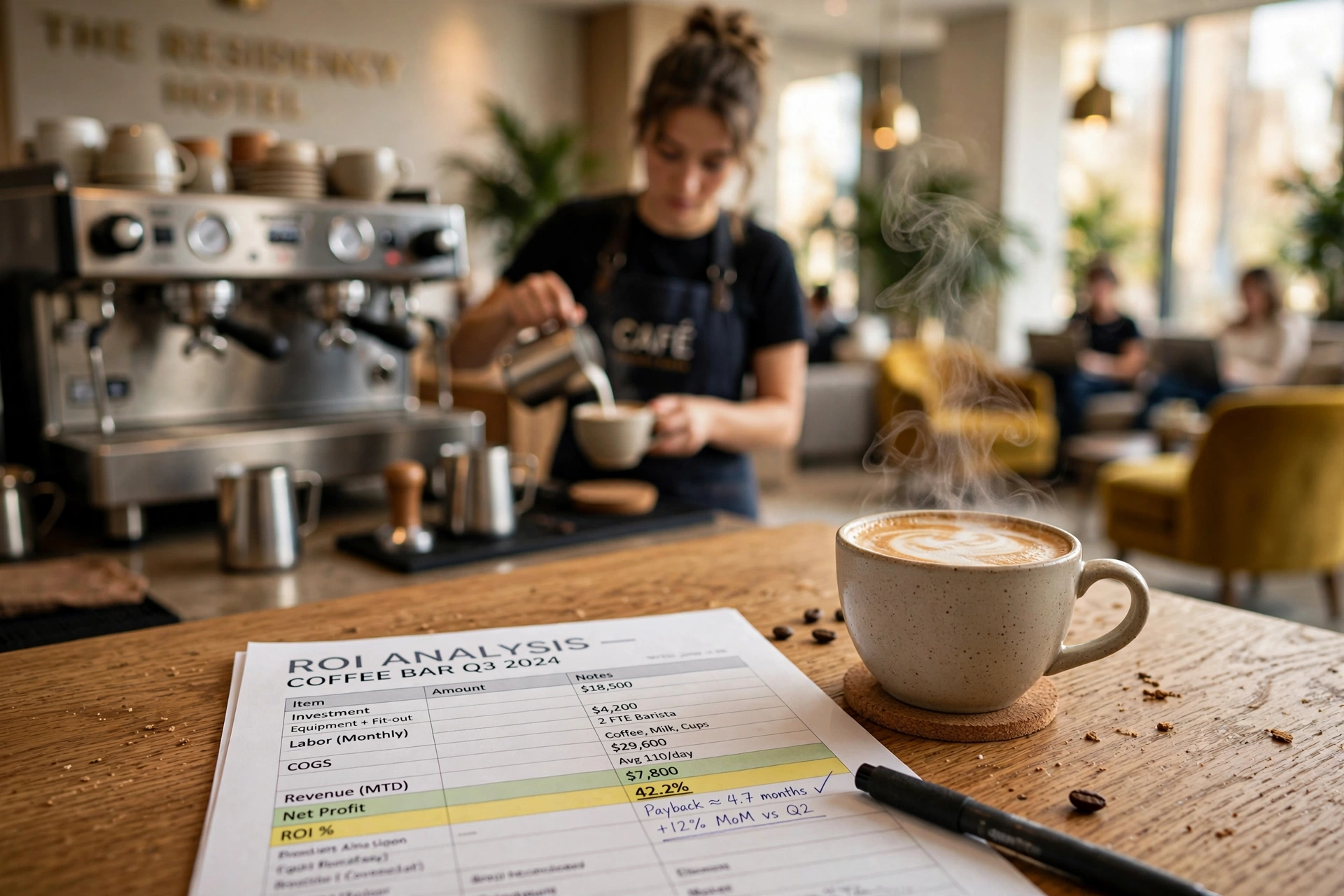
Subtract the cost of the beans, milk, and disposable cup from the retail price. For example, if a latte sells for $5.50 and the total COGS is $1.20, your gross profit is $4.30. This represents a healthy margin, but it must be weighed against the overhead of the equipment.
Step 3: Quantify Indirect Gains
This is the most difficult but most rewarding part of the calculation. Compare the NPS scores of guests who mentioned the coffee experience versus those who didn't. If guests praising the coffee are 10% more likely to book a return stay, that lifetime value (LTV) must be added to your ROI.
Step 4: Analyze Waste and Efficiency
Track how many cups are poured but not sold. High waste levels are a sign of poor training or inefficient equipment. Using a managed service often includes training for your staff to ensure that every gram of coffee is utilized effectively, reducing waste by up to 15% in the first six months.
To optimize these steps, many hotels find that the best path is to move away from fragmented procurement. If you are struggling with the logistical side, check out the Benefits of Managed Coffee Services for Hotels to see how it streamlines this entire financial process.
The Traditional Approach vs. The Modern Managed Approach
Most hotel managers still operate on the 'Buy and Maintain' model. This approach is fraught with hidden costs that often make the ROI negative over a 3-year period. Below is a comparison of how different strategies impact your financial outlook.
| Feature | Traditional Buy & Maintain | Generic/Cheap AI Equipment | Busy Bean Managed Approach |
|---|---|---|---|
| Upfront Cost | Very High (Capex) | Moderate | Zero (Opex) |
| Maintenance | Reactive (Break-Fix) | Minimal/None | Proactive & All-Inclusive |
| Coffee Quality | Variable/Commodity | Low/Inconsistent | Certified Specialty Grade |
| Financial Risk | High (Equipment failure) | Moderate (Poor quality) | Low (Predictable Monthly Fee) |
| Labor Impact | High (Manual cleaning/fixes) | High (Constant errors) | Low (Optimized Workflow) |
As shown in the table, the traditional approach creates a 'valley of death' where the ROI is negative for the first 18-24 months until the equipment is paid off. The modern managed approach, specifically through Busy Bean Coffee, provides an immediate positive ROI because the equipment and installation are included in the monthly service fee. This allows the hotel to start generating profit from day one without risking thousands of dollars in capital.
Common Mistakes That Destroy Your Coffee ROI
In my years of consulting, I have seen several critical errors that turn a potentially profitable coffee program into a money pit. Avoiding these will immediately improve your margins.
1. Ignoring Water Quality
This is the most common mistake. Many hotels plug an expensive espresso machine into a standard water line without professional filtration. Calcium buildup destroys heating elements and ruins the taste of the coffee. According to NSF International, maintaining sanitary and equipment standards is essential for longevity. A single ruined boiler can cost $2,000 to replace, wiping out months of profit.
2. Underpricing Based on 'Commodity' Thinking
Hotels often price their coffee based on what the gas station down the street charges. This is a mistake. When you serve specialty coffee, you are selling an experience. If your coffee is exceptional, guests will pay a premium. By underpricing, you are leaving money on the table and signaling to the guest that your product is mediocre.
3. Neglecting Staff Training
An expensive machine in the hands of an untrained employee is just a very expensive paperweight. If your staff doesn't know how to dial in the grind or texture the milk, the consistency drops. Consistency is the bedrock of ROI; if a guest gets a great coffee on Monday but a sour one on Tuesday, they won't buy it on Wednesday.
4. Failing to Track Waste
I've seen hotels throw away gallons of brewed coffee every hour. Implementing a 'brew-to-demand' system or using higher-quality equipment that maintains temperature longer can slash waste. If you are managing your breakfast buffet, ensure you are Optimizing Coffee for Hotel Breakfast Buffets to keep costs under control.
5. Using Low-Grade Beans to 'Save Money'
Switching to cheaper, lower-grade beans is a race to the bottom. The difference in cost per cup is pennies, but the difference in guest perception is massive. When guests taste a low-quality roast, it reflects poorly on the entire hotel brand. Investing in high-altitude Arabica coffee ensures a flavor profile that justifies your price point.
Frequently Asked Questions
How often should I audit the ROI of my hotel coffee program?
I recommend a comprehensive audit every quarter. Monthly, you should track your COGS and volume, but every three months, you need to look at the 'big picture'—including equipment maintenance costs and guest feedback. A quarterly review allows you to adjust your pricing based on seasonal demand and ensure that your equipment is performing at peak efficiency. If you notice a spike in maintenance calls, it may be time to shift from a purchase model to a managed membership to stabilize your costs.
Can a managed coffee service actually increase my net profit?
Yes, primarily by converting unpredictable Capex into a predictable Opex. When you eliminate the need for a $15,000 upfront investment in machinery and the subsequent $1,000+ annual maintenance fees, your cash flow improves immediately. Furthermore, the inclusion of professional installation and ongoing technical support ensures that your machines are never offline, meaning you never miss a sale. In my experience, the ability to forecast coffee expenses to the penny allows managers to allocate resources more effectively to other high-growth areas of the hotel.
How does coffee quality specifically impact the Average Daily Rate (ADR)?
While a single cup of coffee doesn't set the room rate, the 'perception of luxury' does. Guests categorize hotels by the small touches. A high-end coffee service is a signal of quality that justifies a higher ADR. When a hotel provides a premium experience—from the linens to the specialty coffee in the lobby—guests are less likely to complain about a price increase in the room rate. According to data from the International Coffee Organization (ICO), the global demand for premium coffee is rising, and travelers now expect this standard in high-tier hospitality.
What is the ideal profit margin for hotel coffee?
While it varies by market, a target gross margin of 70% to 85% is standard for specialty coffee programs. If your margins are lower, you are likely either underpricing your product or suffering from excessive waste. If your margins are significantly higher, you may be sacrificing quality to a point that will eventually hurt your guest satisfaction scores. The goal is to find the 'sweet spot' where the quality is high enough to drive loyalty but the price is high enough to cover all operational overhead.
Does the type of machine used affect the ROI?
Absolutely. A machine that is slow or difficult to clean increases labor costs. For instance, a fully automatic machine might have a higher initial cost but requires far less training and labor per cup than a manual setup. Conversely, a manual setup might attract 'coffee enthusiasts' and allow for higher pricing. The key is matching the machine to your guest demographic. For most high-volume hotels, an efficient, high-output espresso machine provides the best ROI by maximizing throughput during the morning rush.
Recommended Readings
To deepen your understanding of these topics, we recommend reading the following articles:
- Flexible no Long Term Contracts for Coffee Services
- Predictable Monthly Fees for Hotel Coffee Services
- No Capex Coffee Solutions for Foodservice
Conclusion
Calculating your hotel coffee program ROI is the difference between running a hobby and running a business. When you move beyond the simple subtraction of costs and begin to quantify the impact of quality on guest loyalty and operational efficiency, you unlock a significant revenue stream. By focusing on reducing waste, optimizing labor, and leveraging the power of specialty coffee, you can transform your beverage program into a high-margin asset.
For those tired of the unpredictable costs of owning and maintaining equipment, Busy Bean Coffee offers a seamless path to profitability. Our all-inclusive managed membership removes the financial risk of equipment failure and the burden of capital expenditure, allowing you to focus on the guest experience while we handle the technicalities.
Ready to stop the leakage in your F&B budget? Start by reviewing our Ultimate Guide to Hotel Coffee Service to see how a professional coffee strategy can elevate your entire property.
Visit www.busybeancoffee.com to discover how our managed solutions can optimize your ROI today.
Free Coffee Pairing Guide & Specialty Roast Cheat Sheet
Unlock the secrets of perfect brewing ratios, water temperatures, and specialty roast profiles. Download the guide.