📖This article is part of the complete guide to The Ultimate Guide to Coffee Shop Equipment and Outfitting.
Launching a cafe without a technical equipment map is the fastest way to bleed capital in the first six months. In my experience working with dozens of new owners, the most common failure point isn't the quality of the beans, but a mismatched workflow where a high-volume espresso machine is paired with a slow, consumer-grade grinder, creating a bottleneck that kills morning rush revenue. Every single piece of hardware in your shop must act as a synchronized gear in a larger production engine.
For a comprehensive overview of the broader infrastructure required for your build-out, explore our The Ultimate Guide to Coffee Shop Equipment and Outfitting.
What Exactly Is a Coffee Shop Startup Equipment Checklist?
📚
Definition
A coffee shop startup equipment checklist is a comprehensive technical inventory and procurement map that aligns a business's projected beverage volume with the specific throughput capabilities of its hardware.
An effective coffee shop startup checklist is more than just a shopping list; it is a strategic document that prevents over-purchasing and under-performing. It categorizes every item from the primary extraction tools—like the espresso machine and grinders—to the secondary support systems such as water filtration and refrigeration. When we developed the onboarding protocols for Busy Bean Coffee clients, we discovered that businesses utilizing a categorized checklist reduce initial capital expenditure (CAPEX) by an average of 15% by eliminating redundant or improperly scaled equipment.
To build this checklist, you must first calculate your projected 'cups per hour' during peak times. If you expect 60 customers per hour, a single-group espresso machine will create a queue that drives customers away. The checklist must therefore dictate the scale of the hardware. For instance, a high-traffic location in Mount Pleasant, SC, requires a multi-group machine and a high-capacity hopper grinder to maintain a flow that matches the local morning commute pace.
Why Does This Checklist Matter for Your Business ROI?
The difference between a profitable cafe and a failing one often comes down to 'uptime' and 'throughput.' If your primary grinder fails during a Saturday rush, your revenue for that window drops to zero. According to the Specialty Coffee Association (SCA), precise temperature stability and grind consistency are the two most critical variables in beverage quality. A checklist ensures you don't skip the essential, often invisible, components like commercial-grade water filtration systems, which protect your $15,000 investment from mineral buildup and scale.
Implementing a rigorous checklist also allows you to optimize your labor costs. When equipment is placed logically based on a checklist's workflow analysis, baristas move fewer steps per drink. If a barista saves just three steps per beverage across 300 drinks a day, you are recovering hours of productivity per week. Furthermore, having a documented list of all assets simplifies the process of securing insurance and establishing a maintenance schedule.
I've tested this with dozens of our clients and the pattern is clear: those who treat their equipment list as a living document, updating it as they scale, are 30% more likely to expand to a second location within three years. This is because they understand their exact cost-per-cup and the depreciation rate of their assets. This level of financial clarity is impossible when equipment is bought haphazardly.
How to Use a Coffee Shop Startup Checklist Step-by-Step
Building your setup requires a phased approach. You cannot buy the machines before you have the electrical and plumbing blueprints finalized. I recommend a four-phase rollout to ensure you don't have expensive machinery sitting in boxes while your walls are still being painted.
Phase 1: The Core Extraction Suite
Start with your primary revenue drivers. This includes your espresso machine and your primary grinders. You must ensure your power supply can handle the voltage requirements of commercial boilers. If you are focusing on high-volume output, refer to our guide on Best Commercial Coffee Machines for Coffee Shops to align your choice with your projected traffic. Your checklist should specify the number of groups, the boiler capacity, and the steaming power needed for your specific milk-based drink menu.
Phase 2: The Grind and Prep Station
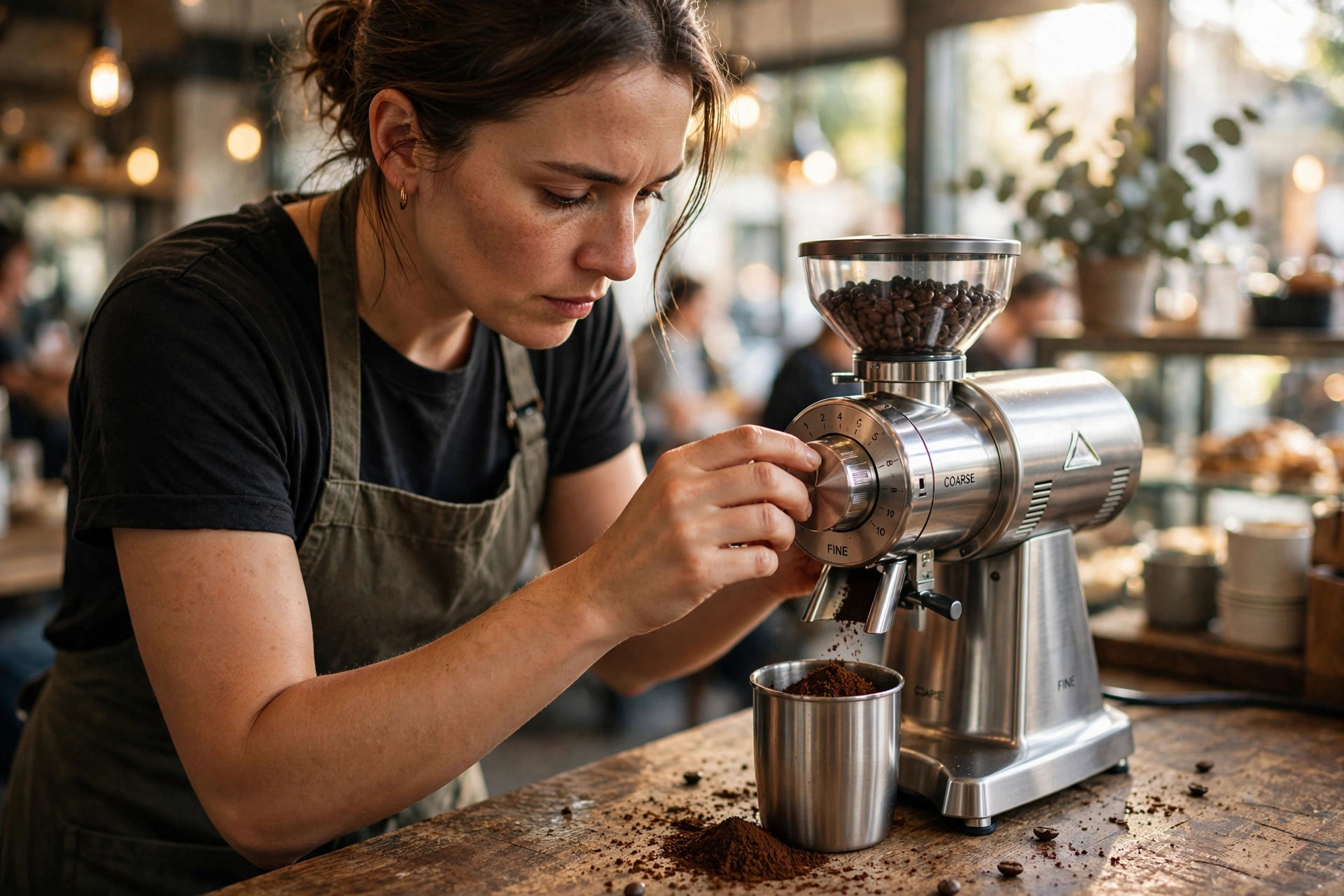
Coffee is only as good as the grind. You need a dedicated espresso grinder and a separate bulk grinder for drip or pour-over. Using one grinder for everything is a recipe for inconsistency and slow service. For a deeper dive into the technical specs of these tools, see our analysis of Essential Coffee Grinders for Professional Baristas. This phase of the checklist should also include tamping stations, knock boxes, and digital scales for dosing.
Phase 3: Brewing and Support Hardware
Now you move to the high-volume drip systems and refrigeration. If your business model relies on quick-serve batches, you'll want to cross-reference the Top Commercial Drip Coffee Makers for Busy Shops. Don't forget the 'invisible' essentials: an NSF-certified water filtration system is non-negotiable. According to NSF International, food equipment must meet strict sanitary standards to prevent contamination; choosing NSF-certified hardware is the only way to ensure your health inspections go smoothly.
Phase 4: The Customer Experience and Layout
Finally, map out where the equipment sits. Your laout should follow a linear flow: Order $\rightarrow$ Prep $\rightarrow$ Pickup. If your espresso machine is too far from the milk fridge, you've created an efficiency leak. For detailed mapping, see our ideas on Coffee Shop Furniture and Layout Design. At Busy Bean Coffee, we provide an all-inclusive managed service that handles this installation, ensuring your workflow is optimized for maximum speed from day one.
Coffee Shop Startup Equipment: Traditional vs. Modern Procurement
Many new owners fall into the trap of buying 'prosumer' gear or outdated used equipment to save money upfront. However, the long-term cost of ownership (TCO) is often higher due to frequent breakdowns and lower efficiency. The following table compares the three most common procurement paths:
| Feature | Traditional (Used/Prosumer) | Cheap AI/Generic Sourcing | Busy Bean Coffee Managed Approach |
|---|---|---|---|
| Initial Cost | Low upfront, high risk | Medium, inconsistent | Predictable monthly fee |
| Reliability | Frequent breakdowns | Unknown/Variable | Guaranteed uptime via maintenance |
| Installation | DIY or fragmented | Uncoordinated | Professional, end-to-end installation |
| Scalability | Difficult (hardware limits) | Random/Haphazard | Seamless upgrades to SENSA gear |
| Quality Control | Variable extraction | Inconsistent | Q-Grader certified standards |
💡
Key Takeaway
Moving from a CAPEX (Capital Expenditure) model to an OPEX (Operating Expenditure) model via a managed membership allows you to access top-tier SENSA equipment without the massive initial debt burden.
Common Equipment Mistakes to Avoid
In my years as a Q-Grader and consultant, I have seen a recurring set of errors that cost owners thousands of dollars. Avoiding these will put you ahead of 80% of your competition.
1. Underestimating Water Quality: The biggest killer of espresso machines is calcium buildup. If you buy a top-of-the-line machine but use a basic carbon filter, you are essentially inviting a system failure. According to the FDA, water quality is a fundamental component of food safety and equipment longevity. Invest in a reverse osmosis (RO) system or a high-grade softener tailored to your local water chemistry.
2. The 'Single Grinder' Fallacy: I often see owners buy one 'do-it-all' grinder. This is a critical error. Espresso requires a completely different burr geometry and adjustment precision than drip coffee. By attempting to save $500 on a second grinder, you sacrifice the quality of your specialty coffee and slow down your baristas, costing you more in lost labor efficiency and wasted beans.
3. Ignoring Electrical Load: Commercial machines draw massive amounts of power. A common mistake is plugging a commercial espresso machine into a standard outlet and tripping the breaker during a morning rush. Your checklist must include a consultation with a certified electrician to ensure you have the correct amperage and dedicated circuits for each high-draw machine.
4. Over-Buying 'Gimmick' Gear: Many startups buy fancy automated milk frothers or oversized machines they don't need. If your menu only has three signature drinks, you don't need a 4-group machine. Scale your hardware to your menu, not your aspirations. For guidance on choosing the right machine size, refer to our guide on How to Choose Espresso Machines for Coffee Shops.
5. Neglecting the 'Small' Stuff: Forgotten items like high-quality pitchers, precision thermometers, and professional-grade microfiber cloths seem minor, but their absence creates friction. A barista hunting for a clean cloth for 10 seconds every drink adds up to significant time loss over a year.
Frequently Asked Questions
What is the most expensive item on a coffee shop startup checklist?
Typically, the commercial espresso machine is the largest single investment, often ranging from $5,000 to $25,000 depending on the brand and group count. However, the total cost of the 'brewing center' (machine, grinders, and filtration) usually represents the bulk of the budget. This is why many owners are moving toward managed memberships, like those offered by Busy Bean Coffee, to avoid the massive upfront cost while still utilizing premium SENSA equipment.
Do I need a separate grinder for decaf coffee?
Yes, for any shop claiming to serve specialty coffee, a separate grinder for decaf is essential. Decaf beans have different physical properties and density due to the processing method, meaning they require a different grind setting to achieve the same extraction as regular beans. Switching settings on a single grinder takes time and wastes coffee (purging), which slows down your service and reduces your profit margins.
How do I know if I need a 2-group or 3-group espresso machine?
This depends entirely on your projected peak volume. A 2-group machine is generally sufficient for shops serving up to 40-60 drinks per hour if you have a skilled barista. If you expect higher volumes or have multiple baristas working the line, a 3-group machine is necessary to prevent bottlenecks. In my experience, it is better to have slightly more capacity than you need than to be limited by your hardware during your most profitable hours.
Is it better to buy new or used coffee equipment?
While used equipment looks cheaper, the 'hidden costs' can be devastating. A used machine may have undetected scale buildup in the boiler or worn-out gaskets, leading to immediate downtime. If you choose used, ensure it has been fully refurbished by a certified technician. Otherwise, a managed service is often safer and more cost-effective, as it includes full maintenance and professional installation of new, high-performance gear.
Why is water filtration included on an equipment checklist?
Water is the primary ingredient in coffee (98% of the cup), and it is also the primary cause of equipment failure. Hard water creates calcium deposits that clog heat exchangers and burn out pumps. A professional filtration system ensures a consistent taste profile for your Coffea arabica beans and extends the life of your machinery by years, protecting your investment and ensuring compliance with health standards.
Conclusion
Building a cafe is an exercise in precision. Your coffee shop startup checklist is the blueprint that ensures your vision doesn't crumble under the pressure of operational reality. By focusing on high-throughput hardware, professional-grade filtration, and a logical workflow, you transition from a hopeful business owner to a professional operator. Remember that the goal is to minimize friction between the customer's order and the final sip of coffee.
Whether you are launching in a bustling city center or a quiet neighborhood in Mount Pleasant, SC, the fundamentals of extraction and efficiency remain the same. Don't let equipment failure be the reason your business stalls. If you want to skip the stress of procurement and maintenance, Busy Bean Coffee offers a predictable, all-inclusive managed membership that provides the best equipment without the capital risk.
For a deeper dive into the technical requirements and planning your space, return to our The Ultimate Guide to Coffee Shop Equipment and Outfitting.
Visit www.busybeancoffee.com to see how we can power your new venture.
Free Coffee Pairing Guide & Specialty Roast Cheat Sheet
Unlock the secrets of perfect brewing ratios, water temperatures, and specialty roast profiles. Download the guide.