Which Commercial Espresso Machine is Right for Your Business?
Choosing the wrong equipment is one of the fastest ways to bleed margin in a foodservice operation. In my experience working with dozens of cafes and hotels, the most common mistake I see is a business owner buying a machine based on brand prestige rather than their actual peak-hour volume. When you're evaluating commercial espresso machines, the "best" one isn't the most expensive model; it is the one that maintains temperature stability during a 7:00 AM rush without requiring a PhD in engineering to operate. For a high-volume cafe, a multi-boiler volumetric machine is the gold standard, while a boutique hotel might find a high-end semi-automatic more appropriate for the experience.
What Exactly Defines a Professional Grade Espresso System?
Before diving into the "which," we have to define the "what." Not every machine that looks like a professional tool actually is one. A true commercial system is designed for thermal mass and repeatability, meaning it can pull 100 shots in a row while keeping the water temperature within a fraction of a degree.
📚
Definition
Thermal Stability is the ability of an espresso machine to maintain a consistent water temperature throughout the extraction process, preventing the coffee from tasting sour (under-extracted) or bitter (over-extracted).
The core difference lies in the boiler system. Entry-level machines often use a single boiler, which requires the user to wait for the machine to switch from brewing temperature to steaming temperature. Professional systems utilize heat exchangers or dual boilers. According to the Specialty Coffee Association (SCA), precision in temperature and pressure is fundamental to achieving the sensory profiles required for specialty coffee. If your temperature fluctuates by even two degrees, you are effectively wasting the quality of your Coffea arabica beans.
In the trenches, I've found that the "hidden" specs matter more than the marketing. Look for PID controllers (Proportional-Integral-Derivative), which allow the barista to set the exact temperature of the brew water. Without this, you are guessing. When we implement systems at Busy Bean Coffee, we prioritize machines that balance this technical precision with "serviceability"—the ease with which a technician can replace a gasket or descale the boiler without shutting down your entire morning revenue stream.
Why Does Your Machine Choice Directly Impact Your Bottom Line?
The machine you choose is not just a tool; it is a financial lever. A poor choice manifests in three ways: labor inefficiency, product waste, and unplanned downtime. When a machine cannot keep up with demand, your ticket times increase. In a high-volume environment, a delay of 30 seconds per drink across 200 morning customers results in significant lost revenue and decreased customer satisfaction.
Data from the National Coffee Association USA (NCA) indicates that consumer preferences are shifting toward more complex, espresso-based beverages. This means your equipment must be capable of producing high-quality microfoam for lattes and cappuccinos consistently. If your steam wand lacks the power to texture milk quickly, your baristas are spending more time on a single drink, increasing your labor cost per cup.
Furthermore, there is the issue of "dialing in." Every coffee bean behaves differently based on roast date and humidity. A machine with poor pressure stability makes it nearly impossible to "dial in" the grind. I've seen owners waste five pounds of premium roast in a single morning because their machine's pressure was drifting, making every shot taste different. This isn't just a quality issue; it's a direct hit to your COGS (Cost of Goods Sold).
Then there is the risk of catastrophic failure. A machine that isn't rated for your volume will suffer from premature pump failure or scale buildup. If you are using a "prosumer" machine in a commercial setting, you aren't just risking a breakdown; you are likely violating health and safety codes. This is why NSF International certifications are non-negotiable. An NSF-certified machine ensures that the materials used are food-safe and that the machine can be properly sanitized, protecting your business from liability and health department fines.
How to Implement a Coffee Program That Scales
Selecting the machine is only step one. The real magic happens in the implementation. Most owners buy a machine, plug it in, and hope for the best. That is a recipe for failure. A professional implementation requires a holistic look at your water quality, power supply, and workflow.
First, you must address the water. Coffee is 98% water. If you have hard water in your area, it will kill a $15,000 espresso machine in six months through lime-scale buildup. You need a dedicated filtration and softening system. In my experience, the most expensive machines in the world perform poorly if the water chemistry is off. We always insist on a water analysis before installing any equipment.
Second, optimize the workflow. The "golden triangle" of the coffee station involves the grinder, the machine, and the knock box. If your barista has to take two steps to reach the milk fridge or turn around to reach the grinder, you are losing seconds on every drink.
💡
Key Takeaway
Workflow efficiency is as important as the machine itself. A mid-range machine in a perfectly designed layout will outperform a top-tier machine in a cramped, illogical space.
At Busy Bean Coffee, we solve this by offering managed coffee solutions. Instead of leaving a business to figure out the installation and maintenance, we provide the SENSA equipment, professional installation, and ongoing maintenance. This removes the "guessing game" and ensures that the equipment is calibrated to the specific volume of the business.

Comparison: Which System Fits Your Business Model?
To decide which commercial espresso machine to buy, you need to categorize your business by volume and skill level. You cannot apply a "one size fits all" logic here. A hotel lobby has different needs than a drive-thru cafe in Mount Pleasant, SC.
| Machine Type | Pros | Cons | Best For |
|---|---|---|---|
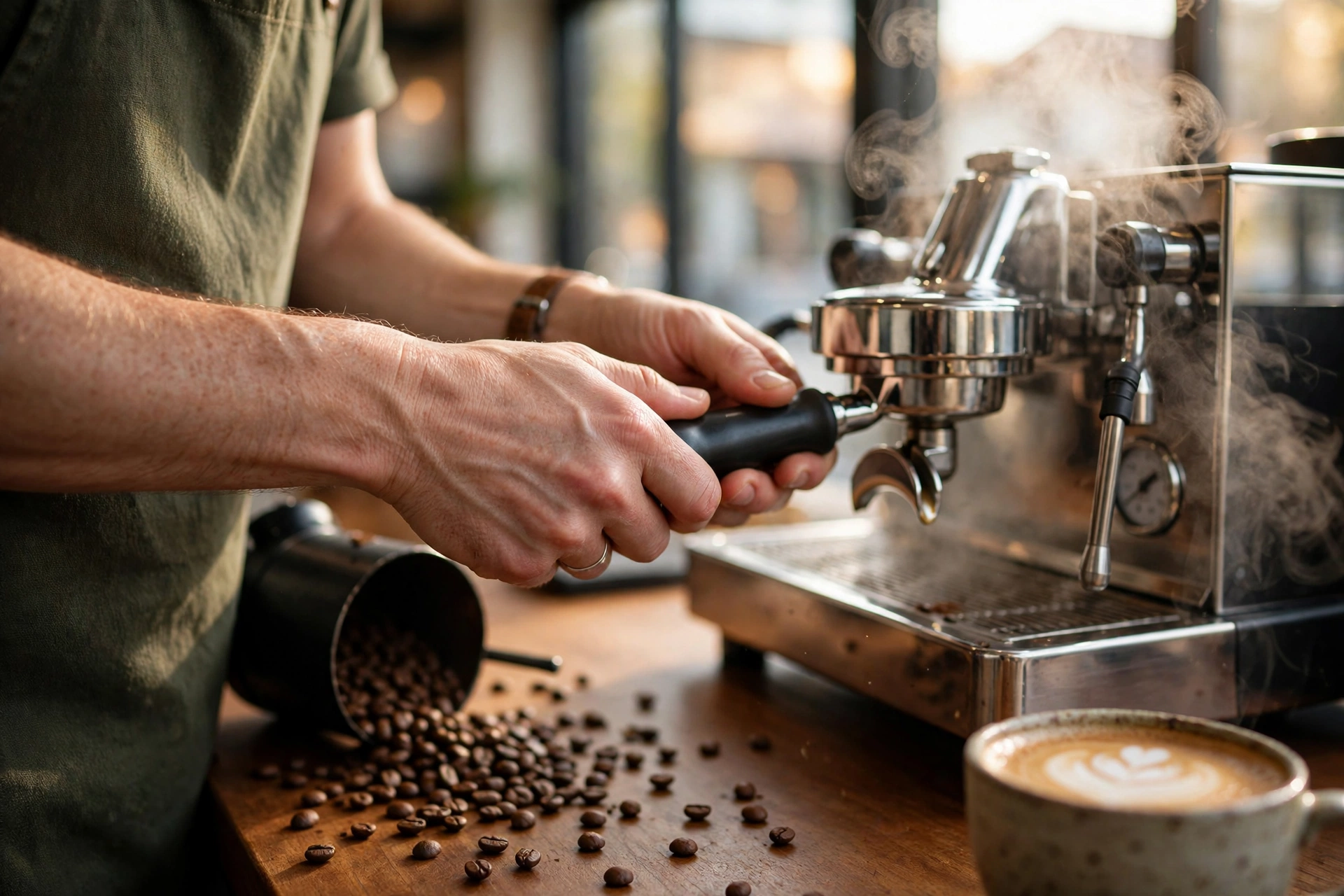
| Semi-Automatic | Total control, lower initial cost, high "craft" appeal | High skill required, inconsistent timing, slower | Boutique cafes, specialty tasting rooms |
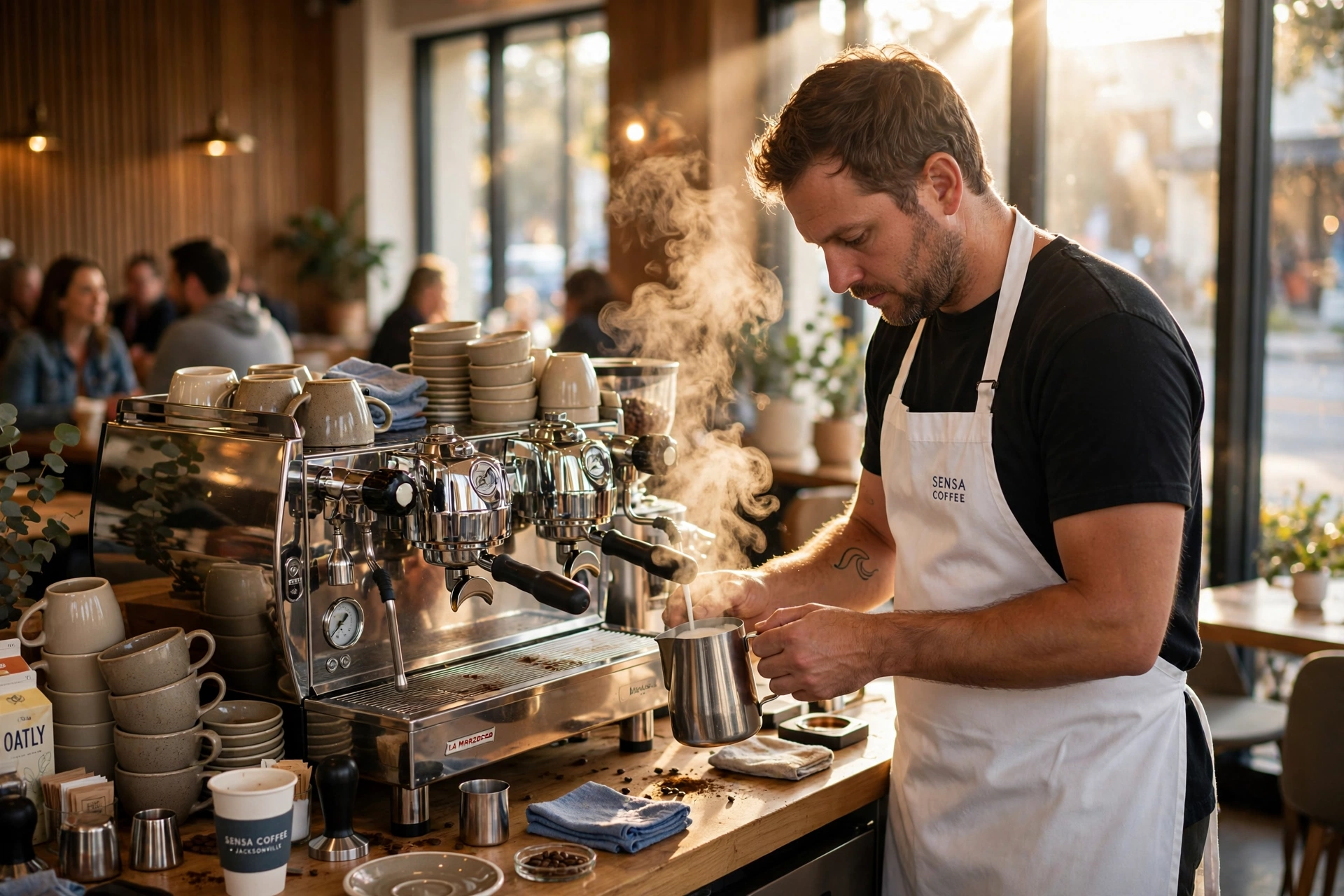
| Volumetric/Auto | Absolute consistency, faster workflow, lower waste | Higher cost, less "manual" control | High-volume cafes, fast-casual dining |
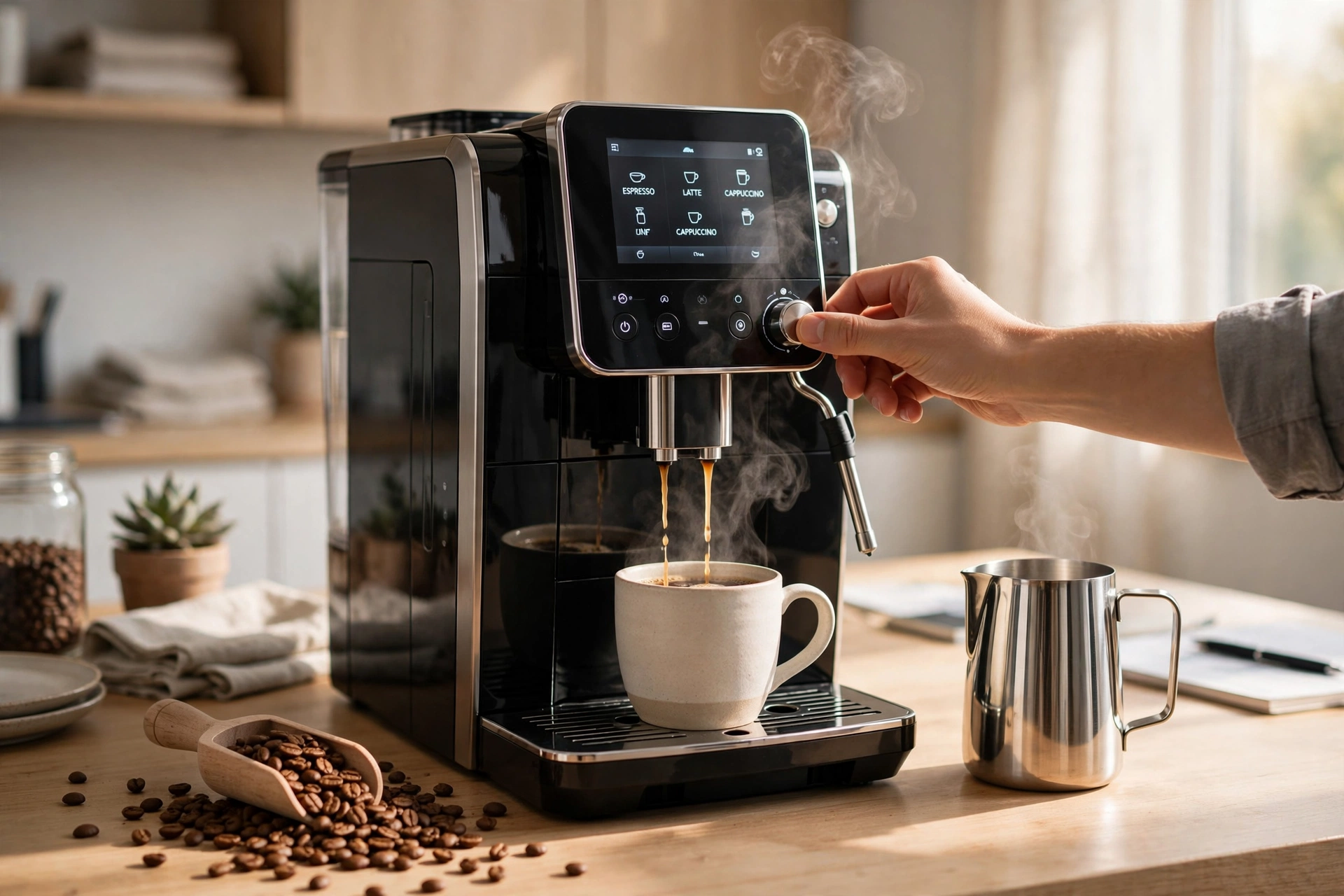
| Super-Automatic | No barista training needed, fastest output | Highest cost, lower quality, hard to clean | Hotels, office breakrooms, convenience stores |
Now, here is where it gets interesting: the trade-off between control and consistency. A semi-automatic machine allows a skilled barista to adjust the shot mid-pull. This is great for winning competitions or serving a tiny number of connoisseurs. However, in a business, consistency is king. Your customer wants their latte to taste the same on Tuesday as it did on Friday. Volumetric machines solve this by timing the water flow precisely, removing the human error of "forgetting to stop the timer."
If you are running a high-volume operation, the "Generic/Cheap AI" approach to coffee—which is essentially buying the cheapest automated machine you find on a marketplace—usually leads to disaster. These machines lack the thermal mass to handle back-to-back drinks, resulting in "temperature surfing" where the first drink is hot and the fifth is lukewarm. The professional approach involves matching the boiler capacity to your peak hourly volume.
Common Misconceptions About Espresso Equipment
Most guides get this wrong by telling you to "buy the most expensive machine to future-proof your business." This is bad advice. Over-specing your equipment ties up capital that could be used for marketing or staffing, and it often results in a machine that is too complex for your staff to maintain.
Myth 1: "More groups always mean more coffee."
A 3-group machine doesn't necessarily make coffee three times faster than a 2-group. If you only have one barista, they can only operate one or two groups effectively. Adding a third group just takes up counter space and increases your energy bill. The bottleneck is usually the grinder or the milk steaming, not the number of group heads.
Myth 2: "Super-automatics are a great way to save on labor."
While you don't need a trained barista, the maintenance on super-automatics is significantly higher. These machines have complex internal robotics that can fail. When a super-automatic breaks, your coffee service is 100% dead. With a manual or volumetric machine, a simple part failure often doesn't stop the whole machine.
Myth 3: "Expensive beans fix a bad machine."
This is a painful lesson many owners learn. You can buy the most expensive, ethically sourced specialty coffee in the world, but if your machine's pressure is unstable or your water is hard, that coffee will taste like battery acid. The equipment is the lens through which the bean is expressed; if the lens is dirty or cracked, the image is blurred.
Frequently Asked Questions
How do I determine the correct number of group heads for my cafe?
To determine the number of group heads, analyze your peak hour transactions. A single group head, operated by a proficient barista, can realistically produce about 25 to 35 high-quality drinks per hour. If your morning rush sees 100 customers in 60 minutes, a 2-group machine is the absolute minimum, but a 3-group provides the necessary headroom to ensure you aren't pushing the equipment to its absolute limit, which extends the machine's lifespan. Always account for "buffer time" for cleaning and milk preparation.
What is the difference between a heat exchanger and a dual boiler?
A heat exchanger (HX) uses a large steam boiler with a smaller tube running through it to heat the brew water. It is more energy-efficient and cheaper, but it can suffer from "temperature instability" if the machine sits idle. A dual boiler has two completely separate boilers: one for steam and one for brewing. This allows for pinpoint temperature control and better stability during high-volume periods. For businesses focusing on specialty coffee, a dual boiler is almost always the superior choice due to its precision.
Do I really need a separate water filtration system?
Yes, without exception. Commercial espresso machines are essentially large plumbing fixtures. Minerals in city water—specifically calcium and magnesium—precipitate out of the water and cling to the heating elements and pipes. This is called scale. Scale acts as an insulator, forcing your heating elements to work harder, which eventually burns them out. More importantly, scale changes the flavor of your coffee. A professional-grade filtration system is the cheapest insurance policy you can buy for your equipment.
How often should a commercial espresso machine be serviced?
Daily maintenance includes backflushing with a cleaning agent and scrubbing the group heads. Weekly maintenance involves deep-cleaning the steam wands and checking the drip trays. However, professional preventative maintenance should happen every 3 to 6 months. This involves replacing group gaskets, shower screens, and checking the pump pressure. Ignoring these small parts leads to leaks, which can cause electrical shorts or permanent boiler damage. This is why managed services are so valuable; they automate this schedule.
Can a "prosumer" machine work in a low-volume commercial setting?
While tempting due to the lower price point, prosumer machines are not designed for the duty cycle of a business. They lack the thermal mass to recover temperature quickly and, most importantly, they lack NSF certification. In many jurisdictions, using a non-certified machine in a commercial kitchen can lead to health code violations. Furthermore, prosumer warranties are often voided the moment the machine is placed in a commercial environment. It is better to buy a small, entry-level commercial machine than a high-end home machine.
Final Thoughts on Choosing Commercial Espresso Machines
Selecting the right equipment is a balance of volume, skill, and budget. The goal isn't to find the "best" machine in a vacuum, but the best machine for your specific operational reality. Whether you need the raw power of a volumetric system or the artisanal control of a semi-automatic, the key is to prioritize thermal stability, water quality, and ease of maintenance.
If the technical side of this feels overwhelming, remember that you don't have to do it alone. At Busy Bean Coffee, we specialize in taking the guesswork out of the equation. We provide the equipment, the installation, and the ongoing support so you can focus on your customers instead of your boilers.
Ready to upgrade your beverage program? Visit Busy Bean Coffee to explore our all-inclusive managed coffee solutions and find the perfect fit for your business.
Recommended Readings
To deepen your understanding of these topics, we recommend reading the following articles:
- The Complete Guide to White Glove Coffee Service
- Ultimate Guide to All-Inclusive Coffee Service for Businesses
- Ultimate Guide to Automated Coffee Machines for Business
- Ultimate Guide to Specialty Coffee Equipment for Business
Free Coffee Pairing Guide & Specialty Roast Cheat Sheet
Unlock the secrets of perfect brewing ratios, water temperatures, and specialty roast profiles. Download the guide.