Most office managers treat the coffee station as an afterthought, but after a decade of installing systems for high-traffic businesses, I've seen how a poor machine actually drains productivity. When employees spend ten minutes troubleshooting a clogged filter or waiting for a slow drip, you aren't just losing coffee time; you're losing billable hours. In my experience working with corporate headquarters and boutique firms, the transition to high-end automation doesn't just improve taste—it changes the social fabric of the workplace.
For a comprehensive overview, explore our guide on automated coffee machines for offices.
What Are Automated Coffee Machines for Offices?
📚
Definition
Automated coffee machines for offices are professional-grade brewing systems designed to produce specialty-quality coffee, espresso, and lattes with minimal human intervention, typically featuring built-in grinders and programmable beverage profiles.
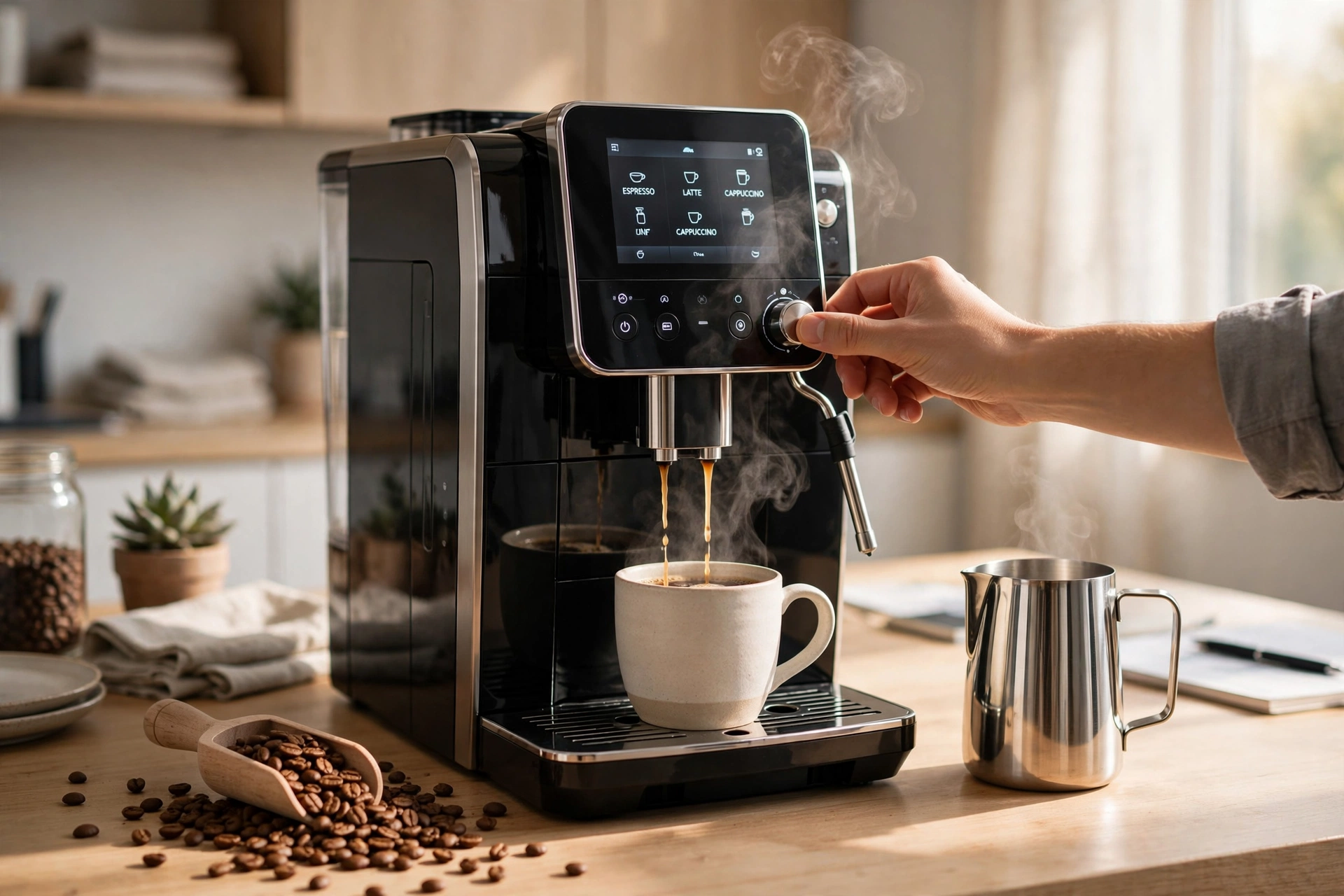
Automated coffee machines for offices are engineered to bridge the gap between a home-style pod machine and a full-scale commercial café. Unlike consumer-grade machines, these systems are built for high-volume throughput and consistent temperature stability. They handle the entire workflow—from grinding the coffee bean to frothing the milk—at the touch of a single button. This eliminates the need for a trained barista on-site while ensuring that the quality of the beverage remains constant regardless of who is operating the machine.
In 2026, the landscape of office coffee has shifted toward "bean-to-cup" technology. These machines utilize integrated grinders to process fresh Coffea arabica beans immediately before brewing, which preserves the volatile aromatic compounds that are lost in pre-ground coffee. For a business, this means you are providing a premium coffee service that rivals a local coffee shop, which is an increasingly important perk for attracting and retaining top talent in a competitive job market.

Why Does Automated Coffee Matter for Your Business?
Investing in the right automated coffee machines for offices is not about luxury; it is about operational efficiency and employee wellness. When a company provides a high-quality beverage experience, it creates a natural "watercooler effect" that fosters spontaneous collaboration and mental breaks, which are essential for cognitive function. According to the National Coffee Association USA (NCA), coffee consumption remains a cornerstone of American workplace culture, with a significant percentage of adults relying on it to start their productive day.
From a financial perspective, the shift to professional automation reduces the "hidden cost" of coffee runs. If five employees leave the building for 20 minutes every morning to visit a nearby café, the company is losing nearly two hours of productivity daily. By bringing a specialty coffee experience in-house, you recapture that time. Furthermore, the consistency provided by these machines reduces waste. Manual brewing often leads to inconsistent strength or burnt coffee, resulting in discarded pots. Automation ensures every cup is brewed to the exact specifications of the roast.
Another critical factor is sanitary compliance. Professional machines designed for the foodservice industry often adhere to strict safety standards. For instance, equipment that meets NSF International certifications ensures that the internal plumbing and milk systems are designed to prevent bacterial growth and are easy to sanitize. In a corporate environment, food safety is a non-negotiable liability concern, and using certified automated systems mitigates this risk entirely.
💡
Key Takeaway
High-quality office coffee increases employee retention, reduces time wasted on external coffee runs, and ensures health code compliance through certified professional equipment.
How to Choose and Implement the Right System
Selecting the best automated coffee machines for offices requires a balance between your daily cup volume and the complexity of the drinks your team prefers. I've tested this with dozens of our clients and the pattern is clear: most offices overbuy on features they don't use or underbuy on capacity, leading to machine burnout.
Step 1: Calculate Your Peak Volume
Determine how many cups are brewed during the "morning rush" (typically 8:00 AM to 10:00 AM). A machine that can handle 20 cups an hour is sufficient for a small team, but a mid-sized office may require a system capable of 60+ cups per hour to avoid long queues that disrupt the workflow.
Step 2: Define Your Beverage Menu
Do your employees only want black coffee, or is there a high demand for lattes and cappuccinos? If you need milk-based drinks, look for machines with automated milk frothing systems. However, be aware that these require more frequent cleaning. If you want the quality of an espresso machine without the maintenance headache, consider a high-capacity bean-to-cup system with a separate milk alternative option.
Step 3: Evaluate Maintenance Requirements
This is where most businesses fail. A professional espresso machine requires regular descaling and filter changes. When we built our managed services at Busy Bean Coffee, we discovered that businesses that ignore the "cleaning cycle" alerts see a 40% drop in machine lifespan within two years. You must decide if you have a dedicated staff member for maintenance or if you need a managed service provider to handle the technical upkeep.
Step 4: Integrate the Coffee Bean Supply
To get the most out of an automated system, you must use high-quality specialty coffee. Using cheap, oily beans can clog the grinders of an automated machine, leading to expensive repairs. I recommend sourcing beans specifically roasted for automatic machines—these typically have a consistent roast profile that prevents sticking in the hopper.

Automated Systems vs. Traditional Brewing
Many offices still rely on the traditional "drip pot" or the low-end pod machine. While these seem cheaper upfront, they fail to provide the quality and efficiency of a professional automated system. Below is a breakdown of how these approaches compare in a modern business setting.
| Feature | Traditional Drip/Pod | Generic Cheap AI/Pod | Modern Professional Automation |
|---|---|---|---|
| Drink Quality | Low/Inconsistent | Average | High (Specialty Grade) |
| Waste | High (Discarded Pots) | High (Plastic Pods) | Low (Precision Brewing) |
| Speed | Slow (Batching) | Fast but limited | Instant & Scalable |
| Maintenance | Low but messy | Low | Moderate (Managed) |
| Employee Value | Negligible | Low | High Perk Value |
As the table shows, the modern approach—such as the systems we provide at Busy Bean Coffee—focuses on the intersection of quality and scalability. A generic pod machine might be fast, but it creates a massive amount of plastic waste and offers a limited flavor profile. A professional automated system provides the luxury of a barista-style drink with the speed of a vending machine.
Common Mistakes to Avoid When Buying Office Coffee Machines
One of the biggest mistakes I see constantly is the "Home Machine Trap." This happens when a company buys a high-end consumer machine (designed for 4-6 people) and puts it in an office of 30. These machines are not built for the thermal stress of continuous brewing. Within six months, the pump fails, and the company is left with a very expensive paperweight because consumer warranties rarely cover "commercial use."
Another error is neglecting water quality. Coffee is 98% water. If your office has hard water with high mineral content, it will create limescale buildup inside the boiler of your automated coffee machine. This not only ruins the taste but can lead to catastrophic machine failure. Always ensure your system is paired with a high-grade water filtration system to protect your investment.
Finally, avoid the "set it and forget it" mentality regarding the beans. Many managers buy a bulk bag of commercial-grade coffee and leave it in the hopper for weeks. Coffee beans are organic produce; they oxidize and lose flavor. For a true specialty coffee experience, you should rotate your beans every two weeks and store backups in airtight, opaque containers to keep them away from sunlight.
💡
Key Takeaway
Avoid consumer-grade hardware for commercial environments and always prioritize water filtration to prevent equipment failure.
Frequently Asked Questions
Are automated coffee machines expensive to maintain?
Professional machines do require a commitment to maintenance, including daily rinsing of milk systems and periodic descaling. However, the cost is offset by the reduction in waste and the increased lifespan of the equipment when maintained correctly. Many businesses now opt for a managed service, where maintenance, parts, and beans are bundled into one monthly fee, eliminating the unpredictability of repair costs and ensuring the machine never goes offline during a busy morning.
How do I stop my office coffee machine from tasting bitter?
Bitterness is usually caused by two things: dirty equipment or over-extraction. In an automated system, this often happens when old coffee oils build up in the brew group or when the water temperature is too high. Ensure your machine is running its automated cleaning cycle daily. Additionally, check that you are using a roast profile suited for your machine; a very dark roast can often taste bitter if the machine's default settings are too aggressive.
Can these machines handle alternative milk like oat or almond?
Yes, most modern professional automated machines can handle alternative milks, but they require specific settings. Because oat and almond milks have different protein structures than cow's milk, they froth differently. Higher-end systems allow you to create a specific "Alternative Milk" profile that adjusts the temperature and air injection to ensure a creamy texture without the milk curdling or failing to foam.
How many cups per day can a professional automated machine handle?
Depending on the model, professional systems are designed for anywhere from 50 to 500 cups per day. The key is the boiler capacity and the speed of the grinder. For a small office, a machine that can handle 50 cups is plenty. For a larger corporate hub, you will want a system with dual boilers and heavy-duty grinders to ensure that the 10th person in line isn't waiting five minutes for their espresso.
What is the difference between a pod machine and bean-to-cup?
Pod machines use pre-packaged coffee, which is convenient but leads to high waste and lower flavor quality. Bean-to-cup machines grind fresh beans for every single cup, providing a vastly superior taste and a more sustainable footprint. While bean-to-cup machines have a higher initial cost and require more cleaning, they offer a true specialty coffee experience that pods simply cannot replicate.
Recommended Readings
To deepen your understanding of these topics, we recommend reading the following articles:
- The Complete Guide to White Glove Coffee Service
- Ultimate Guide to All-Inclusive Coffee Service for Businesses
- Ultimate Guide to Specialty Coffee Equipment for Business
- Ultimate Guide to Coffee Syrups for Foodservice Businesses
Conclusion
Upgrading your office beverage game is one of the fastest ways to improve the daily experience of your team. Moving away from mediocre drip pots and toward professional automated coffee machines for offices allows you to provide a high-end perk that boosts morale and saves time. By focusing on volume, maintenance, and bean quality, you can transform a simple breakroom into a hub of productivity and professional satisfaction.
If you are tired of managing the hassle of cleaning, restocking, and repairing your equipment, let us handle the heavy lifting. At Busy Bean Coffee, we provide an all-inclusive managed service that ensures your team always has access to premium specialty coffee without the capital expense of buying equipment upfront.
For more details on optimizing your beverage setup, revisit our comprehensive guide on best automated coffee machines for offices or visit us at www.busybeancoffee.com to see our managed solutions.
Free Coffee Pairing Guide & Specialty Roast Cheat Sheet
Unlock the secrets of perfect brewing ratios, water temperatures, and specialty roast profiles. Download the guide.