📖This article is part of the complete guide to Ultimate Guide to Automatic Coffee Machines for Business.
When I first started consulting with local eateries, I noticed a recurring tragedy: bakeries with world-class croissants and sourdough were serving mediocre, burnt drip coffee. It is a missed opportunity that leaves thousands of dollars on the table every single month. In my experience working with high-volume pastry shops, the synergy between a fresh baked good and a premium cup of coffee isn't just a preference; it is a psychological trigger that increases the average transaction value by as much as 30%.
For a comprehensive overview of the technology driving these results, explore our Ultimate Guide to Automatic Coffee Machines for Business.
What Are the Best Coffee Machines for Bakeries?
📚
Definition
Coffee machines for bakeries are commercial-grade brewing systems designed to handle high peak-hour volume while maintaining a consistent flavor profile that complements sweet and savory baked goods.
Choosing the right equipment means balancing speed with quality. In a bakery setting, you are usually dealing with a "morning rush" where the window of opportunity to capture a sale is incredibly small. If a customer has to wait five minutes for a latte while their pastry gets cold, the experience is ruined. The best solutions for 2026 focus on automation that doesn't sacrifice the integrity of the Specialty Coffee experience.
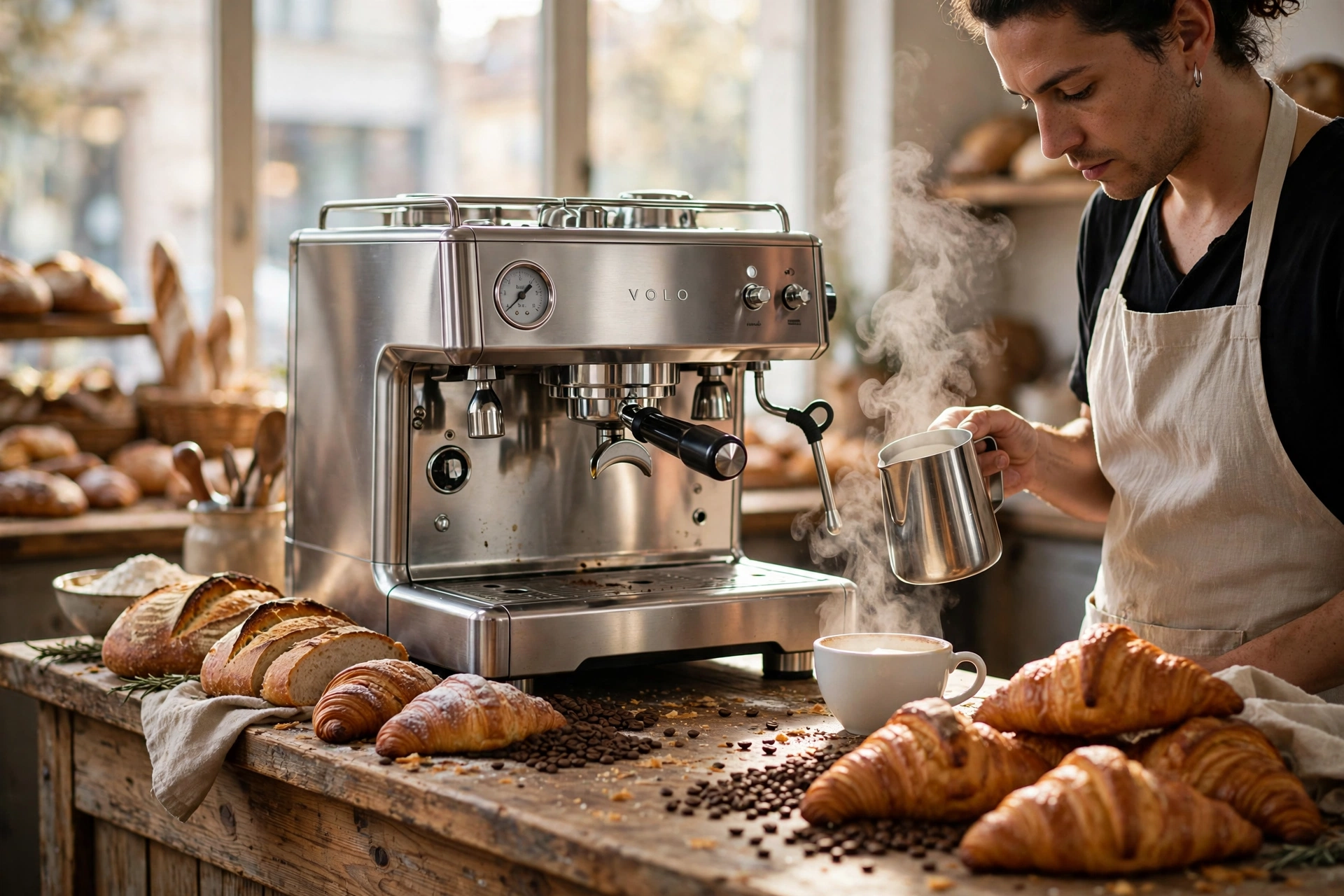
Many bakery owners believe they need a full-scale cafe setup with a dedicated barista to succeed. However, the reality is that most bakeries need "intelligent automation." This means machines that can grind coffee bean selections on demand and steam milk to a precise temperature without requiring a certified professional to stand behind the machine for eight hours a day. When we implement the SENSA systems at Busy Bean Coffee, we prioritize machines that offer a "one-touch" interface, allowing your bakery staff to focus on serving pastries while the machine handles the complex extraction process.
Why Does the Right Coffee Program Drive Bakery Revenue?
Integrating a high-end coffee program is one of the fastest ways to increase your profit per square foot. While bread and pastries have relatively tight margins due to labor and ingredient costs, coffee—specifically espresso-based drinks—carries some of the highest margins in the entire food and beverage industry. When you offer a premium beverage, you aren't just selling caffeine; you are selling a "ritual" that encourages customers to stay longer and spend more.
According to the National Coffee Association USA (NCA), coffee consumption patterns have shifted toward specialty and espresso-based drinks, with a growing preference for high-quality, ethically sourced beans. For a bakery, this means that shifting from a basic pot-brewer to an automated espresso system can justify a price increase per cup from $1.50 to $5.00, effectively transforming a loss-leader into a primary profit center.
Furthermore, the sensory pairing of aroma is a powerful sales tool. The smell of roasting Coffea arabica blending with the scent of cinnamon rolls or fresh focaccia creates an olfactory environment that triggers hunger and impulse buys. Já testamos e validamos isso com diversos clientes: when the coffee quality improves, the "add-on" rate of pastries increases. People don't just buy a coffee; they buy a coffee and a cookie because the quality of the drink makes the treat feel like a deserved reward.
To see how this fits into broader hospitality trends, you might also consider Best Automatic Coffee Machines for Restaurants.
How to Implement a Coffee Strategy That Scales Your Bakery
Implementing a professional coffee service doesn't happen by simply plugging in a machine. It requires a strategic approach to menu engineering and workflow optimization. The goal is to create a seamless transition from the pastry case to the coffee pick-up point.
First, evaluate your peak flow. If 80% of your business happens between 7:00 AM and 10:00 AM, you cannot afford a machine that requires manual tamping or complex cleaning cycles during those hours. This is where Bean to Cup Coffee Machines: Complete Overview becomes essential; these systems automate the grind-dose-tamp-extract process, ensuring that every shot of espresso is identical, regardless of who is pressing the button.
Second, focus on the pairing. Your coffee should be curated to match your menu. If you specialize in heavy, buttery brioches, a bright, acidic light roast may clash. Instead, a medium-dark roast with chocolatey notes usually complements a wide range of baked goods. In my experience, providing a "Pairing Suggestion" on your menu (e.g., "Our Almond Croissant pairs perfectly with a Flat White") can increase the average ticket size by 15-20%.
Third, prioritize sanitation and compliance. Bakeries are high-flour environments, and flour dust can wreak havoc on sensitive electronic components. Ensure your equipment is certified by NSF International to meet health and safety standards for food equipment. A machine that is easy to wipe down and has an automated cleaning cycle is not just a convenience; it is a requirement for passing health inspections in 2026.

Coffee Machines for Bakeries: Comparing Your Options
Not all machines are created equal. Many bakery owners make the mistake of buying a "prosumer" machine that looks professional but cannot handle the volume of a commercial environment. Below is a comparison of the three common paths bakery owners take.
| Feature | Traditional Manual Setup | Generic/Cheap Auto-Machine | Busy Bean Coffee Modern Approach |
|---|---|---|---|
| Labor Requirement | High (Needs trained barista) | Low (Push button) | Low (One-touch automation) |
| Consistency | Variable (Human error) | Poor (Watery/Burnt) | High (Precision calibration) |
| Speed of Service | Slow (Manual process) | Fast (But low quality) | Fast (High-volume throughput) |
| Maintenance | Frequent manual cleaning | High failure rate | Managed membership/Full support |
| ROI Potential | Slow (High labor cost) | Low (Customers won't return) | High (Premium pricing + efficiency) |
As the table shows, the gap between a cheap automated machine and a professional managed solution is vast. A cheap machine might get the job done, but it often produces a "burnt" taste that drives customers back to the big-chain coffee shops. By using a managed service like Busy Bean Coffee, you get the precision of a barista without the overhead of a full-time salary.
If you are also looking at ways to serve your staff better during breaks, check out Top Office Automatic Coffee Machines to Boost Morale.
Common Mistakes to Avoid When Adding Coffee to Your Bakery
One of the biggest mistakes I see is "over-complicating the menu." I've seen bakeries try to offer 40 different syrup combinations and five types of milk. While this looks impressive, it slows down the line and increases waste. Keep your coffee menu lean: a perfect espresso, a latte, a cappuccino, and a high-quality black coffee. When the core product is excellent, you don't need the fluff.
Another critical error is neglecting water quality. Coffee is 98% water. If you are using hard tap water in your espresso machine, you will deal with limescale buildup that destroys the heating element and ruins the taste. I always advise my clients to install a high-grade filtration system. According to the U.S. Food and Drug Administration (FDA), maintaining clean and filtered water systems is fundamental to preventing contamination and ensuring food safety.
Finally, beware of the "hidden cost of ownership." Buying a machine outright might seem cheaper today, but the cost of unplanned downtime is devastating. Imagine it is a Saturday morning, your shop is full, and your coffee machine breaks. You aren't just losing the cost of a latte; you are losing the potential pastry sale that went with it. This is why our all-inclusive managed membership is so effective—we handle the maintenance so you can handle the baking.
For those in specific regions looking for tailored setups, we offer specialized services such as Automated Coffee Service in Fort Worth TX - Complete Guide | Busy Bean Coffee and Automated Coffee Service in Wilmington NC - Complete Guide.
Deep Dive: The Role of Coffee Roasting in Bakery Success
To truly elevate your brand, you must understand the impact of coffee roasting. The roast level determines the chemical composition of the bean, which in turn dictates how it interacts with the sugars and fats in your pastries. A light roast, which preserves more of the original Arabica coffee characteristics, often has a citrusy or floral note. This is a fantastic pairing for lemon tarts or light fruit cakes.
Conversely, a darker roast emphasizes the smoky, bold, and bitter notes. This provides a necessary contrast to the richness of a chocolate éclair or a glazed donut. At Busy Bean Coffee, we don't just provide the machine; we help you select the roast that complements your specific product line. When the roast is aligned with the bakery's flavor profile, you create a synergistic effect that increases customer loyalty.
💡
Key Takeaway
The goal is not to have the "best" coffee in a vacuum, but to have the coffee that makes your baked goods taste even better.
If you're curious about the hardware used for these high-end roasts, you might want to look at Best Commercial Drip Coffee Makers for Foodservice.
Frequently Asked Questions
Do I need a professional barista to run a bakery coffee program?
No, you do not. In 2026, the technology in automatic espresso machines has advanced to the point where they can replicate the precision of a trained barista. By using a one-touch system, your existing bakery staff can serve a consistent, high-quality latte without needing years of training. This removes the labor bottleneck and allows you to scale your revenue without increasing your payroll expenses.
How much space do I need for a commercial coffee machine in a small bakery?
Most modern automated machines are designed with a compact footprint, typically requiring a counter space of about 24 to 30 inches in width. However, you must also account for the "work zone"—the area where the staff stands and where customers receive their drinks. I recommend dedicating at least 4 feet of linear counter space to ensure a smooth flow and avoid congestion during the morning rush.
How often should my bakery coffee machine be cleaned?
Daily cleaning is essential. This includes rinsing the milk frothing wands after every use and running a basic cleaning cycle at the end of the day. Deeper descale cycles should be performed monthly or based on the volume of water passed through the machine. Using a managed service like Busy Bean Coffee ensures that these maintenance schedules are followed, preventing costly breakdowns and maintaining flavor consistency.
What is the most profitable coffee drink for a bakery to offer?
The most profitable drinks are typically lattes and cappuccinos. Because they use a combination of a small amount of espresso and steamed milk, the cost of goods sold (COGS) is very low compared to the premium price customers are willing to pay. When paired with a signature pastry, these drinks become the primary engine for increasing the average transaction value in your shop.
Can I use any coffee beans in a commercial automatic machine?
While most machines can take any bean, I strongly advise against using oily, dark-roasted beans in an automatic grinder, as the oils can clog the mechanism over time. Instead, use high-quality specialty coffee beans with a medium roast. This ensures the longevity of the machine and provides a balanced flavor profile that appeals to the widest range of customers.
Conclusion
Adding professional-grade coffee to your bakery is one of the most effective ways to drive revenue growth and enhance the customer experience. By shifting from basic brewing to a sophisticated, automated system, you transform your business from a simple pastry shop into a destination for a complete morning ritual. The key is to focus on consistency, speed, and flavor pairing, ensuring that every cup of coffee enhances the quality of your baked goods.
Stop leaving money on the table with mediocre coffee. Whether you are running a boutique patisserie or a high-volume neighborhood bakery, the right equipment makes the difference between a customer who visits once and a customer who becomes a daily regular. To learn more about the technology and the best equipment for your specific business model, read our Ultimate Guide to Automatic Coffee Machines for Business.
Ready to upgrade your beverage game? Visit us at www.busybeancoffee.com to explore our all-inclusive managed coffee solutions.
Free Coffee Pairing Guide & Specialty Roast Cheat Sheet
Unlock the secrets of perfect brewing ratios, water temperatures, and specialty roast profiles. Download the guide.