How to Optimize Automated Coffee Machines for Commercial Performance?
The secret to consistent, cafe-quality beverages in a high-volume environment isn't just the machine you buy, but how you calibrate it. For businesses utilizing automated coffee machines, the path to maximum ROI involves a three-pronged approach: precise grind adjustment, rigorous water filtration management, and a strict daily cleaning cycle. When these three elements are aligned, you eliminate the primary causes of bitter or sour coffee and reduce equipment downtime by up to 40%.
In my experience working with hundreds of foodservice operators, the most common failure isn't the hardware itself, but a lack of "calibration literacy." Many managers treat these machines like vending machines, but they are actually high-precision instruments. If you aren't adjusting your grind based on the humidity of the room or the roast date of your beans, you are leaving money on the table through wasted product and dissatisfied customers. For those in the hospitality sector, integrating Automatic Coffee Machines for Hotels and Hospitality in 2026 requires a shift from "set and forget" to "monitor and adjust."

Understanding the Mechanics of Automated Coffee Systems
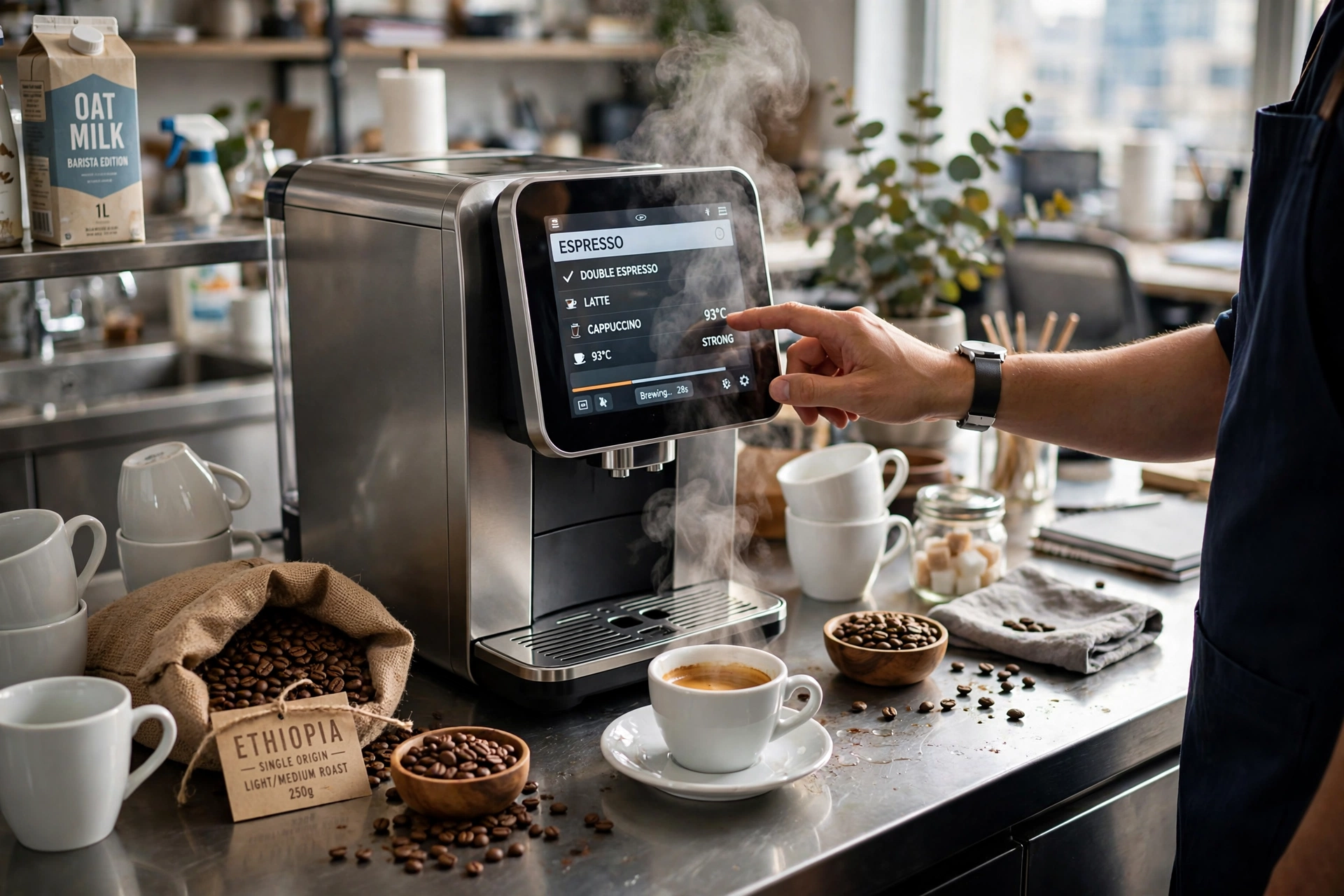
To master the operation of these systems, one must first understand what is happening inside the chassis. Most commercial automated systems utilize a "bean-to-cup" architecture, where the machine handles grinding, tamping, brewing, and waste disposal in one sequence.
📚
Definition
Bean-to-Cup Automation is a process where an integrated grinder and brewing unit measure, grind, and compress the coffee dose automatically, ensuring a consistent ratio of coffee to water without manual barista intervention.
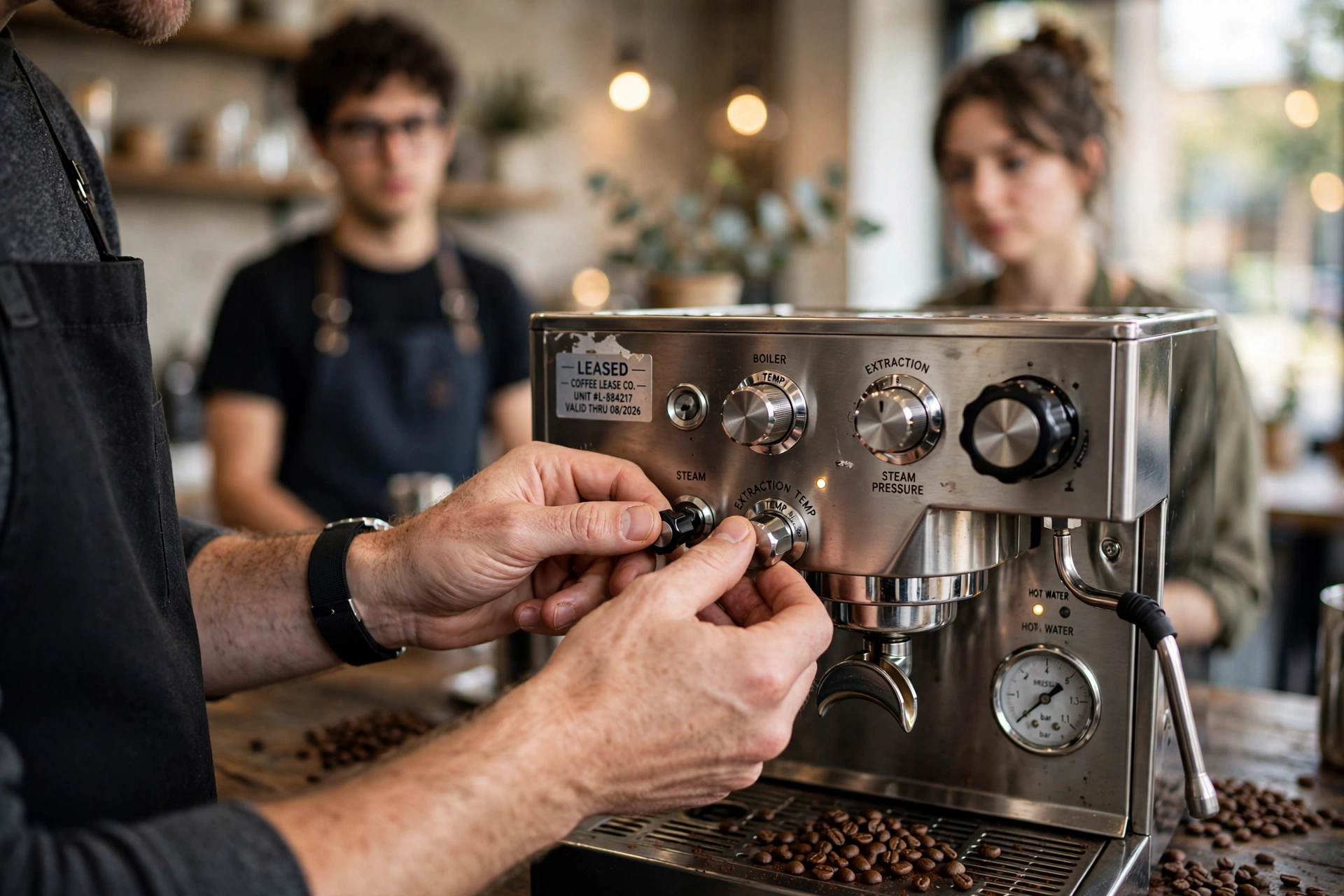
The core of the process is the brew group. This is the heart of the machine where the coffee puck is compressed and hot water is forced through at high pressure. If the grind is too coarse, the water rushes through too quickly, resulting in an under-extracted, sour taste. If the grind is too fine, the water struggles to pass through, leading to over-extraction and a burnt, bitter profile. This is why the grind adjustment dial is the most important tool in your arsenal.
According to the Specialty Coffee Association (SCA), the precise control of water temperature and extraction time is what separates "commodity coffee" from "specialty coffee." In an automated setting, this means you must regularly verify that your machine is hitting the 195°F to 205°F range. If the temperature fluctuates, the chemical compounds in the Coffea arabica beans won't extract correctly, regardless of how expensive the machine was.
Now, here's where it gets interesting: the interaction between the coffee bean and the internal burrs. Different roasts, light, medium, and dark, behave differently. Darker roasts are more porous and extract faster; therefore, they often require a slightly coarser grind than a light roast to avoid bitterness. If you change bean suppliers and don't change your grind setting, your "automated" quality will plummet.
Why Precision Calibration Matters for Your Bottom Line
Precision isn't just about taste; it's about the financial viability of your coffee program. When an automated system is poorly calibrated, you see an immediate increase in "waste-to-cup" ratios. I've seen businesses waste up to 15% of their coffee inventory simply because they were trying to "dial in" the machine without a structured process.
Beyond waste, the impact on equipment longevity is staggering. According to NSF International, improper maintenance and mineral buildup in commercial food equipment can lead to premature component failure. In automated coffee machines, scale buildup in the boiler causes the heating element to work harder, consuming more electricity and eventually leading to a total system burnout.
The business impact is twofold: lost revenue during downtime and decreased customer loyalty. A guest who receives a bitter espresso in a hotel lobby is unlikely to return to the on-site cafe. For clinics and medical offices, where the goal is to reduce patient anxiety, a high-quality beverage service can actually improve the perceived quality of care. This is why choosing Automated Coffee Machines for Clinics and Medical Offices requires a focus on reliability and ease of maintenance.
Consider the cost of a single service call. In 2026, a technician's visit for a preventable scale-related failure can cost anywhere from $200 to $500, not including the price of parts. When you multiply this by a fleet of machines across multiple locations, perhaps across Sensa Coffee Service in Charlotte, NC, the inefficiency becomes a significant line-item expense.
Step-by-Step Guide to Optimizing Your Coffee Service
If you want to transform your output from "standard" to "exceptional," follow this operational framework. Whether you are running a boutique hotel or a corporate headquarters, these steps apply.
Step 1: The Water Audit
Water is 98% of your cup. If your water is too hard, you get scale; too soft, and the coffee tastes flat. Install a high-grade filtration system and test your TDS (Total Dissolved Solids) monthly. If you are operating in areas like Sensa Coffee Service in Raleigh NC (2026 Overview), where water chemistry varies by district, this step is non-negotiable.
Step 2: The Morning Dial-In
Every morning, brew three test shots.
- Shot 1: Check for flow. If it drips slowly, coarsen the grind.
- Shot 2: Evaluate taste. If it's sour, tighten the grind.
- Shot 3: Verify consistency. If the third shot matches the second, you are ready for service.
Step 3: Temperature Validation
Use a digital thermometer to check the output of your milk frother and your coffee spout. If the temperature is below 190°F, your oils won't emulsify, and the coffee will lack body.
Step 4: The Cleaning Cadence
Implement a "Three-Tier" cleaning system:
- Daily: Empty dregs, wipe steam wands, and run a rinse cycle.
- Weekly: Deep clean the brew group with specialized detergent and descale the milk lines.
- Monthly: Full system audit, including filter replacement and technician check-up.
Busy Bean Coffee simplifies this entire process through our managed membership. Instead of your staff guessing if the grind is correct, we provide the equipment, the training, and the ongoing maintenance to ensure the machine is always calibrated to the specific roast we provide. This removes the "human error" element from the equation entirely.
💡
Key Takeaway
The most effective way to ensure consistency in automated coffee is to treat the machine as a variable that must be adjusted daily, not a constant that stays the same.

Choosing the Right Automation Level: A Comparison
Not all automated machines are created equal. Depending on your volume and the skill level of your staff, you may need different levels of intervention.
| Feature | Super-Automatic | Bean-to-Cup (Semi) | Manual Professional |
|---|---|---|---|
| Skill Required | Zero (Push Button) | Low (Basic Calibration) | High (Certified Barista) |
| Consistency | High (Standardized) | Very High (Adjustable) | Variable (Human Dependent) |
| Maintenance | Medium (Automatic cycles) | High (Manual cleaning) | Very High (Daily deep cleans) |
| Cost per Cup | Low | Lowest | Medium |
| Best For | Waiting rooms, Lobbies | High-end Cafes, Offices | Specialty Coffee Shops |
That said, the "Generic AI" approach to coffee, where you buy the cheapest machine available and assume the "auto" button does all the work, is a recipe for failure. These machines often lack the thermal stability required for a true espresso. The modern professional approach, as championed by Busy Bean Coffee, focuses on "Managed Automation." This means using top-tier SENSA equipment paired with professional oversight, ensuring that while the machine does the work, a Q-Grader ensures the quality.
For businesses in the Southeast, this model is becoming the gold standard. Whether it's a Sensa Coffee Service in Jacksonville, FL or a corporate office in Georgia, the shift is moving toward eliminating capital expenditure (CapEx) in favor of a predictable monthly membership that includes all the "tips" and tricks outlined in this guide.
Common Misconceptions About Automated Coffee
Most guides on automated coffee get the fundamentals wrong. They tell you to "just use the best beans," but beans are only half the battle.
Myth 1: "Automatic machines can't produce 'real' espresso."
This is no longer true in 2026. Modern volumetric dosing and precision burrs allow automated machines to mimic the pressure profile of a manual lever machine. The failure isn't in the machine; it's in the calibration. If your espresso tastes "fake," it's likely because your water temperature is too low or your grind is too coarse.
Myth 2: "Automatic cleaning cycles are enough."
Here is the truth: the "auto-clean" button only cleans the parts it can reach. It does not remove the coffee oils that build up on the brew group gaskets or the milk proteins that harden in the steam valves. If you rely solely on the auto-cycle, you will notice a "burnt" taste in your coffee within three months. Manual scrubbing of the brew group is essential.
Myth 3: "The most expensive machine is the best one."
Price does not equal performance. A $10,000 machine that is never calibrated will produce worse coffee than a $3,000 machine that is dialed in every morning. The value is in the ecosystem, the beans, the water, and the maintenance. This is why we emphasize a managed coffee program over a simple equipment sale, such as our Sensa Coffee Service in Columbia SC: Complete Guide | Busy Bean Coffee.
Frequently Asked Questions
How often should I actually change the water filters in my automated coffee machine?
You should change your filters every 3 to 6 months, depending on your daily volume and local water hardness. In regions with high mineral content, waiting six months can lead to significant lime-scale buildup in the boiler. According to the U.S. Food and Drug Administration (FDA), maintaining clean water systems is essential for preventing bacterial growth and ensuring food safety. If you notice a change in the taste of the water or a decrease in flow pressure, change the filter immediately regardless of the date.
Why does my automated machine produce "watery" coffee even though I'm using high-quality beans?
Watery coffee is almost always a sign of "channeling." This happens when the coffee is ground too coarsely, allowing the water to find a path of least resistance through the puck rather than extracting the flavor from the coffee. To fix this, adjust your grind setting to be finer. If you are using a managed service like Sensa Coffee Service in Greensboro NC: Complete Guide | Busy Bean Coffee, your provider can help you find the "sweet spot" where the coffee has a syrupy texture and a rich crema.
Can I use pre-ground coffee in a bean-to-cup automated machine?
Generally, no. Bean-to-cup machines are designed with a specific internal hopper and grinder mechanism. Using pre-ground coffee in a machine designed for whole beans can cause the internal brewing unit to clog or fail because there is no "fluffing" of the grounds. If you need a machine that handles both, you need a hybrid system. However, for the best quality, whole beans are essential because coffee begins to lose its aromatic volatile oils within 15 minutes of being ground.
How do I stop my milk from tasting "burnt" or "scalded" in an automated frother?
Burnt milk occurs when the steam temperature is too high or when milk residue has built up inside the frothing wand. Ensure you are purging the wand (releasing steam for one second) before and after every use. Additionally, use a dedicated milk system cleaner every 24 hours. If you are utilizing Sensa Coffee Service in Augusta GA: Complete Guide | Busy Bean Coffee, we provide specific training on milk temperature management to ensure a creamy, micro-foam texture without the scorched taste.
Is it possible to automate the "dialing-in" process?
While some ultra-high-end machines have sensors to detect flow rate, the final "taste test" still requires a human palate. No sensor can tell you if a coffee is "too acidic" or "too nutty." The goal of automation is to handle the repetitive labor, the grinding and tamping, so that the human expert can focus on the quality control. This is the philosophy behind our membership model: we provide the automation, but our Q-Graders provide the quality oversight.
Final Thoughts on Mastering Automated Coffee Machines
Maximizing the potential of automated coffee machines requires a shift in mindset from "ownership" to "stewardship." The machine is a tool, and like any professional tool, it requires precise calibration and a disciplined maintenance schedule to perform at its peak. By focusing on water quality, grind precision, and rigorous cleaning, you can ensure that every cup served is a reflection of your business's commitment to quality.
If the thought of managing TDS levels and grind settings feels overwhelming, that is exactly why we built Busy Bean Coffee. Our all-inclusive managed coffee membership removes the stress of maintenance and the risk of equipment failure. We provide the premium SENSA equipment, professional installation, and a predictable monthly fee, so you can focus on your guests while we focus on the roast.
For a complete look at how to implement this in your business, explore our Sensa Coffee Service in Mount Pleasant SC: Complete Guide or visit us at www.busybeancoffee.com to start your upgrade today.
Free Coffee Pairing Guide & Specialty Roast Cheat Sheet
Unlock the secrets of perfect brewing ratios, water temperatures, and specialty roast profiles. Download the guide.