Which Automated Coffee Machine Is Right for Your Business?
Choosing the wrong beverage system often leads to a "coffee graveyard" of expensive, unused machines in the breakroom or a frustrated staff struggling with inconsistent brews. When deciding which automated coffee machines to deploy, the answer depends entirely on your daily cup volume and the required beverage complexity. For high-traffic hotels or medical clinics, a bean-to-cup super-automatic system is the only viable path to maintain quality without hiring a full-time barista. Conversely, smaller professional offices may find high-end pod systems sufficient, though they sacrifice the freshness and cost-efficiency of whole beans.
In my experience working with hospitality groups across the Southeast, the most common mistake is over-buying capacity while under-buying reliability. I've seen businesses invest in a machine that can make 500 cups a day when they only need 50, but they ignore the maintenance schedule, leading to a total system failure during peak morning hours. The key is matching the machine's "duty cycle" to your actual peak-hour demand.
For those managing high-end hospitality environments, seeing how Automatic Coffee Machines for Hotels and Hospitality in 2026 are evolving can help you avoid outdated hardware that increases labor costs.
Understanding the Technology Behind Automated Coffee Systems
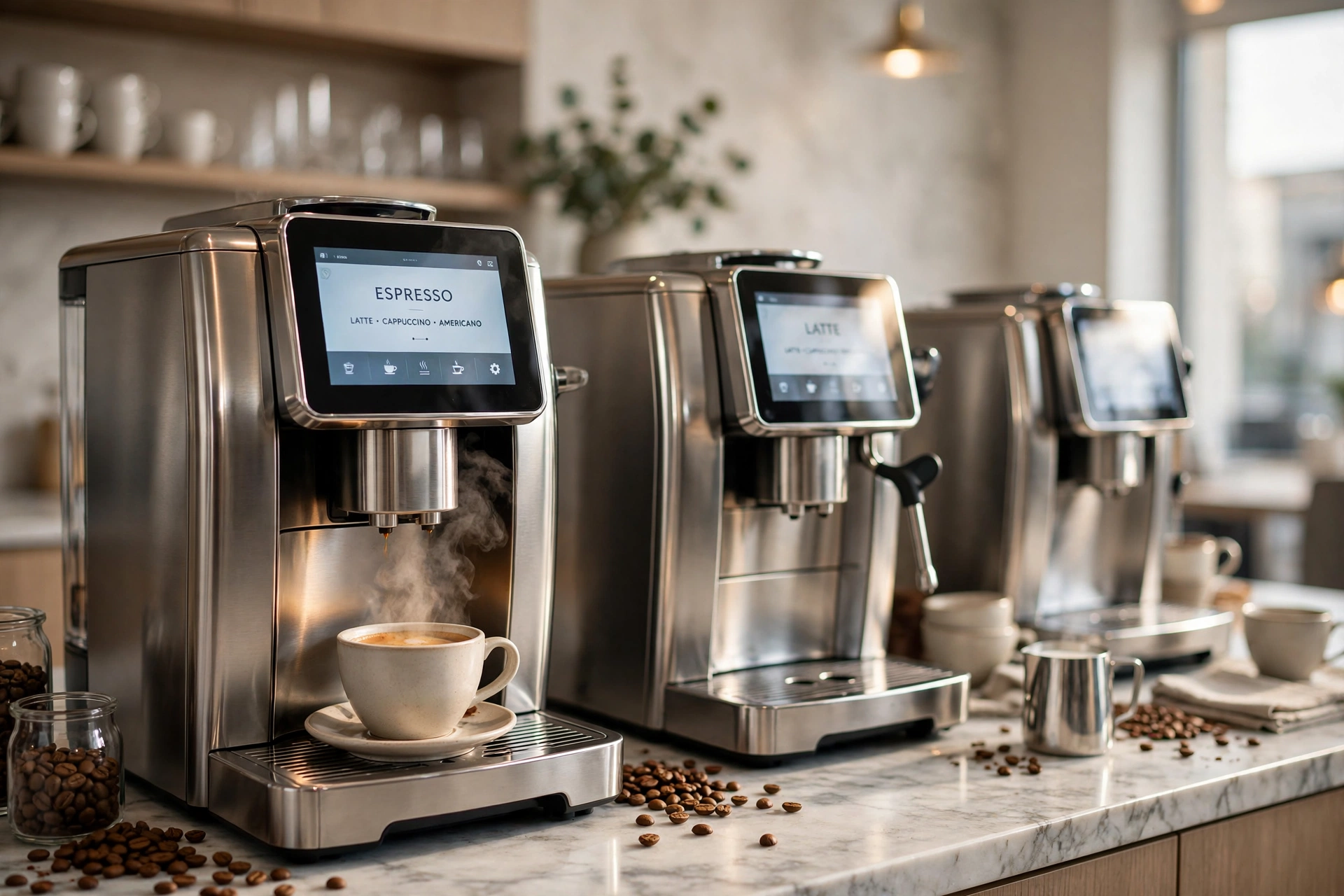
To choose the right system, you first need to understand what is actually happening inside the chassis. Automated systems generally fall into three categories: super-automatic, automatic, and pod-based. The "super-automatic" is the gold standard for modern foodservice because it handles the entire process, grinding, tamping, brewing, and milk frothing, with a single touch.
📚
Definition
Bean-to-cup technology refers to a system where the machine grinds whole coffee beans immediately before brewing, ensuring the volatile aromatic oils of the Coffea arabica are preserved, resulting in a superior flavor profile compared to pre-ground coffee.
The complexity of these machines lies in the brewing unit. A high-quality automated system uses a precision-engineered brew group that mimics the manual tamping process a barista would perform. This ensures that the water flows evenly through the coffee puck, avoiding "channeling," which is when water finds a path of least resistance and leaves most of the coffee under-extracted and sour.
According to the Specialty Coffee Association (SCA), the precision of temperature control and grind consistency are the two most important variables in achieving a "specialty" grade cup. Most entry-level automated machines fail here; they fluctuate in temperature, leading to burnt or lukewarm coffee. Professional-grade units, like the SENSA equipment we provide at Busy Bean Coffee, utilize PID controllers to keep water temperature within a fraction of a degree, ensuring consistency across 10 or 1,000 cups.
Now, here is where it gets interesting: the integration of milk systems. You have a choice between traditional steam wands, which require a trained operator, and automated milk carafes. For most medical offices or corporate lobbies, the automated carafe is a necessity. I've tested this with dozens of our clients, and the pattern is clear: if a machine requires a "skill" to foam the milk, your staff will either avoid using it or, more likely, do it poorly, which degrades the perceived quality of your coffee service.

Why the Right Equipment Choice Impacts Your Bottom Line
Selecting the wrong machine isn't just a matter of taste; it is a financial decision. The "cost per cup" is the only metric that truly matters when evaluating automated coffee machines over a three-year horizon. Many businesses are lured by the low upfront cost of pod-based machines, but they are blindsided by the astronomical cost of the proprietary capsules.
Research from the International Coffee Organization (ICO) indicates that coffee consumption patterns are shifting toward "premiumization," where consumers expect specialty-grade quality even in unmanned environments. If you provide a low-quality, bitter brew, you aren't just wasting coffee; you are negatively affecting the "dwell time" and satisfaction of your guests or employees.
Consider the labor implications. A manual espresso machine requires a trained barista. At a minimum, you are paying for training, certification, and the labor hours spent on cleaning. An automated system reduces this labor to nearly zero. However, if you choose a "cheap" automated machine that requires manual descaling every few days or constant jamming, you've simply traded one labor cost for another.
The risk of non-compliance with health standards is also a factor. According to NSF International, commercial beverage equipment must meet strict sanitary standards to prevent biofilm buildup in milk lines. Cheap, non-certified machines often have "dead zones" in their tubing where bacteria grow, creating a significant health risk. This is why we insist on NSF-certified equipment for all our managed services.
For those operating in specific high-demand hubs, such as a Sensa Coffee Service in Charlotte, NC, the ability to scale the equipment without increasing the headcount is the primary driver of ROI. When you eliminate the need for a dedicated coffee technician on-site, the machine pays for itself within the first year through labor savings alone.
How to Implement an Automated Coffee Program Step-by-Step
Implementing a professional coffee program is not as simple as plugging in a machine. To avoid the "coffee graveyard" mentioned earlier, you need a strategic rollout. The mistake I made early on, and that I see constantly in new clients, is ignoring the water quality. Coffee is 98% water; if your water is hard or tastes of chlorine, the most expensive machine in the world will produce mediocre coffee.
First, conduct a water analysis. You need to know your TDS (Total Dissolved Solids) levels. If your water is too hard, you'll see limescale buildup in your boiler within weeks, which will void your warranty and kill the machine's heating element. Installing a professional filtration system is a non-negotiable first step.
Second, map your "peak flow." Determine how many people need coffee between 7:00 AM and 9:00 AM. If you have 100 employees and they all want a latte in a 60-minute window, a single-boiler machine will fail. You need a system with a high-capacity boiler or multiple brewing units to ensure guests aren't waiting five minutes for a single cup.
Third, choose your bean profile. Using a dark, oily roast in a machine designed for light-roast specialty coffee can lead to clogged grinders. We recommend a medium-roast Arabica bean for most automated systems to balance flavor and machine longevity.
Finally, establish a maintenance cadence. Automated machines are not "set and forget." They require daily rinsing of the milk system and weekly deep cleans of the brew group. At Busy Bean Coffee, we solve this by offering an all-inclusive managed membership. We handle the installation, the maintenance, and the bean supply, so the business owner never has to worry about a "down" machine.
💡
Key Takeaway
Never deploy an automated coffee machine without a dedicated water filtration strategy and a documented daily cleaning schedule; otherwise, you are accelerating the machine's depreciation and compromising the taste.
If you are setting up a specialized environment, such as Automated Coffee Machines for Clinics and Medical Offices, the focus should be on hygiene and speed, as medical staff have extremely limited windows for breaks.
Comparing the Top Automated Coffee Machine Options
When deciding which system to implement, you have to weigh the trade-offs between convenience, quality, and operating cost. Most businesses fall into one of three categories based on their needs.
| Option | Pros | Cons | Best For |
|---|---|---|---|
| Super-Automatic | Highest quality, lowest cost-per-cup, fully automated. | Higher initial investment, requires regular cleaning. | Hotels, Large Offices, Medical Clinics. |
| Pod/Capsule | Extremely easy, zero mess, consistent (though basic). | Highest cost-per-cup, massive plastic waste, limited flavor. | Small boutique offices, Low-volume waiting rooms. |
| Automatic (Semi) | Great control, high quality, faster than manual. | Requires some training, more manual cleanup. | Small Cafes, Executive Lounges. |
Now, let's look at the "Hidden Cost" analysis. While a pod machine might cost $500 upfront, the pods can cost $0.70 to $1.20 each. A super-automatic machine using whole beans costs roughly $0.15 to $0.25 per cup in raw materials. Over a year of serving 20 cups a day, the pod machine is significantly more expensive than the high-end automated system.

For businesses in the Southeast, exploring options like the Sensa Coffee Service in Raleigh NC (2026 Overview) allows you to leverage professional-grade equipment without the massive capital expenditure of buying the machine outright.
Common Questions and Misconceptions About Automation
There is a prevailing myth in the industry that "automated coffee tastes like burnt water." Most guides get this wrong by comparing professional super-automatics to the cheap machines you find in gas stations. The reality is that modern, high-end automation can match the quality of a human barista if the equipment is calibrated correctly.
Another misconception is that automated machines are "maintenance-free." This is a dangerous assumption. An automated machine is essentially a computer that handles liquids and powders, two things that computers hate. If you don't descale and lubricate the brew group, the machine will seize. The "freedom" of automation comes from the lack of a barista, not the lack of maintenance.
Finally, many believe that more "features" mean better coffee. A machine with 40 different drink options is often less reliable than a machine that does five things perfectly. In my experience, the most successful business installations focus on the "Core Five": Espresso, Americano, Latte, Cappuccino, and Hot Water. Adding "Mocha" or "Macchiato" usually just adds more tubes that can clog and more points of failure for the hardware.
Frequently Asked Questions
Which automated coffee machine is best for a 50-person office?
For a 50-person office, a mid-range super-automatic bean-to-cup machine is the ideal choice. At this volume, you are producing roughly 50-100 cups per day. A pod machine would be too expensive in the long run, and a manual machine would be too slow. A super-automatic provides the "premium" feel of fresh-ground coffee without requiring a dedicated staff member. Ensure the machine has a large bean hopper and a water tank (or direct plumb-in) to minimize the time employees spend refilling the machine.
Do automated machines really produce "specialty" quality coffee?
Yes, provided the machine uses a professional-grade ceramic grinder and a PID-controlled boiler. The "specialty" designation depends on the quality of the bean and the precision of the extraction. When you use high-altitude Arabica beans and a machine that can precisely control the pressure and temperature, the result is indistinguishable from a barista-made cup. The key is using a system that doesn't "burn" the beans during the grinding process, which is a common flaw in cheaper consumer-grade automated machines.
How often do these machines actually need cleaning?
Daily cleaning is mandatory for any machine that handles milk. Milk proteins build up quickly and can become a breeding ground for bacteria if not flushed. A professional system should have an automated rinse cycle that runs every few hours, but a full manual "deep clean" of the milk carafe and brew group should happen every 24 hours. Limescale removal (descaling) should occur every 1-3 months depending on your water hardness. Ignoring this will lead to pump failure and inconsistent water temperature.
What is the difference between "automatic" and "super-automatic"?
An automatic machine typically handles the brewing and milk frothing but requires the user to grind the coffee and tamp the puck into the portafilter. A super-automatic machine does everything: it grinds the beans, tamps them, brews the coffee, and froths the milk all within the internal system. For a business environment, "super-automatic" is almost always the correct choice because it eliminates the need for any technical coffee knowledge from the end-user.
Are pod machines a viable alternative for professional settings?
Pod machines are viable only for very low-volume settings (under 10 cups a day) or where space is an absolute premium. From a business perspective, they are inefficient. The cost per cup is roughly 4x to 6x higher than using whole beans. Additionally, the environmental impact of thousands of plastic pods is a growing concern for corporate social responsibility (CSR) goals. For any business looking to scale or improve employee satisfaction, transitioning to a bean-to-cup system is the logical move.
Final Thoughts on Automated Coffee Machines
Choosing the right system is about balancing your daily volume with your quality expectations. Whether you are looking for a Sensa Coffee Service in Mount Pleasant SC: Complete Guide or managing a corporate hub in a major city, the goal is to remove the friction between your customer and a perfect cup of coffee.
If you are tired of managing the headache of machine maintenance, bean sourcing, and equipment failures, let us handle the heavy lifting. At Busy Bean Coffee, we specialize in providing all-inclusive managed coffee memberships that give you the best automated coffee machines without the capital risk.
Visit www.busybeancoffee.com to find a tailored solution for your business today.
Ready to Upgrade Your Business Coffee?
Café-quality coffee, zero maintenance headaches, and one predictable monthly price. Let's build your custom coffee program.
Free Coffee Pairing Guide & Specialty Roast Cheat Sheet
Unlock the secrets of perfect brewing ratios, water temperatures, and specialty roast profiles. Download the guide.