📖This article is part of the complete guide to Ultimate Guide to Automated Coffee Machines for Businesses.
A morning rush at a bakery or convenience store is a high-stakes environment where every single second of friction costs you money. I have spent years watching business owners struggle with the "bottleneck effect," where a line of customers is ready to buy a pastry, but the coffee preparation—whether it is a slow drip or a complex manual espresso process—stalls the entire transaction. In my experience working with high-traffic foodservice outlets, the shift from manual brewing to a professional automated system isn't just about convenience; it is about capturing the 15% to 20% of revenue that typically walks out the door when the wait time exceeds three minutes.
For a comprehensive overview of how this technology scales, explore our Ultimate Guide to Automated Coffee Machines for Businesses.
What Are Automated Coffee Machines for Bakeries and C-Stores?
📚
Definition
Automated coffee machines for bakeries and C-stores are professional-grade beverage systems designed to produce consistent, barista-quality drinks—from espresso to lattes—with minimal human intervention, typically through a touch-screen interface.
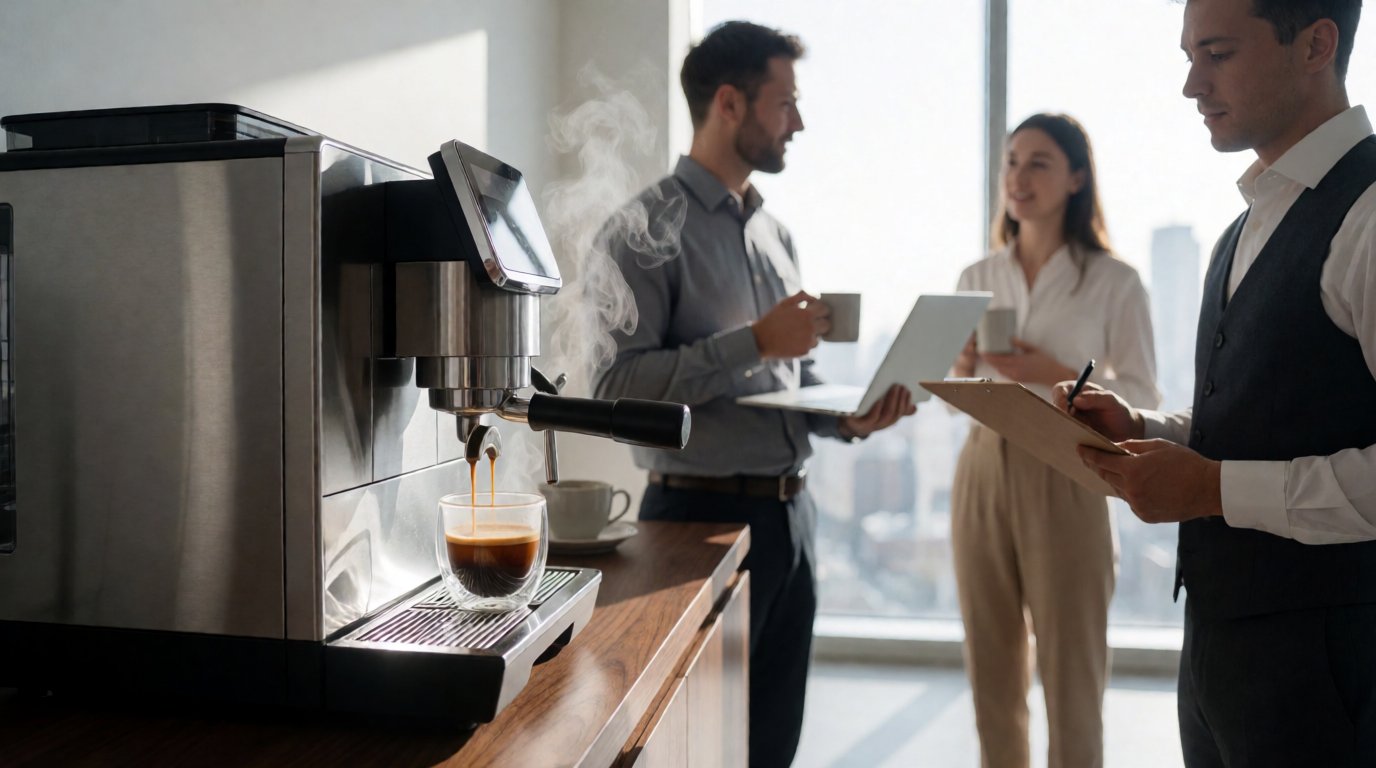
Automated coffee machines for bakeries are engineered to handle the unique volatility of retail footprints. Unlike a dedicated café where a barista is the central focus, bakeries and C-stores need a solution that allows a single employee to manage a register, bag a dozen donuts, and serve a high-quality cappuccino simultaneously. These systems integrate the grinding, tamping, brewing, and milk frothing processes into one seamless cycle.
When we implemented these systems for our clients at Busy Bean Coffee, we discovered that the primary value is not just the speed, but the repeatability. A C-store in a rush shouldn't have to worry about a "bad batch" of coffee. By using precise volumetric dosing and temperature controls, these machines ensure that the 100th cup of the day tastes exactly like the first. This is essential when you are dealing with Coffea arabica beans, which require precise temperature windows to avoid bitterness.

For those who want to understand the technical inner workings, our guide on Bean to Cup Commercial Coffee Machines Explained breaks down the mechanics of integrated grinding and brewing.
Why Does Automation Matter for Bakeries and C-Stores?
In the 2026 retail landscape, the "grab-and-go" economy is the dominant force. For a bakery or C-store, coffee is rarely the primary destination; it is the high-margin accompaniment to a food purchase. The ability to provide a premium beverage without a dedicated trained barista transforms a simple transaction into a high-value experience.
First, labor optimization is the most immediate benefit. According to the National Coffee Association USA (NCA), consumer demand for specialty beverages continues to climb, yet the cost of skilled labor has reached an all-time high. By deploying automated systems, you remove the need for a certified barista, allowing your existing staff to handle coffee service with zero training lag. This directly impacts your bottom line by reducing payroll while increasing throughput.
Second, consistency is a brand protector. If a customer visits your C-store every morning and the coffee tastes different every time, they will eventually switch to a competitor. Professional automation ensures that the extraction parameters—pressure, temperature, and dose—remain constant. This level of precision is what the Specialty Coffee Association (SCA) defines as the standard for high-quality coffee preparation, ensuring that the delicate notes of specialty coffee are preserved even in a fast-paced environment.
Third, the increase in Average Order Value (AOV) is significant. When a bakery can offer a variety of drinks—lattes, macchiatos, and Americanos—instead of just a basic pot of drip coffee, the price point per cup increases. A basic coffee might sell for $2.00, but a specialty latte can easily command $5.00 or more. When you combine this with the key benefits of automated coffee machines for foodservice, the ROI becomes undeniable.
How to Integrate Automated Coffee into Your Workflow
Integrating an automated system into a bakery or C-store requires a strategic approach to layout and timing. You cannot simply place a machine on a counter; you must design a "beverage flow" that doesn't clash with your food service line.
Step 1: The "Zero-Friction" Placement
Place your machine in a way that the employee can reach the coffee without stepping away from the POS (Point of Sale) system. In my experience, the most efficient layouts are those where the machine is perpendicular to the register, allowing the employee to start the brew cycle while the customer is paying for their pastry.
Step 2: Menu Simplification
Avoid offering a 50-item coffee menu. Instead, curate 5 to 8 high-performing drinks. This prevents "decision paralysis" for the customer and speeds up the ordering process. Focus on a strong espresso base, a classic latte, and a signature seasonal drink. If you are looking for advice on how to refine this, check out our guide on how to choose an automated coffee machine for business.
Step 3: Implementation of a Maintenance Schedule
Automation is not "set it and forget it." To maintain food safety standards, you must follow strict cleaning protocols. For instance, the FDA provides rigorous guidelines on food contact surfaces. Automated machines often have built-in cleaning cycles, but manual inspection of the milk lines and drip trays must happen daily to prevent biofilm buildup.
Step 4: Training for "Touch-Point" Efficiency
Train your staff not on how to make coffee, but on how to manage the machine's interface. The goal is for the employee to spend less than 10 seconds interacting with the machine per order. This allows them to maintain focus on the customer, improving the overall guest experience.
💡
Key Takeaway
The goal of automation in a bakery is to move the "production time" from the employee to the machine, freeing the human to focus on hospitality and sales.
The Traditional Approach vs. The Modern Automated Approach
Many store owners still hesitate, believing that a traditional pot of coffee is "enough." However, the data shows a clear shift in consumer expectations. Below is a comparison of the operational models.
| Feature | Traditional Drip/Manual | Generic/Cheap AI Machines | Busy Bean Professional Automation |
|---|---|---|---|
| Quality Control | High Variance (Burnt or Weak) | Inconsistent/Plastic Taste | Barista-Grade Precision |
| Labor Requirement | Constant Monitoring/Brewing | Low, but high failure rate | Minimal; one-touch operation |
| Menu Variety | Single roast only | Limited/Pre-set options | Full Espresso-based menu |
| Maintenance | Simple but manual | Frequent breakdowns | Managed service & professional support |
| Customer Wait | Low (if ready) / High (if not) | Moderate | Ultra-Low (on-demand) |

Common Mistakes to Avoid When Automating Coffee
One of the most frequent mistakes I see in C-stores is the "Under-Specing" Error. Owners often buy a home-grade "super-automatic" machine and expect it to handle 200 cups a day. These machines are not built for the thermal load of a commercial environment. They overheat, the pumps fail, and the result is costly downtime. Always ensure your equipment is NSF International certified for commercial use to ensure it can handle the volume.
Another mistake is neglecting water filtration. Coffee is 98% water. If your C-store is in an area with hard water, the minerals will destroy your machine's boiler and ruin the taste of the espresso. A professional filtration system is not an optional add-on; it is a requirement for machine longevity and flavor consistency.
Finally, avoid the "Invisible Coffee" trap. Many bakeries hide their coffee machine behind a counter. In 2026, the visual of a high-end automated machine is a marketing tool. It signals quality. When customers see a professional piece of equipment, they perceive the coffee as more valuable, which justifies the higher price point.
If you are expanding your footprint into specific regions, you might find our localized guides helpful, such as the Automated Coffee Service in Fort Worth TX - Complete Guide or the Automated Coffee Service in Wilmington NC - Complete Guide.
Frequently Asked Questions
Do automated machines really taste as good as manual espresso?
Yes, provided you use high-quality coffee beans and professional-grade equipment. Modern automation focuses on the physics of extraction—maintaining precise pressure and temperature. When using a high-quality coffee bean and a calibrated grinder, the difference is virtually indistinguishable to the average consumer. The key is the quality of the roast and the freshness of the beans.
How much training does my staff actually need?
Minimal. For most professional automated systems, training takes less than 30 minutes. The staff needs to know how to select the drink on the screen, how to refill the bean hopper, and how to execute the daily cleaning cycle. This removes the "skill gap" that usually makes hiring for bakeries so difficult.
Will an automated machine slow down my morning rush?
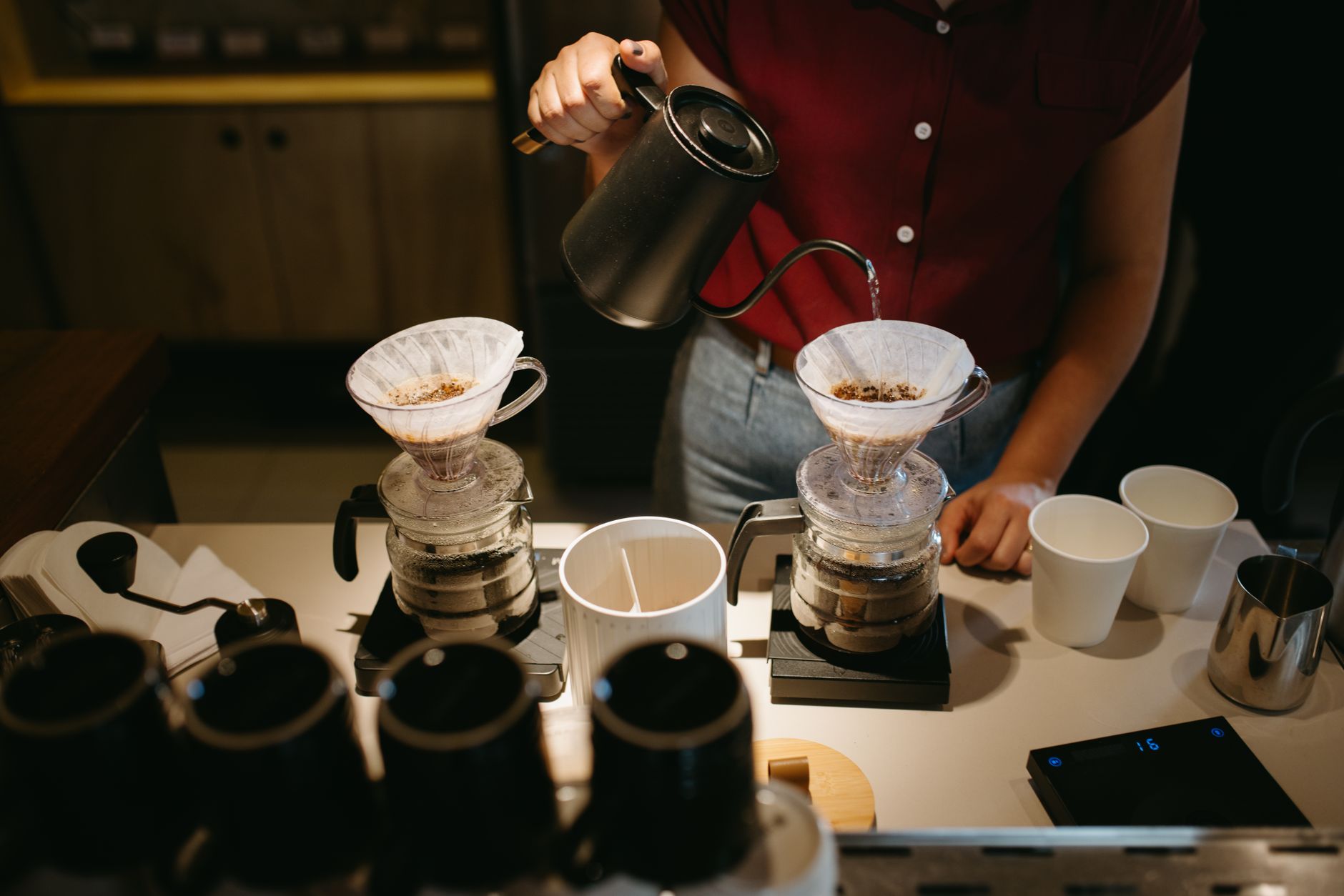
On the contrary, it accelerates it. Manual espresso takes several minutes per drink when you account for grinding, tamping, and steaming. An automated machine handles these steps in parallel. While the machine is brewing, your employee can be handing a pastry to the customer and processing the payment, effectively eliminating the coffee-related bottleneck.
What is the maintenance cost for these machines?
Maintenance typically involves replacing filters and using cleaning tablets. However, the best way to manage this is through a managed service membership. This converts unpredictable repair costs into a predictable monthly fee and ensures that a technician is available before a breakdown occurs during a rush.
Can I offer customized drinks like oat milk or sugar-free syrups?
Absolutely. Most automated machines allow for the addition of external syrups or the use of separate milk carafes. You can program specific buttons for "Oat Milk Latte" or "Vanilla Americano," ensuring the proportions are perfect every time without the employee having to guess measurements.
Conclusion
For bakeries and C-stores, coffee is the ultimate companion product. Transitioning to automated coffee machines allows you to scale your beverage program without increasing your labor overhead. By focusing on consistency, speed, and quality, you turn a simple coffee station into a profit center that drives foot traffic and increases the average ticket size.
In my experience, the businesses that thrive in 2026 are those that remove friction from the customer journey. Whether you are serving a quick espresso to a commuter or a latte to a weekend brunch crowd, the right technology makes the difference between a frustrated customer and a loyal regular.
To build a complete strategy for your business, we recommend returning to our Ultimate Guide to Automated Coffee Machines for Businesses to learn about scaling and equipment selection.
If you are ready to eliminate the hassle of manual brewing and move to a predictable, managed solution, visit us at Busy Bean Coffee.
Free Coffee Pairing Guide & Specialty Roast Cheat Sheet
Unlock the secrets of perfect brewing ratios, water temperatures, and specialty roast profiles. Download the guide.