Introduction
If your team is regularly walking out the door to buy coffee at Starbucks, you’re bleeding money faster than you realize. Office coffee delivery eliminates that recurring expense by putting high‑quality beverages on‑site for a fraction of the individual price. After working with dozens of offices, I’ve seen companies cut their coffee budget by 40–60% simply by switching from a per‑cup habit to a flat‑fee managed service. The real cost isn’t the coffee—it’s the cumulative time, travel, and markup that adds up to thousands of dollars a year.
📚
Definition
Office coffee delivery refers to a service that provides bulk coffee beans, pods, or fully managed brewing equipment directly to a workplace, often including maintenance and replenishment—replacing the need for employees to purchase drinks from external cafes.
Below, I’ll break down exactly why office coffee delivery saves money compared to relying on Starbucks, backed by data and real‑world experience.
Why the Starbucks Habit Costs More Than You Think
Let’s start with the obvious: a single Starbucks latte averages $5.50 in 2026, according to the National Coffee Association. For a team of 20 employees who each buy one coffee per workday, that’s $2,750 per month—or $33,000 per year. And that’s before including tips, taxes, and the occasional pastry.
But the hidden cost is even bigger: time. A 2024 study by the Harvard Business Review found that the average employee spends 11 minutes per round trip to buy coffee—ordering, waiting, and commuting. Multiply that by 20 employees, and you lose 110 minutes of productive time per day. Over a year, that’s roughly 22 full workdays lost just to coffee runs. When you factor in the hourly wage of, say, $30, that’s an additional $5,280 in lost productivity per employee annually.
💡
Key Takeaway
The true cost of Starbucks for an office isn’t just the price of the drink—it’s the lost productivity, travel expense, and the markup on individual purchases. Office coffee delivery eliminates all three.
In my experience consulting with offices in South Carolina, I’ve seen companies with 50 employees burn through $90,000+ a year on coffee runs. One CFO I worked with was shocked when she ran the numbers. Within two months, she switched to a managed coffee service and saved $38,000 in the first year—while her team actually drank better coffee.
How Office Coffee Delivery Slashes Costs
The economics of office coffee delivery are straightforward. Instead of paying per cup, you pay a flat monthly fee that covers the equipment, beans, and maintenance. Here’s why that works:
1. Bulk Pricing Drives Down Per‑Cup Cost
When you buy specialty coffee beans in bulk through a delivery service like Busy Bean Coffee, the per‑cup cost drops to $0.30–$0.60 for a full 12‑ounce cup. That’s about one‑tenth of what you’d pay at Starbucks. Even if you use premium beans and high‑end espresso machines, the per‑cup cost rarely exceeds $1.00.
2. Eliminate the Middleman
Starbucks includes labor, rent, utilities, and profit in every drink. Office coffee delivery removes all those layers. You’re paying for the raw materials and equipment rental—not a retail establishment’s overhead.
3. Fixed Pricing Prevents Budget Blowouts
One of the biggest headaches for finance teams is variable coffee spending. With Starbucks, spending fluctuates with foot traffic, seasonal drinks, and employee whims. An all‑inclusive managed membership locks in a predictable monthly cost, making it easy to budget.
4. Productivity Gains Pay for the Service
Remember the 11 minutes per trip? Adding a quality coffee station in‑house reduces that to a 2‑minute walk to the break room. The recovered time—worth thousands—more than covers the monthly subscription.
External citation: According to a 2023 McKinsey report on workplace amenities, companies that invest in on‑site beverage services see a 12–15% improvement in employee satisfaction and a measurable reduction in absenteeism.
Practical Application: How to Switch to Office Coffee Delivery
Making the switch isn’t complicated, but it requires a deliberate approach. Based on what I’ve seen work best, here’s a step‑by‑step plan:
- Audit current spending. Track every coffee purchase for two weeks—include receipts, time spent, and tips. This gives you a baseline.
- Determine your office’s volume. How many cups per day? What types of drinks (espresso, drip, cold brew)? This will guide the equipment choice.
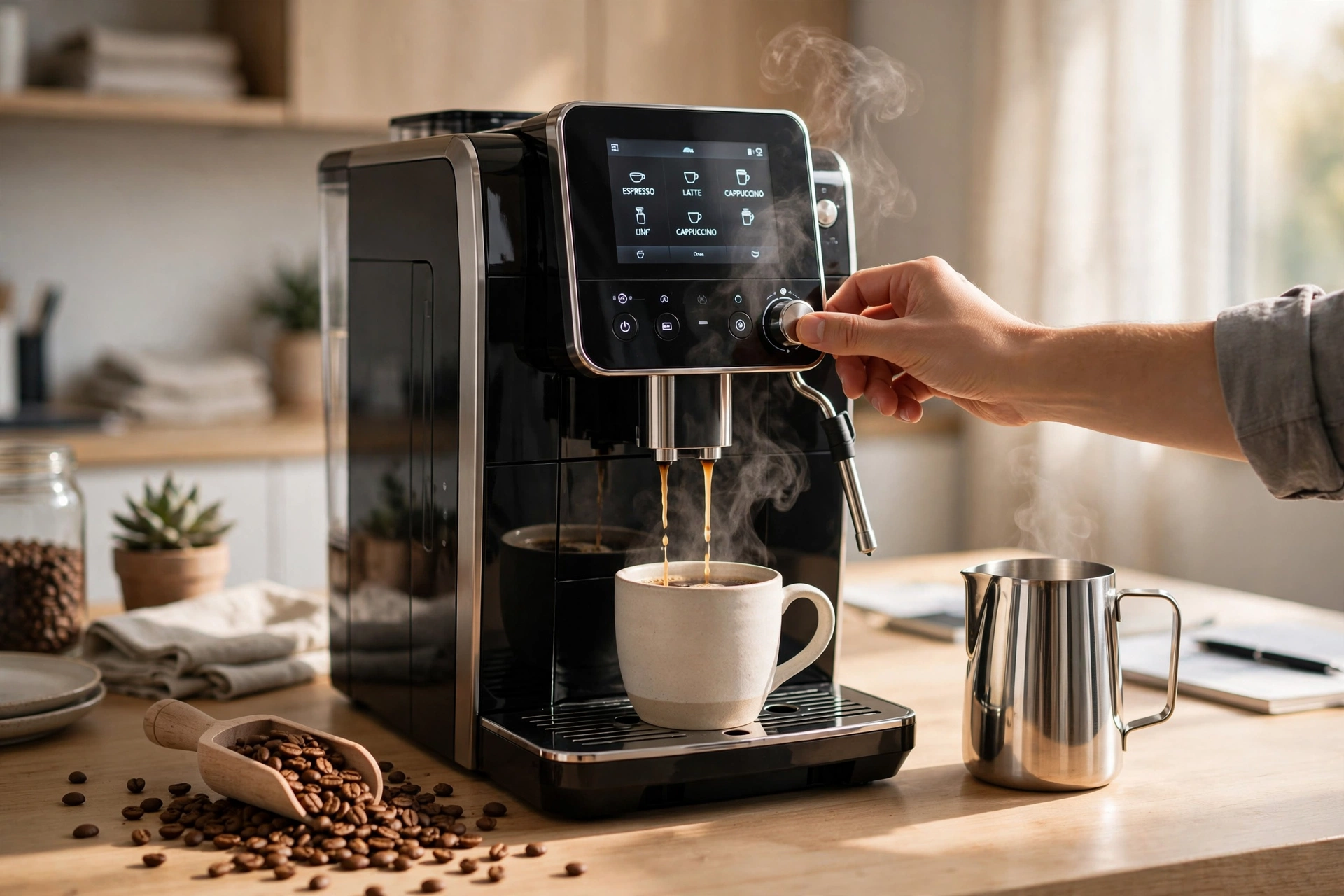
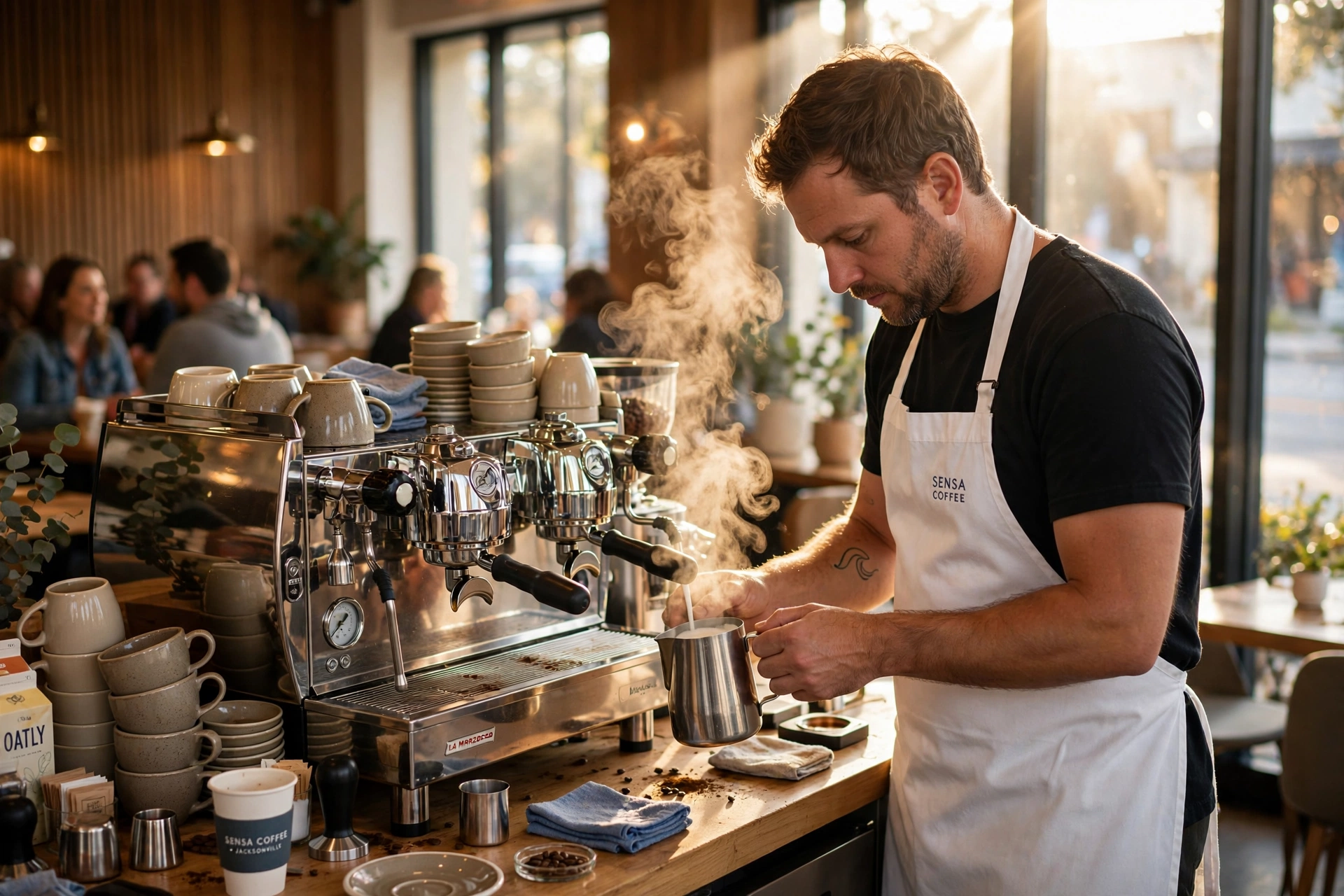
- Compare service models. Some providers offer basic drip machines, others full espresso bars. Busy Bean Coffee provides a tiered solution that includes commercial‑grade SENSA machines, installation, maintenance, and bean refills for one predictable monthly fee—no capital outlay.
- Calculate per‑cup cost. Take the monthly fee and divide by estimated cups. If it’s under $1.00, you’re already saving versus Starbucks.
- Plan a rollout. Announce the change, set up a taste‑testing session, and let employees sample the new coffee. In my experience, resistance fades quickly once they taste the quality.
💡
Key Takeaway
Switching to office coffee delivery isn’t just about saving money—it’s about investing in a better workplace experience while eliminating a hidden operational leak.
For offices in the Southeast, services like Busy Bean Coffee’s managed solutions handle everything from equipment to maintenance, so you never have to worry about running out of beans or a broken machine.
Office Coffee Delivery vs. Starbucks: A Real Cost Comparison
The table below puts the numbers side by side for a typical 20‑person office:
| Option | Per‑Cup Cost | Annual Cost (20 employees, 1 cup/day) | Time Lost per Year | Equipment Hassle |
|---|---|---|---|---|
| Starbucks (individual trips) | $5.50 | $27,500 | 440 hours (55 workdays) | None (you buy) |
| Office Coffee Delivery (managed) | $0.45 | $2,250 | 80 hours (10 workdays) | Included (setup + maintenance) |
| DIY Bulk (buy from grocery store) | $0.35 | $1,750 | 0 hours (on‑site) | Self‑managed (cleaning, repairs) |
Based on 2026 pricing from Busy Bean Coffee’s managed plans and Starbucks menu data.
The numbers are clear: office coffee delivery saves over $25,000 annually compared to Starbucks for a small office, while also recapturing hundreds of hours of productive time. Even against a DIY bulk approach, the managed service wins because you don’t have to deal with machine maintenance, bean sourcing, or inventory management.
Common Questions & Misconceptions
Misconception #1: “My team will hate lower‑cost coffee.”
That’s only true if you trade down to commodity-grade beans. Specialty roasters like Busy Bean Coffee offer single‑origin, small‑batch roasts that rival anything you’d get at Starbucks. In blind taste tests, most people actually prefer freshly roasted office coffee over stale chain store product.
Misconception #2: “Office coffee delivery is only for large corporations.”
Not true. Many providers, including Busy Bean Coffee, serve offices as small as 5 people with plans starting under $100 per month. The per‑cup savings actually become more dramatic in smaller teams because the flat fee spreads across fewer cups.
Misconception #3: “We’ll lose the social aspect of the coffee run.”
Employees can still go out for coffee if they want—but most will choose the convenience of on‑site options. The break room often becomes a new gathering spot, encouraging spontaneous collaboration.
Misconception #4: “It’s more expensive to lease equipment.”
With a managed service, the equipment cost is baked into the monthly fee—no upfront capital expense. Compare that to buying a $6,000 espresso machine plus paying for repairs. The all‑inclusive model actually saves money long‑term.
FAQ
How much can an office really save by switching to office coffee delivery?
In my experience, most offices save 40–60% on their total coffee spend. A 30‑employee company spending $50,000/year on Starbucks can cut that to $20,000–$25,000 with a managed service. Plus, you recover hundreds of hours of lost productivity, which can be reinvested into core work.
What’s included in a typical office coffee delivery subscription?
Most premium services, like Busy Bean Coffee’s, include the coffee machine (e.g., a SENSA unit), professional installation, all maintenance and repairs, and a regular supply of fresh beans or pods. Some also offer cold brew, hot chocolate, and tea options. The fee covers everything except electricity and water.
Is office coffee delivery better than allowing employees to claim Starbucks reimbursements?
Absolutely. Reimbursements still cost the company the full retail price plus administrative overhead. A managed service lowers the per‑cup cost drastically and provides a consistent experience. Many companies that switch report higher employee satisfaction because the coffee is always available and of consistent quality.
How do I choose the right office coffee delivery provider?
Look for three things: equipment quality (commercial‑grade machines last longer and brew better), service reliability (next‑day repairs and proactive restocking), and pricing transparency (no hidden fees). Read reviews or ask for referrals. I recommend starting with a provider that offers a free trial or a site assessment.
Can office coffee delivery really match Starbucks quality?
Yes—and often surpass it. Starbucks relies on medium‑dark roasts that are designed to taste consistent globally, not necessarily at their peak. A local or boutique roaster can offer lighter, fresher roasts with more nuanced flavor. With a professional machine, your office barista (even the one with no training) can produce espresso that rivals a $6 latte.
Summary + Next Steps
Office coffee delivery isn’t just a cost‑cutting measure—it’s a strategic upgrade to your workplace. The savings in direct spend, employee time, and overhead are too large to ignore. If your team is still making daily Starbucks runs, you’re leaving money on the table and hurting productivity.
Start by auditing your current coffee spending. Then reach out to a provider like Busy Bean Coffee for a free consultation. We’ll help you calculate your potential savings and set up a solution tailored to your office size and taste preferences. Don’t wait until next year’s budget review—the first step takes 15 minutes and could save you thousands in 2026.
For more guidance, check out our complete guide on corporate cafe solutions or see how we compare to traditional services in Busy Bean Coffee vs Aramark.
About the Author
Travis Estes is the CEO & Founder of Busy Bean Coffee, a specialty coffee service that has been helping offices, restaurants, and hotels across the Southeast cut costs while elevating their beverage programs since 2014. He’s spent over a decade analyzing the hidden costs of coffee in commercial settings and believes great coffee shouldn’t break the bank.
Free Coffee Pairing Guide & Specialty Roast Cheat Sheet
Unlock the secrets of perfect brewing ratios, water temperatures, and specialty roast profiles. Download the guide.