Introduction
If you’re running a restaurant and still treating coffee as an afterthought, you’re leaving money on the table. Coffee has become the single most profitable beverage category in foodservice, with margins that tower over soda and most alcoholic drinks. Yet many operators buy commodity beans, rely on outdated equipment, and pay too much per cup. That’s where coffee service for restaurants comes in — a managed solution that guarantees quality, consistency, and predictable pricing. In 2026, the question isn’t whether to offer good coffee. It’s why you’d risk doing it yourself.
💡Key Takeaway
Professional coffee service isn’t just about better taste — it directly impacts your bottom line, guest retention, and operational efficiency.
What Is Coffee Service for Restaurants?
📚Definition
A coffee service for restaurants is a turnkey partnership in which a provider supplies commercial-grade equipment, specialty beans, maintenance, and often training — all for a single monthly fee. The restaurant does not own the equipment, and the provider handles everything from installation to emergency repairs.
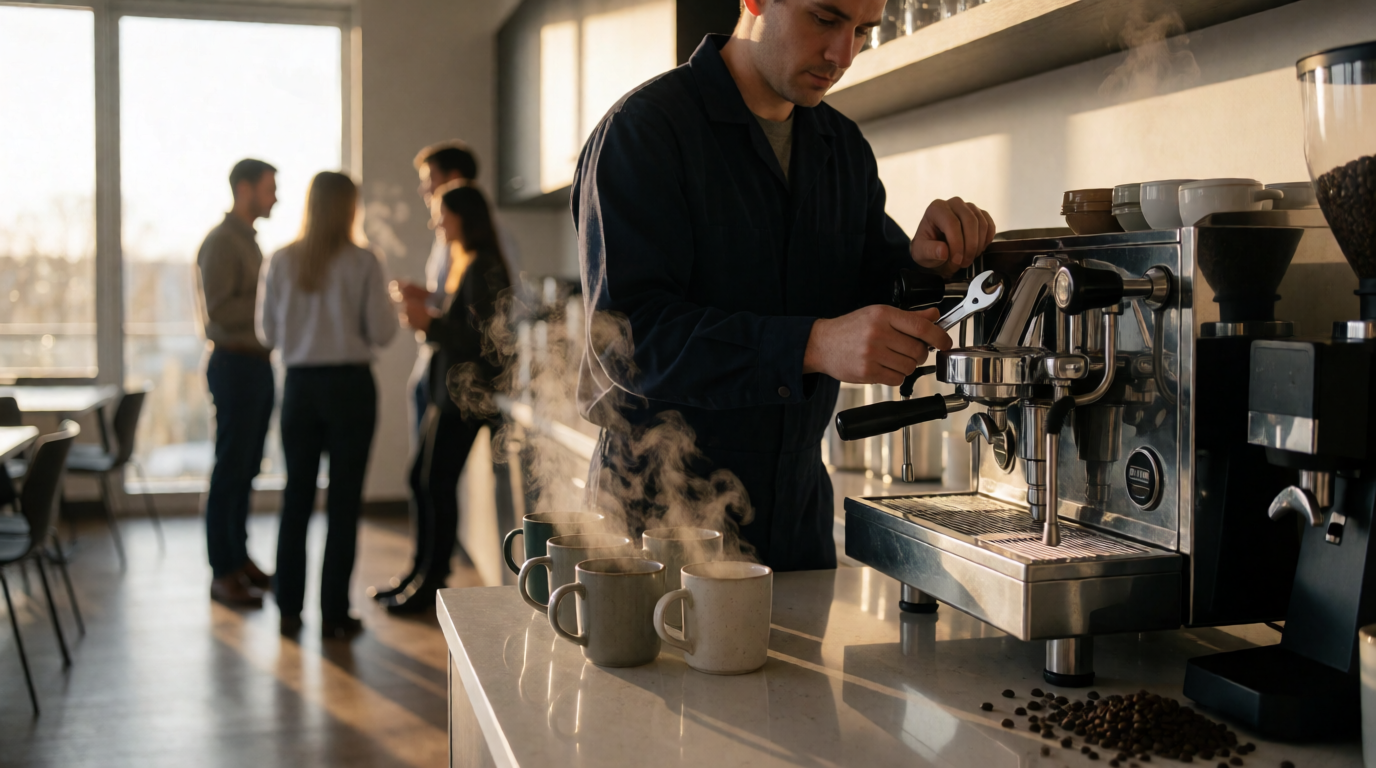
This model, sometimes called managed coffee service, has gained traction because it eliminates capital expense and spreads risk. Instead of spending $15,000 upfront on an espresso machine and grinder, you pay a predictable monthly amount. The provider has an incentive to keep the equipment running perfectly and to supply fresh, high‑quality beans. According to the National Coffee Association’s 2025 Trends Report, 62% of foodservice operators now prefer managed coffee programs over outright ownership because of reduced downtime and access to premium blends without capital outlay.
In my experience helping restaurants transition from DIY to managed service, the most common complaint I hear is, “We never realized how much time we spent on coffee until we stopped.” A professional service frees your staff to focus on what they do best — serving food — while the coffee experts handle the beans, machines, and quality control.
Why It Matters: The Real Implications of Bad Coffee
When a customer orders coffee after a meal, they’re not just thirsty. They’re seeking a satisfying finish to their dining experience. A bitter, lukewarm cup can undo an otherwise perfect meal. Research from the Specialty Coffee Association shows that 48% of diners say coffee quality influences their likelihood of returning to a restaurant. If you’re serving inferior coffee, you’re actively driving away repeat business.
Beyond guest satisfaction, there’s a clear financial argument. Coffee can deliver gross profit margins of 80% or higher when properly sourced, brewed, and priced. By contrast, soda margins average around 60%, and wine margins are often below 50%. A professional coffee service ensures you hit those margins by using the right equipment and correct extraction methods. Without it, you may be losing up to 30% of potential revenue through waste — over-extraction, stale beans, and poorly maintained machines.
The consequences of doing it yourself are real. I’ve seen restaurants that bought a cheap espresso machine only to have it break during Saturday brunch. The cost of an emergency repair — including lost sales and a technician callout — can exceed two months of a managed service fee. As one operator told me, “I saved a few hundred dollars a month doing my own coffee. Then the machine died and I lost $4,000 in one weekend. Never again.”
Practical Application: How to Implement a Professional Coffee Service
Adopting a coffee service for restaurants is straightforward, but it requires choosing the right partner. Here’s a step‑by‑step approach based on what I’ve seen work for hundreds of locations:
1. Audit Your Current Coffee Program
Measure how much coffee you sell per week, what you pay per pound, your equipment age, and how much staff time is spent on cleaning and maintenance. If your espresso machine is more than five years old, it’s likely costing you in inefficiency.
2. Define Your Coffee Vision
Decide if you want a simple drip program, a full espresso/coffee bar, or specialty drinks like lattes and cold brew. Your provider should offer options that match your concept.
How managed coffee services work can help you understand the range of possibilities.
3. Evaluate Providers Using These Criteria
- Equipment quality: Look for commercial-grade brands like La Marzocco, Nuova Simonelli, or Rancilio. Ask about maintenance response times.
- Bean quality: Request cupping samples. Ensure they source specialty-grade beans (SCA score 80+).
- Pricing model: Transparent, all‑inclusive pricing without hidden fees.
- Training: Do they train your staff on setup, cleaning, and service? A provider like Busy Bean Coffee offers ongoing training as part of the membership.
4. Negotiate a Pilot Period
Most reputable providers will offer a 30‑day trial or performance guarantee. Use this to test consistency and customer response.
5. Train Your Team
Even the best equipment needs proper handling. Schedule at least two training sessions — one for opening/closing procedures and one for dialing in the espresso grinder. Many operators underestimate the learning curve.
Why professional coffee shop outfitting covers why training is non‑negotiable.
💡Key Takeaway
A professional service doesn't just drop off a machine and beans — it partners with you on training, maintenance, and quality audits. That ongoing support is what drives consistent results.
DIY vs. Professional Coffee Service: A Comparison
| Option | Pros | Cons | Best For |
|---|
| DIY (Buy equipment + beans wholesale) | Full control over equipment and bean choices; no long‑term contract | High upfront capital ($10k–$20k); you’re responsible for repairs, training, and bean sourcing; downtime risk | High‑volume cafes with experienced baristas; operations willing to invest in a full‑time coffee program manager |
| Professional Coffee Service | Zero capital outlay; predictable monthly fee; full maintenance included; specialty beans; training & support | Less flexibility on equipment brand; long‑term contract (usually 3–5 years) | Most restaurants, hotels, offices, and bakeries that want quality without complexity |
| Hybrid (Own equipment + subscription beans + independent repair) | Moderate control; can pick beans from different roasters; equipment ownership | Still responsible for maintenance; moderate upfront cost; harder to scale | Small chains with a dedicated maintenance person; operations that want to rotate bean suppliers frequently |
In my experience, the hybrid model often has the worst of both worlds because you end up paying for emergency repairs and wasting staff time on troubleshooting. For 90% of restaurants, a managed coffee service delivers the best balance of quality and cost. If you’re curious about pricing specifics, our guide on
how much does craft coffee cost breaks down real numbers.
Common Questions & Misconceptions
Myth 1: Professional coffee service is only for high‑end restaurants.
Reality: The same efficiency that helps a four‑star hotel applies to a family diner. The amount of coffee you serve matters more than your price point. Even a modest operation serving 100 cups a day can see a serious improvement in margin and consistency.
Myth 2: You lose control over your coffee identity.
Reality: Top providers allow you to customize your blend, roast level, and even branding on the packaging. You’re not losing identity — you’re getting expert guidance to refine it.
Myth 3: It’s always more expensive than buying your own beans and machine.
Reality: When you factor in capital cost, depreciation, maintenance, and staff time, managed service is often cheaper per cup. A restaurant owner I worked with saved over $600 per month by switching from DIY to a service, because they eliminated waste and cut labor spent on cleaning and repairs.
Myth 4: I can just use a pod machine — same outcome, less hassle.
Reality: Pod machines produce consistent but lower‑quality coffee, cost significantly more per cup (often $0.60–$1.00 vs. $0.20–$0.30 for fresh‑brewed), and generate excessive plastic waste. For a restaurant looking to build a coffee reputation, pods are a step backward.
Frequently Asked Questions
How much does professional coffee service for restaurants cost?
Monthly fees vary widely based on the equipment tier, bean volume, and number of locations. Most providers charge between $300 and $800 per month for a single‑machine setup, which includes the lease of a commercial espresso machine and grinder, all beans, maintenance, and training. Some programs offer pay‑per‑cup pricing or tiered volume discounts. For typical numbers, see our breakdown of
specialty bean supply pricing. Always ask for a total cost of ownership comparison — the cheapest upfront option often hides higher bean costs or slower service response.
Is a professional coffee service worth it for a small restaurant?
Absolutely. In fact, small restaurants benefit the most because they rarely have the capital to buy premium equipment outright. A service removes the $15,000 barrier and replaces it with a predictable $300–$500 monthly expense. It also frees up the owner or manager to focus on food and front‑of‑house. The consistent coffee quality also helps small shops compete with national chains. One cafe owner I know saw a 12% increase in repeat customers within three months of upgrading to a managed program.
Can I choose my own coffee beans with a managed service?
Most providers let you customize your blends within their sourcing catalog. Busy Bean Coffee, for instance, offers three roast profiles — light, medium, and dark — and can create a custom blend for your restaurant’s brand. You’ll taste samples with the provider and pick the one that fits your menu. Some operators even collaborate on a blend name. However, if you’re insistent on a specific roaster that the service doesn’t carry, you may need a hybrid arrangement.
What happens if the machine breaks?
This is the strongest argument for a managed service. When you own the equipment, a breakdown means an expensive emergency call and lost revenue. With a professional service, the provider typically guarantees a response time (e.g., next business day, sometimes same day). During the wait, they’ll often loan you a backup machine. At Busy Bean Coffee, we keep loaner machines at our warehouse in Charleston so that any restaurant in the region can be back up within 24 hours. Compare that to waiting a week for a local repair technician.
How do I train my staff on a professional coffee system?
Good providers include complimentary training sessions at the time of installation, plus repeated quarterly visits or on‑demand video tutorials. The training covers everything from grinding and tamping to cleaning cycles and troubleshooting. After the initial ramp‑up, the provider can also conduct mystery‑guest quality audits or “coffee refreshers” to keep standards high. Training doesn’t end after day one; it’s an ongoing relationship. That’s why
when to schedule coffee equipment maintenance is equally important to discuss with your partner.
Summary + Next Steps
Why choose coffee service for restaurants? Because it eliminates capital risk, guarantees consistent quality, and improves your bottom line. In an industry where margins are thin and guest expectations are rising, you can’t afford to get coffee wrong. Professional service providers like Busy Bean Coffee deliver premium equipment, specialty beans, and 24/7 support — all for a predictable monthly fee. You keep the profits; they shoulder the complexity.
Ready to see how much you can save? Visit
Busy Bean Coffee to request a free audit of your current coffee program. We’ll compare your costs against a managed solution and show you the numbers. No pressure, just data.
Recommended Readings
To deepen your understanding of these topics, we recommend reading the following articles:
About the Author
Travis Estes is the founder of
Busy Bean Coffee, a specialty coffee service that helps restaurants, hotels, and offices serve exceptional coffee without the headache. With over a decade of experience in commercial coffee equipment and supply chain, Travis has helped hundreds of operations cut costs and boost guest satisfaction by switching to a managed coffee model.
Free Coffee Pairing Guide & Specialty Roast Cheat Sheet
Unlock the secrets of perfect brewing ratios, water temperatures, and specialty roast profiles. Download the guide.