What Is Managed Coffee Services?
Running a high-volume foodservice operation often reveals a frustrating truth: coffee is usually the most underestimated operational headache. Many business owners start with a simple machine and a bag of beans, only to find themselves spending hours every week troubleshooting leaks, descaling boilers, or dealing with inconsistent roast quality that drives customers away. This is where managed coffee services solve the equation by shifting the entire burden of equipment ownership, maintenance, and supply chain management to a dedicated specialist.
Essentially, managed coffee services are an all-inclusive partnership where a provider supplies the professional espresso machines, manages the ongoing technical maintenance, and ensures a consistent supply of high-grade coffee beans for a predictable monthly fee. Instead of paying thousands of dollars upfront for a machine and then paying again every time a gasket blows or a pump fails, the business pays for the outcome—perfectly brewed coffee—rather than the tools.
Understanding the Mechanics of Managed Coffee Services
To truly understand how this model works, we have to look at the difference between owning a tool and managing a beverage program. In a traditional setup, you are the technician, the procurement officer, and the quality control manager. When you switch to a managed model, those roles are absorbed by the service provider.
📚
Definition
Managed coffee services is a specialized operational model—often structured as a membership or lease-to-service agreement—where a provider manages the entire coffee lifecycle, including equipment installation, preventive maintenance, bean sourcing, and technical support.
In my experience working with hotels and restaurants in Mount Pleasant, SC, the biggest point of failure isn't the machine itself; it's the lack of consistent maintenance. I've seen $15,000 espresso machines become expensive paperweights because a staff member didn't know how to properly backflush the group heads. A managed service eliminates this risk by implementing professional maintenance schedules that are not dependent on the fluctuating skill level of your hourly staff.
This shift is mirrored in broader industry trends toward "Equipment-as-a-Service" (EaaS). By removing the capital expenditure (CapEx) and replacing it with a predictable operating expense (OpEx), businesses can maintain higher liquidity. According to the Specialty Coffee Association (SCA), adhering to strict brewing and equipment standards is the only way to consistently achieve "specialty" status, which requires precision that most unmanaged setups simply cannot maintain over time.
Now, here's where it gets interesting: a true managed service doesn't just give you a machine; they curate the coffee. This means sourcing Coffea arabica beans that match the flavor profile of your brand and adjusting the roasting profile to ensure that the coffee tastes the same in January as it does in July. When you manage it yourself, you are at the mercy of crop volatility and shipping delays. In a managed system, the provider buffers that volatility for you.
Why Does a Managed Approach Matter for Your Bottom Line?
The financial impact of a managed coffee program goes far beyond the monthly subscription fee. Most operators fail to calculate the "hidden cost of downtime." When your primary espresso machine goes down on a Saturday morning during a brunch rush, you aren't just losing the $5 cost of the coffee; you're losing the high-margin pastry sale, the customer's trust, and potentially the lifetime value of that guest.
Data from the National Coffee Association USA (NCA) suggests that coffee consumption patterns are shifting toward high-quality, specialty experiences. Consumers are no longer satisfied with "burnt" tasting commercial coffee. If your equipment is poorly calibrated or your beans are stale, you are actively pushing customers toward your competitors.
The risk is not just about quality, but about safety and compliance. Commercial beverage equipment must meet stringent sanitary standards to avoid biofilm buildup and chemical contamination. Following the guidelines established by NSF International, specifically the NSF/ANSI 4 standards for commercial food equipment, requires a level of technical rigor that most cafe managers simply don't have time for. A managed service ensures your gear remains compliant and safe for public consumption.
Consider these three specific business impacts:
- Labor Optimization: Your baristas spend their time crafting drinks and engaging guests rather than scrubbing scale out of a boiler.
- Waste Reduction: Professional calibration means fewer "dial-in" shots wasted every morning. When a technician manages the grind and dose, the margin per cup increases.
- Predictable Cash Flow: No more "surprise" $800 repair bills in the middle of a slow month.
The mistake I made early on—and that I see constantly in this industry—is the belief that buying the most expensive machine solves the problem. It doesn't. A machine is a tool; a managed service is a strategy. One is a liability on your balance sheet; the other is a performance engine for your revenue.

Practical Application: Implementing Managed Coffee Services
Transitioning to a managed model is not as simple as plugging in a machine. It requires a strategic alignment between your volume, your menu, and your space. If you are operating a high-traffic hotel or a busy restaurant in Mount Pleasant, your needs are vastly different from a small boutique office.
The implementation process typically follows these steps:
First, a Volume Audit is conducted. The provider analyzes how many cups you serve per hour during peak times. This determines whether you need a single-group or multi-group espresso machine. Using underpowered equipment leads to long wait times, while over-powering leads to wasted energy and unnecessary costs.
Second, Infrastructure Integration occurs. This is where many businesses stumble. You cannot simply put a professional machine on any table. It requires specific plumbing for water filtration and dedicated electrical circuits to handle the heating elements. Busy Bean Coffee handles this level of installation to ensure the equipment doesn't trip your breakers or flood your floors.
Third, Staff Calibration is performed. Even with the best equipment, a barista needs to understand the basics of milk steaming and shot timing. A managed service provides the ongoing training necessary to keep the quality consistent.
Finally, the Maintenance Cycle begins. This is the "secret sauce" of the managed model. Instead of waiting for the machine to break, the provider performs preventive maintenance. This includes replacing gaskets, calibrating pressure/temperature settings, and deep-cleaning internal components.
💡
Key Takeaway
The true value of managed coffee services isn't the equipment—it's the elimination of operational risk. You are paying for the certainty that your coffee program will never be the reason a customer leaves a bad review.
Comparing Your Options: Traditional vs. Managed vs. Low-Cost
When deciding how to handle your coffee program, you generally have three paths. Most business owners think they only have two (buy it or rent it), but there is a massive difference between a "cheap rental" and a "managed service."
| Feature | Traditional Purchase (DIY) | Generic Rental / Cheap AI | Busy Bean Managed Services |
|---|---|---|---|
| Upfront Cost | Very High (CapEx) | Low to Medium | Zero to Low |
| Maintenance | On your own / Pay-per-visit | Basic / Slow response | Proactive / All-inclusive |
| Coffee Quality | Variable (User-dependent) | Low (Commodity beans) | High (Specialty Grade) |
| Technical Support | Find your own tech | Generic helpdesk | Dedicated specialist |
| Risk Profile | High (Downtime = Loss) | Medium (Poor quality) | Low (Guaranteed uptime) |
| Best For | Hobbyists or Massive Corps | Low-traffic breakrooms | Growth-focused Foodservice |
Here is the reality: the "Traditional Purchase" model is a trap for most small to medium businesses. You spend $10,000 on a machine, and six months later, the steam wand is leaking. Now you have to find a technician, wait three days for them to arrive, and pay a $150 call-out fee plus parts.
On the other hand, generic rental services often provide "bottom-of-the-barrel" equipment and commodity coffee. They aren't interested in coffee roasting excellence or the nuances of Arabica coffee; they just want to rent you a box.
Busy Bean Coffee takes the professional approach. We combine the high-end hardware of the traditional model with the financial flexibility of the rental model, all while adding the expertise of a specialty coffee partner. We don't just provide a machine; we provide a beverage solution that scales with your business.
Common Misconceptions About Managed Coffee
There are several myths that circulate in the foodservice industry regarding managed services. Most guides get this wrong by suggesting that managing it yourself is "cheaper" in the long run. Let's dismantle these misconceptions with data.
Myth 1: "Buying the machine is cheaper than a monthly fee."
This is a mathematical error. People calculate the cost of the machine but forget to calculate the cost of the technician's time, the cost of the water filtration replacements, and the cost of the lost revenue during downtime. When you factor in the "Total Cost of Ownership" (TCO), managed services almost always come out ahead for businesses serving more than 20 cups a day.
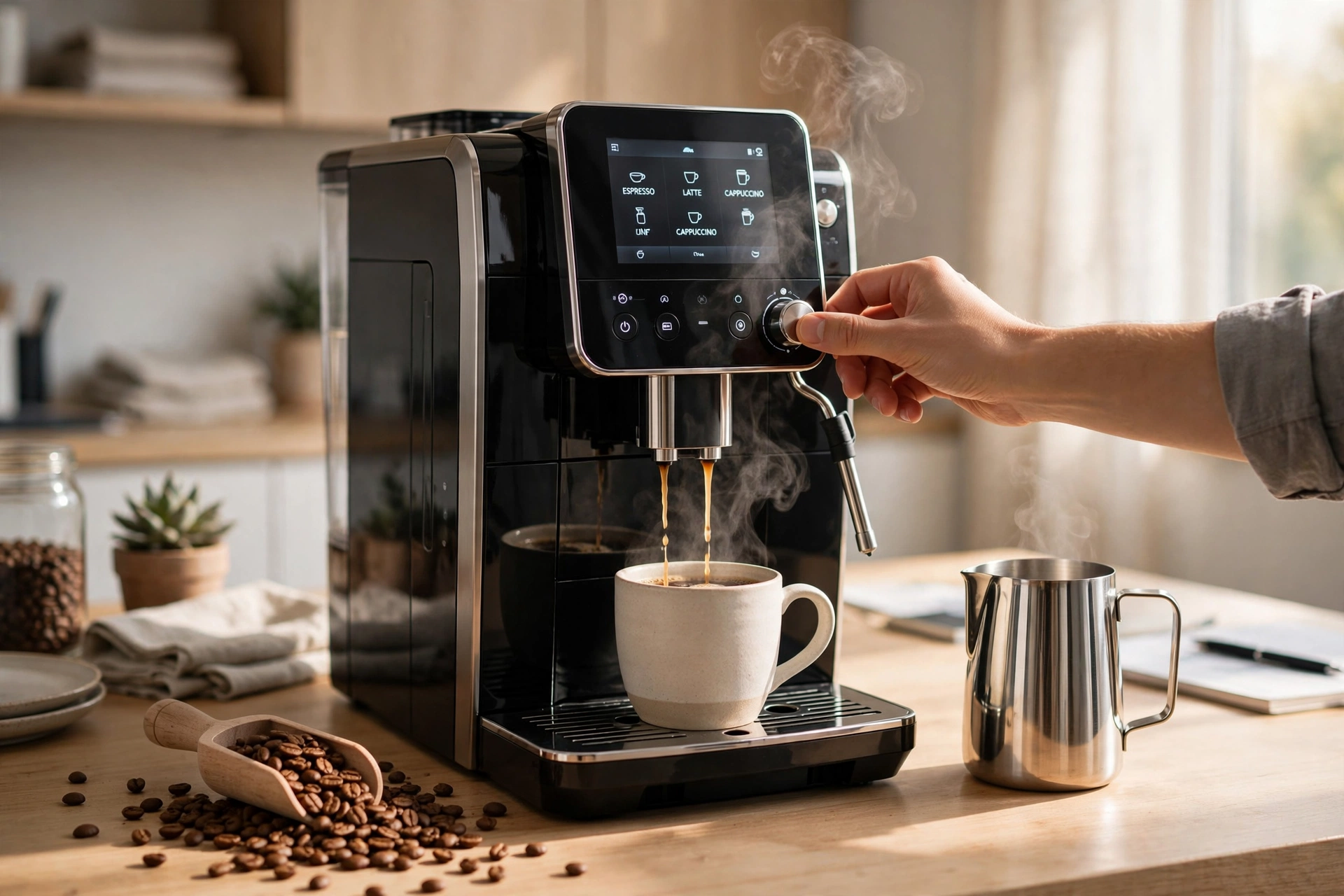
Myth 2: "I can just use a super-automatic machine and skip the service."
Super-automatics are convenient, but they are the most prone to mechanical failure. Because they have so many moving parts, they require more maintenance, not less. I've seen countless "automatic" machines end up in landfills because a single internal sensor failed and the owner didn't have a service contract to fix it.
Myth 3: "Specialty coffee is too expensive for a managed model."
Actually, the opposite is true. By leveraging the buying power of a managed service provider, you get access to premium coffee beans at a price point you couldn't achieve by buying small batches of specialty roast. The provider handles the sourcing and roasting, allowing you to serve a world-class product without paying retail prices for the beans.
Frequently Asked Questions
What exactly is included in a managed coffee service agreement?
A comprehensive managed coffee service typically includes the provision of professional-grade espresso and brewing equipment, professional installation, and an ongoing maintenance schedule. This includes both preventive maintenance—such as descaling and gasket replacement—and corrective repairs. Additionally, it covers the consistent supply of premium coffee beans and, in many cases, staff training to ensure the equipment is operated correctly. The goal is to turn coffee from a complex operational task into a predictable monthly utility.
How does a managed service differ from a standard equipment lease?
A standard lease is a financial agreement; you are paying to use a piece of hardware. If the machine breaks in a lease agreement, you are usually still responsible for the repair costs and finding a technician. A managed service is an operational agreement. You are paying for the service of having working coffee equipment. If a machine fails under a managed plan, the provider is responsible for the fix and the uptime, often providing a loaner machine to ensure your business never stops serving guests.
Will I be able to choose the type of coffee beans I serve?
Yes, a professional managed service focuses on alignment. Since the provider understands the technical specifications of the machines they install, they can recommend specialty coffee roasts that perform best with that specific hardware. Whether you prefer a bold, dark roast or a bright, citrusy Coffea arabica profile, the provider works with you to curate a selection that appeals to your target demographic while ensuring the beans are fresh and properly roasted.
Is it expensive to switch from an owned-equipment model to a managed service?
In most cases, the transition is cash-flow positive from day one. By removing the need for emergency repair funds and high upfront equipment costs, you move your expenses from a volatile "spike" pattern to a flat, predictable line. While there is a monthly fee, it replaces the fragmented costs of bean procurement, technician call-outs, and part replacements. For most businesses, this leads to better margins and significantly lower stress for the management team.
How often is the equipment serviced in a managed coffee plan?
Service intervals vary based on volume, but a professional plan typically includes monthly or quarterly preventive visits. During these visits, technicians check pressure gauges, inspect seals, clean internal valves, and calibrate the grind settings. This proactive approach prevents the "catastrophic failure" scenario. In my experience, businesses that move to this proactive schedule see a 90% reduction in unexpected equipment downtime compared to those who only call a technician when the machine stops working.
Final Thoughts on Managed Coffee Services
If you are tired of playing technician and procurement officer, it is time to rethink your beverage program. Coffee should be a profit center and a guest-satisfaction driver, not a source of operational anxiety. By implementing managed coffee services, you effectively outsource the risk and the labor of coffee production, leaving you free to focus on the guest experience and the growth of your business.
Whether you are running a boutique cafe, a high-end hotel, or a busy restaurant in Mount Pleasant, SC, the goal remains the same: consistent, high-quality coffee delivered with zero friction. When the equipment is managed by experts, the quality remains steady, the costs stay predictable, and your staff stays happy.
Stop worrying about pump failures and scale buildup. Let the experts handle the gear so you can handle the growth. For a tailored solution that fits your specific volume and brand, visit Busy Bean Coffee and discover how our all-inclusive managed memberships can transform your coffee program.
Recommended Readings
To deepen your understanding of these topics, we recommend reading the following articles:
- The Complete Guide to White Glove Coffee Service
- Ultimate Guide to All-Inclusive Coffee Service for Businesses
- Ultimate Guide to Automated Coffee Machines for Business
- Ultimate Guide to Specialty Coffee Equipment for Business
Free Coffee Pairing Guide & Specialty Roast Cheat Sheet
Unlock the secrets of perfect brewing ratios, water temperatures, and specialty roast profiles. Download the guide.