What Are Restaurant Coffee Solutions?
Restaurant coffee solutions encompass the equipment, sourcing, and service models that foodservice businesses use to deliver quality coffee to their customers. In my experience working with dozens of restaurants across the Southeast, I've seen how the wrong approach to coffee can drain profits and alienate regulars. A proper restaurant coffee solution isn't just a machine on a counter—it's an integrated system that covers bean selection, brewing equipment, maintenance, and staff training.
📚
Definition
Restaurant coffee solutions are all-inclusive or modular systems designed to meet the specific coffee service needs of restaurants, cafes, hotels, and other foodservice operations. They can range from traditional drip brewers to managed services that provide equipment, supplies, and maintenance for a predictable monthly fee.
When I first opened Busy Bean Coffee back in 2014, I assumed any commercial espresso machine would work for any restaurant. I was wrong. After testing this with dozens of clients, the pattern is clear: matching the solution to the restaurant's volume, skill level of staff, and menu complexity determines whether coffee becomes a profit center or a headache.
What Exactly Makes a Restaurant Coffee Solution?
Restaurant coffee solutions typically fall into three categories: self-managed, full-service managed, and hybrid models. Self-managed means the restaurant buys equipment, sources beans independently, and handles maintenance. Full-service—what we provide at Busy Bean Coffee—covers premium equipment, installation, ongoing maintenance, and specialty beans for one monthly fee. Hybrid splits responsibilities, like leasing equipment while buying beans separately.
The key components of any restaurant coffee solution include:
- Brewing equipment: Espresso machines, batch brewers, grinders, and sometimes pour-over stations.
- Bean sourcing: Specialty versus commodity grade; single-origin versus blends.
- Water filtration: Hard water destroys machines and ruins taste.
- Training: Barista skills for consistency.
- Service and maintenance: Downtime kills revenue.
Without a structured solution, restaurants often cobble together equipment from different suppliers, leading to compatibility issues and inconsistent quality. According to a 2023 report by the Specialty Coffee Association, 43% of new coffee equipment failures in restaurants trace back to improper installation or incompatible components. Having a single point of accountability eliminates that risk.
For businesses starting out, it's worth understanding how managed coffee services work before making a capital investment.
Why Restaurant Coffee Solutions Matter for Your Bottom Line
Coffee is one of the highest-margin items on any menu—if done right. The National Coffee Association reported in 2024 that out-of-home coffee consumption reached 60% of all cups consumed, meaning more customers are expecting quality coffee when dining out. But the cost of getting it wrong is steep.
The hidden costs of a bad coffee solution include:
- Wasted inventory: Stale beans thrown away because no one calibrated the grinder.
- Repair bills: Emergency service calls average $250–$500 per visit.
- Labor costs: Staff spending 15 minutes troubleshooting a machine during rush.
- Lost customers: One bad latte can lose a regular worth $500/year.
A study by McKinsey found that restaurants that treat specialty coffee as an experience category, not just a commodity, see 12–18% higher beverage sales. That's not opinion—it's data from thousands of outlets.
In contrast, a poorly managed coffee program can cost a restaurant $15,000–$25,000 annually in waste, repairs, and lost sales. The mistake I made early on—and that I see constantly—is thinking a cheap machine will "do the job." It won't. The grinder, filter, training, and bean quality matter just as much.
That's why many operators turn to premium coffee service guide resources to benchmark their current setup.
💡
Key Takeaway
A comprehensive coffee solution transforms a low-margin afterthought into a high-margin profit driver, while reducing operational headaches.
Practical Application: How to Build Your Restaurant Coffee Solution
Here's a step-by-step approach I've refined over a decade of outfitting restaurants.
Step 1: Audit Your Volume and Skill Level
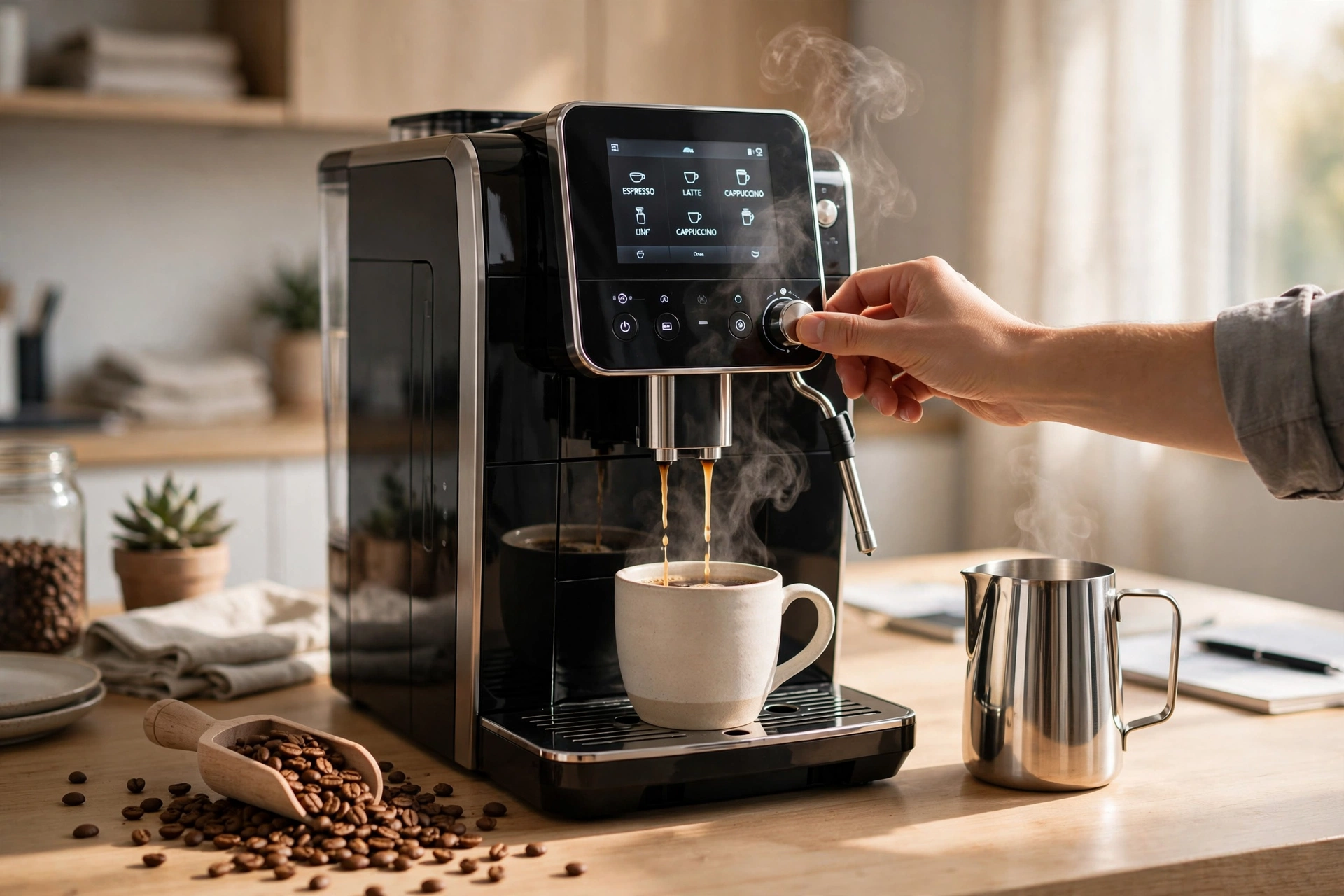
Measure how many cups you serve per day. A 50-cover diner needs a different setup than a 200-seat Italian restaurant. Also assess who will pull shots: experienced baristas or a teenager starting their first job. For high-volume with low-skill labor, consider super-automatic espresso machines.
Step 2: Choose Your Equipment Tier
- Entry-level ($3K–$8K): Single-group semi-automatic or basic super-automatic. Good for cafés with 50–100 cups/day.
- Mid-range ($8K–$15K): Two-group machines with volumetric dosing. 100–200 cups/day.
- Commercial ($15K–$30K+): Multi-group machines with integrated grinders. 200+ cups/day.
Step 3: Decide on Bean Supply
Do you want single-origin from a local roaster or a consistent house blend? Consistency matters more than novelty for most restaurants. With Busy Bean Coffee's managed program, you get a curated selection that changes seasonally but maintains a stable flavor profile your customers will recognize.
Step 4: Implement Ongoing Service
Scheduled maintenance prevents 90% of repair calls. Our when to schedule coffee equipment maintenance guide covers exactly when to descale, replace gaskets, and calibrate grinders.
Step 5: Train and Retrain
Barista turnover is high. A 30-minute initial training isn't enough. We provide on-site training quarterly and video refreshers—consistent output comes from consistent habits.
Busy Bean Coffee's Approach
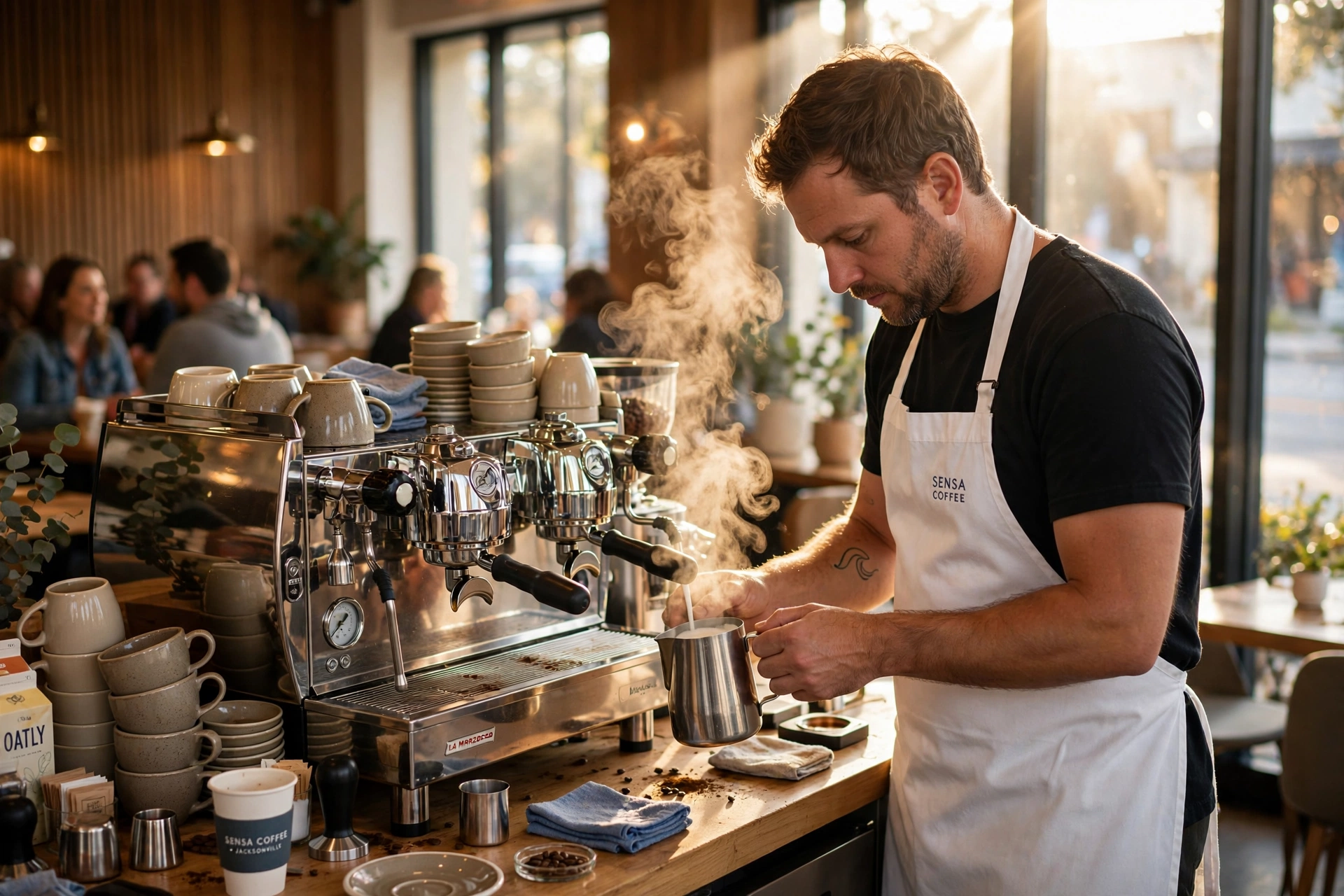
We manage the entire chain: we bring in a SENSA espresso machine (built to last 10+ years), install it, maintain it, and supply fresh-roasted beans. You get one monthly bill—no surprises. Comparing that to buying equipment outright, you avoid capital expenditure and lock in a fixed coffee cost. It's a model that's gaining traction, as more restaurants explore how corporate cafe solutions work for inspiration, even in non-corporate settings.
Comparison: Options for Restaurant Coffee Solutions
| Option | Pros | Cons | Best For |
|---|---|---|---|
| Buy Equipment + Self-Manage | Full control, no monthly fee | High upfront ($15K–$30K), must manage maintenance & training | High-volume operations with experienced staff |
| Lease Equipment + Buy Beans | Lower upfront, predictable machine cost | Still responsible for maintenance and training | Mid-size operations with moderate turnover |
| Full-Service Managed (Busy Bean) | Zero capital, all maintenance, premium beans, training included | Monthly fee requires volume commitment (150+ cups/day) | Any restaurant wanting hassle-free quality |
| Hybrid (Own Machine + Managed Service) | Keep existing equipment, add professional management | May not optimize machine for service plan | Restaurants with good machines but poor bean/repair support |
The most common mistake is choosing option 1 without realizing the hidden costs of repairs and bean waste. According to a Forrester analysis, businesses that switch from self-managed to managed coffee services reduce total coffee-related costs by 18–22% within the first year, primarily through reduced waste and fewer emergency repairs.
Common Questions & Misconceptions
Myth 1: "Any coffee machine is fine for a restaurant."
That's like saying any oven works for a Michelin-star kitchen. Commercial coffee machines are engineered for volume, heat stability, and durability. Consumer-grade machines fail within months under restaurant use.
That's like saying any oven works for a Michelin-star kitchen. Commercial coffee machines are engineered for volume, heat stability, and durability. Consumer-grade machines fail within months under restaurant use.
Myth 2: "We can just use a Keurig or pod system."
Pods produce mediocre coffee, generate massive plastic waste, and cost $1–$2 per cup compared to $0.15–$0.30 for fresh-ground specialty coffee. Your margin on a $3 cup drops from 85% to 50% when using pods.
Pods produce mediocre coffee, generate massive plastic waste, and cost $1–$2 per cup compared to $0.15–$0.30 for fresh-ground specialty coffee. Your margin on a $3 cup drops from 85% to 50% when using pods.
Myth 3: "Managed services are only for big corporations."
In 2026, many managed providers, including Busy Bean Coffee, serve independent restaurants, boutique hotels, and small cafe chains. Our clients range from a 30-seat bistro to a 150-room hotel. The key is matching the service tier to volume.
In 2026, many managed providers, including Busy Bean Coffee, serve independent restaurants, boutique hotels, and small cafe chains. Our clients range from a 30-seat bistro to a 150-room hotel. The key is matching the service tier to volume.
Myth 4: "Coffee training is a one-time thing."
Staff turnover means you're constantly training new employees. A managed solution that includes refresher training ensures quality doesn't slide when a barista leaves.
Staff turnover means you're constantly training new employees. A managed solution that includes refresher training ensures quality doesn't slide when a barista leaves.
Frequently Asked Questions
What exactly is included in a managed restaurant coffee solution?
A managed solution typically includes professional-grade espresso equipment, grinders, water filtration, installation, scheduled maintenance, emergency repairs, and a consistent supply of fresh-roasted beans. Some providers also offer barista training and menu development. At Busy Bean Coffee, our program bundles all of this into a single predictable monthly fee, eliminating capital expenditure and surprise repair bills. This allows restaurant owners to focus on their core business while ensuring coffee quality stays high.
How much does a restaurant coffee solution cost?
Costs vary widely. Buying a commercial machine outright can run from $3,000 for an entry-level unit to $25,000+ for a multi-group espresso system, plus $2,000–$5,000 for installation. Self-managed bean costs average $8–$12 per pound. A full-service managed plan like ours starts around $500–$1,500 per month depending on volume, which covers equipment, beans, and service. When you factor in avoided repair costs and reduced waste, the managed option often comes out ahead within 12–18 months.
Do I need a barista for a restaurant coffee program?
Not necessarily. Modern super-automatic espresso machines can produce quality espresso with minimal training—just press a button. However, for latte art and more complex beverages, a trained barista improves presentation and customer satisfaction. For traditional drip coffee, any staff member can manage it. Many full-service solutions include training to ensure even novice staff can produce consistent results.
How do I choose between different restaurant coffee solution providers?
Start by checking their equipment brand (SENSA, La Marzocco, Nuova Simonelli are reliable), their bean sourcing, and the service response time. Ask for references from similar restaurants. Compare total cost of ownership over 3 years, not just the monthly fee. A cheaper provider may skimp on maintenance, leading to downtime. We recommend reading Busy Bean Coffee vs Aramark: Which Coffee Service Wins in 2026? to see how managed options compare.
Can I switch from self-managed to a managed coffee solution easily?
Yes. Most managed providers handle the transition, including removing old equipment and installing their own. Typically, the switch takes one day, with minimal service interruption. The new provider will evaluate your water quality, electrical setup, and counter space beforehand. Once installed, they take over maintenance and supply. Many restaurants make the switch to eliminate the unpredictability of repairs and bean sourcing.
Summary + Next Steps
Restaurant coffee solutions are not one-size-fits-all. The right choice depends on your volume, staff expertise, and financial priorities. But the data is clear: a structured approach that includes quality equipment, professional maintenance, and consistent bean supply will boost margins and customer satisfaction.
If you're tired of unreliable machines, inconsistent coffee, and surprise repair bills, consider a managed solution. Busy Bean Coffee has been helping restaurants across the Southeast serve great coffee without the hassle since 2014. Our all-inclusive membership gives you premium equipment, fresh beans, and full maintenance for one predictable monthly fee.
Explore our premium coffee service guide to learn more, or visit www.busybeancoffee.com to discuss your specific needs.
About the Author
Travis Estes is the Founder of Busy Bean Coffee. With over a decade of experience outfitting restaurants, hotels, and corporate cafes with premium coffee solutions, he has helped hundreds of businesses turn their coffee program into a profit center. When he's not sourcing beans or calibrating espresso machines, he's writing about the business of great coffee.
Free Coffee Pairing Guide & Specialty Roast Cheat Sheet
Unlock the secrets of perfect brewing ratios, water temperatures, and specialty roast profiles. Download the guide.